


ORCL Stock Snapshot & Real-Time Price
- Core Drivers: Cloud revenue acceleration (Oracle Cloud Infrastructure), Remaining Performance Obligations (RPO), and operating margins.
- Valuation Context: ORCL often trades as a hybrid: part value stock (due to dividends and cash flow) and part growth stock (due to AI/cloud expansion).
- Real-Time Data: For the most up-to-date quote, volume, and 52-week range, refer to the Oracle Corporation (ORCL) Quote on the New York Stock Exchange.
- Crypto-Native Exposure: Traders looking for alternative liquidity or 24/7 exposure to the Oracle ecosystem narrative often track ORCLON on MEXC. Live market data and price trends can be found on the ORCLON Price page.
ORCL Stock Price: The Core Logic Behind the Moves
- Fundamentals: The pace of Cloud Revenue growth (specifically OCI consumption), the accumulation of RPO (backlog), and the discipline in Operating Margins and Free Cash Flow (FCF).
- Valuation & Narrative: How the market prices the "AI Infrastructure" story, interest rate sensitivity, and broad market risk appetite.
ORCL Stock Price History and Performance
ORCL Calendar-Year Stock Price Performance
Year | Year-End Price | Price Return | Primary Driver |
2023 | ~$105.4 | +29% | AI/Cloud narrative expansion; OCI growth acceleration. |
2024 | ~$170.8 | +61% | Strong cloud bookings; strategic AI partnerships. |
2025 | (TBD) | (TBD) | Continued cloud migration & margin focus. |
ORCL Calendar-Year Total Return (With Dividends)
Year | ORCL Total Return | S&P 500 Total Return | Context |
2023 | +32% | +26% | Dividends added ~3% to total return. |
2024 | +63% | +24% | Compounding effect of reinvested dividends. |
What Drives ORCL Stock Price (The Repeatable Variables)
- Cloud Growth & Structure (OCI + Cloud Apps): The market assigns a higher valuation multiple to OCI (consumption-based) revenue than legacy license revenue. Accelerating OCI growth is the primary bullish catalyst. Reference: Oracle Investor Relations for quarterly cloud growth breakdowns.
- RPO / Backlog Visibility: Remaining Performance Obligations (RPO) serve as a crystal ball for future revenue. A growing RPO balance indicates strong customer commitment and revenue visibility, often dampening downside risk.
- Profitability Quality (Margins + FCF): Investors pay a premium for "profitable growth." Expanding non-GAAP operating margins and robust Free Cash Flow (FCF) signal that Oracle can fund its AI CapEx without sacrificing shareholder returns.
- Valuation Multiples & Interest Rates: ORCL is sensitive to the P/E ratio the market assigns. In a low-rate environment, the "AI Cloud" narrative can expand the multiple; in a high-rate environment, the focus shifts to FCF yield.
- Capital Returns (Dividends + Buybacks): Consistent dividend hikes and share repurchases reduce the share count (boosting EPS) and attract long-term income investors, stabilizing the stock during volatility.
How to Read Oracle Earnings So It Helps With ORCL Stock Price
- Cloud Revenue Quality: Is the growth coming from "consumption" (OCI) or "seats" (SaaS)? Consumption growth suggests active usage and scalability, which the market values higher.
- RPO Trajectory: Is RPO growing faster than revenue? This implies a building backlog and sustained demand momentum.
- CapEx vs. FCF: Monitor Capital Expenditures. While high CapEx signals AI investment, it suppresses short-term Free Cash Flow. The market wants to see a clear path to FCF recovery.
- Guidance Changes: The market moves on the future, not the past. An upward revision in full-year cloud revenue or margin guidance is the strongest bullish signal.
Simple Valuation Tools for ORCL Stock Valuation
- EPS × P/E Framework:
- Input: Use the consensus Non-GAAP EPS estimate for the next fiscal year.
- Multiple: Apply a P/E range (e.g., 18x–24x) based on current cloud growth rates and market sentiment.
- FCF Yield:
- Compare Oracle's FCF Yield (FCF / Market Cap) to the 10-Year Treasury yield. A spread of >2% is historically attractive for large-cap tech.
- Multiple Sensitivity:
- Recognize that a 2-point expansion in P/E (e.g., from 20x to 22x) can drive stock price gains even if earnings are flat.
ORCL Price Prediction 2026 and 2030 (Scenario-Based Range)
ORCL Stock Price Prediction Table (2026 & 2030)
Forecast View | EPS / FCF Assumption | Valuation Multiple Range | Implied Price Range |
Bear Case 2026 | Cloud growth slows <20%; Margins compress. | 15x – 18x P/E (Value stock re-rating) | $130 – $155 |
Base Case 2026 | OCI grows ~40%; Margins stable; EPS compounds 12%. | 20x – 24x P/E (Cloud growth premium) | $185 – $220 |
Bull Case 2026 | AI demand accelerates OCI >50%; Margins expand. | 25x – 28x P/E (AI Infrastructure leader) | $240 – $280 |
Base Case 2030 | Sustained cloud maturity; heavy FCF generation. | 18x – 22x P/E (Mature tech compounder) | $300 – $380 |
ORCL vs Competitors: Returns and Financial Profile Comparison
Calendar-Year Total Return Comparison (Trailing 3 Years)
Company | 3-Year Total Return (CAGR) | Primary Driver |
Oracle (ORCL) | High | Cloud pivot success + Margin discipline. |
Microsoft (MSFT) | Medium-High | Azure growth + AI leadership (OpenAI). |
Amazon (AMZN) | Medium | AWS stabilization + Retail margin recovery. |
SAP (SAP) | High | Cloud backlog migration + Efficiency restructuring. |
Table E: Business Scale & Profitability Context
Company | Cloud Revenue Mix | Operating Margin (Non-GAAP) | FCF Profile |
Oracle | Growing (~35-40%) | High (~40%+) | Strong, impacted by AI CapEx cycles. |
Microsoft | Dominant (>50%) | High (~40%+) | Massive FCF generation. |
Amazon | High (AWS is profit engine) | Medium (Retail drags mix) | Volatile but growing. |
What to Watch Each Quarter That Often Moves ORCL Stock Price
- OCI Consumption Growth: Is it accelerating or decelerating?
- RPO Growth Rate: Does it signal a healthy long-term pipeline?
- Cloud Application Renewal Rates: Are SaaS customers sticking?
- Operating Margin Trend: Is the company maintaining discipline?
- CapEx Intensity: Is investment generating a return (ROI)?
- Guidance Revisions: Any changes to full-year targets?
- Capital Return Announcements: Dividend hikes or new buyback authorizations.
Common Mistakes in ORCL Stock Price Analysis
- Treating it as "Legacy Tech": Ignoring the hyper-growth OCI segment leads to undervaluation.
- Focusing Only on Revenue YoY: Ignoring RPO and backlog visibility misses the future growth story.
- Overlooking CapEx Cycles: Not adjusting FCF expectations for AI infrastructure build-out phases.
- Single-Metric Valuation: Relying solely on P/E without considering growth rates (PEG) or FCF yield.
- Fiscal Year Confusion: Forgetting that Oracle’s fiscal year ends May 31st, causing misalignment in peer comparisons.
FAQ: ORCL Stock Price & Prediction
Disclaimer
Description:Crypto Pulse is powered by AI and public sources to bring you the hottest token trends instantly. For expert insights and in-depth analysis, visit MEXC Learn.
The articles shared on this page are sourced from public platforms and are provided for informational purposes only. They do not necessarily represent the views of MEXC. All rights remain with the original authors. If you believe any content infringes upon third-party rights, please contact [email protected] for prompt removal.
MEXC does not guarantee the accuracy, completeness, or timeliness of any content and is not responsible for any actions taken based on the information provided. The content does not constitute financial, legal, or other professional advice, nor should it be interpreted as a recommendation or endorsement by MEXC.
Learn More About Humanity
View More
Ethereum RSI Indicator: How to Read ETH Overbought and Oversold Levels

What Is the Ethereum Rate? ETH Exchange Rate, Funding Rate & Staking APY
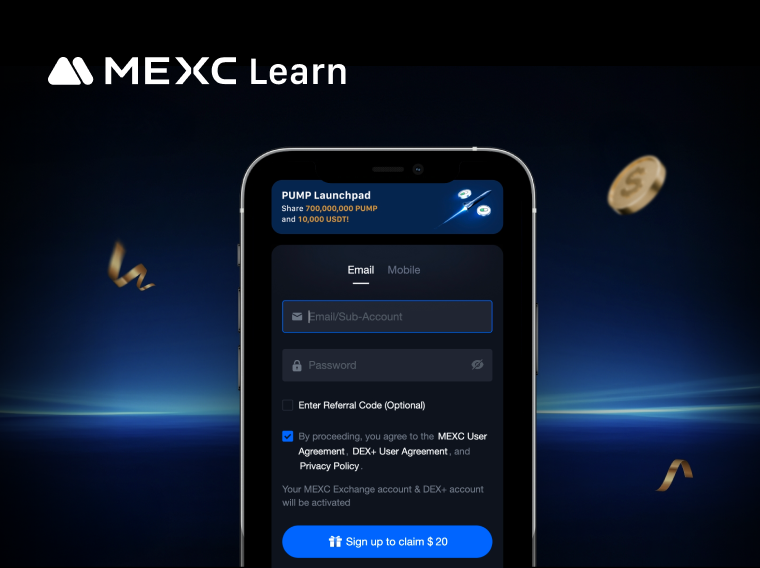
How to Access MEXC via H5
- Sign Up for a New Account Step 1: Visit the MEXC official website from your device's browser. Step 2: Tap Sign Up Now and complete the following: 1)Enter your email address 2)Set your password
Latest Updates on Humanity
View More
Humanity Protocol Price Explodes 40% as Whale Activity Spike: Next Move Loading?

Humanity Protocol up 80% from April lows: Can bulls keep H rising?

USS George H.W. Bush enters Indian Ocean, three US carriers in Middle East
HOT
Currently trending cryptocurrencies that are gaining significant market attention
Crypto Prices
The cryptocurrencies with the highest trading volume
Newly Added
Recently listed cryptocurrencies that are available for trading