


Pudgy Penguins (PENGU) evolved from a single digital art drop into a multi‑faceted Web3 brand that bridges collectible NFTs, physical merchandise, and a native token designed to align community incentives and on‑chain utility. This article explains the origin and design of the original 8,888 Ethereum NFT collection, the brand's real‑world expansions, the technical and economic mechanics of the PENGU ERC‑20 token, the December 2024 token allocation event and claiming process, how PENGU is distributed through MEXC programs, and what these developments mean for holders and the broader NFT ecosystem.
Key Highlights of Pudgy Penguins (PENGU)
Pudgy Penguins began as a collection of 8,888 distinctive cartoon penguin NFTs launched on Ethereum and has since grown into a broader Web3 platform that intentionally blends virtual ownership with offline consumer products and experiences. The project's roadmap progressed from collectible art to licensing, retail distribution of toys and apparel, and interactive experiences such as browser games, all aimed at driving mainstream recognition and sustained community engagement. In late 2024 the team introduced an ERC‑20 token, PENGU, to formalize economic utility across the ecosystem; the token allocation that December represented a large distribution event targeting original NFT holders, derivative collections, and eligible participants—establishing token‑based access, governance potential, and incentive mechanisms for community growth.
Getting Started with Pudgy Penguins
For newcomers, Pudgy Penguins is best understood as a branded NFT family with an active collector community and a roadmap of product and platform extensions. The 8,888 collection—created and deployed on Ethereum in July 2021—provided the cultural foundation and IP that enabled subsequent licensing and product deals; ownership conferred not only collectible status but also broad commercial rights, enabling holders to create derivative works and merchandise tied to their NFTs. The PENGU token's launch marks a strategic shift from purely cultural value toward tokenized utility: PENGU introduces mechanisms for distributing rewards, granting access to exclusive drops or experiences, and aligning economic incentives for contributors and long‑term community participants.
Understanding the Original NFT Series
The original Pudgy Penguins set consists of 8,888 unique avatars minted on Ethereum in mid‑2021, each defined by a set of visual attributes—feather patterns, clothing and accessory adornments, facial expressions, and background scenes—that determine rarity and collector appeal. Scarcity is structural: only 8,888 originals exist, and trait combinations produce rarer variants that historically drove secondary‑market demand. Early popularity stemmed from an accessible, whimsical aesthetic, active community engagement across socials, and timing within the 2021 NFT market cycle, which together elevated the collection's cultural status and made it a recognizable brand in the NFT space. That cultural momentum later supported product licensing and helped justify tokenization as a path to broaden participation.
Physical Expansion and Brand Development
Pudgy Penguins deliberately expanded into physical merchandise and mainstream retail to reach audiences beyond crypto‑native collectors. The brand licensed toys, apparel, and collectibles—some distributed through major retail channels—and invested in marketing campaigns designed to build consumer awareness outside Web3 communities. Importantly, the project's intellectual property framework grants NFT owners commercial usage rights for their individual penguin images, enabling community entrepreneurs to design and sell derivative products legally under those owner‑rights terms. This ecosystem approach—combining community events, branded retail products, and licensed partnerships—creates multiple revenue channels (merchandise, licensing, games) and reduces dependence on any single income source while reinforcing brand visibility and real‑world relevance.
Understanding the PENGU Token Mechanics
PENGU is an ERC‑20 token intended to introduce fungible economic utility across the Pudgy Penguins ecosystem and to interact with DeFi and community governance flows. As an ERC‑20 on Ethereum, PENGU can integrate with wallets, decentralized finance protocols, and on‑chain governance modules where the team or community implements them. Core utilities described by the project include access to exclusive experiences or drops, participation in governance or voting mechanisms, staking or incentive programs that reward ecosystem contributors, and use as a medium in community initiatives that require fungible tokens for allocation or redemption. The token's design aims to create mutual incentives: collectors and community members gain tokenized access and rewards, while the project secures a liquid instrument to distribute incentives and coordinate collective activity.
Token Allocation Details (December 2024)
The December 2024 allocation event distributed PENGU to a wide set of participants and is notable for its scale within the NFT sector. Eligibility criteria prioritized original Pudgy Penguins holders and owners of affiliated collections such as the Lil Penguins series, while also reserving allocations for broader NFT community participants and project contributors. The event featured a defined claiming window during which eligible wallets could claim token allocations via the project's authorized claim portal; unclaimed tokens after the deadline were permanently burned to tighten circulating supply and incentivize timely claims, per the project's public communications about the allocation mechanics. This allocation sought to reward historical supporters while enabling new holders to participate via secondary eligibility routes established by the team.
Claiming Your PENGU Tokens: A Complete Walkthrough
Claiming PENGU requires using the official claim interface published by the Pudgy Penguins team and following a structured wallet‑based verification process. Steps include connecting the wallet holding qualifying NFTs, confirming eligibility through on‑chain checks (smart contract proof that a given address owns an eligible token), and completing any cryptographic signature or CAPTCHA steps required by the portal to prove control of the wallet. Because PENGU supports cross‑chain delivery mechanics (notably Ethereum and Solana support discussed during the token rollout), claimants may need to provide a Solana wallet address if the distribution path delivers tokens on Solana or if a wrapped bridging mechanism is used. Optional profile setup and KYC or anti‑fraud checks may apply depending on the distribution stage and regional regulatory requirements; always follow the official instructions on the project's claim page to avoid phishing attempts and verify the URL before connecting a wallet.
PENGU Distribution Through MEXC Programs
PENGU participates in several MEXC distribution and listing initiatives that facilitate token accessibility for exchange users. Distribution through MEXC typically includes snapshot‑based allocations (where token eligibility is computed from recorded on‑chain holdings at a snapshot time) and automatic rewards or airdrops tied to participation in MEXC earning products or holding tokens in designated accounts. Allocation through MEXC's programs is often proportional to user holdings in a given snapshot or product, and once distributed on the exchange, PENGU is usually available for immediate trading on supported pairs within MEXC's platform. Leveraging MEXC's ecosystem can therefore provide liquidity and simplified custody for users who prefer to keep assets within a centralized venue for trading or earning utilities, while the project's official claim portal remains the authoritative method for on‑chain eligibility claims.
Final Thoughts
Pudgy Penguins illustrates a path from iconic NFT drop to diversified Web3 brand: a 2021 art collection provided cultural capital and IP that the team translated into physical products, interactive experiences, and a tokenized economic layer with PENGU. The token launch and December 2024 allocation marked a significant step toward formalizing incentives and broadening participation beyond pure collectors to token holders who can access rewards, governance options, and ecosystem benefits. For holders and observers, the project's mix of on‑chain verifiability, real‑world licensing, and exchange distribution (including programs on MEXC) offers a model of how NFT projects can create sustainable business channels while preserving community ownership rights.
Frequently Asked Questions
How do Pudgy Penguins work? Pudgy Penguins began as 8,888 unique NFTs with trait‑based rarity on Ethereum; community culture, visual design, and scarcity underpinned early valuation and engagement.
What is the purpose of PENGU? PENGU is an ERC‑20 token that provides utility such as access to exclusive drops, community incentives, potential governance participation, and integration with DeFi or staking programs as determined by the project's roadmap.
What sets Pudgy Penguins apart from other NFT projects? Distinguishing features include a strong visual identity, active licensing and retail partnerships that extend the brand offline, commercial rights granted to holders, and a concerted move to tokenize ecosystem utility—factors that combine cultural appeal with business diversification.
Note: This article synthesizes information from Pudgy Penguins' public announcements and industry reporting; for the most current details about token economics, claiming windows, or partnership programs on MEXC, consult Pudgy Penguins' official communications and MEXC's platform notices before taking action.
Description:Crypto Pulse is powered by AI and public sources to bring you the hottest token trends instantly. For expert insights and in-depth analysis, visit MEXC Learn.
The articles shared on this page are sourced from public platforms and are provided for informational purposes only. They do not necessarily represent the views of MEXC. All rights remain with the original authors. If you believe any content infringes upon third-party rights, please contact [email protected] for prompt removal.
MEXC does not guarantee the accuracy, completeness, or timeliness of any content and is not responsible for any actions taken based on the information provided. The content does not constitute financial, legal, or other professional advice, nor should it be interpreted as a recommendation or endorsement by MEXC.
Latest Updates on Pudgy Penguins
View More
PENGU and APE Dominate NFT Social Engagement as Community Activity Indicates Market Strength
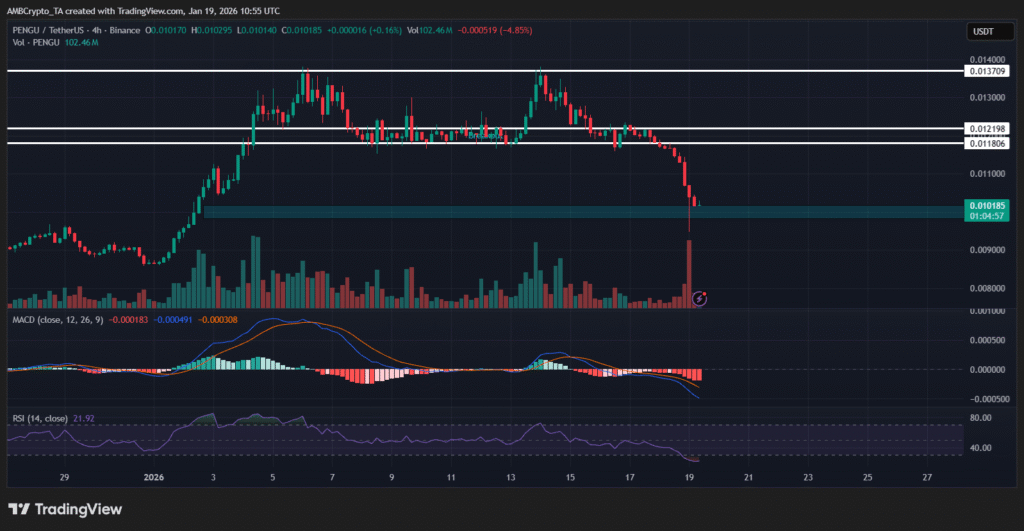
PENGU Price Falls Below $0.011 as Manchester City Partnership Hype Fades

Moonbirds jumps 94% in 2 days – Can BIRB replicate PENGU’s $1B run?
HOT
Currently trending cryptocurrencies that are gaining significant market attention
Crypto Prices
The cryptocurrencies with the highest trading volume
Newly Added
Recently listed cryptocurrencies that are available for trading