BitcoinWorld Quantum Threat to Satoshi’s BTC: The Crypto Community’s Fierce Debate Over 1.1 Million Bitcoin Imagine waking up to news that Satoshi Nakamoto’s legendaryBitcoinWorld Quantum Threat to Satoshi’s BTC: The Crypto Community’s Fierce Debate Over 1.1 Million Bitcoin Imagine waking up to news that Satoshi Nakamoto’s legendary

Quantum Threat to Satoshi’s BTC: The Crypto Community’s Fierce Debate Over 1.1 Million Bitcoin
2025/12/15 06:55
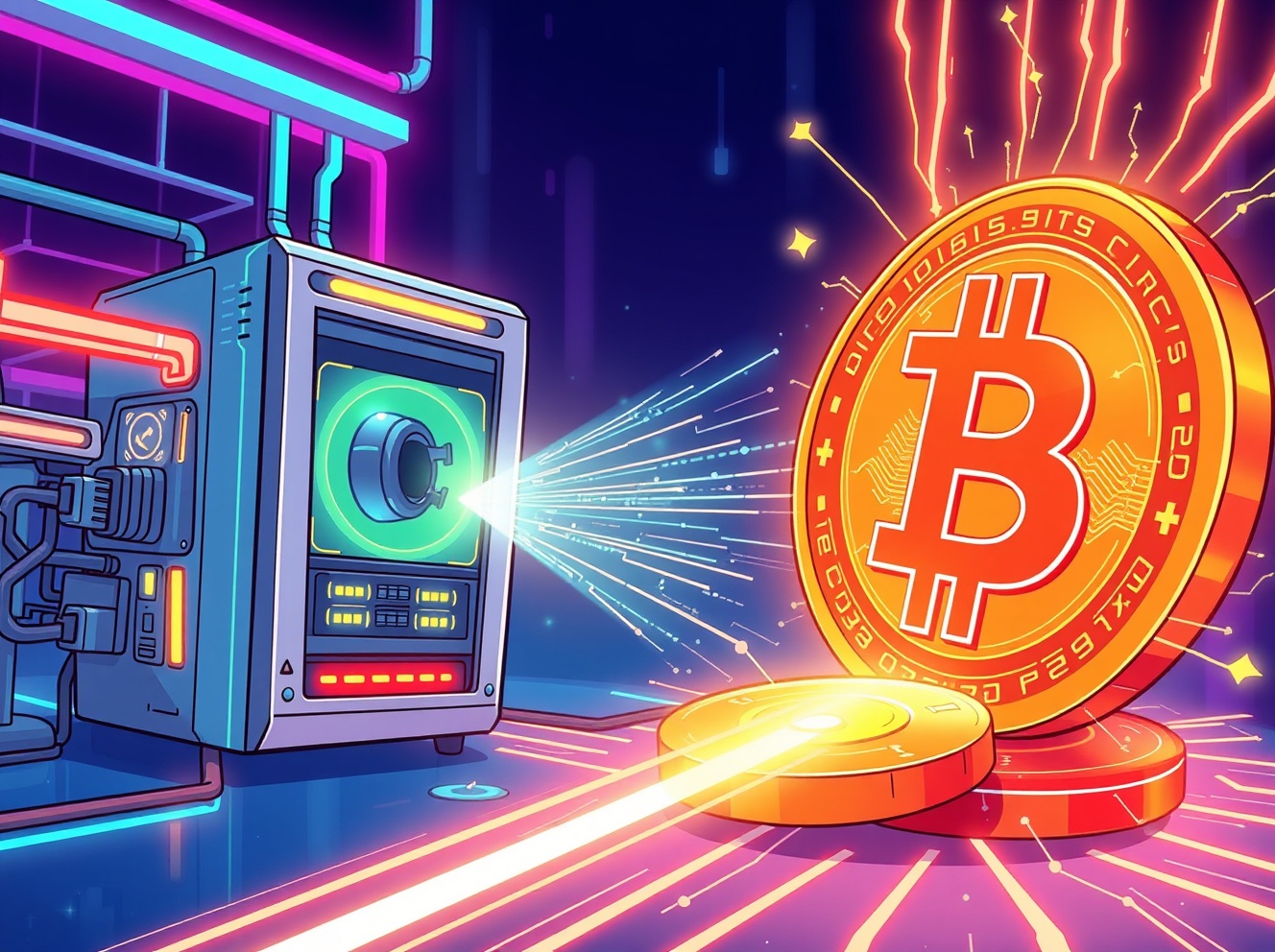
Cartoon illustration of quantum threat to Satoshi's BTC showing a futuristic computer attacking a protected Bitcoin coin

BitcoinWorld

Quantum Threat to Satoshi’s BTC: The Crypto Community’s Fierce Debate Over 1.1 Million Bitcoin

Imagine waking up to news that Satoshi Nakamoto’s legendary 1.1 million Bitcoin stash has been compromised. This isn’t science fiction—it’s a real debate shaking the cryptocurrency community right now. The quantum threat to Satoshi’s BTC has become one of the most heated discussions in crypto circles, dividing experts and investors alike. Let’s explore what’s really at stake.

What Exactly Is the Quantum Threat to Satoshi’s BTC?

The core concern revolves around quantum computers potentially breaking the cryptographic security protecting early Bitcoin addresses. According to on-chain analyst Willy Woo, approximately four million BTC held in addresses using the Pay-to-Public-Key (P2PK) standard could be vulnerable. However, the quantum threat to Satoshi’s BTC specifically targets those legendary untouched coins mined during Bitcoin’s earliest days.

YouTuber Josh Otten sparked recent discussions by suggesting such a breach could crash Bitcoin’s price to just $3. While this sounds extreme, it highlights how seriously some community members take this potential vulnerability. The quantum threat to Satoshi’s BTC isn’t just about technical security—it’s about market psychology and the very foundation of Bitcoin’s value proposition.

Why Is This Debate So Polarizing?

The cryptocurrency community remains deeply divided on this issue. On one side, technical experts like Adam Back, CEO of Blockstream, argue we have decades before quantum computers pose a realistic threat. He emphasizes that post-quantum cryptography already exists, giving the Bitcoin network ample time to implement necessary upgrades.

However, other voices sound more urgent alarms. James Check, lead on-chain analyst at Glassnode, focuses on psychological risks rather than technical ones. He believes any movement of Satoshi’s coins would:

  • Severely damage market sentiment
  • Trigger immediate price collapse
  • Create impossible consensus challenges for preemptive measures

The quantum threat to Satoshi’s BTC therefore represents a perfect storm of technical vulnerability and market psychology.

Could Bitcoin Survive a Quantum Attack?

Interestingly, most experts agree Bitcoin would likely survive even if the quantum threat to Satoshi’s BTC became reality. Willy Woo notes that while price would plummet initially, original long-term holders might buy during the sharp decline, providing market support. The network itself—the blockchain, the mining protocol, the transaction verification system—would remain intact.

What makes the quantum threat to Satoshi’s BTC particularly challenging is the community’s inability to agree on preventive measures. As James Check pointed out, reaching consensus about what to do with these legendary holdings is virtually impossible. This creates a unique vulnerability where technical solutions exist but political will doesn’t.

What Are the Real Timelines and Solutions?

Let’s separate science fiction from reality. Current quantum computers lack the processing power to break Bitcoin’s cryptography. Most estimates suggest we’re 10-30 years away from that capability. During that time, several protective measures could be implemented:

  • Post-quantum cryptography upgrades to the Bitcoin protocol
  • Address migration initiatives for vulnerable P2PK holdings
  • Community education about quantum-resistant practices
  • Layer-2 solutions with enhanced quantum security

The quantum threat to Satoshi’s BTC serves as an important reminder that cryptocurrency security must evolve continuously. While the immediate risk appears low, the discussion pushes developers to create more resilient systems.

Conclusion: Vigilance Without Panic

The quantum threat to Satoshi’s BTC represents one of cryptocurrency’s most fascinating dilemmas. It combines legendary early Bitcoin history with cutting-edge technological risks and profound market psychology questions. While experts debate timelines and probabilities, one thing remains clear: the Bitcoin community must balance vigilance against potential threats with confidence in the network’s adaptability.

Rather than fearing the quantum threat to Satoshi’s BTC, we should view it as motivation for continued innovation. The same adaptive spirit that created Bitcoin can surely protect it from future challenges.

Frequently Asked Questions

What makes Satoshi’s Bitcoin vulnerable to quantum attacks?

Satoshi’s early coins use the Pay-to-Public-Key (P2PK) transaction format, which could theoretically be vulnerable to quantum computers that can derive private keys from public addresses.

How soon could quantum computers break Bitcoin’s security?

Most experts estimate 10-30 years before quantum computers develop sufficient power. The timeline remains uncertain and depends on quantum computing advancements.

Would Bitcoin’s price really crash to $3 if Satoshi’s coins moved?

While some predictions are extreme, most analysts agree any movement of Satoshi’s holdings would cause significant price volatility due to psychological impact rather than supply changes.

Can Bitcoin upgrade to be quantum-resistant?

Yes, post-quantum cryptography solutions already exist and could be implemented through a Bitcoin protocol upgrade when necessary.

What should Bitcoin holders do about quantum threats?

Regular users should ensure they use modern address formats (like SegWit or Taproot) and stay informed about protocol developments. No immediate action is needed for most holders.

Are other cryptocurrencies vulnerable to quantum attacks?

Most blockchain networks using similar cryptographic methods face comparable theoretical risks, though implementation details vary between different cryptocurrencies.

Found this analysis of the quantum threat to Satoshi’s BTC valuable? Share this article with fellow cryptocurrency enthusiasts on social media to spread awareness about this crucial security discussion. Your shares help educate the community about both risks and solutions in the evolving crypto landscape.

To learn more about the latest Bitcoin security trends, explore our article on key developments shaping Bitcoin institutional adoption and long-term security protocols.

This post Quantum Threat to Satoshi’s BTC: The Crypto Community’s Fierce Debate Over 1.1 Million Bitcoin first appeared on BitcoinWorld.

Market Opportunity
QUANTUM Logo
QUANTUM Price(QUANTUM)
$0.003207
$0.003207$0.003207
+3.88%
USD
QUANTUM (QUANTUM) Live Price Chart
Disclaimer: The articles reposted on this site are sourced from public platforms and are provided for informational purposes only. They do not necessarily reflect the views of MEXC. All rights remain with the original authors. If you believe any content infringes on third-party rights, please contact [email protected] for removal. MEXC makes no guarantees regarding the accuracy, completeness, or timeliness of the content and is not responsible for any actions taken based on the information provided. The content does not constitute financial, legal, or other professional advice, nor should it be considered a recommendation or endorsement by MEXC.

You May Also Like

Volante Technologies Customers Successfully Navigate Critical Regulatory Deadlines for EU SEPA Instant and Global SWIFT Cross-Border Payments

Volante Technologies Customers Successfully Navigate Critical Regulatory Deadlines for EU SEPA Instant and Global SWIFT Cross-Border Payments

PaaS leader ensures seamless migrations and uninterrupted payment operations LONDON–(BUSINESS WIRE)–Volante Technologies, the global leader in Payments as a Service
Share
AI Journal2025/12/16 17:16
Fed Acts on Economic Signals with Rate Cut

Fed Acts on Economic Signals with Rate Cut

In a significant pivot, the Federal Reserve reduced its benchmark interest rate following a prolonged ten-month hiatus. This decision, reflecting a strategic response to the current economic climate, has captured attention across financial sectors, with both market participants and policymakers keenly evaluating its potential impact.Continue Reading:Fed Acts on Economic Signals with Rate Cut
Share
Coinstats2025/09/18 02:28
Google's AP2 protocol has been released. Does encrypted AI still have a chance?

Google's AP2 protocol has been released. Does encrypted AI still have a chance?

Following the MCP and A2A protocols, the AI Agent market has seen another blockbuster arrival: the Agent Payments Protocol (AP2), developed by Google. This will clearly further enhance AI Agents' autonomous multi-tasking capabilities, but the unfortunate reality is that it has little to do with web3AI. Let's take a closer look: What problem does AP2 solve? Simply put, the MCP protocol is like a universal hook, enabling AI agents to connect to various external tools and data sources; A2A is a team collaboration communication protocol that allows multiple AI agents to cooperate with each other to complete complex tasks; AP2 completes the last piece of the puzzle - payment capability. In other words, MCP opens up connectivity, A2A promotes collaboration efficiency, and AP2 achieves value exchange. The arrival of AP2 truly injects "soul" into the autonomous collaboration and task execution of Multi-Agents. Imagine AI Agents connecting Qunar, Meituan, and Didi to complete the booking of flights, hotels, and car rentals, but then getting stuck at the point of "self-payment." What's the point of all that multitasking? So, remember this: AP2 is an extension of MCP+A2A, solving the last mile problem of AI Agent automated execution. What are the technical highlights of AP2? The core innovation of AP2 is the Mandates mechanism, which is divided into real-time authorization mode and delegated authorization mode. Real-time authorization is easy to understand. The AI Agent finds the product and shows it to you. The operation can only be performed after the user signs. Delegated authorization requires the user to set rules in advance, such as only buying the iPhone 17 when the price drops to 5,000. The AI Agent monitors the trigger conditions and executes automatically. The implementation logic is cryptographically signed using Verifiable Credentials (VCs). Users can set complex commission conditions, including price ranges, time limits, and payment method priorities, forming a tamper-proof digital contract. Once signed, the AI Agent executes according to the conditions, with VCs ensuring auditability and security at every step. Of particular note is the "A2A x402" extension, a technical component developed by Google specifically for crypto payments, developed in collaboration with Coinbase and the Ethereum Foundation. This extension enables AI Agents to seamlessly process stablecoins, ETH, and other blockchain assets, supporting native payment scenarios within the Web3 ecosystem. What kind of imagination space can AP2 bring? After analyzing the technical principles, do you think that's it? Yes, in fact, the AP2 is boring when it is disassembled alone. Its real charm lies in connecting and opening up the "MCP+A2A+AP2" technology stack, completely opening up the complete link of AI Agent's autonomous analysis+execution+payment. From now on, AI Agents can open up many application scenarios. For example, AI Agents for stock investment and financial management can help us monitor the market 24/7 and conduct independent transactions. Enterprise procurement AI Agents can automatically replenish and renew without human intervention. AP2's complementary payment capabilities will further expand the penetration of the Agent-to-Agent economy into more scenarios. Google obviously understands that after the technical framework is established, the ecological implementation must be relied upon, so it has brought in more than 60 partners to develop it, almost covering the entire payment and business ecosystem. Interestingly, it also involves major Crypto players such as Ethereum, Coinbase, MetaMask, and Sui. Combined with the current trend of currency and stock integration, the imagination space has been doubled. Is web3 AI really dead? Not entirely. Google's AP2 looks complete, but it only achieves technical compatibility with Crypto payments. It can only be regarded as an extension of the traditional authorization framework and belongs to the category of automated execution. There is a "paradigm" difference between it and the autonomous asset management pursued by pure Crypto native solutions. The Crypto-native solutions under exploration are taking the "decentralized custody + on-chain verification" route, including AI Agent autonomous asset management, AI Agent autonomous transactions (DeFAI), AI Agent digital identity and on-chain reputation system (ERC-8004...), AI Agent on-chain governance DAO framework, AI Agent NPC and digital avatars, and many other interesting and fun directions. Ultimately, once users get used to AI Agent payments in traditional fields, their acceptance of AI Agents autonomously owning digital assets will also increase. And for those scenarios that AP2 cannot reach, such as anonymous transactions, censorship-resistant payments, and decentralized asset management, there will always be a time for crypto-native solutions to show their strength? The two are more likely to be complementary rather than competitive, but to be honest, the key technological advancements behind AI Agents currently all come from web2AI, and web3AI still needs to keep up the good work!
Share
PANews2025/09/18 07:00