US Dollar Index Plunges Below 100: Central Bank Rate Pause Sparks Historic Forex Shift
BitcoinWorld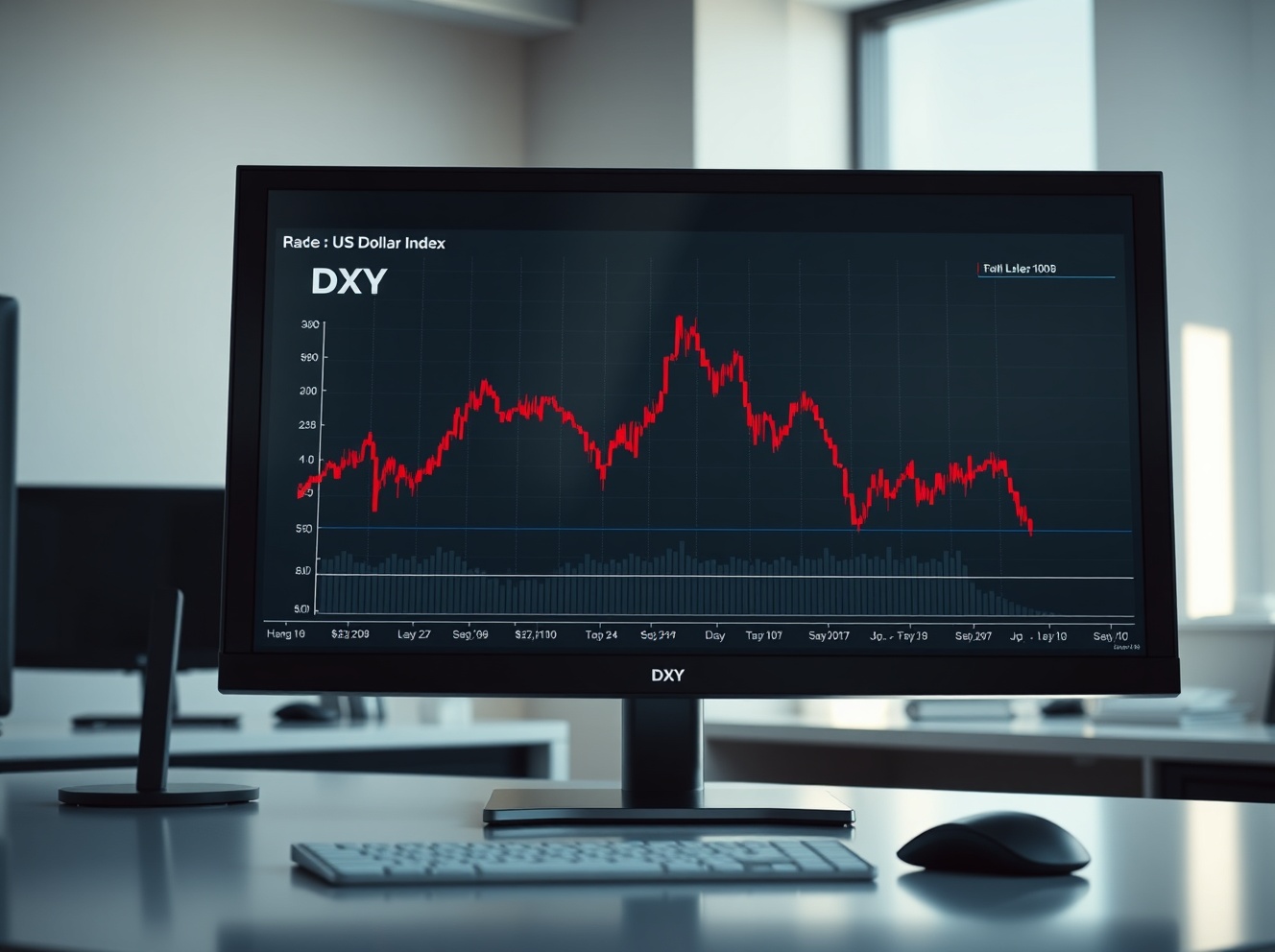
US Dollar Index Plunges Below 100: Central Bank Rate Pause Sparks Historic Forex Shift
In a landmark move for global currency markets, the US Dollar Index (DXY) has decisively broken below the psychologically significant 100 level. This pivotal shift follows coordinated decisions by major central banks, including the Federal Reserve, the European Central Bank, and the Bank of England, to hold their benchmark interest rates steady. Consequently, traders are now reassessing long-held strategies as the dollar’s multi-year dominance shows clear signs of receding.
US Dollar Index Breakdown: Analyzing the Technical Fall
The US Dollar Index measures the dollar’s strength against a basket of six major world currencies. For over a decade, the 100 level has served as a crucial support and resistance zone. Breaking below it signals a fundamental change in market sentiment. Market analysts point to several immediate catalysts for this decline. First, the Federal Reserve’s latest policy statement indicated a definitive pause in its tightening cycle. Second, comparatively hawkish tones from other central banks narrowed the interest rate differential that had favored the dollar. Finally, improving economic data from key regions like the Eurozone reduced the dollar’s traditional ‘safe-haven’ appeal.
Technical chart patterns now reveal a clear bearish structure. The 50-day and 200-day moving averages have crossed into a ‘death cross’ formation. Furthermore, trading volume spiked significantly during the breakdown, confirming the move’s strength. Key support levels now lie near 98.50, a zone not tested since early 2023. Market participants are closely watching these levels for any potential consolidation or further decline.
Central Bank Policy Convergence Reshapes Forex Landscape
The synchronized pause in rate hikes marks a new phase in global monetary policy. For nearly two years, the Federal Reserve’s aggressive tightening cycle propelled the dollar higher. Now, with inflation showing sustained signs of cooling, the policy divergence that powered the dollar’s rally has evaporated. The European Central Bank, while also on hold, maintains a slightly more cautious stance on inflation. Similarly, the Bank of England faces persistent domestic price pressures. This convergence, rather than divergence, removes a primary engine of dollar strength.
Historical data illustrates the impact of such shifts. The table below compares key rate differentials before and after the recent central bank meetings:
| Currency Pair | Rate Diff (Oct 2024) | Rate Diff (Current) | Change |
|---|---|---|---|
| USD vs EUR | +1.25% | +0.75% | -0.50% |
| USD vs GBP | +0.75% | +0.25% | -0.50% |
| USD vs JPY | +4.50% | +4.00% | -0.50% |
This narrowing directly reduces the yield advantage for holding US dollar-denominated assets. As a result, international investors have less incentive to flock to the dollar, leading to capital outflows and downward pressure on the DXY.
Expert Analysis on Market Implications
Senior currency strategists from major investment banks highlight the broader implications. “This isn’t just a technical correction,” notes one chief FX strategist cited in a Reuters analysis. “It reflects a recalibration of long-term growth and rate expectations. Markets are now pricing in a scenario where US economic outperformance is less pronounced.” This view is supported by recent adjustments in futures markets, where bets on Fed rate cuts have increased for 2025. The shift also alleviates pressure on emerging market currencies and commodities priced in dollars, potentially fostering more stable global trade conditions.
Global Currency Reactions and Trader Positioning
The dollar’s weakness has created clear winners in the forex market. Major currencies have appreciated significantly against the greenback. The Euro (EUR/USD) breached the 1.1000 resistance level, reaching its highest point in over a year. The British Pound (GBP/USD) also rallied strongly, testing the 1.3000 area. Perhaps most notably, the Japanese Yen (USD/JPY) saw substantial gains as the wide interest rate gap began to compress, easing the burden on the Bank of Japan’s yield curve control policy.
Commitment of Traders (COT) reports from the Commodity Futures Trading Commission reveal a dramatic shift in market positioning. Data shows:
- Net long positions on the US dollar have fallen to their lowest level since 2021.
- Speculative bets on Euro strength have reached a multi-year high.
- Hedge funds have rapidly unwinded carry trades that relied on a strong dollar.
This rapid repositioning suggests the move is driven by both fundamental reassessment and technical momentum, creating a self-reinforcing cycle. Retail traders, therefore, face a markedly different environment, where strategies predicated on a perpetually strong dollar require urgent review.
Historical Context and the Path Forward for the DXY
The last sustained period below 100 for the US Dollar Index occurred in the mid-2010s. During that era, global growth was more synchronized, and US monetary policy was exceptionally accommodative. Analysts are careful not to draw direct parallels but acknowledge that structural factors are now at play. Key factors to monitor include:
- The trajectory of US inflation and employment data.
- Geopolitical developments affecting capital flows.
- The fiscal outlook and debt dynamics of the United States.
- The speed and scale of rate cuts priced into other major economies.
Market consensus, as reflected in analyst surveys, now leans toward a period of range-bound trading for the dollar, albeit at a lower baseline. The immediate risk is a technical rebound, but the fundamental backdrop suggests the era of relentless dollar appreciation has likely concluded. This creates new opportunities in currency pairs that were previously suppressed by dollar strength.
Conclusion
The breach of the 100 level by the US Dollar Index represents a significant inflection point for global finance. Driven by a convergence in global central bank policies and a reassessment of relative economic strength, this move reshapes the landscape for currency traders, multinational corporations, and policymakers alike. While volatility may continue as markets digest this new paradigm, the decisive break below a key decade-long support level signals a historic shift. The performance of the US Dollar Index will now depend on incoming economic data and the evolving narrative around the timing of the next global monetary policy cycle.
FAQs
Q1: What is the US Dollar Index (DXY)?
The US Dollar Index is a measure of the value of the United States dollar relative to a basket of six major foreign currencies: the Euro, Japanese Yen, British Pound, Canadian Dollar, Swedish Krona, and Swiss Franc. It provides a broad gauge of the dollar’s international strength.
Q2: Why is the 100 level so important for the DXY?
The 100 level is a major psychological and technical benchmark. It has acted as a key support and resistance zone for over a decade. A sustained break below it is widely interpreted by traders and analysts as a signal of a fundamental bearish shift in the dollar’s long-term trend.
Q3: Which central banks held rates, and why does that weaken the dollar?
The Federal Reserve, European Central Bank, and Bank of England all held their policy rates steady. This weakens the dollar because it narrows the ‘interest rate differential’—the extra yield investors get for holding dollars. When that advantage shrinks, demand for the currency often falls.
Q4: Which currencies benefit most from a weaker US Dollar Index?
Major currencies like the Euro (EUR) and British Pound (GBP) typically see direct appreciation. Emerging market currencies and commodities priced in dollars (like gold and oil) also often benefit, as they become cheaper for holders of other currencies.
Q5: What should forex traders watch next after this move?
Traders should monitor upcoming US inflation (CPI) and jobs data for clues on the Fed’s next move. They should also watch for any shift in rhetoric from other central banks and track key technical support levels for the DXY, such as 98.50, for signs of stabilization or further decline.
This post US Dollar Index Plunges Below 100: Central Bank Rate Pause Sparks Historic Forex Shift first appeared on BitcoinWorld.
You May Also Like

CEO Sandeep Nailwal Shared Highlights About RWA on Polygon

Velo protocol Integrates SumPlus to Power AI-Driven Finance