BitcoinWorld Talat’s Revolutionary AI Meeting Notes App Secures Your Privacy with Local-Only Processing In an era where cloud-based AI services dominate the productivityBitcoinWorld Talat’s Revolutionary AI Meeting Notes App Secures Your Privacy with Local-Only Processing In an era where cloud-based AI services dominate the productivity

Talat’s Revolutionary AI Meeting Notes App Secures Your Privacy with Local-Only Processing

2026/03/25 03:30
7 min read
For feedback or concerns regarding this content, please contact us at [email protected]

BitcoinWorld
BitcoinWorld
Talat’s Revolutionary AI Meeting Notes App Secures Your Privacy with Local-Only Processing

In an era where cloud-based AI services dominate the productivity landscape, a groundbreaking Mac application called Talat emerges with a compelling proposition: your meeting notes, transcriptions, and summaries never leave your computer. Developed by Yorkshire-based programmer Nick Payne, this $49 one-time purchase application represents a significant shift toward privacy-conscious AI tools that prioritize user data sovereignty over cloud convenience.

Talat’s AI Meeting Notes Revolutionize Privacy Standards

The AI-powered notetaking market has experienced explosive growth recently, with industry leader Granola achieving a $250 million valuation through its popular subscription service. However, Talat developer Nick Payne identified a critical gap in this expanding market. “While hosted transcription models deliver impressive results,” Payne explained in an exclusive interview, “the tradeoff requires providing not just my data, but my audio data; my actual voice.” This fundamental privacy concern drove Payne to create an alternative that processes everything locally on users’ Mac computers.

Traditional AI notetaking applications typically route audio through cloud servers for processing. Consequently, sensitive business discussions, confidential negotiations, and personal conversations pass through third-party infrastructure. Talat completely eliminates this vulnerability by performing all transcription and summarization directly on the user’s device. The application leverages Apple’s Neural Engine hardware specifically designed for on-device AI processing.

The Technical Breakthrough Behind Local AI Processing

Payne’s journey to creating Talat began with what he describes as “a series of happy accidents.” Initially fascinated by how applications could capture system audio without video recording, Payne discovered Apple’s Core Audio Taps API. This relatively undocumented interface allows developers to access Mac audio streams directly. To simplify working with this technology, Payne created AudioTee, an open-source audio library that formed the foundation for his subsequent work.

The real breakthrough arrived when Payne encountered FluidAudio, a Swift framework enabling fully local, low-latency audio AI on Apple devices. This technology allows small, efficient transcription models to run directly on Mac hardware. “FluidAudio does a lot of the heavy lifting,” Payne noted, describing how it abstracts complex audio processing tasks. The framework makes it possible to achieve near real-time transcription without sending data to external servers.

Architecture and Performance Considerations

Talat’s architecture represents a sophisticated balance between performance and privacy. The 20MB application defaults to using Qwen3-4B-4bit for summarization tasks, a model optimized to run efficiently on Apple’s M-series processors. Remarkably, this model functions effectively even on modest hardware configurations. For transcription, users can select between two Parakeet variants developed by Nvidia or configure custom models through Ollama integration.

The application’s configurability extends beyond model selection. Users maintain complete control over their data pipeline through features including automatic export to Obsidian, webhook notifications when meetings conclude, and MCP server integration for on-demand data access. This flexibility distinguishes Talat from more rigid, cloud-dependent alternatives.

Privacy Implications in the AI Productivity Space

The privacy-focused approach of Talat arrives at a critical moment in technology adoption. Recent surveys indicate growing concern among professionals about data sovereignty, particularly in regulated industries like finance, healthcare, and legal services. Cloud-based AI services typically retain transcripts for model improvement and quality assurance, creating potential compliance issues for sensitive discussions.

Industry analyst Michael Chen observes, “The shift toward local AI processing represents more than a technical preference—it’s becoming a business necessity for organizations handling confidential information.” This trend aligns with broader movements toward edge computing and decentralized data processing across multiple technology sectors.

Comparison: Cloud vs. Local AI Meeting Notes
Feature Cloud-Based Solutions Talat (Local Processing)
Data Storage Company servers User’s device only
Subscription Model Monthly/Annual fees One-time purchase
Internet Requirement Mandatory Optional for some features
Account Creation Required Not required
Data for Training Often used Never used

Market Position and User Experience

Talat enters a competitive landscape dominated by feature-rich cloud services. While applications like Granola offer extensive integrations and advanced capabilities, Talat focuses on core functionality with uncompromising privacy. The application captures audio from meeting platforms including Zoom, Microsoft Teams, and Google Meet, providing real-time transcription with speaker identification.

Key features include:

  • Real-time transcription with editable speaker assignments
  • Local LLM summarization generating key points and action items
  • Full search functionality across notes, transcripts, and summaries
  • Segment editing and organization tools for post-meeting refinement
  • Export capabilities to popular note-taking applications

Currently available as a pre-release version for $49, Talat offers 10 free recording hours for evaluation. The application requires M-series Mac computers (M1 or later) to leverage Apple’s Neural Engine hardware. Upon reaching version 1.0, the price will increase to $99, though Payne and co-developer Mike Franklin commit to maintaining the one-time purchase model for the core application.

Future Development Roadmap

The development team plans several enhancements for upcoming releases. Planned integrations include Google Calendar synchronization and Notion connectivity, expanding Talat’s utility within existing productivity ecosystems. Additionally, the developers intend to add more built-in model options and refine the user interface based on early adopter feedback.

Payne emphasizes that Talat’s development philosophy centers on user control. “We’re leaning into configurability and letting users control where their data goes,” he explained. This approach contrasts sharply with the walled-garden ecosystems common in productivity software, potentially appealing to users seeking greater autonomy over their digital tools.

Broader Industry Implications

Talat’s emergence signals a potential inflection point in AI application development. As privacy regulations tighten globally and user awareness increases, demand for locally-processed AI tools may accelerate. This trend could pressure established cloud-based providers to offer enhanced privacy options or develop their own local processing alternatives.

Technology ethicist Dr. Anya Sharma comments, “Applications like Talat demonstrate that privacy and functionality aren’t mutually exclusive. They provide a viable alternative for users who value data sovereignty, potentially influencing how larger companies approach product development in this space.”

The success of privacy-focused applications could reshape investment patterns in the AI sector. While venture capital has predominantly flowed toward cloud-centric models, Talat’s bootstrapped development demonstrates alternative pathways for creating sustainable AI businesses.

Conclusion

Talat’s AI meeting notes application represents a significant advancement in privacy-conscious productivity tools. By processing all data locally on users’ Mac computers, the application addresses growing concerns about cloud-based AI services while delivering practical functionality for professionals. The one-time purchase model further distinguishes Talat from subscription-based alternatives, offering long-term value for users seeking reliable meeting documentation without ongoing fees.

As AI integration deepens across workplace tools, solutions prioritizing user privacy and data sovereignty will likely gain importance. Talat’s approach demonstrates that technical innovation can align with ethical data practices, potentially influencing broader industry standards for AI-powered applications. For professionals handling sensitive information or simply preferring greater control over their digital footprint, Talat offers a compelling alternative in the increasingly crowded AI productivity landscape.

FAQs

Q1: How does Talat ensure privacy compared to cloud-based alternatives?
Talat processes all audio transcription and summarization directly on your Mac using Apple’s Neural Engine. Your data never leaves your device, eliminating the privacy risks associated with cloud processing where audio and transcripts typically pass through third-party servers.

Q2: What are the system requirements for running Talat?
Talat requires a Mac with an M-series processor (M1 or later) to leverage Apple’s Neural Engine hardware for efficient local AI processing. The application is optimized for macOS and cannot run on Intel-based Macs or other operating systems.

Q3: Can I use Talat without an internet connection?
Yes, Talat’s core transcription and summarization features work completely offline once installed. Internet access is only required for optional features like cloud LLM integration or specific export functions, but the primary functionality operates independently.

Q4: How does the pricing model work for Talat?
Talat uses a one-time purchase model rather than subscriptions. The pre-release version costs $49 with 10 free recording hours for evaluation. After version 1.0 launches, the price will increase to $99, with no recurring fees for the core application.

Q5: What meeting platforms does Talat support for audio capture?
Talat captures audio from popular meeting applications including Zoom, Microsoft Teams, Google Meet, and other standard conferencing platforms. The application accesses system audio through macOS APIs rather than integrating directly with specific platforms.

This post Talat’s Revolutionary AI Meeting Notes App Secures Your Privacy with Local-Only Processing first appeared on BitcoinWorld.

Market Opportunity
ERA Logo
ERA Price(ERA)
$0.1296
$0.1296$0.1296
+0.69%
USD
ERA (ERA) Live Price Chart
Disclaimer: The articles reposted on this site are sourced from public platforms and are provided for informational purposes only. They do not necessarily reflect the views of MEXC. All rights remain with the original authors. If you believe any content infringes on third-party rights, please contact [email protected] for removal. MEXC makes no guarantees regarding the accuracy, completeness, or timeliness of the content and is not responsible for any actions taken based on the information provided. The content does not constitute financial, legal, or other professional advice, nor should it be considered a recommendation or endorsement by MEXC.

You May Also Like

American Bitcoin’s $5B Nasdaq Debut Puts Trump-Backed Miner in Crypto Spotlight

American Bitcoin’s $5B Nasdaq Debut Puts Trump-Backed Miner in Crypto Spotlight

The post American Bitcoin’s $5B Nasdaq Debut Puts Trump-Backed Miner in Crypto Spotlight appeared on BitcoinEthereumNews.com. Key Takeaways: American Bitcoin (ABTC) surged nearly 85% on its Nasdaq debut, briefly reaching a $5B valuation. The Trump family, alongside Hut 8 Mining, controls 98% of the newly merged crypto-mining entity. Eric Trump called Bitcoin “modern-day gold,” predicting it could reach $1 million per coin. American Bitcoin, a fast-rising crypto mining firm with strong political and institutional backing, has officially entered Wall Street. After merging with Gryphon Digital Mining, the company made its Nasdaq debut under the ticker ABTC, instantly drawing global attention to both its stock performance and its bold vision for Bitcoin’s future. Read More: Trump-Backed Crypto Firm Eyes Asia for Bold Bitcoin Expansion Nasdaq Debut: An Explosive First Day ABTC’s first day of trading proved as dramatic as expected. Shares surged almost 85% at the open, touching a peak of $14 before settling at lower levels by the close. That initial spike valued the company around $5 billion, positioning it as one of 2025’s most-watched listings. At the last session, ABTC has been trading at $7.28 per share, which is a small positive 2.97% per day. Although the price has decelerated since opening highs, analysts note that the company has been off to a strong start and early investor activity is a hard-to-find feat in a newly-launched crypto mining business. According to market watchers, the listing comes at a time of new momentum in the digital asset markets. With Bitcoin trading above $110,000 this quarter, American Bitcoin’s entry comes at a time when both institutional investors and retail traders are showing heightened interest in exposure to Bitcoin-linked equities. Ownership Structure: Trump Family and Hut 8 at the Helm Its management and ownership set up has increased the visibility of the company. The Trump family and the Canadian mining giant Hut 8 Mining jointly own 98 percent…
Share
BitcoinEthereumNews2025/09/18 01:33
Adoption Leads Traders to Snorter Token
Adoption Leads Traders to Snorter Token

The post Adoption Leads Traders to Snorter Token appeared on BitcoinEthereumNews.com. Largest Bank in Spain Launches Crypto Service: Adoption Leads Traders to Snorter Token Sign Up for Our Newsletter! For updates and exclusive offers enter your email. Leah is a British journalist with a BA in Journalism, Media, and Communications and nearly a decade of content writing experience. Over the last four years, her focus has primarily been on Web3 technologies, driven by her genuine enthusiasm for decentralization and the latest technological advancements. She has contributed to leading crypto and NFT publications – Cointelegraph, Coinbound, Crypto News, NFT Plazas, Bitcolumnist, Techreport, and NFT Lately – which has elevated her to a senior role in crypto journalism. Whether crafting breaking news or in-depth reviews, she strives to engage her readers with the latest insights and information. Her articles often span the hottest cryptos, exchanges, and evolving regulations. As part of her ploy to attract crypto newbies into Web3, she explains even the most complex topics in an easily understandable and engaging way. Further underscoring her dynamic journalism background, she has written for various sectors, including software testing (TEST Magazine), travel (Travel Off Path), and music (Mixmag). When she’s not deep into a crypto rabbit hole, she’s probably island-hopping (with the Galapagos and Hainan being her go-to’s). Or perhaps sketching chalk pencil drawings while listening to the Pixies, her all-time favorite band. This website uses cookies. By continuing to use this website you are giving consent to cookies being used. Visit our Privacy Center or Cookie Policy. I Agree Source: https://bitcoinist.com/banco-santander-and-snorter-token-crypto-services/
Share
BitcoinEthereumNews2025/09/17 23:45
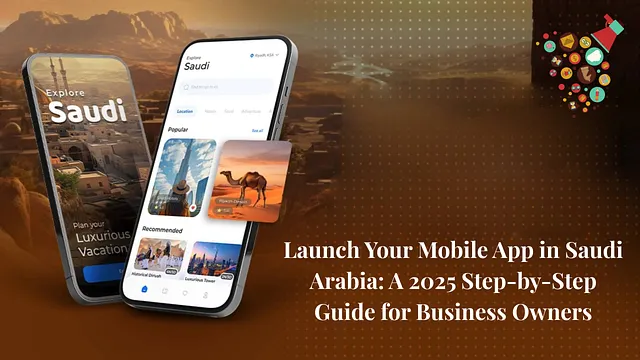
From Idea to App Store: The Complete Guide to Mobile App Development in Saudi Arabia

From Idea to App Store: The Complete Guide to Mobile App Development in Saudi Arabia

Saudi Arabia is at the forefront of digital transformation. With Vision 2030 driving innovation and a rapidly growing population of tech-savvy users, mobile apps have become a core driver of business growth in the Kingdom. From e-commerce and fintech to healthcare, logistics, and on-demand services, Saudi businesses are embracing mobile apps to connect with customers and scale faster. But how do you take a mobile app idea and turn it into a successful launch on the App Store or Google Play? This guide breaks down the complete mobile app development process in Saudi Arabia — step by step. Step 1: Validate Your App Idea for the Saudi Market Before you start building, ask: What problem does my app solve for Saudi users? Is there a cultural or market gap my app can fill? How do local competitors approach the same challenge? For example, apps related to digital payments, e-learning, delivery services, and healthcare are in high demand across Saudi Arabia. Conducting market research and aligning your app idea with local user behavior is critical. Step 2: Plan Features with Local Needs in Mind Your app should start with an MVP (Minimum Viable Product) — a core version that solves the main problem. Later, you can scale with advanced features. In Saudi Arabia, consider adding: Arabic language support (essential for user adoption) Integration with local payment gateways like STC Pay, Mada, or Apple Pay Regulatory compliance (especially for fintech and health apps) Localization for user preferences (Hijri calendar, cultural UI elements) Step 3: Select the Right Development Approach You can choose: Native Apps (Swift for iOS, Kotlin for Android) — Great for scalability and performance. Cross-Platform Apps (Flutter, React Native) — Cost-effective for startups targeting both iOS and Android simultaneously. Hybrid Apps — Suitable for simpler apps with limited features. For Saudi startups and enterprises, cross-platform development is often preferred to reach a wider audience quickly and efficiently. Step 4: Design With a Local Touch The design must balance global usability standards with local cultural relevance. UI (User Interface): Clean, modern visuals that align with Saudi branding. UX (User Experience): Simple navigation, clear Arabic text support, and intuitive flows. Wireframing & Prototyping: Test early with Saudi users to ensure adoption. A user-friendly design is one of the top reasons apps succeed in the Kingdom’s competitive market. Step 5: Develop Your Mobile App Once the design is ready, the coding begins. Saudi app development companies often follow Agile methodology, ensuring flexibility and faster delivery. Front-End Development: Interface and user interactions. Back-End Development: Databases, servers, and APIs. Integration: Secure connections between front-end and back-end. Strong collaboration between developers, designers, and business analysts ensures your app aligns with Saudi market needs. Step 6: Testing Across Devices and Networks Saudi users rely on different devices and network speeds. That’s why rigorous testing is critical: Functionality Testing: Features work as expected. Performance Testing: The app runs smoothly on both 4G and 5G networks. Localization Testing: Arabic text displays correctly, without alignment issues. Security Testing: Data protection compliance with Saudi cybersecurity standards. Step 7: App Store & Google Play Launch in Saudi Arabia To publish your app: Apple App Store (iOS): Requires an Apple Developer account and strict guideline compliance. Google Play Store (Android): Faster approval but still requires detailed app info. You’ll also need metadata in both English and Arabic — titles, descriptions, and screenshots — to maximize visibility among Saudi users. Step 8: Market Your App in Saudi Arabia Launching an app is only the beginning. You need a marketing strategy tailored to the Kingdom: App Store Optimization (ASO): Use Arabic and English keywords. Social Media Campaigns: Leverage platforms like Snapchat, Twitter (X), and Instagram, which are highly popular in Saudi Arabia. Influencer Marketing: Collaborate with Saudi influencers for early traction. Paid Ads: Google Ads and Saudi-focused Facebook/Instagram ads. Partnerships: Collaborate with local businesses to reach a wider audience. Step 9: Gather Feedback and Optimize Once your app is live, monitor: User reviews on app stores Analytics on engagement, retention, and churn rates Suggestions from Saudi users for culturally relevant features Continuous updates and improvements are vital to stay competitive. Step 10: Scale With Advanced Features Once your MVP gains traction, you can expand with advanced features such as: AI and machine learning for personalization Blockchain-based payments for fintech apps AR/VR features for retail and gaming apps IoT integration for smart home and mobility solutions Saudi Arabia’s digital ecosystem is growing rapidly — apps that adapt quickly will thrive. Conclusion Mobile app development in Saudi Arabia is not just about building an app — it’s about aligning with Vision 2030, cultural needs, and user expectations. By following a clear process — from idea validation to launch and beyond — you can transform your concept into a profitable digital product. Whether you’re a startup or an enterprise in Saudi Arabia, the opportunity is massive. With the right strategy, you can move from idea to App Store and create an app that truly resonates with Saudi users. From Idea to App Store: The Complete Guide to Mobile App Development in Saudi Arabia was originally published in Coinmonks on Medium, where people are continuing the conversation by highlighting and responding to this story
Share
Medium2025/09/18 14:46