The post UNI Technical Analysis Mar 13 appeared on BitcoinEthereumNews.com. UNI is holding above the short-term EMA20, showing bullish signals within a sidewaysThe post UNI Technical Analysis Mar 13 appeared on BitcoinEthereumNews.com. UNI is holding above the short-term EMA20, showing bullish signals within a sideways

UNI Technical Analysis Mar 13

For feedback or concerns regarding this content, please contact us at [email protected]

UNI is holding above the short-term EMA20, showing bullish signals within a sideways trend, but presents a cautious picture due to Supertrend bearish pressure and BTC downtrend. Critical resistances will be tested in the $4.10-$4.27 range.

Executive Summary

UNI/USDT is trading at $4.03 as of March 13, 2026, with a 3.02% rise in the last 24 hours, moving in the $3.84-$4.06 range. While the market shows a sideways structure, short-term bullish momentum (RSI 56.87, MACD positive histogram) is observed above EMA20 ($3.83), but Supertrend bearish signal and BTC downtrend pose risks for altcoins. Critical supports are concentrated at $3.64-$3.96, resistances at $4.10-$4.27; bull target $5.77, bear $1.83. Volume is at a moderate $88M, with 14 strong level confluences in multi-timeframe analysis. Strategically, a break above $4.27 opens upside potential, but downside risk increases if BTC falls below $70K. Short-term risk/reward ratio is around 1:4 in favor, but the overall trend should remain cautious.

Market Structure and Trend Status

Current Trend Analysis

UNI’s overall trend can be described as sideways; the price has been consolidating in the $3.80-$4.20 range in recent weeks. In the short-term (1D/4H) view, a slight bullish bias dominates with holding above EMA20 ($3.83), but the Supertrend indicator gives a bearish signal pointing to $4.74 resistance. Higher timeframes (1W/1M) show remnants of downtrend; price has been in a falling channel since the October 2025 peak of $12. The 3.02% recovery in the last 24h correlates with BTC’s +2.94% move, but volume increase is limited. This structure indicates a consolidation phase awaiting breakout or breakdown; low volatility carries high risk of sudden moves.

Structural Levels

Main structural supports: $3.6419 (66/100 score, 1D strong), $3.7764 (62/100, 3D confluence), $3.9560 (61/100, swing low). Resistances: $4.0952 (66/100, near target), $4.2676 (71/100, strongest R1), $5.1464 (66/100, medium-term). Multi-timeframe analysis reveals 14 strong levels: 1D (3S/4R), 3D (1S/2R), 1W (2S/2R). Price is currently neutral at $4.03; a drop below $3.96 signals momentum loss, a break above $4.27 signals trend change.

Technical Indicators Report

Momentum Indicators

RSI(14) at 56.87 is neutral-bullish; holding above 50 preserves buying strength, but hasn’t approached 70 (no overbought). MACD line has crossed above the signal line, histogram expanding positively – short-term momentum in favor. Stochastic %K crossing above %D (4H), but divergence risk on 1D. CCI at +45, transitioning from neutral to bullish. Overall momentum confluence is positive short-term, no overbought; high potential for continuation after correction.

Trend Indicators

EMAs: Price bullish above EMA20 ($3.83), but bearish below EMA50 ($4.12). EMA200 ($5.20) distant resistance. Supertrend bearish (HTF), showing $4.74 resistance. Ichimoku cloud thin and price above; Tenkan/Kijun golden cross nearing. ADX at 22 indicates weak trend, DI+ has passed DI-. Trend indicators mixed: short-term bullish, medium-term sideways-bearish.

Critical Support and Resistance Analysis

Support cluster: $3.6419 (pivot + Fib 0.618, 66/100), $3.7764 (previous low + volume profile, 62/100), $3.9560 (EMA21 + 1D S1, 61/100). On breakdown, watch $3.50 (psychological + 1W support). Resistances: $4.0952 (gap fill, 66/100), $4.2676 (highest score 71/100, 3D R1 + Fib 0.5), $5.1464 (EMA200 zone, 66/100). Bull scenario: $4.27 break to $5.77 target (25 score), 43% upside. Bear scenario: $3.64 break to $1.83 (22 score), 55% downside. Level map squeezes price; volume will determine breakout. Pivot point analysis aligns R1 $4.10, S1 $3.92.

Volume and Market Participation

24h volume $88.01M, moderate level (10-15% increase vs. previous days), partially supports price rise. Volume profile shows $3.90-$4.00 high volume node (HVN), holding area. OBV rising, no divergence. POC around $3.95. Futures open interest rising (+5%), long/short ratio 1.1 in favor. Participation increase limited; $100M+ volume needed for breakout. Low-volume sideways increases fakeout risk – wait for confirmation for real trend.

Risk Assessment

Short-term risk/reward: Entry $4.03, stop $3.90 (near S), TP $4.27 (1R) / $5.77 (4R) → 1:4+ ratio excellent. Medium-term: Bear target $1.83 distant (55% risk), but low probability (22 score). Main risks: BTC downtrend break ($70K below), Supertrend flip down, RSI <40. Volatility 4.5% (high), max drawdown potential 10%. Limit position size to 1-2% risk. Overall risk medium; low if BTC stable, high otherwise.

Bitcoin Correlation

UNI correlates with BTC at 0.85; BTC at $72,034 (+2.94%) with Supertrend bearish in downtrend. BTC supports $70,586 / $68,181 / $62,948 critical – below $70K pressures UNI to $3.80. Resistances $72,393 / $75,560; BTC above $75K opens $5+ for UNI. BTC dominance rising, altcoin rotation delayed. If BTC stable, UNI can move independently, but downbreak triggers 20%+ UNI drop. Watch: BTC $72K hold.

Conclusion and Strategic Outlook

UNI chart balanced in sideways consolidation with short-term bullish momentum (MACD/RSI/EMA20); $4.27 resistance break opens path to $5.77 (RR favorable). However, Supertrend bearish, BTC downtrend, and low volume keep it cautious – breakdown below $3.64 bear signal. Strategy: Long on $3.96 dip buy (TP $4.27/$5.14), short on $4.27 rejection (TP $3.77). Check detailed reports at UNI Spot Analysis and UNI Futures Analysis. Professional approach: Wait for confluence, trade with 1% risk. Market neutral-bullish, but BTC-dependent.

This analysis uses Chief Analyst Devrim Cacal’s market views and methodology.

Market Analyst: Sarah Chen

Technical analysis and risk management specialist

This analysis is not investment advice. Do your own research.

Source: https://en.coinotag.com/analysis/uni-comprehensive-technical-analysis-detailed-review-for-march-13-2026


Market Opportunity
4 Logo
4 Price(4)
$0.008254
$0.008254$0.008254
+2.86%
USD
4 (4) Live Price Chart
Disclaimer: The articles reposted on this site are sourced from public platforms and are provided for informational purposes only. They do not necessarily reflect the views of MEXC. All rights remain with the original authors. If you believe any content infringes on third-party rights, please contact [email protected] for removal. MEXC makes no guarantees regarding the accuracy, completeness, or timeliness of the content and is not responsible for any actions taken based on the information provided. The content does not constitute financial, legal, or other professional advice, nor should it be considered a recommendation or endorsement by MEXC.

You May Also Like

Why Ethereum Price Could Drop to $1,500 Despite Record Activity

Why Ethereum Price Could Drop to $1,500 Despite Record Activity

The post Why Ethereum Price Could Drop to $1,500 Despite Record Activity appeared on BitcoinEthereumNews.com. Ethereum network activity has reached record levels
Share
BitcoinEthereumNews2026/03/13 19:40
Why More Teams Are Replacing Pure Agile with PRINCE2 Agile

Why More Teams Are Replacing Pure Agile with PRINCE2 Agile

  Agile once felt like the answer to everything. Simple sprints. Constant feedback. Working software over process. It sounded great and for many, it still is. But
Share
Techbullion2026/03/13 19:41
4 in 10 Americans Ready for Regulated DeFi: A Pivotal Survey on DeFi Regulation

4 in 10 Americans Ready for Regulated DeFi: A Pivotal Survey on DeFi Regulation

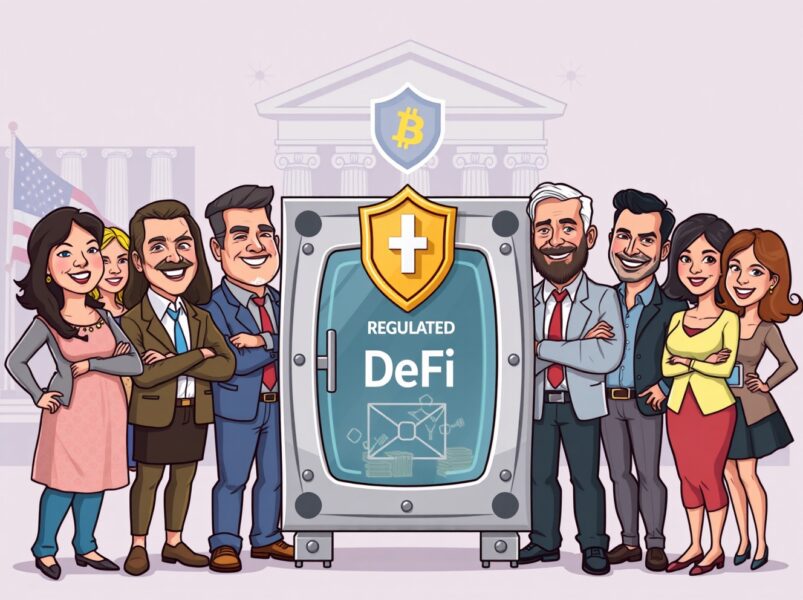
BitcoinWorld 4 in 10 Americans Ready for Regulated DeFi: A Pivotal Survey on DeFi Regulation The world of decentralized finance, or DeFi, is often seen as a frontier, exciting but perhaps a little wild. However, a groundbreaking survey from the DeFi Education Fund reveals a surprising truth: a significant portion of Americans are ready to embrace DeFi regulation. This isn’t just a niche interest; it’s a clear signal that mainstream adoption hinges on establishing clear, thoughtful rules for this innovative financial ecosystem. What’s the Buzz Around DeFi Regulation? Imagine a financial system that’s open, transparent, and accessible to everyone, everywhere. That’s the promise of DeFi. Yet, for many, the lack of established guidelines has been a major hurdle. The recent survey sheds light on this hesitation, indicating that nearly half of all Americans are willing to dive into DeFi, but only if it operates within a regulated framework. Key Finding: 42% of respondents would use DeFi under a regulated framework. This figure highlights a strong desire for security and clarity. Payment Services Potential: Among those willing, a remarkable 84% expressed readiness to try DeFi-based payment services. This suggests a massive untapped market for innovative payment solutions. This data points to a crucial intersection where innovation meets consumer protection. It suggests that appropriate DeFi regulation could unlock a new era of financial services for millions. Why Are Americans Eyeing Regulated DeFi? It’s not just about curiosity; there’s a deeper reason behind this willingness to engage with regulated DeFi. The survey also uncovered a significant lack of trust in existing financial systems. Only 29% of respondents believe the current U.S. financial system is truly safe. This sentiment is powerful. It indicates that people are actively seeking alternatives that offer greater transparency, security, and fairness. DeFi regulation, when done right, can provide the assurance needed for individuals to confidently explore these new avenues. It’s about building bridges of trust between cutting-edge technology and everyday users. Consider the benefits: enhanced consumer protection, reduced fraud risks, and a level playing field for all participants. These are the pillars upon which a trusted financial system, traditional or decentralized, must stand. The Promise of Regulated DeFi Payments The enthusiasm for DeFi isn’t limited to just financial products like lending or borrowing. A significant portion of the surveyed group expressed a strong interest in using DeFi for everyday transactions. The idea of regulated DeFi-based payment services is particularly appealing. Faster Transactions: Imagine sending money globally in minutes, not days. Lower Fees: Bypassing traditional intermediaries can significantly reduce costs. Greater Control: Users maintain more direct control over their funds. These advantages, combined with the security provided by clear DeFi regulation, could revolutionize how we think about and use money daily. It’s about creating more efficient, inclusive, and user-centric payment experiences. Navigating the Path to Mainstream DeFi Regulation While the demand for regulated DeFi is evident, the path to achieving it is complex. Regulators face the challenge of understanding a rapidly evolving technology while simultaneously protecting consumers and fostering innovation. This isn’t a simple task, but the survey provides a clear mandate for action. Key Considerations for Effective DeFi Regulation: Clarity: Establishing clear definitions and legal frameworks for DeFi protocols and assets. Consumer Protection: Implementing safeguards against scams, hacks, and financial exploitation. Innovation: Crafting rules that don’t stifle technological advancement and growth. Global Coordination: Harmonizing regulations across different jurisdictions to prevent arbitrage and ensure market stability. The future of finance could very well be decentralized, but its widespread adoption depends heavily on thoughtful and effective DeFi regulation. It’s a collaborative effort between innovators, users, and policymakers to build a financial system that serves everyone. Summary: A Clear Call for Action The survey from the DeFi Education Fund delivers a compelling message: Americans are ready for DeFi, but they want it to be safe and sound. The willingness of 4 in 10 respondents to engage with regulated DeFi, coupled with the strong interest in payment services, underscores the immense potential of this technology. It also highlights a critical opportunity for regulators to step up and provide the clarity and oversight necessary to unlock DeFi’s full promise. The future of finance is evolving, and DeFi regulation will be a cornerstone of its mainstream success. Frequently Asked Questions About Regulated DeFi Q1: What is DeFi? A1: DeFi, or decentralized finance, refers to financial services built on blockchain technology. These services, like lending, borrowing, and trading, operate without traditional intermediaries such as banks, using smart contracts instead. Q2: Why do Americans want DeFi to be regulated? A2: Americans desire regulation for DeFi primarily for security and trust. Many are wary of unregulated financial systems due to potential risks like fraud, hacks, and lack of consumer protection. Regulation can provide a framework of safety and legitimacy. Q3: What benefits could regulated DeFi offer? A3: Regulated DeFi could offer several benefits, including enhanced consumer protection, reduced risks of scams, greater transparency, potentially faster and cheaper financial services (especially payments), and increased trust, leading to broader adoption. Q4: How does DeFi regulation compare to traditional finance regulation? A4: Traditional finance operates under well-established, comprehensive regulatory frameworks. DeFi regulation is still evolving and aims to apply similar principles of consumer protection and market integrity to a decentralized, blockchain-based environment, often requiring new approaches due to its unique technological characteristics. Q5: What are the challenges in implementing DeFi regulation? A5: Challenges include the decentralized and global nature of DeFi, which makes enforcement difficult; the rapid pace of technological innovation; defining which entities are responsible for compliance; and ensuring regulations foster innovation rather than stifling it. Found this article insightful? Share it with your friends, colleagues, and anyone interested in the future of finance and the exciting potential of regulated DeFi! Your shares help spread awareness and foster important conversations. To learn more about the latest crypto market trends, explore our article on key developments shaping DeFi institutional adoption. This post 4 in 10 Americans Ready for Regulated DeFi: A Pivotal Survey on DeFi Regulation first appeared on BitcoinWorld.
Share
Coinstats2025/09/18 17:30