WTI Oil Surges Toward $94.00 as Investors Brace for Protracted Iran Conflict
BitcoinWorld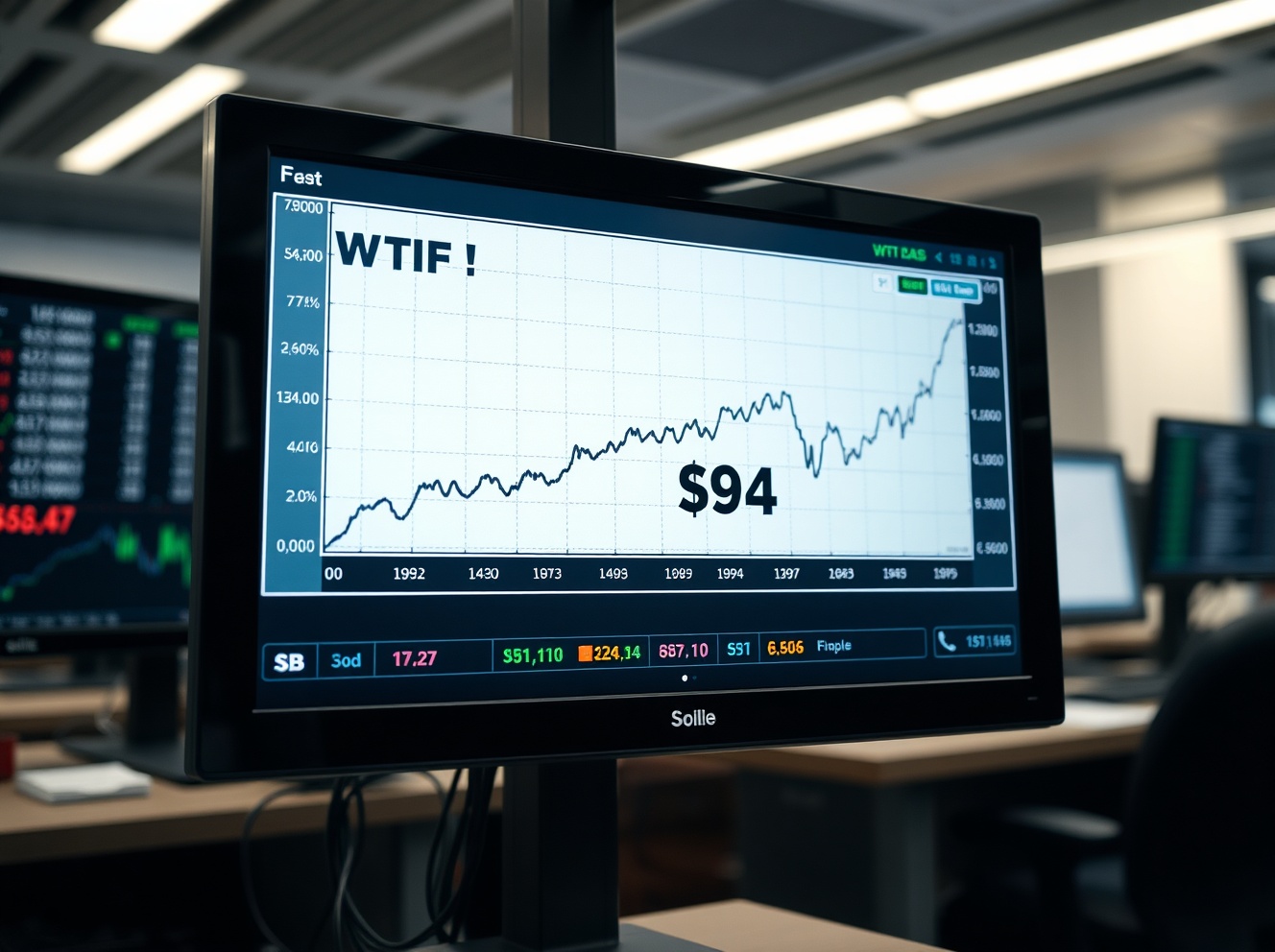
WTI Oil Surges Toward $94.00 as Investors Brace for Protracted Iran Conflict
Global energy markets face renewed volatility as West Texas Intermediate (WTI) crude oil futures surge toward the $94.00 per barrel threshold. This significant price movement, observed in early 2025, directly correlates with escalating geopolitical tensions and the potential for a protracted military conflict involving Iran. Consequently, investors and analysts are rapidly reassessing their outlooks for global energy supply chains, inflation pressures, and economic stability for the remainder of the year.
WTI Oil Price Dynamics and the Iran Conflict Catalyst
The recent ascent of WTI oil prices represents a critical juncture for commodity markets. Historically, the Strait of Hormuz, a narrow maritime chokepoint bordering Iran, facilitates the transit of approximately 20-21% of global petroleum consumption. Therefore, any sustained conflict in the region immediately threatens this vital artery. Market data from the New York Mercantile Exchange (NYMEX) shows front-month WTI contracts gaining over 8% in a two-week period, signaling intense trader anxiety. For context, the current price level approaches highs not seen since the initial months of the Russia-Ukraine war, underscoring the market’s acute sensitivity to supply disruptions.
Furthermore, several key factors are compounding the price pressure. First, global oil inventories have remained relatively tight following coordinated production cuts by OPEC+ members throughout 2024. Second, seasonal demand increases are beginning to materialize in key consuming regions. Finally, the geopolitical premium—the additional cost traders build into prices due to uncertainty—has expanded dramatically. This combination creates a potent environment for sustained price elevation, especially if hostilities intensify.
Geopolitical Context and Historical Precedents
Understanding the current market reaction requires examining the historical relationship between Middle Eastern instability and oil prices. For instance, the 2019 attacks on Saudi Aramco facilities briefly removed 5% of global supply, causing the largest single-day price spike on record. Similarly, tensions in the Strait of Hormuz have repeatedly led to sharp, albeit sometimes temporary, price increases. The present situation, however, involves a broader regional confrontation with multiple state and non-state actors, raising the risk of a more prolonged disruption.
Analysts from major financial institutions, including Goldman Sachs and JPMorgan Chase, have published notes highlighting the asymmetric risk to oil prices. Their consensus suggests that while the immediate supply impact may be limited, the threat of escalation keeps a significant risk premium firmly in place. The table below outlines recent major geopolitical events and their immediate impact on WTI prices:
| Event | Date | Approx. WTI Price Impact |
|---|---|---|
| Drone attacks on Saudi Aramco | September 2019 | +15% (intraday) |
| Russia’s invasion of Ukraine | February 2022 | +30% (one month) |
| Initial 2025 Iran escalation | Present | +8% and climbing |
Expert Analysis on Market Fundamentals
Energy market specialists emphasize the difference between a physical supply shock and a fear-driven premium. Dr. Anya Sharma, a senior fellow at the Center for Global Energy Policy, explains, “The current price move is predominantly driven by risk assessment, not an actual barrel shortage. However, this sentiment can become self-fulfilling as traders secure physical cargoes, draining available spot supplies and tightening the market tangibly.” This expert perspective clarifies how trader psychology and physical logistics interact during crises. Additionally, the U.S. Strategic Petroleum Reserve (SPR) sits at levels lower than in previous decades, potentially limiting a key tool for price stabilization.
Global Economic Impacts and Sectoral Effects
The ripple effects of sustained higher oil prices are far-reaching. Primarily, transportation and manufacturing costs rise globally, applying upward pressure on consumer inflation. Central banks, including the Federal Reserve and the European Central Bank, then face more complex decisions regarding interest rate policy. Moreover, certain sectors experience direct consequences:
- Aviation & Shipping: Fuel surcharges increase, raising costs for global trade and travel.
- Chemical Manufacturing: Petrochemical feedstocks become more expensive, impacting plastics and fertilizer production.
- Consumer Discretionary Spending: Higher gasoline prices can reduce household spending in other areas.
- Alternative Energy: Elevated fossil fuel prices improve the relative economics for renewables and electric vehicles.
Emerging market economies, which often spend a larger share of GDP on energy imports, face particular strain. Countries like India and Turkey, major importers of crude oil, may see widening trade deficits and currency pressures. Conversely, major exporting nations within OPEC and other alliances may experience significant revenue windfalls, altering global financial flows.
Investor Strategies and Market Positioning
In response to the heightened volatility, institutional investors are adjusting portfolios. Common strategies include increasing exposure to:
- Integrated energy majors with strong balance sheets.
- Futures contracts and exchange-traded funds (ETFs) tracking the oil complex.
- Companies in the energy services and equipment sector.
- Commodity trading advisors (CTAs) employing trend-following algorithms.
Simultaneously, risk management has become paramount. Many funds are raising cash levels or implementing stricter hedging protocols using options to cap potential losses. The CBOE Crude Oil Volatility Index (OVX), a key fear gauge for the oil market, has spiked, reflecting the cost of this insurance. This activity demonstrates how sophisticated market participants navigate uncertain geopolitical landscapes, balancing opportunity against potential downside.
Conclusion
The surge in WTI oil prices toward $94.00 serves as a stark reminder of the commodity’s intrinsic link to global geopolitics. The potential for a protracted conflict in Iran has injected a substantial and persistent risk premium into the market, influencing everything from inflation forecasts to corporate earnings. While the ultimate trajectory of both the conflict and oil prices remains uncertain, the immediate effect is a repricing of global risk and a recalibration of economic expectations for 2025. Market participants must now monitor diplomatic developments as closely as inventory reports, understanding that in today’s interconnected world, geopolitical stability is a fundamental component of energy market fundamentals.
FAQs
Q1: Why does conflict in Iran specifically affect WTI oil prices?
Iran is a major oil producer and borders the Strait of Hormuz, a critical chokepoint for global maritime oil shipments. Threats to this transit route immediately raise concerns about supply disruptions, causing traders to bid up prices due to perceived scarcity risk.
Q2: What is the difference between WTI and Brent crude oil?
WTI (West Texas Intermediate) is a primary benchmark for oil sourced from the U.S., particularly Texas, and is generally lighter and sweeter. Brent crude is a benchmark for oil from the North Sea and is used to price two-thirds of the world’s internationally traded crude. Both are highly correlated but can have different price spreads based on regional supply and demand.
Q3: How could higher oil prices impact the average consumer?
Higher oil prices typically lead to increased costs for gasoline, diesel, and heating oil. This raises transportation and home heating costs directly. Indirectly, it increases the cost of goods and services that require energy for production and shipping, contributing to broader inflation.
Q4: Can the U.S. use its own oil production to offset this price rise?
While the U.S. is a top global producer, its oil is integrated into the global market. Prices are set internationally, so domestic production can help with energy security but does not fully insulate U.S. consumers and businesses from global price spikes caused by geopolitical events.
Q5: What are the long-term implications for energy markets from this event?
Prolonged periods of high volatility and price spikes often accelerate investment in energy efficiency, alternative fuels, and renewable energy sources. They may also encourage consuming nations to further diversify their supply sources and increase strategic stockpiles, potentially altering long-term trade patterns.
This post WTI Oil Surges Toward $94.00 as Investors Brace for Protracted Iran Conflict first appeared on BitcoinWorld.
You May Also Like
Trump’s Iran Strike Extension: How Bitcoin, Equities, and Crude Oil Are Reacting

Netflix (NFLX) Stock; Rises Slightly as Company Raises Prices Across All Streaming Plans