BitcoinWorld MoneyGram Stablecoins: Unlocking Revolutionary Global Remittances A significant and exciting shift is underway in the world of global money transfers. Remittance giant MoneyGram has announced a groundbreaking move, introducing support for dollar stablecoins and leveraging advanced blockchain payment rails. This exciting development, which kicks off in Colombia, promises to reshape how individuals send and receive money across borders. MoneyGram’s new app now integrates popular stablecoins like USDC, along with the Stellar blockchain and Crossmint, paving the way for more efficient and accessible international transactions. This strategic pivot by MoneyGram into the realm of MoneyGram stablecoins marks a pivotal moment for both the remittance industry and the broader adoption of digital currencies. What Does MoneyGram’s Stablecoin Integration Mean for You? For millions worldwide, sending money home or receiving funds from abroad has often been a costly and time-consuming process. MoneyGram’s latest initiative directly addresses these pain points. By embracing dollar stablecoins, MoneyGram is tapping into the inherent advantages of blockchain technology. Faster Transactions: Traditional bank transfers can take days. Stablecoin transactions often settle in minutes. Lower Fees: Blockchain networks can reduce the overhead associated with cross-border payments, potentially leading to lower costs for users. Increased Accessibility: For those without traditional bank accounts, stablecoins offer a new pathway to financial services. The initial launch in Colombia is a strategic move, targeting a region with high remittance volumes. The support for USDC, a widely used and reputable stablecoin, ensures a reliable digital dollar experience. Partnering with Stellar provides a robust and scalable blockchain infrastructure, while Crossmint likely facilitates the on-ramp and off-ramp processes, making it easier for users to convert local currency to stablecoins and vice-versa. This integration makes MoneyGram stablecoins a compelling option. How Do MoneyGram Stablecoins Revolutionize Remittances? The integration of MoneyGram stablecoins isn’t just an incremental improvement; it represents a fundamental change in how global remittances operate. Think about the current system: multiple intermediaries, varying exchange rates, and business hours limitations. Stablecoins bypass many of these hurdles, offering a more direct and efficient path. Here’s how this technology is set to transform the landscape: 24/7 Availability: Blockchain networks never sleep, meaning transactions can be initiated and received at any time, day or night. Transparency: Transactions on a public blockchain are verifiable, offering a new level of transparency compared to opaque traditional systems. Reduced Friction: By streamlining the payment process, MoneyGram can offer a smoother, more user-friendly experience. This move positions MoneyGram at the forefront of financial innovation, demonstrating a commitment to leveraging cutting-edge technology to serve its global customer base better. The focus on dollar stablecoins ensures that users benefit from the stability of the U.S. dollar while enjoying the efficiency of blockchain technology. Are There Any Challenges for MoneyGram Stablecoins to Overcome? While the potential benefits of MoneyGram stablecoins are immense, there are certainly challenges to navigate. Widespread adoption will depend on several factors that MoneyGram will need to address proactively. Key considerations include: Regulatory Landscape: The regulatory environment for cryptocurrencies and stablecoins is still evolving globally. MoneyGram will need to ensure compliance across all operating jurisdictions, which can be complex. User Education: Many users may be unfamiliar with stablecoins and blockchain. Educating customers on how to use the new service safely and effectively will be crucial for broader acceptance. Market Volatility Perception: While stablecoins are designed to maintain a peg to a fiat currency, the broader cryptocurrency market’s volatility can sometimes create apprehension among new users. MoneyGram will need to clearly communicate the stability of dollar-backed stablecoins. Overcoming these hurdles will require clear communication, robust security measures, and a commitment to adapting to changing market and regulatory conditions. MoneyGram’s established reputation and extensive network, however, provide a strong foundation for addressing these challenges head-on and fostering trust in MoneyGram stablecoins. What’s Next for MoneyGram Stablecoins and Global Payments? The launch in Colombia is just the beginning. MoneyGram has expressed clear intentions for future expansion to other countries, signaling a broader strategy to integrate dollar stablecoins into its global remittance network. This expansion could have profound implications for financial inclusion, particularly in regions where traditional banking infrastructure is limited or expensive. As MoneyGram continues to roll out this service, we can expect to see: Increased Competition: Other remittance providers may follow suit, accelerating the adoption of blockchain-based payment solutions across the industry. Technological Advancements: Further innovation in stablecoin technology and blockchain interoperability could emerge, enhancing the user experience. Greater Financial Inclusion: By making remittances more affordable and accessible, MoneyGram stablecoins can empower individuals and communities worldwide, fostering economic growth. This initiative represents a bold step forward, positioning MoneyGram not just as a traditional remittance provider but as a leader in the future of global digital payments. The journey of MoneyGram stablecoins will undoubtedly be one to watch closely as it unfolds. In conclusion, MoneyGram’s embrace of dollar-backed stablecoins marks a significant milestone in the evolution of global remittances. By offering faster, potentially cheaper, and more accessible cross-border payments, this initiative has the power to truly transform lives, starting with Colombia and expanding globally. It’s a clear signal that traditional financial services are increasingly recognizing the undeniable potential of blockchain technology and digital assets to build a more inclusive and efficient financial future. The advent of MoneyGram stablecoins is set to redefine how we think about international money transfers. Frequently Asked Questions (FAQs) What are dollar stablecoins? Dollar stablecoins are a type of cryptocurrency designed to maintain a stable value, typically pegged 1:1 with the U.S. dollar. This stability makes them suitable for transactions, as their value doesn’t fluctuate wildly like other cryptocurrencies. Which stablecoins does MoneyGram support? MoneyGram’s new service supports USDC (USD Coin), a widely recognized and reputable dollar-backed stablecoin. It also leverages the Stellar blockchain for its payment rails and Crossmint for facilitating transactions. Where is MoneyGram’s stablecoin service available first? The new MoneyGram service supporting dollar stablecoins will launch first in Colombia, with plans for future expansion to other countries globally. What are the main benefits of using stablecoins for remittances? The primary benefits include faster transaction speeds (often minutes instead of days), potentially lower transfer fees compared to traditional methods, and increased accessibility for individuals who may not have traditional bank accounts. Is it safe to use stablecoins for money transfers? Yes, reputable dollar stablecoins like USDC are designed for stability and backed by reserves. MoneyGram’s integration means these transactions are handled within their established and secure app environment, aiming to provide a safe and reliable service. If you found this article insightful, please share it with your network! Help us spread the word about the exciting advancements MoneyGram is bringing to global remittances. Your shares help others discover the future of money transfers and the power of MoneyGram stablecoins. To learn more about the latest explore our article on key developments shaping stablecoins and their institutional adoption. This post MoneyGram Stablecoins: Unlocking Revolutionary Global Remittances first appeared on BitcoinWorld.BitcoinWorld MoneyGram Stablecoins: Unlocking Revolutionary Global Remittances A significant and exciting shift is underway in the world of global money transfers. Remittance giant MoneyGram has announced a groundbreaking move, introducing support for dollar stablecoins and leveraging advanced blockchain payment rails. This exciting development, which kicks off in Colombia, promises to reshape how individuals send and receive money across borders. MoneyGram’s new app now integrates popular stablecoins like USDC, along with the Stellar blockchain and Crossmint, paving the way for more efficient and accessible international transactions. This strategic pivot by MoneyGram into the realm of MoneyGram stablecoins marks a pivotal moment for both the remittance industry and the broader adoption of digital currencies. What Does MoneyGram’s Stablecoin Integration Mean for You? For millions worldwide, sending money home or receiving funds from abroad has often been a costly and time-consuming process. MoneyGram’s latest initiative directly addresses these pain points. By embracing dollar stablecoins, MoneyGram is tapping into the inherent advantages of blockchain technology. Faster Transactions: Traditional bank transfers can take days. Stablecoin transactions often settle in minutes. Lower Fees: Blockchain networks can reduce the overhead associated with cross-border payments, potentially leading to lower costs for users. Increased Accessibility: For those without traditional bank accounts, stablecoins offer a new pathway to financial services. The initial launch in Colombia is a strategic move, targeting a region with high remittance volumes. The support for USDC, a widely used and reputable stablecoin, ensures a reliable digital dollar experience. Partnering with Stellar provides a robust and scalable blockchain infrastructure, while Crossmint likely facilitates the on-ramp and off-ramp processes, making it easier for users to convert local currency to stablecoins and vice-versa. This integration makes MoneyGram stablecoins a compelling option. How Do MoneyGram Stablecoins Revolutionize Remittances? The integration of MoneyGram stablecoins isn’t just an incremental improvement; it represents a fundamental change in how global remittances operate. Think about the current system: multiple intermediaries, varying exchange rates, and business hours limitations. Stablecoins bypass many of these hurdles, offering a more direct and efficient path. Here’s how this technology is set to transform the landscape: 24/7 Availability: Blockchain networks never sleep, meaning transactions can be initiated and received at any time, day or night. Transparency: Transactions on a public blockchain are verifiable, offering a new level of transparency compared to opaque traditional systems. Reduced Friction: By streamlining the payment process, MoneyGram can offer a smoother, more user-friendly experience. This move positions MoneyGram at the forefront of financial innovation, demonstrating a commitment to leveraging cutting-edge technology to serve its global customer base better. The focus on dollar stablecoins ensures that users benefit from the stability of the U.S. dollar while enjoying the efficiency of blockchain technology. Are There Any Challenges for MoneyGram Stablecoins to Overcome? While the potential benefits of MoneyGram stablecoins are immense, there are certainly challenges to navigate. Widespread adoption will depend on several factors that MoneyGram will need to address proactively. Key considerations include: Regulatory Landscape: The regulatory environment for cryptocurrencies and stablecoins is still evolving globally. MoneyGram will need to ensure compliance across all operating jurisdictions, which can be complex. User Education: Many users may be unfamiliar with stablecoins and blockchain. Educating customers on how to use the new service safely and effectively will be crucial for broader acceptance. Market Volatility Perception: While stablecoins are designed to maintain a peg to a fiat currency, the broader cryptocurrency market’s volatility can sometimes create apprehension among new users. MoneyGram will need to clearly communicate the stability of dollar-backed stablecoins. Overcoming these hurdles will require clear communication, robust security measures, and a commitment to adapting to changing market and regulatory conditions. MoneyGram’s established reputation and extensive network, however, provide a strong foundation for addressing these challenges head-on and fostering trust in MoneyGram stablecoins. What’s Next for MoneyGram Stablecoins and Global Payments? The launch in Colombia is just the beginning. MoneyGram has expressed clear intentions for future expansion to other countries, signaling a broader strategy to integrate dollar stablecoins into its global remittance network. This expansion could have profound implications for financial inclusion, particularly in regions where traditional banking infrastructure is limited or expensive. As MoneyGram continues to roll out this service, we can expect to see: Increased Competition: Other remittance providers may follow suit, accelerating the adoption of blockchain-based payment solutions across the industry. Technological Advancements: Further innovation in stablecoin technology and blockchain interoperability could emerge, enhancing the user experience. Greater Financial Inclusion: By making remittances more affordable and accessible, MoneyGram stablecoins can empower individuals and communities worldwide, fostering economic growth. This initiative represents a bold step forward, positioning MoneyGram not just as a traditional remittance provider but as a leader in the future of global digital payments. The journey of MoneyGram stablecoins will undoubtedly be one to watch closely as it unfolds. In conclusion, MoneyGram’s embrace of dollar-backed stablecoins marks a significant milestone in the evolution of global remittances. By offering faster, potentially cheaper, and more accessible cross-border payments, this initiative has the power to truly transform lives, starting with Colombia and expanding globally. It’s a clear signal that traditional financial services are increasingly recognizing the undeniable potential of blockchain technology and digital assets to build a more inclusive and efficient financial future. The advent of MoneyGram stablecoins is set to redefine how we think about international money transfers. Frequently Asked Questions (FAQs) What are dollar stablecoins? Dollar stablecoins are a type of cryptocurrency designed to maintain a stable value, typically pegged 1:1 with the U.S. dollar. This stability makes them suitable for transactions, as their value doesn’t fluctuate wildly like other cryptocurrencies. Which stablecoins does MoneyGram support? MoneyGram’s new service supports USDC (USD Coin), a widely recognized and reputable dollar-backed stablecoin. It also leverages the Stellar blockchain for its payment rails and Crossmint for facilitating transactions. Where is MoneyGram’s stablecoin service available first? The new MoneyGram service supporting dollar stablecoins will launch first in Colombia, with plans for future expansion to other countries globally. What are the main benefits of using stablecoins for remittances? The primary benefits include faster transaction speeds (often minutes instead of days), potentially lower transfer fees compared to traditional methods, and increased accessibility for individuals who may not have traditional bank accounts. Is it safe to use stablecoins for money transfers? Yes, reputable dollar stablecoins like USDC are designed for stability and backed by reserves. MoneyGram’s integration means these transactions are handled within their established and secure app environment, aiming to provide a safe and reliable service. If you found this article insightful, please share it with your network! Help us spread the word about the exciting advancements MoneyGram is bringing to global remittances. Your shares help others discover the future of money transfers and the power of MoneyGram stablecoins. To learn more about the latest explore our article on key developments shaping stablecoins and their institutional adoption. This post MoneyGram Stablecoins: Unlocking Revolutionary Global Remittances first appeared on BitcoinWorld.

MoneyGram Stablecoins: Unlocking Revolutionary Global Remittances

6 min read

BitcoinWorld

MoneyGram Stablecoins: Unlocking Revolutionary Global Remittances

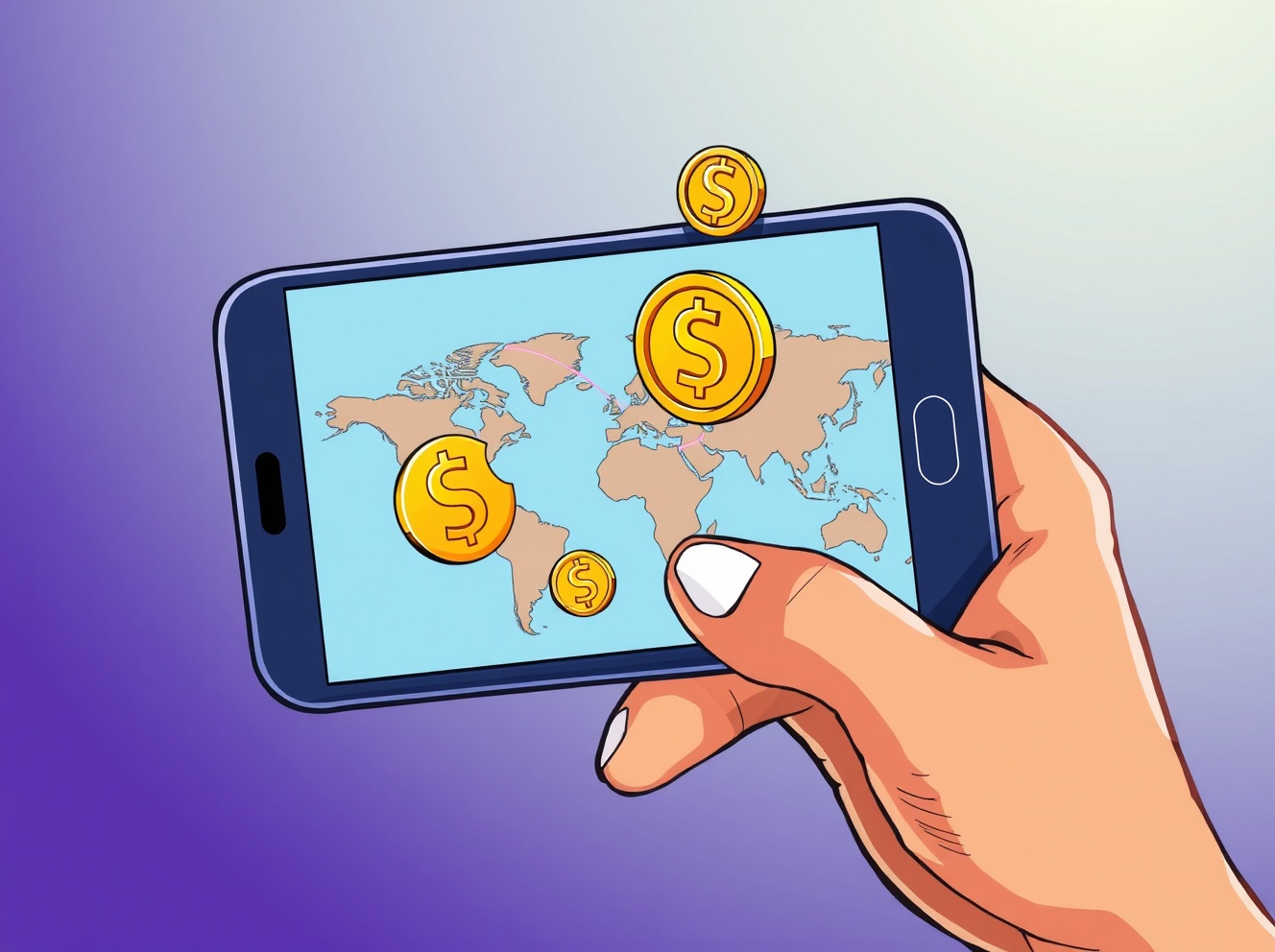
A significant and exciting shift is underway in the world of global money transfers. Remittance giant MoneyGram has announced a groundbreaking move, introducing support for dollar stablecoins and leveraging advanced blockchain payment rails. This exciting development, which kicks off in Colombia, promises to reshape how individuals send and receive money across borders. MoneyGram’s new app now integrates popular stablecoins like USDC, along with the Stellar blockchain and Crossmint, paving the way for more efficient and accessible international transactions. This strategic pivot by MoneyGram into the realm of MoneyGram stablecoins marks a pivotal moment for both the remittance industry and the broader adoption of digital currencies.

What Does MoneyGram’s Stablecoin Integration Mean for You?

For millions worldwide, sending money home or receiving funds from abroad has often been a costly and time-consuming process. MoneyGram’s latest initiative directly addresses these pain points. By embracing dollar stablecoins, MoneyGram is tapping into the inherent advantages of blockchain technology.

  • Faster Transactions: Traditional bank transfers can take days. Stablecoin transactions often settle in minutes.
  • Lower Fees: Blockchain networks can reduce the overhead associated with cross-border payments, potentially leading to lower costs for users.
  • Increased Accessibility: For those without traditional bank accounts, stablecoins offer a new pathway to financial services.

The initial launch in Colombia is a strategic move, targeting a region with high remittance volumes. The support for USDC, a widely used and reputable stablecoin, ensures a reliable digital dollar experience. Partnering with Stellar provides a robust and scalable blockchain infrastructure, while Crossmint likely facilitates the on-ramp and off-ramp processes, making it easier for users to convert local currency to stablecoins and vice-versa. This integration makes MoneyGram stablecoins a compelling option.

How Do MoneyGram Stablecoins Revolutionize Remittances?

The integration of MoneyGram stablecoins isn’t just an incremental improvement; it represents a fundamental change in how global remittances operate. Think about the current system: multiple intermediaries, varying exchange rates, and business hours limitations. Stablecoins bypass many of these hurdles, offering a more direct and efficient path.

Here’s how this technology is set to transform the landscape:

  • 24/7 Availability: Blockchain networks never sleep, meaning transactions can be initiated and received at any time, day or night.
  • Transparency: Transactions on a public blockchain are verifiable, offering a new level of transparency compared to opaque traditional systems.
  • Reduced Friction: By streamlining the payment process, MoneyGram can offer a smoother, more user-friendly experience.

This move positions MoneyGram at the forefront of financial innovation, demonstrating a commitment to leveraging cutting-edge technology to serve its global customer base better. The focus on dollar stablecoins ensures that users benefit from the stability of the U.S. dollar while enjoying the efficiency of blockchain technology.

Are There Any Challenges for MoneyGram Stablecoins to Overcome?

While the potential benefits of MoneyGram stablecoins are immense, there are certainly challenges to navigate. Widespread adoption will depend on several factors that MoneyGram will need to address proactively.

Key considerations include:

  • Regulatory Landscape: The regulatory environment for cryptocurrencies and stablecoins is still evolving globally. MoneyGram will need to ensure compliance across all operating jurisdictions, which can be complex.
  • User Education: Many users may be unfamiliar with stablecoins and blockchain. Educating customers on how to use the new service safely and effectively will be crucial for broader acceptance.
  • Market Volatility Perception: While stablecoins are designed to maintain a peg to a fiat currency, the broader cryptocurrency market’s volatility can sometimes create apprehension among new users. MoneyGram will need to clearly communicate the stability of dollar-backed stablecoins.

Overcoming these hurdles will require clear communication, robust security measures, and a commitment to adapting to changing market and regulatory conditions. MoneyGram’s established reputation and extensive network, however, provide a strong foundation for addressing these challenges head-on and fostering trust in MoneyGram stablecoins.

What’s Next for MoneyGram Stablecoins and Global Payments?

The launch in Colombia is just the beginning. MoneyGram has expressed clear intentions for future expansion to other countries, signaling a broader strategy to integrate dollar stablecoins into its global remittance network. This expansion could have profound implications for financial inclusion, particularly in regions where traditional banking infrastructure is limited or expensive.

As MoneyGram continues to roll out this service, we can expect to see:

  • Increased Competition: Other remittance providers may follow suit, accelerating the adoption of blockchain-based payment solutions across the industry.
  • Technological Advancements: Further innovation in stablecoin technology and blockchain interoperability could emerge, enhancing the user experience.
  • Greater Financial Inclusion: By making remittances more affordable and accessible, MoneyGram stablecoins can empower individuals and communities worldwide, fostering economic growth.

This initiative represents a bold step forward, positioning MoneyGram not just as a traditional remittance provider but as a leader in the future of global digital payments. The journey of MoneyGram stablecoins will undoubtedly be one to watch closely as it unfolds.

In conclusion, MoneyGram’s embrace of dollar-backed stablecoins marks a significant milestone in the evolution of global remittances. By offering faster, potentially cheaper, and more accessible cross-border payments, this initiative has the power to truly transform lives, starting with Colombia and expanding globally. It’s a clear signal that traditional financial services are increasingly recognizing the undeniable potential of blockchain technology and digital assets to build a more inclusive and efficient financial future. The advent of MoneyGram stablecoins is set to redefine how we think about international money transfers.

Frequently Asked Questions (FAQs)

What are dollar stablecoins?

Dollar stablecoins are a type of cryptocurrency designed to maintain a stable value, typically pegged 1:1 with the U.S. dollar. This stability makes them suitable for transactions, as their value doesn’t fluctuate wildly like other cryptocurrencies.

Which stablecoins does MoneyGram support?

MoneyGram’s new service supports USDC (USD Coin), a widely recognized and reputable dollar-backed stablecoin. It also leverages the Stellar blockchain for its payment rails and Crossmint for facilitating transactions.

Where is MoneyGram’s stablecoin service available first?

The new MoneyGram service supporting dollar stablecoins will launch first in Colombia, with plans for future expansion to other countries globally.

What are the main benefits of using stablecoins for remittances?

The primary benefits include faster transaction speeds (often minutes instead of days), potentially lower transfer fees compared to traditional methods, and increased accessibility for individuals who may not have traditional bank accounts.

Is it safe to use stablecoins for money transfers?

Yes, reputable dollar stablecoins like USDC are designed for stability and backed by reserves. MoneyGram’s integration means these transactions are handled within their established and secure app environment, aiming to provide a safe and reliable service.

If you found this article insightful, please share it with your network! Help us spread the word about the exciting advancements MoneyGram is bringing to global remittances. Your shares help others discover the future of money transfers and the power of MoneyGram stablecoins.

To learn more about the latest explore our article on key developments shaping stablecoins and their institutional adoption.

This post MoneyGram Stablecoins: Unlocking Revolutionary Global Remittances first appeared on BitcoinWorld.

Market Opportunity
Threshold Logo
Threshold Price(T)
$0.007609
$0.007609$0.007609
-1.29%
USD
Threshold (T) Live Price Chart
Disclaimer: The articles reposted on this site are sourced from public platforms and are provided for informational purposes only. They do not necessarily reflect the views of MEXC. All rights remain with the original authors. If you believe any content infringes on third-party rights, please contact [email protected] for removal. MEXC makes no guarantees regarding the accuracy, completeness, or timeliness of the content and is not responsible for any actions taken based on the information provided. The content does not constitute financial, legal, or other professional advice, nor should it be considered a recommendation or endorsement by MEXC.

You May Also Like

Trading time: Tonight, the US GDP and the upcoming non-farm data will become the market focus. Institutions are bullish on BTC to $120,000 in the second quarter.

Trading time: Tonight, the US GDP and the upcoming non-farm data will become the market focus. Institutions are bullish on BTC to $120,000 in the second quarter.

Daily market key data review and trend analysis, produced by PANews.
Share
PANews2025/04/30 13:50
Ethereum Fusaka Upgrade Set for December 3 Mainnet Launch, Blob Capacity to Double

Ethereum Fusaka Upgrade Set for December 3 Mainnet Launch, Blob Capacity to Double

Ethereum developers confirmed the Fusaka upgrade will activate on mainnet on December 3, 2025, following a systematic testnet rollout beginning on October 1 on Holesky. The major hard fork will implement around 11-12 Ethereum Improvement Proposals targeting scalability, node efficiency, and data availability improvements without adding new user-facing features. According to Christine Kim, the upgrade introduces a phased blob capacity expansion through Blob Parameter Only forks occurring two weeks after Fusaka activation. Initially maintaining current blob limits of 6/9 target/max, the first BPO fork will increase capacity to 10/15 blobs one week later. A second BPO fork will further expand limits to 14/21 blobs, more than doubling total capacity within two weeks. Strategic Infrastructure Overhaul Fusaka prioritizes backend protocol improvements over user-facing features, focusing on making Ethereum faster and less resource-intensive. The upgrade includes PeerDAS implementation through EIP-7594, allowing validator nodes to verify data by sampling small pieces rather than downloading entire blobs. This reduces bandwidth and storage requirements while enhancing Layer 2 rollup scalability. The upgrade builds on recent gas limit increases from 30 million to 45 million gas, with ongoing discussions for further expansion. EIP-7935 proposes increasing limits to 150 million gas, potentially enabling significantly higher transaction throughput. These improvements complement broader scalability efforts, including EIP-9698, which suggests a 100x gas limit increase over two years to reach 2,000 transactions per second. Fusaka removes the previously planned EVM Object Format redesign to reduce complexity while maintaining focus on essential infrastructure improvements. The upgrade introduces bounded base fees for blob transactions via EIP-7918, creating more predictable transaction costs for data-heavy applications. Enhanced spam resistance and security improvements strengthen network resilience against scalability bottlenecks and attacks. Technical Implementation and Testing Timeline The Fusaka rollout follows a conservative four-phase approach across Ethereum testnets before mainnet deployment. Holesky upgrade occurs October 1, followed by Sepolia on October 14 and Hoodi on October 28. Each testnet will undergo the complete BPO fork sequence to validate the blob capacity expansion mechanism. BPO forks activate automatically based on predetermined epochs rather than requiring separate hard fork processes. On mainnet, the first BPO fork launches December 17, increasing blob capacity to 10/15 target/max. The second BPO fork activates January 7, 2026, reaching the final capacity of 14/21 blobs. This automated approach enables flexible blob scaling without requiring full network upgrades. Notably, node operators face release deadlines ranging from September 25 for Holesky to November 3 for mainnet preparation. The staggered timeline, according to the developers, allows comprehensive testing while giving infrastructure providers sufficient preparation time. Speculatively, the developers use this backward-compatible approach to ensure smooth transitions with minimal disruption to existing applications. PeerDAS implementation reduces node resource demands, potentially increasing network decentralization by lowering barriers for smaller operators. The technology enables more efficient data availability sampling, crucial for supporting growing Layer 2 rollup adoption. Overall, these improvements, combined with increased gas limits, will enable Ethereum to handle higher transaction volumes while maintaining security guarantees. Addressing Network Scalability Pressures The Fusaka upgrade addresses mounting pressure for Ethereum base layer improvements amid criticism of Layer 2 fragmentation strategies. Critics argue that reliance on rollups has created isolated chains with limited interoperability, complicating user experiences. The upgrade’s focus on infrastructure improvements aims to enhance base layer capacity while supporting continued Layer 2 growth. The recent validator queue controversy particularly highlights ongoing network scalability challenges. According to a Cryptonews report covered yesterday, currently, over 2M ETH sits in exit queues facing 43-day delays, while entry queues process in just 7 days.Ethereum Validator Queue (Source: ValidatorQueue) However, Vitalik Buterin defended these delays as essential for network security, comparing validator commitments to military service requiring “friction in quitting.” The upgrade coincides with growing institutional interest in Ethereum infrastructure, with VanEck predicting that Layer 2 networks could reach $1 trillion market capitalization within six years. Fusaka’s emphasis on data availability and node efficiency supports Ethereum’s evolution toward seamless cross-chain interoperability. The upgrade complements initiatives like the Open Intents Framework, where Coinbase Payments recently joined as a core contributor. The initiative, if successful, will address the $21B surge in cross-chain crime. These coordinated efforts aim to unify the fragmented multichain experience while maintaining Ethereum’s security and decentralization principles
Share
CryptoNews2025/09/19 16:37
VectorUSA Achieves Fortinet’s Engage Preferred Services Partner Designation

VectorUSA Achieves Fortinet’s Engage Preferred Services Partner Designation

TORRANCE, Calif., Feb. 3, 2026 /PRNewswire/ — VectorUSA, a trusted technology solutions provider, specializes in delivering integrated IT, security, and infrastructure
Share
AI Journal2026/02/05 00:02