

New Zealand South Island Itinerary: 10 Days by Campervan (Freedom Camping Edition)
Skip the hotels. This is how you actually see the South Island.
If you’re planning a New Zealand South Island itinerary, doing it by campervan is genuinely one of the best decisions you’ll make. The South Island is built for road trips — dramatic alpine passes, glacier valleys, fjords, and turquoise lakes, all strung together by some of the most scenic driving on earth.
The bonus: New Zealand has a legal framework for freedom camping, which means you can sleep next to a glacier, a fjord, or a lake for exactly nothing. But the rules have tightened, and getting them wrong costs up to 200 NZD (~S$166).
Here’s a complete 10-day South Island road trip itinerary, plus everything you need to know about freedom camping to do it right.

Stay Up To Date:
– Things To Do In Hoi An (2026): 15 Best Activities & Travel Guide
– Japan Budget Airlines: The Singaporean Traveller’s Guide (2026)
– Things to Do in Taipei: 15 Best Picks for 2026

TL;DR: New Zealand South Island Road Trip Itinerary
HighlightsDetailsTrip length10 days / 9 nightsRouteChristchurch → Akaroa → Lake Tekapo → Mt Cook → Queenstown → Milford Sound → West Coast → ChristchurchVehicleSelf-contained campervan (NZMCA certified)Accommodation costFree to 15 NZD (~S$11) per night at DOC sitesDaily budget80–120 NZD (~S$59–S$89) per person, excl. campervan rentalTotal driving~2,000km / ~26 hoursBest seasonNovember–March (NZ summer)Key appsCamperMate, Rankers Camping NZFreedom camping finesUp to 200 NZD (~S$148) per person if rules are broken
Table of Contents
- What Is Freedom Camping in New Zealand?
- Can You Still Freedom Camp in New Zealand?
- Where Are You Allowed to Freedom Camp in NZ?
- Can You Sleep in Your Car When Freedom Camping?
- Best Apps and Maps for Finding Freedom Camping Spots
- The 10-Day South Island Campervan Itinerary
- Practical Tips Before You Go
- Spending Money in New Zealand
- FAQ
What Is Freedom Camping in New Zealand?
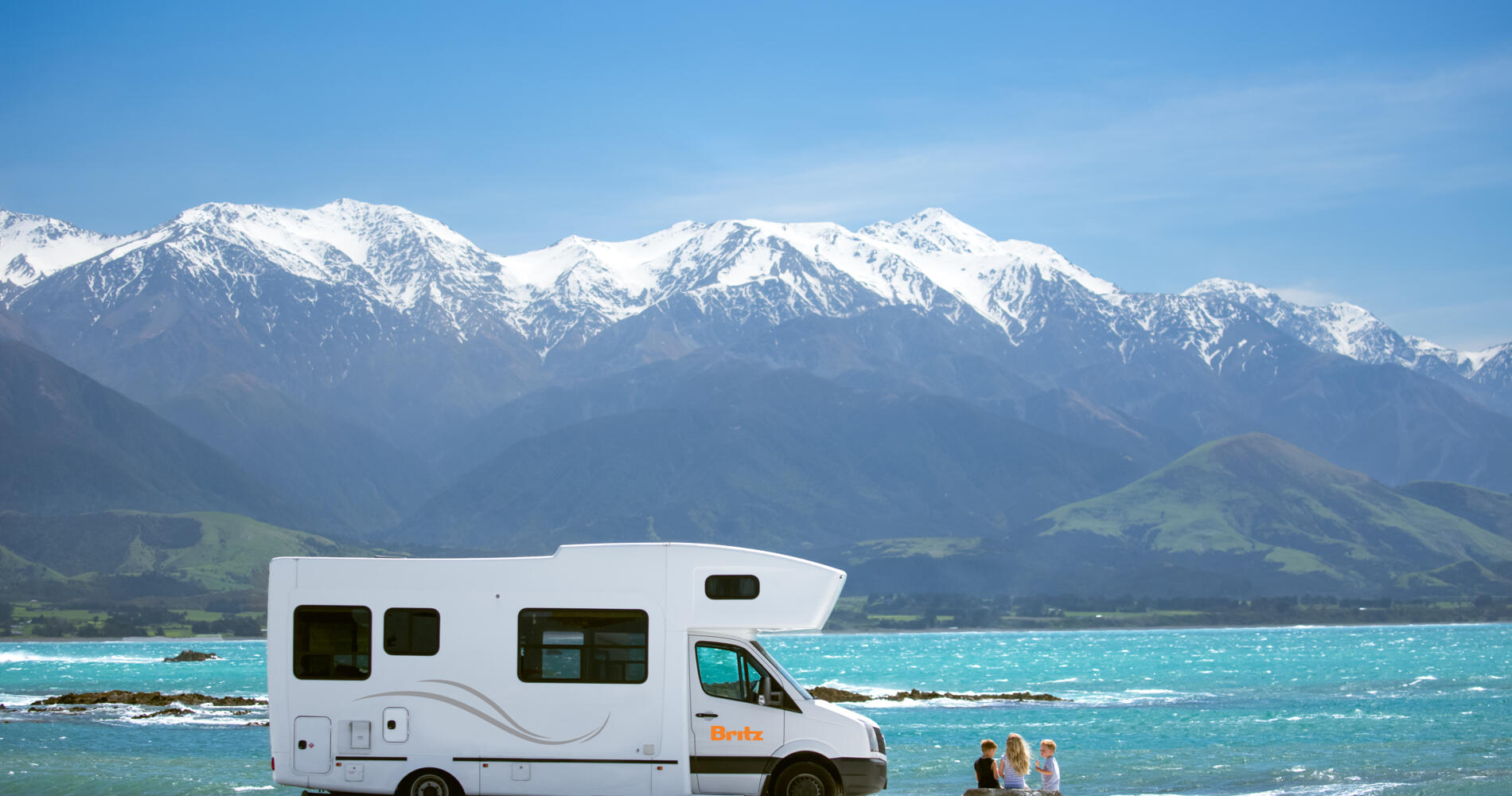
Image credits: New Zealand
Freedom camping means staying overnight outside a paid campground. Approved site types include:
- Roadside rest stops
- Department of Conservation (DOC) reserves
- Council-designated areas
- Coastal layby spots
It’s legal, common, and deeply embedded in NZ travel culture.
The practice is governed by the Freedom Camping Act 2011, which gives local councils and DOC the authority to designate which areas allow freedom camping and which don’t. Some sites are completely open; others require a self-contained vehicle; others are off-limits entirely.

Related Guide: Things To Do In New Zealand: The Ultimate Travel Guide
Can You Still Freedom Camp in New Zealand?
Yes. But the rules tightened significantly in 2022.
Anyone camping in a restricted freedom camping area must now have a certified self-contained vehicle. A self-contained vehicle has a built-in toilet and grey water storage capable of operating for at least three days without emptying. Rental campervans from reputable companies will display a green warrant self-containment certificate (the government-recognised certification required as of June 2026).
If you’re renting a campervan, confirm self-containment status before booking. If your vehicle isn’t certified, you’re limited to non-restricted sites only (fewer and more basic).
Fines for freedom camping in prohibited areas or failing to meet self-containment requirements can reach 200 NZD (~S$148) per person.
Related Guide: Best Time to Visit New Zealand & Weather by Month
Where Are You Allowed to Freedom Camp in NZ?
Freedom camping is allowed in three main categories of sites:
1. DOC freedom camping areas
DOC manages hundreds of sites across New Zealand. Some are free; others charge a small fee (typically 6–15 NZD (~S$4–S$11) per night). These are the most reliable and scenic options. Find them at doc.govt.nz.
2. Council-designated freedom camping sites
Each local council maintains its own list of approved areas. Rules vary: some are self-contained only; others are open to all. Check the relevant council’s website before you arrive.
3. Private land (with permission)
You can freedom camp on private land with the landowner’s consent. Some farmers and orchards actively welcome this.
Can you freedom camp on the side of the road? In some areas, yes, if the roadside is a designated freedom camping zone. Most main highways are not. Don’t assume a carpark or lay-by is approved; always check an app or the council website first.
Can you park and sleep anywhere in New Zealand? No. Freedom camping is only legal in designated areas or with explicit permission. Sleeping in random carparks, beaches, or national park entrances where it isn’t designated is illegal and subject to fines.
Related Guide: How To Start A Working Holiday In New Zealand: A Guide For Singaporeans
Can You Sleep in Your Car When Freedom Camping?
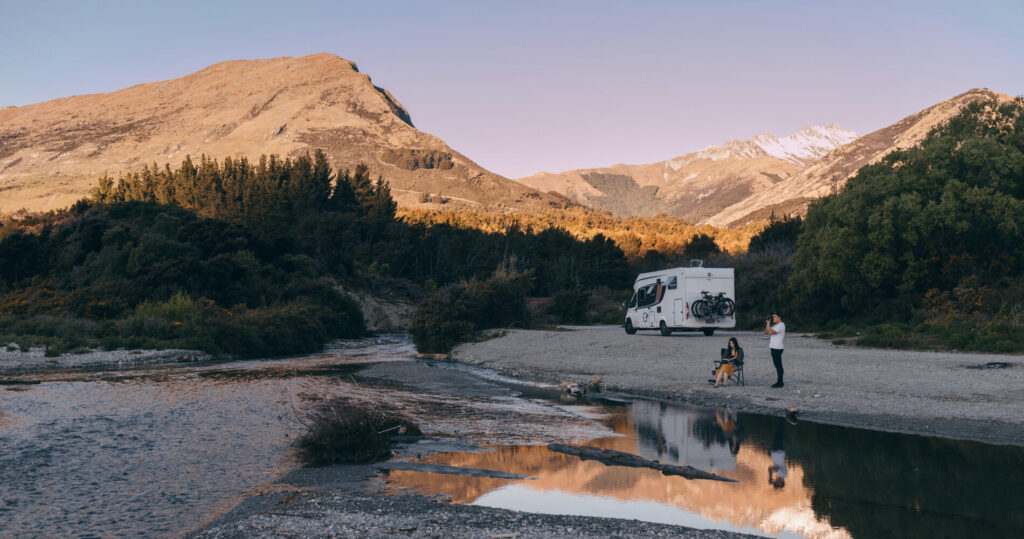
Image credits: New Zealand
This is where it gets nuanced.
- At a non-restricted (open) freedom camping site: Yes. Any vehicle, including a standard car, can sleep here. These sites don’t require self-containment.
- At a restricted freedom camping site: Only self-contained vehicles are allowed. A standard car (even with a mattress in the back) doesn’t qualify as self-contained because it has no toilet or grey water system.
Sleeping in your car is allowed at open sites, but banned at restricted ones. Always check whether your target site is restricted or open before pulling up.
Related Guide: Ever Tried Freedom Camping In New Zealand?
Best Apps and Maps for Finding Freedom Camping Spots
Before you hit the road, download these:
- CamperMate: The most comprehensive NZ camping app. Shows freedom camping areas, DOC sites, dump stations, and toilets. Offline maps work without data. Free.
- Rankers Camping NZ: Community-reviewed campsite database with photos and recent visitor comments. Useful for checking current conditions.
- DOC website: doc.govt.nz is the authoritative source for all DOC-managed freedom camping areas. Searchable by region.
- Google Maps: Search “freedom camping [region name]” for a rough starting point, then verify with CamperMate.

Tip: Download CamperMate and cache your maps before heading into remote areas. Mobile coverage on the South Island is patchy outside main towns.
Related Guide: Best Camping Sites In New Zealand
The 10-Day South Island Campervan Itinerary
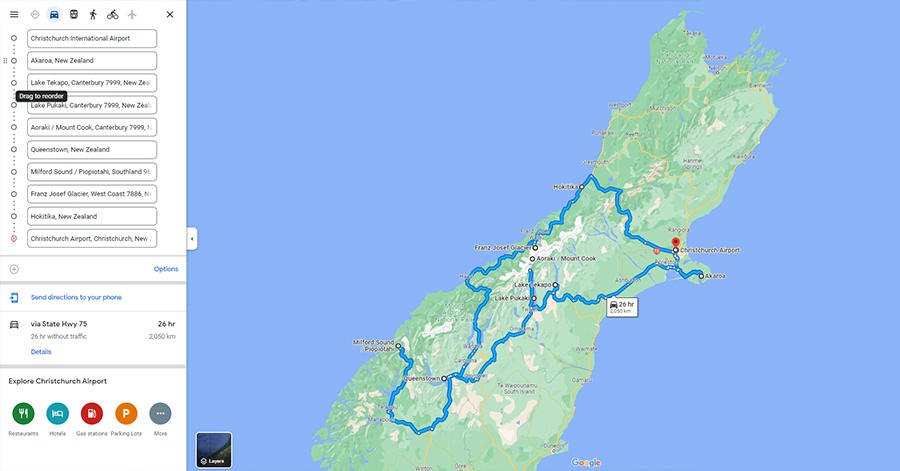
This New Zealand road trip covers roughly 2,000km of the South Island and takes around 26 hours of total driving. It’s designed for a self-contained campervan rental picked up and dropped off in Christchurch.
Day 1: Christchurch — Collect Your Campervan and Head to Akaroa
Drive: ~1.5 hours from Christchurch Airport to Akaroa
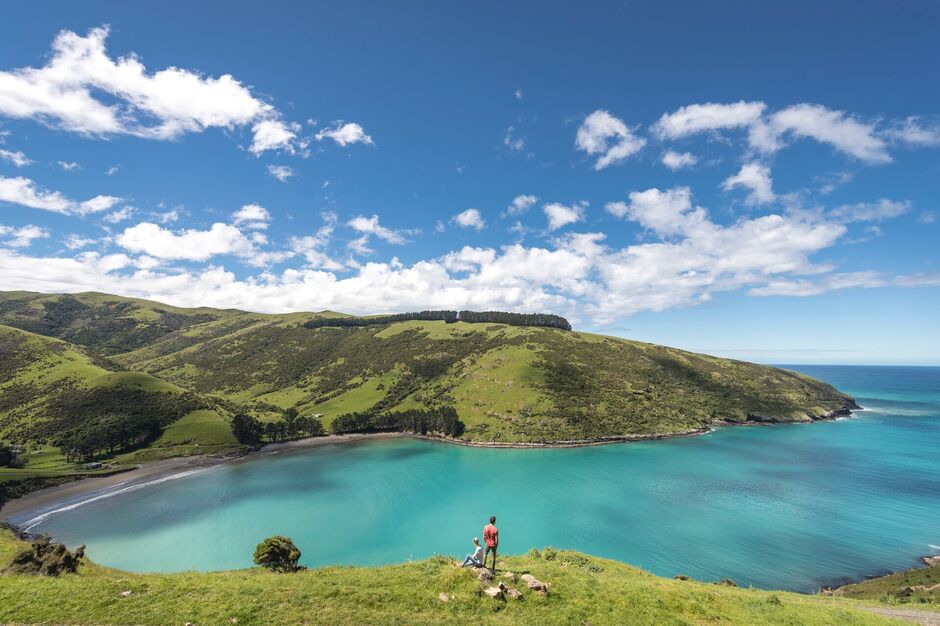
Image Credits: New Zealand
Pick up your campervan from Christchurch. Check that it carries a valid self-containment certificate before leaving the depot.
Stock up on groceries at a Countdown or Pak’nSave in Christchurch before heading to Akaroa, a charming harbour town with strong French colonial heritage. Walk the main street, spot little blue penguins at dusk, or book a Hector’s dolphin swim if you’re keen.

Freedom camping tip: Check CamperMate for current freedom camping spots around Akaroa Harbour. Options are seasonal, so verify the night before.
Days 2–3: Lake Tekapo and Mount Cook (Aoraki)
Drive: ~3 hours from Akaroa to Lake Tekapo
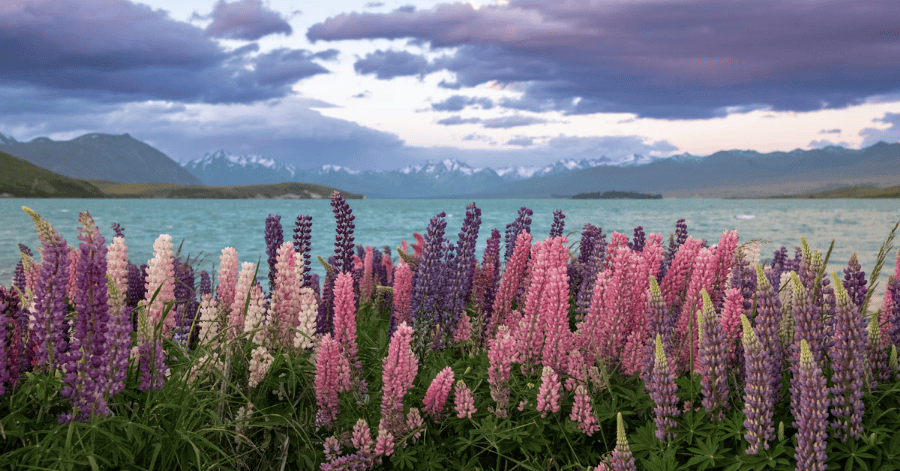
Lake Tekapo is one of NZ’s most-photographed spots. The turquoise glacial water against the Southern Alps is genuinely surreal. Visit the Church of the Good Shepherd in the morning before the tour buses arrive. At night, the Mackenzie Basin is a Dark Sky Reserve, making it one of the best stargazing spots in the Southern Hemisphere. The Dark Sky Project runs guided summit tours at Mt John Observatory — 2 hours, transport included, advance booking required.
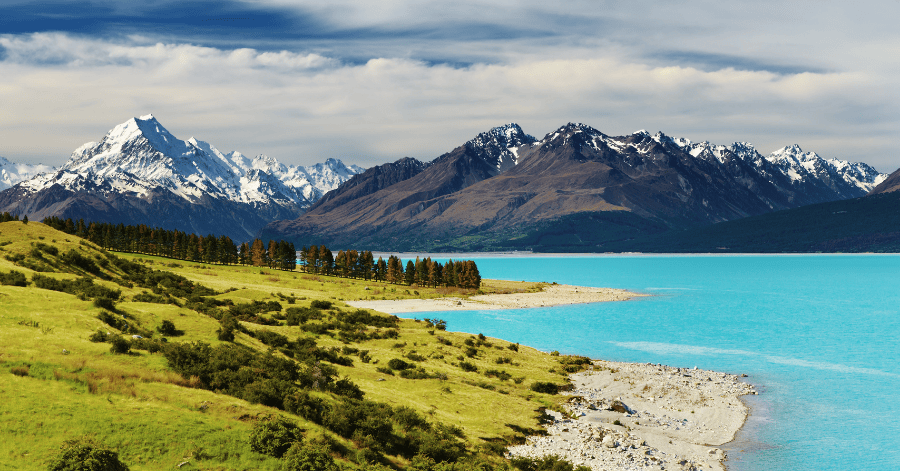
From Tekapo, continue to Aoraki / Mount Cook National Park (about 1.5 hours further). At 3,724m, Aoraki is New Zealand’s tallest peak. You don’t need to be a mountaineer to enjoy it. The Hooker Valley Track (3 hours return, flat) takes you across swing bridges to a glacier terminal lake with full mountain views.
Freedom camping tip: DOC operates freedom camping areas in the Mackenzie Basin. Check doc.govt.nz for current availability. Sites at Mount Cook Village fill fast in summer, so arrive early.
Days 4–5: Queenstown
Drive: ~3.5 hours from Mount Cook to Queenstown
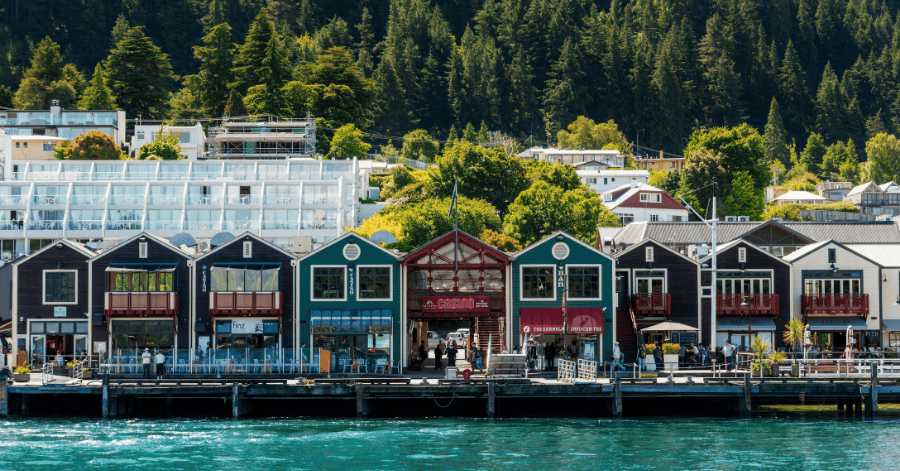
Queenstown is the adventure capital of the world, and it earns the title. Options include:
- Bungee jumping: AJ Hackett’s Kawarau Bridge is the original commercial bungee site
- Skydiving: NZONE Skydive offers jumps over the Remarkables mountain range
- Jet boating: Shotover Jet through the Shotover River canyon
- Milford Sound day tour: Book ahead, especially in peak season
- Queenstown Hill Walk: Free, 2 hours, panoramic views of the lake and The Remarkables
Freedom camping tip: Freedom camping directly in Queenstown is restricted. Most spots require self-contained vehicles. Check CamperMate for the nearest open sites. Some travellers base in nearby Frankton or along the lakefront road.
Days 6–7: Fiordland National Park — Milford Sound
Drive: ~2.5 hours from Queenstown to Milford Sound
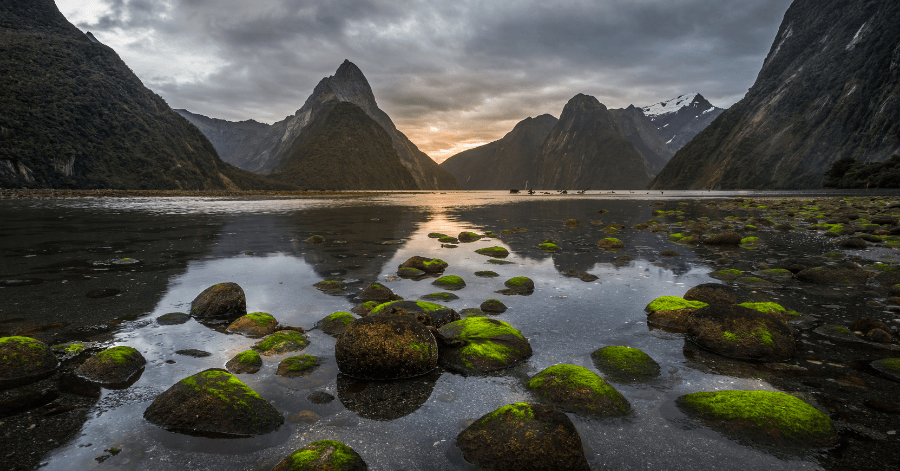
Te Anau is the gateway town. Stock up on food here before heading into Fiordland. The road to Milford Sound (SH94) is one of the most dramatic drives in the world, passing through the Homer Tunnel and into a valley of sheer rock faces and waterfalls.
- ZMilford Sound is best experienced by boat cruise (1.5–2 hours). Rain actually makes it more impressive, temporary waterfalls appear all over the cliff faces. Book ahead.
- The Milford Track is one of New Zealand’s Great Walks, but requires advance booking (months ahead in peak season). For day hikers, the Lake Marian Track (4 hours return) in the Hollyford Valley is excellent.
Freedom camping tip: There’s no freedom camping at Milford Sound itself as it’s a national park. Your best option is to camp near Te Anau, which has several DOC sites, and day-trip in.
Days 8–9: West Coast — Franz Josef and Fox Glaciers
Drive: ~4 hours from Te Anau to Franz Josef (via Haast Pass)
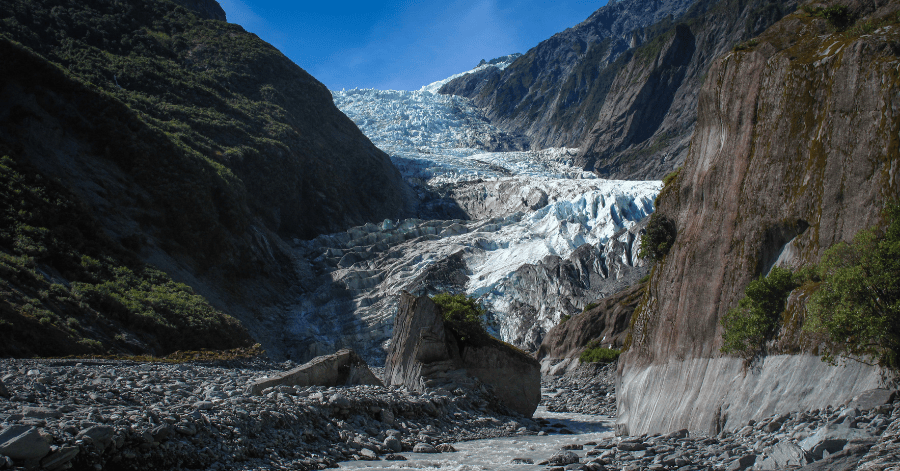
The drive over the Haast Pass is spectacular. You’ll cross from alpine terrain into dense, wet West Coast rainforest within an hour. Stop at Thunder Creek Falls along the way.
Franz Josef Glacier and Fox Glacier are accessible year-round, though getting to the glacier face itself requires a guided hike or helicopter flight (the ice is unstable for independent access). The valley walks to the glacier viewpoints are free and worth doing.
Note for Franz Josef: Trail damage has partially closed the route. Current track goes to Sentinel Rock viewpoint (~30 min return), ~3km from the terminal face.
Also on the West Coast: Pancake Rocks at Punakaiki, layered limestone formations that blow sea spray through blowholes at high tide.
Freedom camping tip: The West Coast has some of the best freedom camping in the country due to wide DOC reserves, long stretches of beach, and fewer crowds than the east coast. CamperMate will show you plenty of options.
Day 10: Drive Back to Christchurch
Drive: ~5 hours via Arthur’s Pass
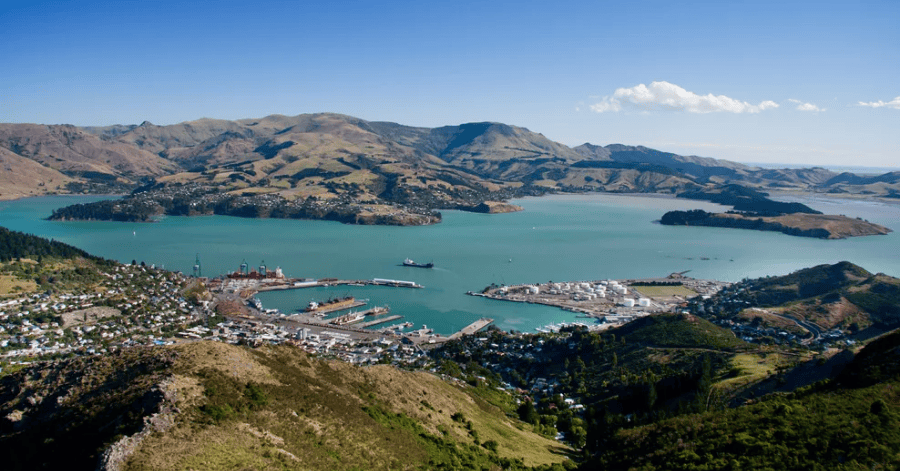
Image credits: Britannica
Take Arthur’s Pass through the Southern Alps rather than the more direct coastal route. It adds almost nothing to the total time and is significantly more scenic. Stop at Castle Hill for the bizarre limestone boulder field (also a well-known bouldering spot).
Return the campervan in Christchurch with the grey water tank emptied and the certificate still intact.
Related Guide: YouTrip Withdrawal Guide For Singaporeans: ATM Fees & Limits
Practical Tips Before You Go
- Plan your route before leaving for remote areas. Mobile coverage disappears fast on the South Island. Download CamperMate offline maps the night before each leg.
- Check the weather. NZ weather changes rapidly, especially on the West Coast and in Fiordland. Check metservice.com daily.
- Restock every 2–3 days. Small towns do have supermarkets, but they’re expensive. Stock up in major towns (Christchurch, Queenstown, Invercargill).
- Respect the Leave No Trace rules. Pack out all rubbish. Dispose of waste only at designated dump stations (CamperMate shows these too). Freedom camping’s future depends on travellers not ruining it.
- Book key attractions in advance. Milford Sound cruises, Milford Track bookings, and Franz Josef heli hikes sell out weeks ahead in December–February.
- Budget for fuel. Petrol on the South Island is expensive and stations are sparse. Don’t let the tank drop below a quarter.
Related Guide: SGD to NZD: Exchange Rate, Forecast & Best Way to Convert in Singapore
Spending Money in New Zealand
New Zealand isn’t cheap. Expect around 80–120 NZD (~S$59–S$89) per person per day for food, fuel, and activities, on top of your campervan rental. Saving on accommodation through freedom camping helps significantly.
For spending, use a multi-currency travel card that doesn’t charge foreign transaction fees. YouTrip lets you load NZD at real exchange rates with no fees per transaction, which adds up fast across 10 days of fuel stops, grocery runs, and activity bookings. You can also hold SGD, AUD, and other currencies in the same wallet, which is handy if you’re combining NZ with an Australia leg.
Keep 50–100 NZD (~S$37–S$74) cash for sites that only take cash, but most places including DOC booking kiosks accept card.
Related Guide: YouTrip Exchange Rates: Everything You Need to Know
FAQs
Q: How does free camping work in New Zealand? Freedom camping lets you sleep overnight outside a paid campground — at DOC reserves, council-designated spots, or roadside rest stops. It’s legal under the Freedom Camping Act 2011, but rules vary by site. Some require a self-contained vehicle; others are open to all. Always check CamperMate or the relevant council website before you stop.
Q: Is freedom camping allowed everywhere in New Zealand? No. It’s only legal at designated freedom camping areas. Sleeping in random carparks, beaches, or national park entrances that haven’t been designated is illegal and subject to fines up to 200 NZD (~S$1648) per person.
Q: Do I need a self-contained campervan to freedom camp in NZ? For restricted freedom camping areas, yes. A self-contained vehicle must have a built-in toilet and grey water storage for at least three days. For non-restricted (open) sites, any vehicle (including a standard car) is allowed. Most rental campervans from reputable companies are certified self-contained.
Q: How much does freedom camping cost in New Zealand? Many sites are completely free. DOC sites typically charge 6–15 NZD (~S$4–S$11) per night. Even the paid sites are significantly cheaper than campgrounds or hostels, which can run 30–60 NZD (~S$22–S$44) per night.
Q: What is the best app for freedom camping in New Zealand? CamperMate is the most comprehensive. It covers freedom camping areas, DOC sites, dump stations, and toilets, with offline maps that work without data. Rankers Camping NZ is good for community reviews and checking current site conditions.
Q: Can you freedom camp on the North Island too? Yes, the Freedom Camping Act applies nationwide. This itinerary covers the South Island, but the North Island has its own designated freedom camping areas, particularly around the Coromandel, Bay of Plenty, and Northland regions.
Q: What happens if you freedom camp illegally in NZ? Fines can reach 200 NZD (~S$148) per person. Enforcement has increased since 2022.


You May Also Like

Intel (INTC) Stock Rockets 78% in 2026 — Will Q1 Earnings Justify the Rally?

Gold Price Rises After Trump Extends Iran Ceasefire Indefinitely




