Ethereum developers confirmed the Fusaka upgrade will activate on mainnet on December 3, 2025, following a systematic testnet rollout beginning on October 1 on Holesky. The major hard fork will implement around 11-12 Ethereum Improvement Proposals targeting scalability, node efficiency, and data availability improvements without adding new user-facing features. According to Christine Kim, the upgrade introduces a phased blob capacity expansion through Blob Parameter Only forks occurring two weeks after Fusaka activation. Initially maintaining current blob limits of 6/9 target/max, the first BPO fork will increase capacity to 10/15 blobs one week later. A second BPO fork will further expand limits to 14/21 blobs, more than doubling total capacity within two weeks. Strategic Infrastructure Overhaul Fusaka prioritizes backend protocol improvements over user-facing features, focusing on making Ethereum faster and less resource-intensive. The upgrade includes PeerDAS implementation through EIP-7594, allowing validator nodes to verify data by sampling small pieces rather than downloading entire blobs. This reduces bandwidth and storage requirements while enhancing Layer 2 rollup scalability. The upgrade builds on recent gas limit increases from 30 million to 45 million gas, with ongoing discussions for further expansion. EIP-7935 proposes increasing limits to 150 million gas, potentially enabling significantly higher transaction throughput. These improvements complement broader scalability efforts, including EIP-9698, which suggests a 100x gas limit increase over two years to reach 2,000 transactions per second. Fusaka removes the previously planned EVM Object Format redesign to reduce complexity while maintaining focus on essential infrastructure improvements. The upgrade introduces bounded base fees for blob transactions via EIP-7918, creating more predictable transaction costs for data-heavy applications. Enhanced spam resistance and security improvements strengthen network resilience against scalability bottlenecks and attacks. Technical Implementation and Testing Timeline The Fusaka rollout follows a conservative four-phase approach across Ethereum testnets before mainnet deployment. Holesky upgrade occurs October 1, followed by Sepolia on October 14 and Hoodi on October 28. Each testnet will undergo the complete BPO fork sequence to validate the blob capacity expansion mechanism. BPO forks activate automatically based on predetermined epochs rather than requiring separate hard fork processes. On mainnet, the first BPO fork launches December 17, increasing blob capacity to 10/15 target/max. The second BPO fork activates January 7, 2026, reaching the final capacity of 14/21 blobs. This automated approach enables flexible blob scaling without requiring full network upgrades. Notably, node operators face release deadlines ranging from September 25 for Holesky to November 3 for mainnet preparation. The staggered timeline, according to the developers, allows comprehensive testing while giving infrastructure providers sufficient preparation time. Speculatively, the developers use this backward-compatible approach to ensure smooth transitions with minimal disruption to existing applications. PeerDAS implementation reduces node resource demands, potentially increasing network decentralization by lowering barriers for smaller operators. The technology enables more efficient data availability sampling, crucial for supporting growing Layer 2 rollup adoption. Overall, these improvements, combined with increased gas limits, will enable Ethereum to handle higher transaction volumes while maintaining security guarantees. Addressing Network Scalability Pressures The Fusaka upgrade addresses mounting pressure for Ethereum base layer improvements amid criticism of Layer 2 fragmentation strategies. Critics argue that reliance on rollups has created isolated chains with limited interoperability, complicating user experiences. The upgrade’s focus on infrastructure improvements aims to enhance base layer capacity while supporting continued Layer 2 growth. The recent validator queue controversy particularly highlights ongoing network scalability challenges. According to a Cryptonews report covered yesterday, currently, over 2M ETH sits in exit queues facing 43-day delays, while entry queues process in just 7 days.Ethereum Validator Queue (Source: ValidatorQueue) However, Vitalik Buterin defended these delays as essential for network security, comparing validator commitments to military service requiring “friction in quitting.” The upgrade coincides with growing institutional interest in Ethereum infrastructure, with VanEck predicting that Layer 2 networks could reach $1 trillion market capitalization within six years. Fusaka’s emphasis on data availability and node efficiency supports Ethereum’s evolution toward seamless cross-chain interoperability. The upgrade complements initiatives like the Open Intents Framework, where Coinbase Payments recently joined as a core contributor. The initiative, if successful, will address the $21B surge in cross-chain crime. These coordinated efforts aim to unify the fragmented multichain experience while maintaining Ethereum’s security and decentralization principlesEthereum developers confirmed the Fusaka upgrade will activate on mainnet on December 3, 2025, following a systematic testnet rollout beginning on October 1 on Holesky. The major hard fork will implement around 11-12 Ethereum Improvement Proposals targeting scalability, node efficiency, and data availability improvements without adding new user-facing features. According to Christine Kim, the upgrade introduces a phased blob capacity expansion through Blob Parameter Only forks occurring two weeks after Fusaka activation. Initially maintaining current blob limits of 6/9 target/max, the first BPO fork will increase capacity to 10/15 blobs one week later. A second BPO fork will further expand limits to 14/21 blobs, more than doubling total capacity within two weeks. Strategic Infrastructure Overhaul Fusaka prioritizes backend protocol improvements over user-facing features, focusing on making Ethereum faster and less resource-intensive. The upgrade includes PeerDAS implementation through EIP-7594, allowing validator nodes to verify data by sampling small pieces rather than downloading entire blobs. This reduces bandwidth and storage requirements while enhancing Layer 2 rollup scalability. The upgrade builds on recent gas limit increases from 30 million to 45 million gas, with ongoing discussions for further expansion. EIP-7935 proposes increasing limits to 150 million gas, potentially enabling significantly higher transaction throughput. These improvements complement broader scalability efforts, including EIP-9698, which suggests a 100x gas limit increase over two years to reach 2,000 transactions per second. Fusaka removes the previously planned EVM Object Format redesign to reduce complexity while maintaining focus on essential infrastructure improvements. The upgrade introduces bounded base fees for blob transactions via EIP-7918, creating more predictable transaction costs for data-heavy applications. Enhanced spam resistance and security improvements strengthen network resilience against scalability bottlenecks and attacks. Technical Implementation and Testing Timeline The Fusaka rollout follows a conservative four-phase approach across Ethereum testnets before mainnet deployment. Holesky upgrade occurs October 1, followed by Sepolia on October 14 and Hoodi on October 28. Each testnet will undergo the complete BPO fork sequence to validate the blob capacity expansion mechanism. BPO forks activate automatically based on predetermined epochs rather than requiring separate hard fork processes. On mainnet, the first BPO fork launches December 17, increasing blob capacity to 10/15 target/max. The second BPO fork activates January 7, 2026, reaching the final capacity of 14/21 blobs. This automated approach enables flexible blob scaling without requiring full network upgrades. Notably, node operators face release deadlines ranging from September 25 for Holesky to November 3 for mainnet preparation. The staggered timeline, according to the developers, allows comprehensive testing while giving infrastructure providers sufficient preparation time. Speculatively, the developers use this backward-compatible approach to ensure smooth transitions with minimal disruption to existing applications. PeerDAS implementation reduces node resource demands, potentially increasing network decentralization by lowering barriers for smaller operators. The technology enables more efficient data availability sampling, crucial for supporting growing Layer 2 rollup adoption. Overall, these improvements, combined with increased gas limits, will enable Ethereum to handle higher transaction volumes while maintaining security guarantees. Addressing Network Scalability Pressures The Fusaka upgrade addresses mounting pressure for Ethereum base layer improvements amid criticism of Layer 2 fragmentation strategies. Critics argue that reliance on rollups has created isolated chains with limited interoperability, complicating user experiences. The upgrade’s focus on infrastructure improvements aims to enhance base layer capacity while supporting continued Layer 2 growth. The recent validator queue controversy particularly highlights ongoing network scalability challenges. According to a Cryptonews report covered yesterday, currently, over 2M ETH sits in exit queues facing 43-day delays, while entry queues process in just 7 days.Ethereum Validator Queue (Source: ValidatorQueue) However, Vitalik Buterin defended these delays as essential for network security, comparing validator commitments to military service requiring “friction in quitting.” The upgrade coincides with growing institutional interest in Ethereum infrastructure, with VanEck predicting that Layer 2 networks could reach $1 trillion market capitalization within six years. Fusaka’s emphasis on data availability and node efficiency supports Ethereum’s evolution toward seamless cross-chain interoperability. The upgrade complements initiatives like the Open Intents Framework, where Coinbase Payments recently joined as a core contributor. The initiative, if successful, will address the $21B surge in cross-chain crime. These coordinated efforts aim to unify the fragmented multichain experience while maintaining Ethereum’s security and decentralization principles

Ethereum Fusaka Upgrade Set for December 3 Mainnet Launch, Blob Capacity to Double

4 min read

Ethereum developers confirmed the Fusaka upgrade will activate on mainnet on December 3, 2025, following a systematic testnet rollout beginning on October 1 on Holesky.

The major hard fork will implement around 11-12 Ethereum Improvement Proposals targeting scalability, node efficiency, and data availability improvements without adding new user-facing features.

According to Christine Kim, the upgrade introduces a phased blob capacity expansion through Blob Parameter Only forks occurring two weeks after Fusaka activation.

Initially maintaining current blob limits of 6/9 target/max, the first BPO fork will increase capacity to 10/15 blobs one week later.

A second BPO fork will further expand limits to 14/21 blobs, more than doubling total capacity within two weeks.

Strategic Infrastructure Overhaul

Fusaka prioritizes backend protocol improvements over user-facing features, focusing on making Ethereum faster and less resource-intensive.

The upgrade includes PeerDAS implementation through EIP-7594, allowing validator nodes to verify data by sampling small pieces rather than downloading entire blobs.

This reduces bandwidth and storage requirements while enhancing Layer 2 rollup scalability.

The upgrade builds on recent gas limit increases from 30 million to 45 million gas, with ongoing discussions for further expansion.

EIP-7935 proposes increasing limits to 150 million gas, potentially enabling significantly higher transaction throughput.

These improvements complement broader scalability efforts, including EIP-9698, which suggests a 100x gas limit increase over two years to reach 2,000 transactions per second.

Fusaka removes the previously planned EVM Object Format redesign to reduce complexity while maintaining focus on essential infrastructure improvements.

The upgrade introduces bounded base fees for blob transactions via EIP-7918, creating more predictable transaction costs for data-heavy applications.

Enhanced spam resistance and security improvements strengthen network resilience against scalability bottlenecks and attacks.

Technical Implementation and Testing Timeline

The Fusaka rollout follows a conservative four-phase approach across Ethereum testnets before mainnet deployment.

Holesky upgrade occurs October 1, followed by Sepolia on October 14 and Hoodi on October 28.

Each testnet will undergo the complete BPO fork sequence to validate the blob capacity expansion mechanism.

BPO forks activate automatically based on predetermined epochs rather than requiring separate hard fork processes.

On mainnet, the first BPO fork launches December 17, increasing blob capacity to 10/15 target/max.

The second BPO fork activates January 7, 2026, reaching the final capacity of 14/21 blobs. This automated approach enables flexible blob scaling without requiring full network upgrades.

Notably, node operators face release deadlines ranging from September 25 for Holesky to November 3 for mainnet preparation.

The staggered timeline, according to the developers, allows comprehensive testing while giving infrastructure providers sufficient preparation time.

Speculatively, the developers use this backward-compatible approach to ensure smooth transitions with minimal disruption to existing applications.

PeerDAS implementation reduces node resource demands, potentially increasing network decentralization by lowering barriers for smaller operators.

The technology enables more efficient data availability sampling, crucial for supporting growing Layer 2 rollup adoption.

Overall, these improvements, combined with increased gas limits, will enable Ethereum to handle higher transaction volumes while maintaining security guarantees.

Addressing Network Scalability Pressures

The Fusaka upgrade addresses mounting pressure for Ethereum base layer improvements amid criticism of Layer 2 fragmentation strategies.

Critics argue that reliance on rollups has created isolated chains with limited interoperability, complicating user experiences.

The upgrade’s focus on infrastructure improvements aims to enhance base layer capacity while supporting continued Layer 2 growth.

The recent validator queue controversy particularly highlights ongoing network scalability challenges.

According to a Cryptonews report covered yesterday, currently, over 2M ETH sits in exit queues facing 43-day delays, while entry queues process in just 7 days.
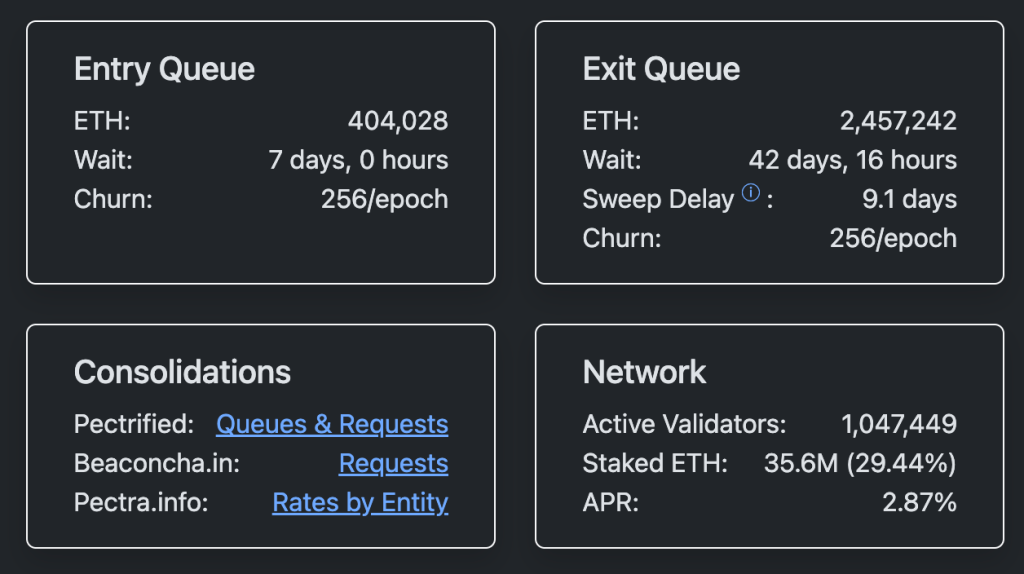
Ethereum Fusaka Upgrade Set for December 3 Mainnet Launch, Blob Capacity to DoubleEthereum Validator Queue (Source: ValidatorQueue)

However, Vitalik Buterin defended these delays as essential for network security, comparing validator commitments to military service requiring “friction in quitting.”

The upgrade coincides with growing institutional interest in Ethereum infrastructure, with VanEck predicting that Layer 2 networks could reach $1 trillion market capitalization within six years.

Fusaka’s emphasis on data availability and node efficiency supports Ethereum’s evolution toward seamless cross-chain interoperability.

The upgrade complements initiatives like the Open Intents Framework, where Coinbase Payments recently joined as a core contributor. The initiative, if successful, will address the $21B surge in cross-chain crime.

These coordinated efforts aim to unify the fragmented multichain experience while maintaining Ethereum’s security and decentralization principles.

Disclaimer: The articles reposted on this site are sourced from public platforms and are provided for informational purposes only. They do not necessarily reflect the views of MEXC. All rights remain with the original authors. If you believe any content infringes on third-party rights, please contact [email protected] for removal. MEXC makes no guarantees regarding the accuracy, completeness, or timeliness of the content and is not responsible for any actions taken based on the information provided. The content does not constitute financial, legal, or other professional advice, nor should it be considered a recommendation or endorsement by MEXC.

You May Also Like

Taiko and Chainlink to Unleash Reliable Onchain Data for DeFi Ecosystem

Taiko and Chainlink to Unleash Reliable Onchain Data for DeFi Ecosystem

Taiko and Chainlink Data Streams to deliver secure, high-speed onchain data by empowering next-generation DeFi protocols and institutional-grade adoption.
Share
Blockchainreporter2025/09/18 06:10
Why The Green Bay Packers Must Take The Cleveland Browns Seriously — As Hard As That Might Be

Why The Green Bay Packers Must Take The Cleveland Browns Seriously — As Hard As That Might Be

The post Why The Green Bay Packers Must Take The Cleveland Browns Seriously — As Hard As That Might Be appeared on BitcoinEthereumNews.com. Jordan Love and the Green Bay Packers are off to a 2-0 start. Getty Images The Green Bay Packers are, once again, one of the NFL’s better teams. The Cleveland Browns are, once again, one of the league’s doormats. It’s why unbeaten Green Bay (2-0) is a 8-point favorite at winless Cleveland (0-2) Sunday according to betmgm.com. The money line is also Green Bay -500. Most expect this to be a Packers’ rout, and it very well could be. But Green Bay knows taking anyone in this league for granted can prove costly. “I think if you look at their roster, the paper, who they have on that team, what they can do, they got a lot of talent and things can turn around quickly for them,” Packers safety Xavier McKinney said. “We just got to kind of keep that in mind and know we not just walking into something and they just going to lay down. That’s not what they going to do.” The Browns certainly haven’t laid down on defense. Far from. Cleveland is allowing an NFL-best 191.5 yards per game. The Browns gave up 141 yards to Cincinnati in Week 1, including just seven in the second half, but still lost, 17-16. Cleveland has given up an NFL-best 45.5 rushing yards per game and just 2.1 rushing yards per attempt. “The biggest thing is our defensive line is much, much improved over last year and I think we’ve got back to our personality,” defensive coordinator Jim Schwartz said recently. “When we play our best, our D-line leads us there as our engine.” The Browns rank third in the league in passing defense, allowing just 146.0 yards per game. Cleveland has also gone 30 straight games without allowing a 300-yard passer, the longest active streak in the NFL.…
Share
BitcoinEthereumNews2025/09/18 00:41
One Of Frank Sinatra’s Most Famous Albums Is Back In The Spotlight

One Of Frank Sinatra’s Most Famous Albums Is Back In The Spotlight

The post One Of Frank Sinatra’s Most Famous Albums Is Back In The Spotlight appeared on BitcoinEthereumNews.com. Frank Sinatra’s The World We Knew returns to the Jazz Albums and Traditional Jazz Albums charts, showing continued demand for his timeless music. Frank Sinatra performs on his TV special Frank Sinatra: A Man and his Music Bettmann Archive These days on the Billboard charts, Frank Sinatra’s music can always be found on the jazz-specific rankings. While the art he created when he was still working was pop at the time, and later classified as traditional pop, there is no such list for the latter format in America, and so his throwback projects and cuts appear on jazz lists instead. It’s on those charts where Sinatra rebounds this week, and one of his popular projects returns not to one, but two tallies at the same time, helping him increase the total amount of real estate he owns at the moment. Frank Sinatra’s The World We Knew Returns Sinatra’s The World We Knew is a top performer again, if only on the jazz lists. That set rebounds to No. 15 on the Traditional Jazz Albums chart and comes in at No. 20 on the all-encompassing Jazz Albums ranking after not appearing on either roster just last frame. The World We Knew’s All-Time Highs The World We Knew returns close to its all-time peak on both of those rosters. Sinatra’s classic has peaked at No. 11 on the Traditional Jazz Albums chart, just missing out on becoming another top 10 for the crooner. The set climbed all the way to No. 15 on the Jazz Albums tally and has now spent just under two months on the rosters. Frank Sinatra’s Album With Classic Hits Sinatra released The World We Knew in the summer of 1967. The title track, which on the album is actually known as “The World We Knew (Over and…
Share
BitcoinEthereumNews2025/09/18 00:02