

South African Rand Weakens Sharply as Escalating US-Iran Tensions and Surging Oil Prices Rattle Markets
BitcoinWorld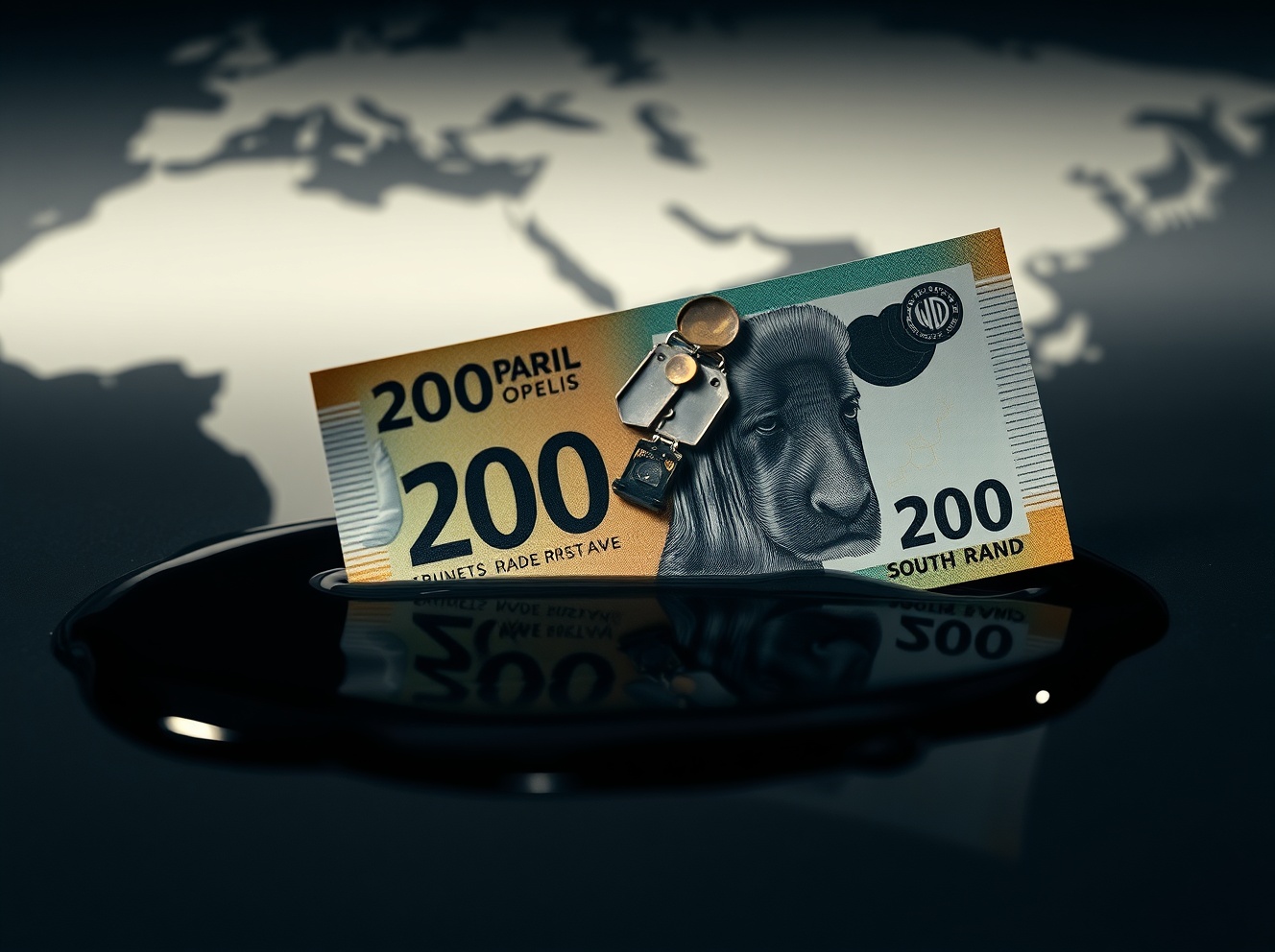
South African Rand Weakens Sharply as Escalating US-Iran Tensions and Surging Oil Prices Rattle Markets
The South African rand weakens against major global currencies as escalating US-Iran tensions and a subsequent surge in oil prices create a perfect storm for emerging market assets. This movement marks a significant shift in the ZAR’s trajectory, raising concerns about inflation and economic stability in the region. Johannesburg, South Africa — The currency experienced a sharp depreciation in early trading, reflecting deep-seated investor anxiety over geopolitical risks.
Why the South African Rand Weakens Under Geopolitical Pressure
The connection between geopolitical strife and currency devaluation is well-documented. When the South African rand weakens, it often responds to global risk aversion. The recent US-Iran tensions act as a powerful catalyst. Investors flee risky assets. They move towards safe havens like the US dollar and gold. This flight to safety directly impacts the ZAR.
South Africa operates a current account deficit. This means it relies heavily on foreign capital inflows. Rising global uncertainty dries up these flows. The currency then bears the brunt of the adjustment. A weaker rand increases the cost of imports. This is especially painful for a nation dependent on imported oil.
The Direct Link: Rising Oil Prices and the ZAR
The US-Iran tensions have directly pushed crude oil prices higher. South Africa imports a substantial portion of its fuel. When the South African rand weakens and oil prices rise simultaneously, the effect is compounded. Fuel prices at the pump increase. This feeds into broader inflation. The central bank, the South African Reserve Bank (SARB), faces a difficult choice. It must balance supporting growth with controlling price pressures.
Historical data shows a strong correlation. In periods of Middle East instability, the rand often underperforms. The 2019 drone attacks on Saudi Aramco facilities serve as a recent example. The rand dropped over 2% in a single day. The current situation carries similar, if not greater, risks.
Market Reaction and Immediate Impact
Market participants reacted swiftly to the news. The USD/ZAR pair broke through key resistance levels. It moved past the psychologically important R18.00 mark. Traders reported increased volatility. Bid-ask spreads widened. This indicates a lack of liquidity and heightened uncertainty.
Local bond yields also rose. This reflects a sell-off in South African government debt. Foreign investors reduced their exposure. They repatriated capital to safer jurisdictions. The Johannesburg Stock Exchange (JSE) experienced a broad-based decline. Resource stocks initially gained on higher commodity prices. However, financial and retail stocks suffered losses.
Key Data Points from the Session
- USD/ZAR: Opened at R17.85, surged to R18.25 before settling near R18.15.
- Brent Crude Oil: Rose 4.5% to $92 per barrel.
- Gold Price: Increased 1.2% to $2,050 per ounce, reflecting safe-haven demand.
- 10-Year Bond Yield: Climbed 15 basis points to 11.75%.
Expert Analysis: A Structural Weakness Exposed
Economists point to South Africa’s structural vulnerabilities. The nation faces high unemployment. It struggles with sluggish growth. Load-shedding (rolling blackouts) continues to hamper productivity. These domestic issues make the rand exceptionally sensitive to external shocks.
“The South African rand weakens not just because of US-Iran tensions, but because the economy lacks a safety net,” explains a senior currency strategist at a major Johannesburg bank. “When a global crisis hits, investors look at the fundamentals. South Africa’s fundamentals are fragile. The rand pays the price.”
The reliance on portfolio flows is a key weakness. Unlike commodity exporters like Australia or Canada, South Africa does not benefit directly from higher oil prices. It suffers from them. This creates an asymmetric risk profile for the ZAR.
Timeline of Events: From Tensions to Currency Weakness
The sequence of events unfolded rapidly over the past 48 hours. Understanding the timeline helps contextualize the market move.
| Time (SAST) | Event | Impact on ZAR |
|---|---|---|
| Monday 08:00 | Reports of increased US naval presence in the Gulf | ZAR opens weaker, down 0.3% |
| Monday 14:00 | Iranian official makes aggressive statement | ZAR drops 0.8%, breaks R18.00 |
| Monday 18:00 | Oil prices spike 3% on supply disruption fears | ZAR falls further, testing R18.20 |
| Tuesday 06:00 | Asian markets open risk-off; safe-haven flows intensify | ZAR hits session low at R18.25 |
Impact on South African Consumers and Businesses
The weakening rand has immediate, tangible consequences for ordinary South Africans. The most visible impact is at the fuel pump. South Africa uses a basic fuel price formula. This formula incorporates the international oil price and the rand-dollar exchange rate. A weaker rand makes every barrel of oil more expensive in local currency terms.
Fuel price increases ripple through the economy. Transport costs rise. Food prices follow. Manufacturing input costs increase. This creates a cost-push inflation environment. The SARB may be forced to raise interest rates. Higher rates slow economic growth. They also increase the cost of debt for consumers and businesses.
Business Impact Summary
- Importers: Face immediate margin compression. Must either absorb costs or pass them on.
- Exporters: Benefit from a weaker rand. Their goods become cheaper for foreign buyers.
- Tourism: South Africa becomes a cheaper destination. This could boost international arrivals.
- Fuel Retailers: Operate on thin margins. Volatility makes planning difficult.
Historical Context: The Rand’s Vulnerability to Oil Shocks
The South African rand weakens predictably during oil price shocks. Data from the past two decades confirms this pattern. The 2008 financial crisis saw the rand collapse from R7.00 to over R10.00 against the dollar. Oil prices had peaked at $147 per barrel earlier that year.
The 2014 oil price crash, triggered by OPEC’s strategy, initially helped the rand. However, the subsequent collapse in commodity prices hurt South Africa’s mining sector. This shows the complex relationship. The rand is not a pure petro-currency. It is influenced by a basket of factors. Geopolitical risk remains the dominant driver in the current environment.
What Comes Next: Scenarios for the ZAR
Analysts outline several potential scenarios. The path of the rand depends heavily on the evolution of US-Iran tensions. A de-escalation would likely trigger a sharp recovery. The rand could rally back below R18.00 quickly. However, any further escalation would push the currency towards R18.50 or even R19.00.
The SARB’s next monetary policy meeting is a key event. If inflation expectations become unanchored, the bank may hike rates aggressively. This would support the rand in the short term. However, it would also damage an already fragile economy. The central bank faces a difficult balancing act.
Conclusion
The South African rand weakens significantly due to the combined pressure of US-Iran tensions and rising oil prices. This event exposes the structural vulnerabilities of the South African economy. It highlights the nation’s dependence on foreign capital and imported energy. The immediate outlook remains uncertain. Investors should monitor geopolitical developments closely. The ZAR’s fate is now tied to events thousands of miles away. For South African consumers, the cost of this instability will be felt in higher prices and potentially higher interest rates. The situation demands careful attention from policymakers and market participants alike.
FAQs
Q1: Why does the South African rand weaken when oil prices rise?
South Africa is a net importer of oil. When oil prices rise, the country must spend more foreign currency to buy the same amount of fuel. This increases the demand for US dollars and puts downward pressure on the rand. Additionally, higher oil prices fuel inflation, which can lead to economic instability and further currency weakness.
Q2: How do US-Iran tensions directly affect the ZAR?
US-Iran tensions create global uncertainty. Investors become risk-averse and sell emerging market assets like the South African rand. They move their money into safe-haven currencies like the US dollar, Swiss franc, and Japanese yen. This ‘flight to safety’ directly causes the rand to weaken.
Q3: What is the impact of a weaker rand on South African inflation?
A weaker rand makes imported goods more expensive. This includes oil, machinery, and consumer electronics. These higher import costs feed into the consumer price index (CPI), leading to higher inflation. The South African Reserve Bank may then raise interest rates to control this inflation.
Q4: Will the SARB intervene to support the rand?
The SARB does not target a specific exchange rate. Its primary mandate is to control inflation. However, it can intervene in the forex market to smooth excessive volatility. The bank may also raise interest rates, which can attract foreign capital and support the currency. Direct intervention is rare and usually reserved for extreme circumstances.
Q5: Is the current rand weakness a buying opportunity for forex traders?
The current environment is highly volatile. While a weaker rand can present a buying opportunity if tensions de-escalate, the risks are significant. Traders should use strict risk management. The potential for further escalation remains high. A technical analysis of the USD/ZAR pair shows strong resistance at R18.50. A break above that level could signal further downside for the rand.
This post South African Rand Weakens Sharply as Escalating US-Iran Tensions and Surging Oil Prices Rattle Markets first appeared on BitcoinWorld.


You May Also Like

AT&T (T) Stock: J.P. Morgan Keeps It as a Top Pick on Fiber and 5G Strength
XRP News: Ripple Healthcare’s XRPL-Base Integration – What Next?




