Written by: 1912212.eth, Foresight News After the October 11th crash, widespread market concerns about a potential second dip surfaced, and just days later, another plunge struck. Bitcoin, which rebounded from $116,000 on October 17th, experienced four consecutive daily declines. At around 4:00 PM today, it dipped to around $104,500, within striking distance of the October 11th crash low of $102,000. Ether (ETH) was also not immune, plummeting to $3,706, and Sol (SOL) to around $175. A host of altcoins saw widespread declines. Coinglass data shows that over the past 24 hours, open interest across the entire network has reached $1.189 billion, with $935 million in long positions liquidated. The largest single liquidation occurred on Hyperliquid's ETH-USD exchange, valued at $20.4274 million. Alternative data shows that the market panic index has fallen to 22, indicating extreme panic. US BTC and ETH spot ETFs both saw significant net outflows Since the crash, US BTC spot ETFs have shown significant net outflows. Between October 10 and 16, only October 14th saw a net inflow of $102.58 million, while the rest of the period saw net outflows. On October 1st, net outflows exceeded $536 million, a new low since August. The outlook for Ethereum spot ETFs is also not optimistic, with large net outflows occurring since October 9. On October 13, the net outflow exceeded $428 million, setting a new record for net outflows since September this year. The crash has left market confidence fragile DeFiance Capital, which had prospered in the previous cycle by betting on multiple DeFi projects, suffered losses in this crash. On October 14th, its founder, Arthur, posted on social media, "We're fine. The fund experienced some losses, but they weren't among our top five biggest profit and loss days. I'm just extremely angry and disappointed. This crash has set the entire crypto space back significantly, especially for the altcoin market, as most price discovery occurs on offshore CEXs." He even pessimistically believes that the crash marks the end of the encryption era. The previously popular trend of treasury DATs has also died down. Tom Lee, chairman of BitMine, the largest Ethereum holding company, said the bubble may have burst. Previously, on September 9, 2025, Nasdaq-listed QMMM Holdings announced plans to invest $100 million in a cryptocurrency reserve, leading to a 9.6-fold increase in its stock price within three weeks. At the end of September, the U.S. Securities and Exchange Commission (SEC) suspended trading of the company, effective September 29, based on allegations that the company was manipulating its stock price through social media platforms. The suspension remains in effect. Caixin visited its Hong Kong headquarters on October 16th and found the office deserted. Upon contacting staff at another nearby company, they stated that the company had relocated in September and were unaware of the relocation. Changpeng Zhao commented on this, saying, “All crypto treasury (DAT) companies should use third-party crypto custodians and have their accounts audited by investors.” Small US banks collapse as market sells first Two regional U.S. banks, Zions Bancorp and Western Alliance Bancorp, disclosed losses Thursday from fraud involving distressed commercial mortgage investment funds. While the losses were relatively small compared to other recent credit defaults, amounting to only tens of millions of dollars, the market reaction was dramatic. Germany's DAX index fell 2.13%, Britain's FTSE 100 index fell 1.6%, Nikkei 225 index fell 1.44%, Australia's S&P/ASX 200 index fell 0.81%, and all three major U.S. stock index futures fell. Panic spread quickly, dragging down the entire banking sector, with the total market value of 74 large US banks wiping out more than $100 billion in one day. This "sell now, see later" mentality quickly spread. JPMorgan analysts Anthony Elian and Michael Pietrini wrote in a report that they also questioned "why all these credit 'isolation' events seem to have occurred in such a short period of time." However, the sell-off did not spare large bank stocks, with shares of Citigroup and Bank of America both falling by more than 3%. The 2023 US banking crisis also triggered a sharp correction in the crypto market. Will the market turn bearish in the future? Chris Burniske, partner at Placeholder VC, wrote, “It increasingly feels like last Friday’s plunge has caused the crypto market to stagnate in the short term. After such a crash, it’s difficult to quickly form sustained buying. This cycle has been disappointing for most people, which may limit their actions because everyone is looking forward to a market recovery or previous historical highs. It’s easy to get caught up in the details of the chart, but if you look at the monthly charts of BTC and ETH, it shows that we are still in the high range (although there are cracks), if you are considering taking profits. MSTR is falling, gold is warning, as are credit markets, and stocks will be the last to react. We can always get a weak rebound, but I've already taken action (remember, cashing out is never all or nothing). I'll watch how BTC reacts to $100,000, but I might become interested again if it reaches $75,000 or lower. This bull market is different from the last, and the next bear market won't be either." Arete Capital partner McKenna said the market is in the process of forming a bottom, which takes 40-60 days to establish. All price action within this interval is a volatile washout. "In mid-November, we should begin to expect constructive results and a positive December and first quarter of 2026." glassnode tweeted that Bitcoin is currently in a key support range, with the price below the 200-day moving average ($107,400) and just above the 365-day moving average ($99,900). At the same time, there is also pressure from the 111-day moving average ($114,700) above it. If the 365-day moving average can be held, the trend may stabilize; if it falls below this level, there may be a risk of a deeper correction. Weiss Crypto suggests that around October 17th, the market may begin to rebound from its lows. By December of this year, the price of Bitcoin could reach a new high of nearly $135,000.Written by: 1912212.eth, Foresight News After the October 11th crash, widespread market concerns about a potential second dip surfaced, and just days later, another plunge struck. Bitcoin, which rebounded from $116,000 on October 17th, experienced four consecutive daily declines. At around 4:00 PM today, it dipped to around $104,500, within striking distance of the October 11th crash low of $102,000. Ether (ETH) was also not immune, plummeting to $3,706, and Sol (SOL) to around $175. A host of altcoins saw widespread declines. Coinglass data shows that over the past 24 hours, open interest across the entire network has reached $1.189 billion, with $935 million in long positions liquidated. The largest single liquidation occurred on Hyperliquid's ETH-USD exchange, valued at $20.4274 million. Alternative data shows that the market panic index has fallen to 22, indicating extreme panic. US BTC and ETH spot ETFs both saw significant net outflows Since the crash, US BTC spot ETFs have shown significant net outflows. Between October 10 and 16, only October 14th saw a net inflow of $102.58 million, while the rest of the period saw net outflows. On October 1st, net outflows exceeded $536 million, a new low since August. The outlook for Ethereum spot ETFs is also not optimistic, with large net outflows occurring since October 9. On October 13, the net outflow exceeded $428 million, setting a new record for net outflows since September this year. The crash has left market confidence fragile DeFiance Capital, which had prospered in the previous cycle by betting on multiple DeFi projects, suffered losses in this crash. On October 14th, its founder, Arthur, posted on social media, "We're fine. The fund experienced some losses, but they weren't among our top five biggest profit and loss days. I'm just extremely angry and disappointed. This crash has set the entire crypto space back significantly, especially for the altcoin market, as most price discovery occurs on offshore CEXs." He even pessimistically believes that the crash marks the end of the encryption era. The previously popular trend of treasury DATs has also died down. Tom Lee, chairman of BitMine, the largest Ethereum holding company, said the bubble may have burst. Previously, on September 9, 2025, Nasdaq-listed QMMM Holdings announced plans to invest $100 million in a cryptocurrency reserve, leading to a 9.6-fold increase in its stock price within three weeks. At the end of September, the U.S. Securities and Exchange Commission (SEC) suspended trading of the company, effective September 29, based on allegations that the company was manipulating its stock price through social media platforms. The suspension remains in effect. Caixin visited its Hong Kong headquarters on October 16th and found the office deserted. Upon contacting staff at another nearby company, they stated that the company had relocated in September and were unaware of the relocation. Changpeng Zhao commented on this, saying, “All crypto treasury (DAT) companies should use third-party crypto custodians and have their accounts audited by investors.” Small US banks collapse as market sells first Two regional U.S. banks, Zions Bancorp and Western Alliance Bancorp, disclosed losses Thursday from fraud involving distressed commercial mortgage investment funds. While the losses were relatively small compared to other recent credit defaults, amounting to only tens of millions of dollars, the market reaction was dramatic. Germany's DAX index fell 2.13%, Britain's FTSE 100 index fell 1.6%, Nikkei 225 index fell 1.44%, Australia's S&P/ASX 200 index fell 0.81%, and all three major U.S. stock index futures fell. Panic spread quickly, dragging down the entire banking sector, with the total market value of 74 large US banks wiping out more than $100 billion in one day. This "sell now, see later" mentality quickly spread. JPMorgan analysts Anthony Elian and Michael Pietrini wrote in a report that they also questioned "why all these credit 'isolation' events seem to have occurred in such a short period of time." However, the sell-off did not spare large bank stocks, with shares of Citigroup and Bank of America both falling by more than 3%. The 2023 US banking crisis also triggered a sharp correction in the crypto market. Will the market turn bearish in the future? Chris Burniske, partner at Placeholder VC, wrote, “It increasingly feels like last Friday’s plunge has caused the crypto market to stagnate in the short term. After such a crash, it’s difficult to quickly form sustained buying. This cycle has been disappointing for most people, which may limit their actions because everyone is looking forward to a market recovery or previous historical highs. It’s easy to get caught up in the details of the chart, but if you look at the monthly charts of BTC and ETH, it shows that we are still in the high range (although there are cracks), if you are considering taking profits. MSTR is falling, gold is warning, as are credit markets, and stocks will be the last to react. We can always get a weak rebound, but I've already taken action (remember, cashing out is never all or nothing). I'll watch how BTC reacts to $100,000, but I might become interested again if it reaches $75,000 or lower. This bull market is different from the last, and the next bear market won't be either." Arete Capital partner McKenna said the market is in the process of forming a bottom, which takes 40-60 days to establish. All price action within this interval is a volatile washout. "In mid-November, we should begin to expect constructive results and a positive December and first quarter of 2026." glassnode tweeted that Bitcoin is currently in a key support range, with the price below the 200-day moving average ($107,400) and just above the 365-day moving average ($99,900). At the same time, there is also pressure from the 111-day moving average ($114,700) above it. If the 365-day moving average can be held, the trend may stabilize; if it falls below this level, there may be a risk of a deeper correction. Weiss Crypto suggests that around October 17th, the market may begin to rebound from its lows. By December of this year, the price of Bitcoin could reach a new high of nearly $135,000.

Bitcoin falls below $110,000, will the market turn bearish?

2025/10/20 07:29
6 min read

Written by: 1912212.eth, Foresight News

After the October 11th crash, widespread market concerns about a potential second dip surfaced, and just days later, another plunge struck. Bitcoin, which rebounded from $116,000 on October 17th, experienced four consecutive daily declines. At around 4:00 PM today, it dipped to around $104,500, within striking distance of the October 11th crash low of $102,000. Ether (ETH) was also not immune, plummeting to $3,706, and Sol (SOL) to around $175. A host of altcoins saw widespread declines.

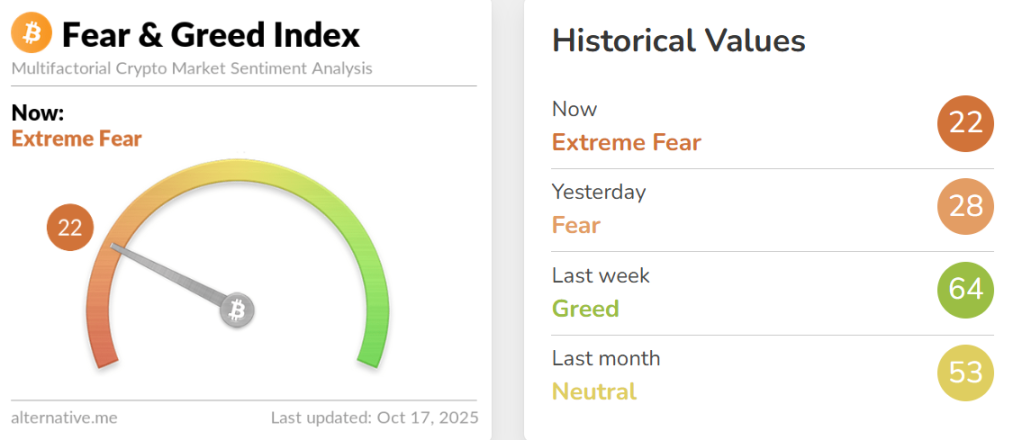
Coinglass data shows that over the past 24 hours, open interest across the entire network has reached $1.189 billion, with $935 million in long positions liquidated. The largest single liquidation occurred on Hyperliquid's ETH-USD exchange, valued at $20.4274 million. Alternative data shows that the market panic index has fallen to 22, indicating extreme panic.
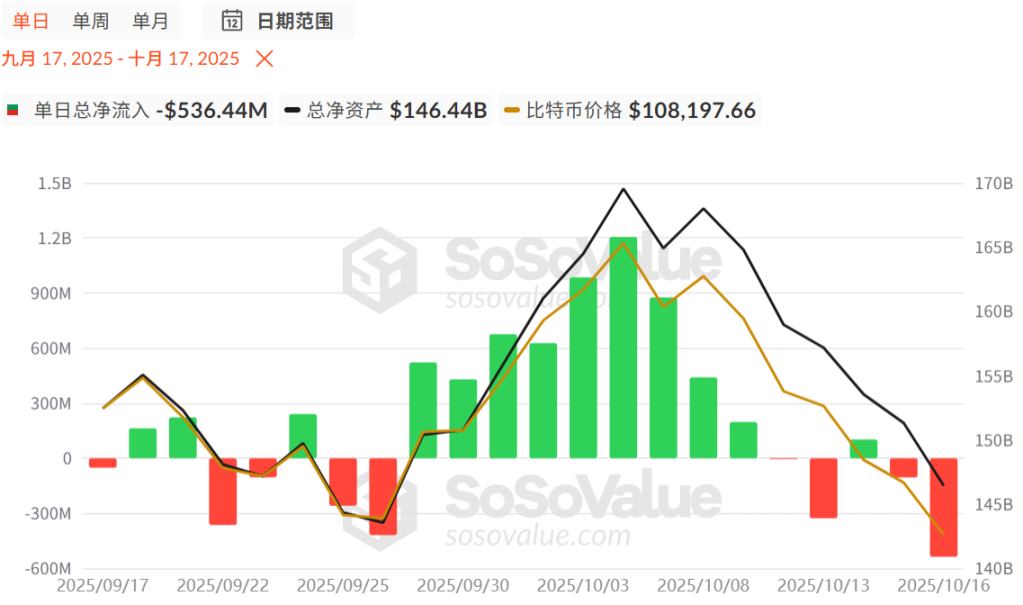
US BTC and ETH spot ETFs both saw significant net outflows

Since the crash, US BTC spot ETFs have shown significant net outflows. Between October 10 and 16, only October 14th saw a net inflow of $102.58 million, while the rest of the period saw net outflows. On October 1st, net outflows exceeded $536 million, a new low since August.
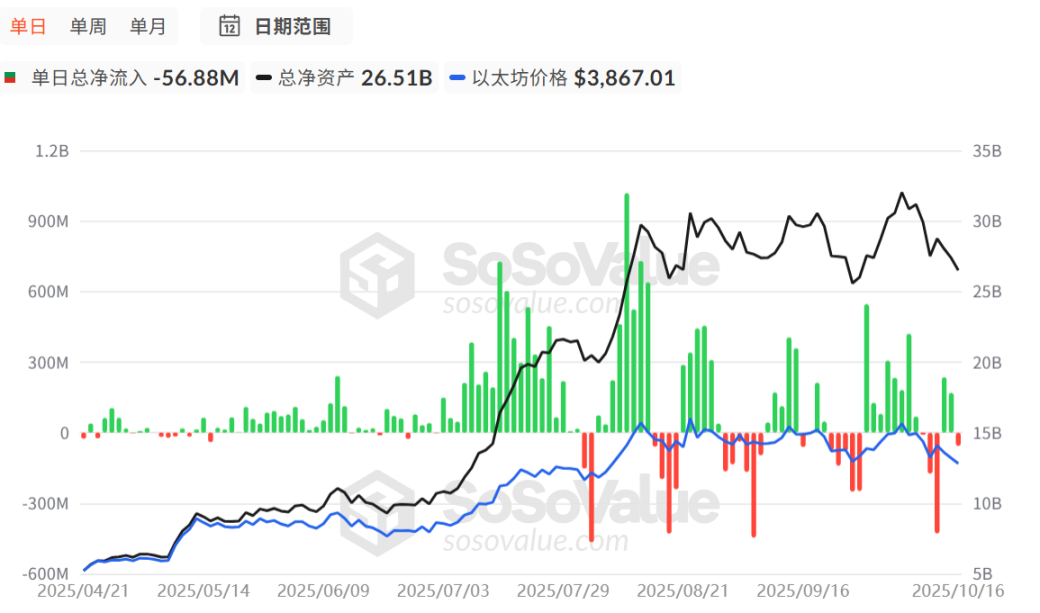
The outlook for Ethereum spot ETFs is also not optimistic, with large net outflows occurring since October 9. On October 13, the net outflow exceeded $428 million, setting a new record for net outflows since September this year.
The crash has left market confidence fragile

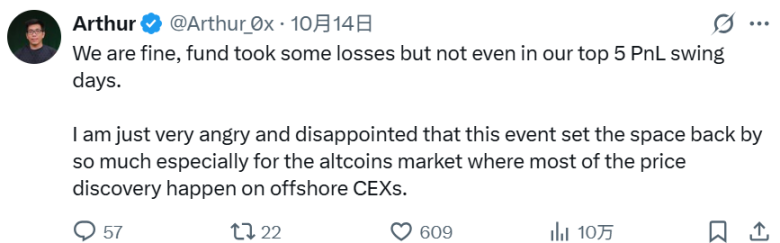
DeFiance Capital, which had prospered in the previous cycle by betting on multiple DeFi projects, suffered losses in this crash. On October 14th, its founder, Arthur, posted on social media, "We're fine. The fund experienced some losses, but they weren't among our top five biggest profit and loss days. I'm just extremely angry and disappointed. This crash has set the entire crypto space back significantly, especially for the altcoin market, as most price discovery occurs on offshore CEXs."
He even pessimistically believes that the crash marks the end of the encryption era.

The previously popular trend of treasury DATs has also died down. Tom Lee, chairman of BitMine, the largest Ethereum holding company, said the bubble may have burst.

Previously, on September 9, 2025, Nasdaq-listed QMMM Holdings announced plans to invest $100 million in a cryptocurrency reserve, leading to a 9.6-fold increase in its stock price within three weeks. At the end of September, the U.S. Securities and Exchange Commission (SEC) suspended trading of the company, effective September 29, based on allegations that the company was manipulating its stock price through social media platforms. The suspension remains in effect. Caixin visited its Hong Kong headquarters on October 16th and found the office deserted. Upon contacting staff at another nearby company, they stated that the company had relocated in September and were unaware of the relocation.

Changpeng Zhao commented on this, saying, “All crypto treasury (DAT) companies should use third-party crypto custodians and have their accounts audited by investors.”

Small US banks collapse as market sells first

Two regional U.S. banks, Zions Bancorp and Western Alliance Bancorp, disclosed losses Thursday from fraud involving distressed commercial mortgage investment funds. While the losses were relatively small compared to other recent credit defaults, amounting to only tens of millions of dollars, the market reaction was dramatic.

Germany's DAX index fell 2.13%, Britain's FTSE 100 index fell 1.6%, Nikkei 225 index fell 1.44%, Australia's S&P/ASX 200 index fell 0.81%, and all three major U.S. stock index futures fell.

Panic spread quickly, dragging down the entire banking sector, with the total market value of 74 large US banks wiping out more than $100 billion in one day.

This "sell now, see later" mentality quickly spread. JPMorgan analysts Anthony Elian and Michael Pietrini wrote in a report that they also questioned "why all these credit 'isolation' events seem to have occurred in such a short period of time." However, the sell-off did not spare large bank stocks, with shares of Citigroup and Bank of America both falling by more than 3%.

The 2023 US banking crisis also triggered a sharp correction in the crypto market.

Will the market turn bearish in the future?

Chris Burniske, partner at Placeholder VC, wrote, “It increasingly feels like last Friday’s plunge has caused the crypto market to stagnate in the short term. After such a crash, it’s difficult to quickly form sustained buying. This cycle has been disappointing for most people, which may limit their actions because everyone is looking forward to a market recovery or previous historical highs. It’s easy to get caught up in the details of the chart, but if you look at the monthly charts of BTC and ETH, it shows that we are still in the high range (although there are cracks), if you are considering taking profits.
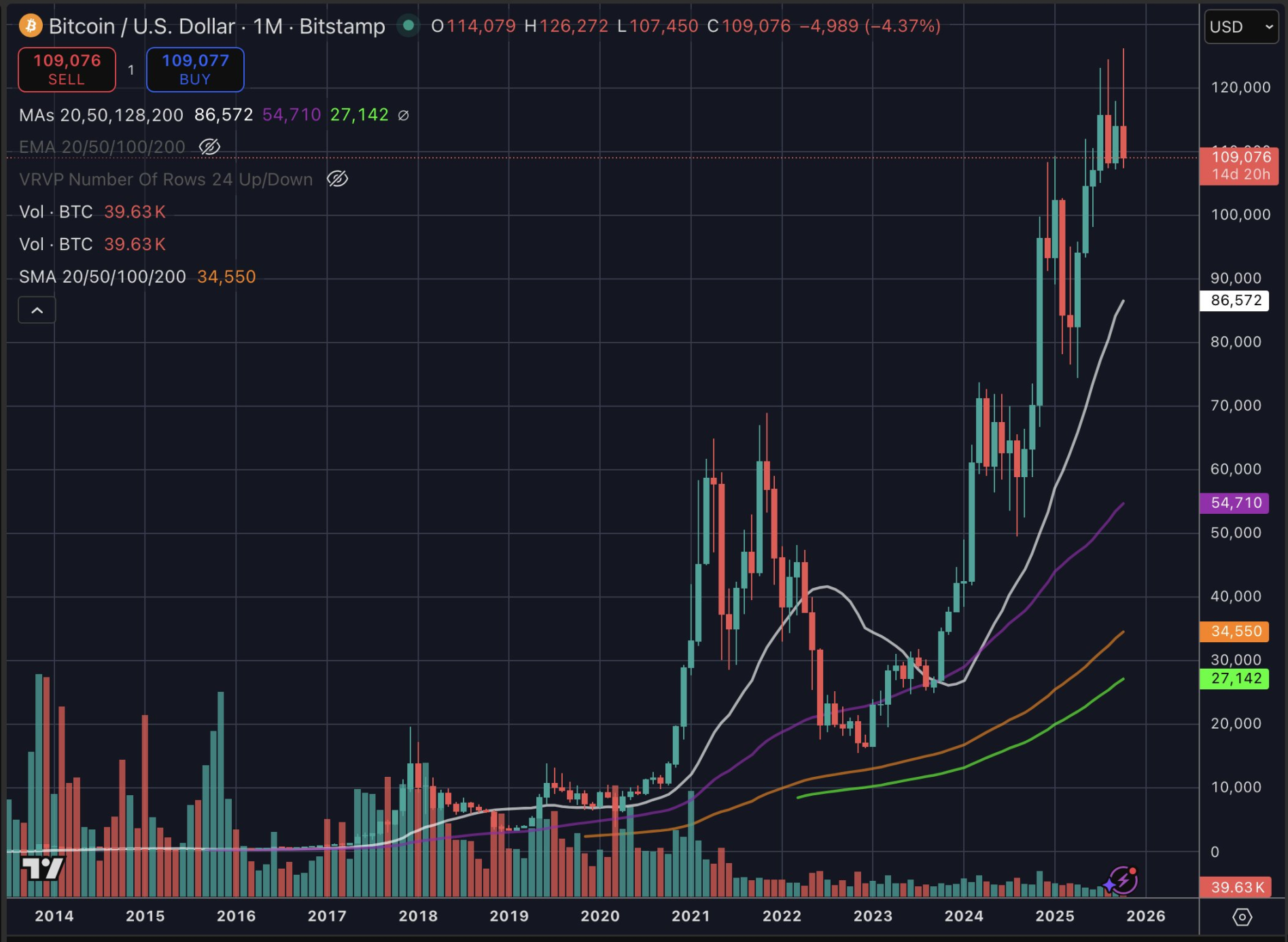
MSTR is falling, gold is warning, as are credit markets, and stocks will be the last to react. We can always get a weak rebound, but I've already taken action (remember, cashing out is never all or nothing). I'll watch how BTC reacts to $100,000, but I might become interested again if it reaches $75,000 or lower. This bull market is different from the last, and the next bear market won't be either."

Arete Capital partner McKenna said the market is in the process of forming a bottom, which takes 40-60 days to establish. All price action within this interval is a volatile washout. "In mid-November, we should begin to expect constructive results and a positive December and first quarter of 2026."

glassnode tweeted that Bitcoin is currently in a key support range, with the price below the 200-day moving average ($107,400) and just above the 365-day moving average ($99,900). At the same time, there is also pressure from the 111-day moving average ($114,700) above it.
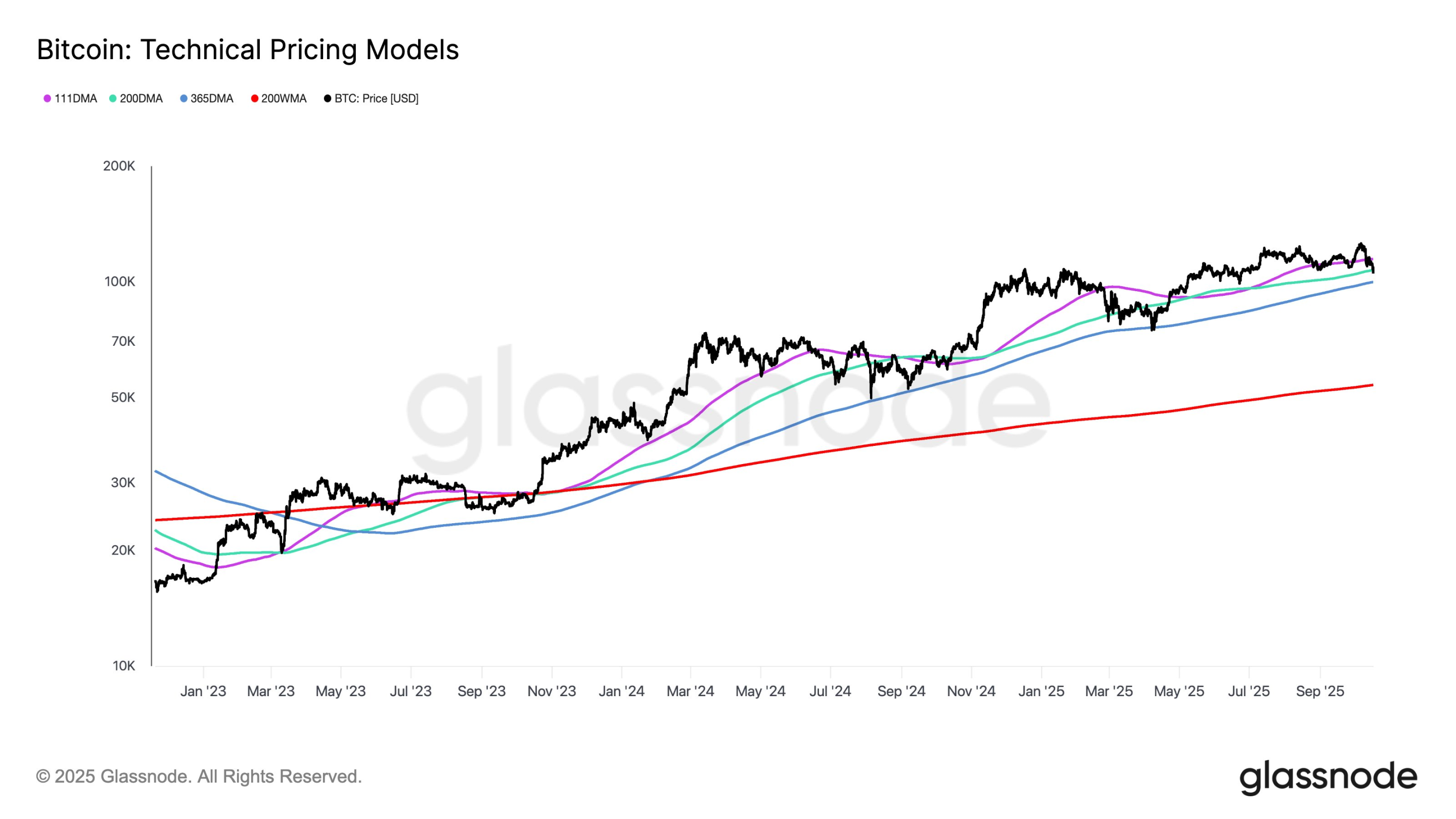
If the 365-day moving average can be held, the trend may stabilize; if it falls below this level, there may be a risk of a deeper correction.

Weiss Crypto suggests that around October 17th, the market may begin to rebound from its lows. By December of this year, the price of Bitcoin could reach a new high of nearly $135,000.

Market Opportunity
Ethereum Logo
Ethereum Price(ETH)
$2,098.56
$2,098.56$2,098.56
-0.47%
USD
Ethereum (ETH) Live Price Chart
Disclaimer: The articles reposted on this site are sourced from public platforms and are provided for informational purposes only. They do not necessarily reflect the views of MEXC. All rights remain with the original authors. If you believe any content infringes on third-party rights, please contact [email protected] for removal. MEXC makes no guarantees regarding the accuracy, completeness, or timeliness of the content and is not responsible for any actions taken based on the information provided. The content does not constitute financial, legal, or other professional advice, nor should it be considered a recommendation or endorsement by MEXC.

You May Also Like

CEO Sandeep Nailwal Shared Highlights About RWA on Polygon

CEO Sandeep Nailwal Shared Highlights About RWA on Polygon

The post CEO Sandeep Nailwal Shared Highlights About RWA on Polygon appeared on BitcoinEthereumNews.com. Polygon CEO Sandeep Nailwal highlighted Polygon’s lead in global bonds, Spiko US T-Bill, and Spiko Euro T-Bill. Polygon published an X post to share that its roadmap to GigaGas was still scaling. Sentiments around POL price were last seen to be bearish. Polygon CEO Sandeep Nailwal shared key pointers from the Dune and RWA.xyz report. These pertain to highlights about RWA on Polygon. Simultaneously, Polygon underlined its roadmap towards GigaGas. Sentiments around POL price were last seen fumbling under bearish emotions. Polygon CEO Sandeep Nailwal on Polygon RWA CEO Sandeep Nailwal highlighted three key points from the Dune and RWA.xyz report. The Chief Executive of Polygon maintained that Polygon PoS was hosting RWA TVL worth $1.13 billion across 269 assets plus 2,900 holders. Nailwal confirmed from the report that RWA was happening on Polygon. The Dune and https://t.co/W6WSFlHoQF report on RWA is out and it shows that RWA is happening on Polygon. Here are a few highlights: – Leading in Global Bonds: Polygon holds 62% share of tokenized global bonds (driven by Spiko’s euro MMF and Cashlink euro issues) – Spiko U.S.… — Sandeep | CEO, Polygon Foundation (※,※) (@sandeepnailwal) September 17, 2025 The X post published by Polygon CEO Sandeep Nailwal underlined that the ecosystem was leading in global bonds by holding a 62% share of tokenized global bonds. He further highlighted that Polygon was leading with Spiko US T-Bill at approximately 29% share of TVL along with Ethereum, adding that the ecosystem had more than 50% share in the number of holders. Finally, Sandeep highlighted from the report that there was a strong adoption for Spiko Euro T-Bill with 38% share of TVL. He added that 68% of returns were on Polygon across all the chains. Polygon Roadmap to GigaGas In a different update from Polygon, the community…
Share
BitcoinEthereumNews2025/09/18 01:10
SHIB Price Analysis for February 8

SHIB Price Analysis for February 8

The post SHIB Price Analysis for February 8 appeared on BitcoinEthereumNews.com. Original U.Today article Can traders expect SHIB to test the $0.0000070 range soon
Share
BitcoinEthereumNews2026/02/09 00:26
UK Looks to US to Adopt More Crypto-Friendly Approach

UK Looks to US to Adopt More Crypto-Friendly Approach

The post UK Looks to US to Adopt More Crypto-Friendly Approach appeared on BitcoinEthereumNews.com. The UK and US are reportedly preparing to deepen cooperation on digital assets, with Britain looking to copy the Trump administration’s crypto-friendly stance in a bid to boost innovation.  UK Chancellor Rachel Reeves and US Treasury Secretary Scott Bessent discussed on Tuesday how the two nations could strengthen their coordination on crypto, the Financial Times reported on Tuesday, citing people familiar with the matter.  The discussions also involved representatives from crypto companies, including Coinbase, Circle Internet Group and Ripple, with executives from the Bank of America, Barclays and Citi also attending, according to the report. The agreement was made “last-minute” after crypto advocacy groups urged the UK government on Thursday to adopt a more open stance toward the industry, claiming its cautious approach to the sector has left the country lagging in innovation and policy.  Source: Rachel Reeves Deal to include stablecoins, look to unlock adoption Any deal between the countries is likely to include stablecoins, the Financial Times reported, an area of crypto that US President Donald Trump made a policy priority and in which his family has significant business interests. The Financial Times reported on Monday that UK crypto advocacy groups also slammed the Bank of England’s proposal to limit individual stablecoin holdings to between 10,000 British pounds ($13,650) and 20,000 pounds ($27,300), claiming it would be difficult and expensive to implement. UK banks appear to have slowed adoption too, with around 40% of 2,000 recently surveyed crypto investors saying that their banks had either blocked or delayed a payment to a crypto provider.  Many of these actions have been linked to concerns over volatility, fraud and scams. The UK has made some progress on crypto regulation recently, proposing a framework in May that would see crypto exchanges, dealers, and agents treated similarly to traditional finance firms, with…
Share
BitcoinEthereumNews2025/09/18 02:21