

SSV Network Unveils Compose Network to Stitch Ethereum Rollups Together

SSV Network has unveiled a new project called Compose Network, pitching it as the “holy grail of Ethereum interoperability” and a layer that will connect rollups rather than compete with them. Announced in a spirited post on X, the team positioned Compose as a continuation of SSV’s infrastructure work, built on its validator stack and meant to enable atomic, instant coordination across Ethereum’s various rollups.
According to SSV’s announcement, Compose is a coordination layer at the execution layer: it lets actions that span multiple rollups execute together, or not at all. The core promise is straightforward but consequential. Deposit to Rollup A, swap on Rollup B, bridge back to Rollup A; all of those steps would settle together, atomically, in a single coordinated flow. No long waits on bridges, no fragmented liquidity across siloed rollups, just instant finality backed by fast zk proofs and secured by Ethereum.
SSV framed Compose not as a pivot but as an “SSV-native initiative.” The team says it builds on the group’s earlier work on distributed validator technology (DVT) and on the notion of “Based Applications” that SSV introduced earlier this year. By extending those ideas, Compose aims to give SSV validators a new role: powering cross-rollup coordination and earning additional incentives for doing so. In SSV’s view, that will create more use cases, increase demand for validators, and strengthen network effects while attracting a growing ecosystem to build on top of the infrastructure.
The company emphasized that SSV Labs and the SSV DAO remain committed to advancing DVT and to the network’s core roadmap, portraying Compose as the next logical step in both SSV’s roadmap and Ethereum’s evolution. “Compose isn’t just about faster transactions,” the post reads, “It’s about restoring the Ethereum experience, where everything works together again. Atomic. Synchronous. Instant. Composable.”
From DVT to interoperability
Technically, Compose promises to stitch rollups at the execution layer using a combination of fast zero-knowledge proofs and SSV’s validator security. That architecture is intended to deliver the kind of atomic cross-chain experiences users and developers have long sought: multi-step flows that either complete in full across rollups or fail cleanly, without leaving funds stranded mid-bridge. If Compose delivers on its claims, developers would be able to design multi-rollup applications that behave as if they were deployed on one unified Ethereum, rather than a patchwork of separate environments.
SSV’s announcement also teased a broader play: by enabling synchronous composition across rollups, the project aims to make Ethereum scale horizontally via rollups while preserving a vertically unified user and developer experience. The blog post linked by SSV promises more technical detail and context for teams that want to learn how Compose will work and who will be able to build on it.
To answer questions from the community, SSV invited followers to a community call and pointed readers to its Discord channel. The team also encouraged people to follow Compose Network on X for updates as the project moves from announcement toward implementation. The introduction of Compose comes at a moment when Ethereum’s roadmap increasingly relies on rollups for scaling, and the ecosystem is hungry for better cross-rollup primitives. Bridges have long been a pain point; slow finality, liquidity fragmentation, and complicated user flows have frustrated both builders and end users.
By promising instant, atomic multi-rollup transactions, Compose isn’t trying to be another rival rollup; it’s pitching itself as the glue that actually makes rollups work together. The idea is simple: stitch different rollups into a single, seamless experience so users and builders don’t have to wrestle with slow bridges or fragmented liquidity.
Of course, whether Compose can pull it off comes down to the gritty details, the implementation, how validator rewards are structured, and whether SSV can produce fast, reliable zk proofs at scale. Still, the announcement feels like a bold step: moving interoperability from basic message passing to true atomic execution. If it succeeds, it could change how multi-rollup apps are built and, more importantly, how they feel to use across Ethereum.


You May Also Like
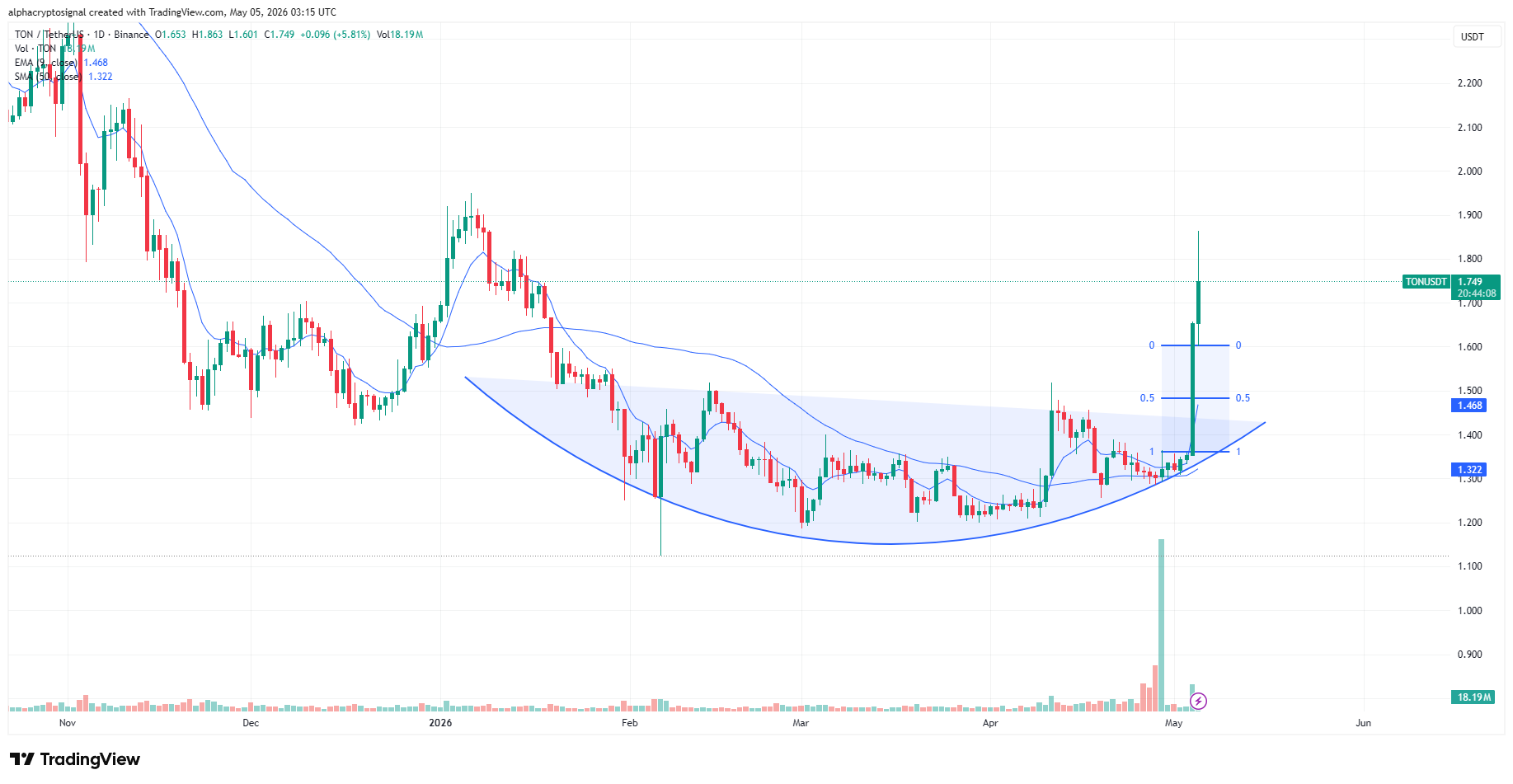
What’s Behind the 25% Toncoin (TON) Price Rally Today?
Polygon puts shielded stablecoin payments on crypto’s radar




