Author: Zuo Ye Network effects extend beyond the internet. Water and electricity are highly exclusive, making them very suitable for "monopolistic" collective management, which can benefit or harm the whole society. However, the network of relationships between people is naturally distributed and decentralized, and even a super social elite would find it difficult to know everyone. Is crypto a web of funds, or a arena for interaction between people? Satoshi Nakamoto clearly believed it was the latter, a peer-to-peer transaction model. Starting from this point, the history of the cryptocurrency world has been about fully embracing the connection of funds as capital appreciates and expands, while reducing direct interaction between people. The only reasonable question is: how long will this dense network of funds collapse? Why is the market recovering? Many people are still reeling from the crashes and liquidations of October 11th and November 3rd, wondering how long it will take for synthetic stablecoins, Vault, and Yield products to recover. However, Hyperliquid's BLP and HIP-3 growth models are coming one after another, and Framework's stablecoin YC has been launched on Sky. There's also Aave's sudden arrival of V4 and a mobile financial product app. In terms of absolute data, the market is indeed in a recovery period, but in terms of personal experience, project teams seem to be innovating by closely following historical trends. In other words, market cycles have become decoupled from retail investor activity, which is not uncommon. The fundamentals of the US economy have little to do with the real economy. Trump's only concern is interest rate cuts and stock prices. Americans and the real economy are just one part of the game. In this cycle, if one still believes in a four-year Bitcoin cycle, then one is simply stuck in a time machine from 2017. Like the flash crash of Cloudflare, the crypto infrastructure is constantly changing. DEXs, represented by Hyperliquid, have indeed taken over the CEX market, especially in conjunction with Meme, which has changed the token valuation, pricing, and distribution system. The era of CEXs is visibly dying out, with Kraken valued at only $20 billion, and many CEXs turning to support their own DEXs. When high FDV impacted Binance's pricing system in 2024, VCs were already dead, and then it became the era of market makers: Hyperliquid and other Perp DEXs were backed by market makers, as were many YBS projects. SBF came from Jane Street, Jeff came from Hudson River Trading, and the founder of Variational came from the market-making department of DCG. Even during the ADL liquidation on October 11, market makers were the first to be affected. Fortune and misfortune are intertwined, and the market structure dominated by market makers becomes more rigid and rigid more quickly than that dominated by CEXs. Web3Port's frantic dumping of tokens manipulated the price, DWF's repeated manipulation of token prices, and even Hyperliquid's HLP faced similar accusations. Whether it's a centralized market maker or a decentralized vault, anyone participating in a market-making system cannot escape the suspicion of market manipulation. If we call the current market structure a "recovery," then market makers have been severely impacted, rendering them unable to continue manipulating the market, which in turn has led to market stabilization. This is not uncommon. Before FTX collapsed in 2022, there were rumors that Alameda once held 20% of the market-making share in the BTC market. In the SBF & FTX biography "Towards Infinity", SBF admitted that they were the earliest professional company to make large-scale market-making. Image caption: BTC liquidity plummets Image source: @KaikoData Returning to the flash crash of October 11, from the perspective of market makers, it was a purely technical crisis, or rather, the trading liquidity before that was a technical golden age: there were no retail investors trading, but market makers buying and selling. Image caption: Sharp drop in liquidity on October 11th. Image source: @coinwatchdotco The existence of market makers is not a problem in itself, but for altcoins or new TGE coins, it means a huge sell-off. Airdrop hunters, arbitrageurs, and even VCs and project teams themselves will resolutely sell to market makers to lock in profits. Market makers are caught in a dilemma: if they don't manipulate the market, they will inevitably absorb all the worthless coins, or they will become the Lich King, increasing market volatility as much as possible to make a little money for themselves and occasionally let market participants make a little money as well. Image caption: Mainstream market makers' positions Image source: @arkham The reasoning here has a major flaw: it only shows the composition and changes in market makers' positions, making it difficult to analyze in detail how they manipulate the price within the CEX. Data from DEXs like Hyperliquid is relatively transparent, and we'll leave that for future analysis. In summary, the market is not experiencing a rebound, but rather a situation where market makers have suffered heavy losses, coupled with the successive collapses of the YBS project, rendering them unable to manipulate the market. Now, the true price mechanism is at work. There is no recovery, only honesty. The 70% Law of Natural Monopoly The various sub-sectors of crypto have already revealed products with "natural monopoly" characteristics, such as EVM. In contrast, the Bitcoin network as infrastructure has failed. Everyone desires BTC, but no one wants to engage in P2P transactions. Aside from proponents like Jack Dorsey who insist on using the Bitcoin network as a stablecoin chain, the pipe dream of BTCFi has been real and tragic enough. Stopping the fantasy about it will benefit the entire industry. Aside from EVM, only Binance and USDT are close to the concept of "monopoly" as super single products. Note that this does not conflict with the impact of DEX on CEXs, or the innovative impact of USDC/USDe/YBS/Curator. Super Item ≠ Track In other words, Binance and USDT are working hard to resist entropy increase, while Ethereum, after experiencing a series of self-destructive actions (Infinite Garden, L2 scaling -> L1 scaling), and even now turning to privacy and AI, which emphasizes doing whatever it wants, is still the mainstream choice. However, Binance and USDT's market share, and even Hyperliquid's share on Perp DEX, have peaked at around 70%, and more market actions are needed to solidify their current positions. Image caption: Market share under a stable market structure Image credit: @GLC_Research @defillama @SPGlobal Based on experience, in a stable market structure, the top projects can occupy 70% of the market share in this sector. However, the market environment changes over time, and currently, the market share of Hyperliquid, USDT, and Binance has all dropped below 50%. Of course, EVM is absolutely stable in the overall VM track, with only a very few competitors such as SVM or Move VM, which can be regarded as entering an ultra-stable structure. Image caption: Mainstream market makers Image source: @coinwatchdotco Looking at market makers from this perspective again, we know that there are at most 20 mainstream market makers, and we speculate that they occupied the mainstream market position before October 11. However, they did not achieve a natural monopoly. Even if they forcibly maintained it, they are now at their limit. So how will the market structure change in the next stage? The transition between generations is underway. Taking the traditional financial approach means being limited by traditional financial valuation models. The path of becoming an internet fintech company is limited by the valuation scale of the internet industry. Only by forging a path suitable for cryptocurrency valuation models and breaking free from any existing industry definitions can a company like AI emerge as a top player with a market capitalization of 5 trillion. The market has been quite strange lately. Solana, as a pioneer in RWA and institutional adoption, has suddenly announced that its foundation chair, Lily Liu, wants to revive the cryptopunk dream, combined with Ethereum's return to the L1 scaling route and the privacy concept mentioned earlier, making Zcash incredibly popular. Crypto seems to be rediscovering the technological logic and valuation system of the crypto world, and these have less and less to do with market makers. Even when institutions adopt it, it's more about "crypto projects using institutional funds to do DeFi" rather than "selling crypto DeFi to institutions". In short, internally, get rid of MM (presumably referring to a specific organization or group); externally, get rid of the organization. Even OGs have to keep up with the new era. DAT, co-sponsored by Li Lin and Xiao Feng, was stillborn. After breaking through Chinese venture capital, the Big Name effect of OGs is also coming to an end. Encryption is reclaiming its dreams, at the cost of shedding the parasitic systems that underpin it. Referring to the most mature US capital market, A16Z is part of the US capital market, but Chinese VCs are not. Only the government, state-owned enterprises (state-owned capital groups), and internet companies (previously) had money. Reflecting on the situation of Chinese VCs in Web3, they lack the ability to participate in market pricing and distribution systems. Market makers and CEXs used to be able to, but after 10/11, the trend of on-chain integration in the industry has become increasingly clear. On-chain ≠ Decentralization. Hyperliquid, for example, is transparent on-chain but not decentralized in terms of physical nodes and token economics. Even in the reality of state-owned enterprise capitalization reform, it is not simply about selling the old and replacing it with the new, but about investing in new industries and exchanging it for a ticket to a new world. From this perspective, the biggest problem for market makers is similar to that of memes: liquidity has no value. In the extreme, nihilistic PvP, they make a fortune, but market makers cannot become the dominant force in the industry. Vitlaik has done too much in terms of dreams and long-term technological vision, while MM has done too little. It's better to be more moderate. Conclusion Essentially, this article is written for myself. Theoretically, the market should have stagnated after October 11th and November 3rd, but the decline in TVL did not hinder DeFi's innovation and self-correction, which I find puzzling. Vault, YBS (interest-bearing stablecoin), and Curators are still evolving. The market is more resilient than we imagine. If we still hold onto the same mindset we had a month ago, or even a week ago, we won't understand the market. In the post-MM-dominated era, the balance between cryptocurrency values and product profitability will redefine valuation logic.Author: Zuo Ye Network effects extend beyond the internet. Water and electricity are highly exclusive, making them very suitable for "monopolistic" collective management, which can benefit or harm the whole society. However, the network of relationships between people is naturally distributed and decentralized, and even a super social elite would find it difficult to know everyone. Is crypto a web of funds, or a arena for interaction between people? Satoshi Nakamoto clearly believed it was the latter, a peer-to-peer transaction model. Starting from this point, the history of the cryptocurrency world has been about fully embracing the connection of funds as capital appreciates and expands, while reducing direct interaction between people. The only reasonable question is: how long will this dense network of funds collapse? Why is the market recovering? Many people are still reeling from the crashes and liquidations of October 11th and November 3rd, wondering how long it will take for synthetic stablecoins, Vault, and Yield products to recover. However, Hyperliquid's BLP and HIP-3 growth models are coming one after another, and Framework's stablecoin YC has been launched on Sky. There's also Aave's sudden arrival of V4 and a mobile financial product app. In terms of absolute data, the market is indeed in a recovery period, but in terms of personal experience, project teams seem to be innovating by closely following historical trends. In other words, market cycles have become decoupled from retail investor activity, which is not uncommon. The fundamentals of the US economy have little to do with the real economy. Trump's only concern is interest rate cuts and stock prices. Americans and the real economy are just one part of the game. In this cycle, if one still believes in a four-year Bitcoin cycle, then one is simply stuck in a time machine from 2017. Like the flash crash of Cloudflare, the crypto infrastructure is constantly changing. DEXs, represented by Hyperliquid, have indeed taken over the CEX market, especially in conjunction with Meme, which has changed the token valuation, pricing, and distribution system. The era of CEXs is visibly dying out, with Kraken valued at only $20 billion, and many CEXs turning to support their own DEXs. When high FDV impacted Binance's pricing system in 2024, VCs were already dead, and then it became the era of market makers: Hyperliquid and other Perp DEXs were backed by market makers, as were many YBS projects. SBF came from Jane Street, Jeff came from Hudson River Trading, and the founder of Variational came from the market-making department of DCG. Even during the ADL liquidation on October 11, market makers were the first to be affected. Fortune and misfortune are intertwined, and the market structure dominated by market makers becomes more rigid and rigid more quickly than that dominated by CEXs. Web3Port's frantic dumping of tokens manipulated the price, DWF's repeated manipulation of token prices, and even Hyperliquid's HLP faced similar accusations. Whether it's a centralized market maker or a decentralized vault, anyone participating in a market-making system cannot escape the suspicion of market manipulation. If we call the current market structure a "recovery," then market makers have been severely impacted, rendering them unable to continue manipulating the market, which in turn has led to market stabilization. This is not uncommon. Before FTX collapsed in 2022, there were rumors that Alameda once held 20% of the market-making share in the BTC market. In the SBF & FTX biography "Towards Infinity", SBF admitted that they were the earliest professional company to make large-scale market-making. Image caption: BTC liquidity plummets Image source: @KaikoData Returning to the flash crash of October 11, from the perspective of market makers, it was a purely technical crisis, or rather, the trading liquidity before that was a technical golden age: there were no retail investors trading, but market makers buying and selling. Image caption: Sharp drop in liquidity on October 11th. Image source: @coinwatchdotco The existence of market makers is not a problem in itself, but for altcoins or new TGE coins, it means a huge sell-off. Airdrop hunters, arbitrageurs, and even VCs and project teams themselves will resolutely sell to market makers to lock in profits. Market makers are caught in a dilemma: if they don't manipulate the market, they will inevitably absorb all the worthless coins, or they will become the Lich King, increasing market volatility as much as possible to make a little money for themselves and occasionally let market participants make a little money as well. Image caption: Mainstream market makers' positions Image source: @arkham The reasoning here has a major flaw: it only shows the composition and changes in market makers' positions, making it difficult to analyze in detail how they manipulate the price within the CEX. Data from DEXs like Hyperliquid is relatively transparent, and we'll leave that for future analysis. In summary, the market is not experiencing a rebound, but rather a situation where market makers have suffered heavy losses, coupled with the successive collapses of the YBS project, rendering them unable to manipulate the market. Now, the true price mechanism is at work. There is no recovery, only honesty. The 70% Law of Natural Monopoly The various sub-sectors of crypto have already revealed products with "natural monopoly" characteristics, such as EVM. In contrast, the Bitcoin network as infrastructure has failed. Everyone desires BTC, but no one wants to engage in P2P transactions. Aside from proponents like Jack Dorsey who insist on using the Bitcoin network as a stablecoin chain, the pipe dream of BTCFi has been real and tragic enough. Stopping the fantasy about it will benefit the entire industry. Aside from EVM, only Binance and USDT are close to the concept of "monopoly" as super single products. Note that this does not conflict with the impact of DEX on CEXs, or the innovative impact of USDC/USDe/YBS/Curator. Super Item ≠ Track In other words, Binance and USDT are working hard to resist entropy increase, while Ethereum, after experiencing a series of self-destructive actions (Infinite Garden, L2 scaling -> L1 scaling), and even now turning to privacy and AI, which emphasizes doing whatever it wants, is still the mainstream choice. However, Binance and USDT's market share, and even Hyperliquid's share on Perp DEX, have peaked at around 70%, and more market actions are needed to solidify their current positions. Image caption: Market share under a stable market structure Image credit: @GLC_Research @defillama @SPGlobal Based on experience, in a stable market structure, the top projects can occupy 70% of the market share in this sector. However, the market environment changes over time, and currently, the market share of Hyperliquid, USDT, and Binance has all dropped below 50%. Of course, EVM is absolutely stable in the overall VM track, with only a very few competitors such as SVM or Move VM, which can be regarded as entering an ultra-stable structure. Image caption: Mainstream market makers Image source: @coinwatchdotco Looking at market makers from this perspective again, we know that there are at most 20 mainstream market makers, and we speculate that they occupied the mainstream market position before October 11. However, they did not achieve a natural monopoly. Even if they forcibly maintained it, they are now at their limit. So how will the market structure change in the next stage? The transition between generations is underway. Taking the traditional financial approach means being limited by traditional financial valuation models. The path of becoming an internet fintech company is limited by the valuation scale of the internet industry. Only by forging a path suitable for cryptocurrency valuation models and breaking free from any existing industry definitions can a company like AI emerge as a top player with a market capitalization of 5 trillion. The market has been quite strange lately. Solana, as a pioneer in RWA and institutional adoption, has suddenly announced that its foundation chair, Lily Liu, wants to revive the cryptopunk dream, combined with Ethereum's return to the L1 scaling route and the privacy concept mentioned earlier, making Zcash incredibly popular. Crypto seems to be rediscovering the technological logic and valuation system of the crypto world, and these have less and less to do with market makers. Even when institutions adopt it, it's more about "crypto projects using institutional funds to do DeFi" rather than "selling crypto DeFi to institutions". In short, internally, get rid of MM (presumably referring to a specific organization or group); externally, get rid of the organization. Even OGs have to keep up with the new era. DAT, co-sponsored by Li Lin and Xiao Feng, was stillborn. After breaking through Chinese venture capital, the Big Name effect of OGs is also coming to an end. Encryption is reclaiming its dreams, at the cost of shedding the parasitic systems that underpin it. Referring to the most mature US capital market, A16Z is part of the US capital market, but Chinese VCs are not. Only the government, state-owned enterprises (state-owned capital groups), and internet companies (previously) had money. Reflecting on the situation of Chinese VCs in Web3, they lack the ability to participate in market pricing and distribution systems. Market makers and CEXs used to be able to, but after 10/11, the trend of on-chain integration in the industry has become increasingly clear. On-chain ≠ Decentralization. Hyperliquid, for example, is transparent on-chain but not decentralized in terms of physical nodes and token economics. Even in the reality of state-owned enterprise capitalization reform, it is not simply about selling the old and replacing it with the new, but about investing in new industries and exchanging it for a ticket to a new world. From this perspective, the biggest problem for market makers is similar to that of memes: liquidity has no value. In the extreme, nihilistic PvP, they make a fortune, but market makers cannot become the dominant force in the industry. Vitlaik has done too much in terms of dreams and long-term technological vision, while MM has done too little. It's better to be more moderate. Conclusion Essentially, this article is written for myself. Theoretically, the market should have stagnated after October 11th and November 3rd, but the decline in TVL did not hinder DeFi's innovation and self-correction, which I find puzzling. Vault, YBS (interest-bearing stablecoin), and Curators are still evolving. The market is more resilient than we imagine. If we still hold onto the same mindset we had a month ago, or even a week ago, we won't understand the market. In the post-MM-dominated era, the balance between cryptocurrency values and product profitability will redefine valuation logic.

The market hasn't recovered, only admitted its innocence: crypto repricing in the post-market maker era.

2025/11/24 15:00
9 min read

Author: Zuo Ye

Network effects extend beyond the internet.

Water and electricity are highly exclusive, making them very suitable for "monopolistic" collective management, which can benefit or harm the whole society. However, the network of relationships between people is naturally distributed and decentralized, and even a super social elite would find it difficult to know everyone.

Is crypto a web of funds, or a arena for interaction between people?

Satoshi Nakamoto clearly believed it was the latter, a peer-to-peer transaction model. Starting from this point, the history of the cryptocurrency world has been about fully embracing the connection of funds as capital appreciates and expands, while reducing direct interaction between people.

The only reasonable question is: how long will this dense network of funds collapse?

Why is the market recovering?

Many people are still reeling from the crashes and liquidations of October 11th and November 3rd, wondering how long it will take for synthetic stablecoins, Vault, and Yield products to recover. However, Hyperliquid's BLP and HIP-3 growth models are coming one after another, and Framework's stablecoin YC has been launched on Sky.

There's also Aave's sudden arrival of V4 and a mobile financial product app.

In terms of absolute data, the market is indeed in a recovery period, but in terms of personal experience, project teams seem to be innovating by closely following historical trends.

In other words, market cycles have become decoupled from retail investor activity, which is not uncommon. The fundamentals of the US economy have little to do with the real economy. Trump's only concern is interest rate cuts and stock prices. Americans and the real economy are just one part of the game.

In this cycle, if one still believes in a four-year Bitcoin cycle, then one is simply stuck in a time machine from 2017. Like the flash crash of Cloudflare, the crypto infrastructure is constantly changing.

DEXs, represented by Hyperliquid, have indeed taken over the CEX market, especially in conjunction with Meme, which has changed the token valuation, pricing, and distribution system. The era of CEXs is visibly dying out, with Kraken valued at only $20 billion, and many CEXs turning to support their own DEXs.

When high FDV impacted Binance's pricing system in 2024, VCs were already dead, and then it became the era of market makers: Hyperliquid and other Perp DEXs were backed by market makers, as were many YBS projects.

Even during the ADL liquidation on October 11, market makers were the first to be affected. Fortune and misfortune are intertwined, and the market structure dominated by market makers becomes more rigid and rigid more quickly than that dominated by CEXs.

Web3Port's frantic dumping of tokens manipulated the price, DWF's repeated manipulation of token prices, and even Hyperliquid's HLP faced similar accusations. Whether it's a centralized market maker or a decentralized vault, anyone participating in a market-making system cannot escape the suspicion of market manipulation.

If we call the current market structure a "recovery," then market makers have been severely impacted, rendering them unable to continue manipulating the market, which in turn has led to market stabilization.

This is not uncommon. Before FTX collapsed in 2022, there were rumors that Alameda once held 20% of the market-making share in the BTC market. In the SBF & FTX biography "Towards Infinity", SBF admitted that they were the earliest professional company to make large-scale market-making.

Image caption: BTC liquidity plummets

Image source: @KaikoData

Returning to the flash crash of October 11, from the perspective of market makers, it was a purely technical crisis, or rather, the trading liquidity before that was a technical golden age: there were no retail investors trading, but market makers buying and selling.

Image caption: Sharp drop in liquidity on October 11th.

Image source: @coinwatchdotco

The existence of market makers is not a problem in itself, but for altcoins or new TGE coins, it means a huge sell-off. Airdrop hunters, arbitrageurs, and even VCs and project teams themselves will resolutely sell to market makers to lock in profits.

Market makers are caught in a dilemma: if they don't manipulate the market, they will inevitably absorb all the worthless coins, or they will become the Lich King, increasing market volatility as much as possible to make a little money for themselves and occasionally let market participants make a little money as well.

Image caption: Mainstream market makers' positions

Image source: @arkham

The reasoning here has a major flaw: it only shows the composition and changes in market makers' positions, making it difficult to analyze in detail how they manipulate the price within the CEX. Data from DEXs like Hyperliquid is relatively transparent, and we'll leave that for future analysis.

In summary, the market is not experiencing a rebound, but rather a situation where market makers have suffered heavy losses, coupled with the successive collapses of the YBS project, rendering them unable to manipulate the market. Now, the true price mechanism is at work.

There is no recovery, only honesty.

The 70% Law of Natural Monopoly

The various sub-sectors of crypto have already revealed products with "natural monopoly" characteristics, such as EVM. In contrast, the Bitcoin network as infrastructure has failed. Everyone desires BTC, but no one wants to engage in P2P transactions.

Aside from proponents like Jack Dorsey who insist on using the Bitcoin network as a stablecoin chain, the pipe dream of BTCFi has been real and tragic enough. Stopping the fantasy about it will benefit the entire industry.

Aside from EVM, only Binance and USDT are close to the concept of "monopoly" as super single products. Note that this does not conflict with the impact of DEX on CEXs, or the innovative impact of USDC/USDe/YBS/Curator.

Super Item ≠ Track

In other words, Binance and USDT are working hard to resist entropy increase, while Ethereum, after experiencing a series of self-destructive actions (Infinite Garden, L2 scaling -> L1 scaling), and even now turning to privacy and AI, which emphasizes doing whatever it wants, is still the mainstream choice.

However, Binance and USDT's market share, and even Hyperliquid's share on Perp DEX, have peaked at around 70%, and more market actions are needed to solidify their current positions.

Image caption: Market share under a stable market structure

Image credit: @GLC_Research @defillama @SPGlobal

Based on experience, in a stable market structure, the top projects can occupy 70% of the market share in this sector. However, the market environment changes over time, and currently, the market share of Hyperliquid, USDT, and Binance has all dropped below 50%.

Of course, EVM is absolutely stable in the overall VM track, with only a very few competitors such as SVM or Move VM, which can be regarded as entering an ultra-stable structure.

Image caption: Mainstream market makers

Image source: @coinwatchdotco

Looking at market makers from this perspective again, we know that there are at most 20 mainstream market makers, and we speculate that they occupied the mainstream market position before October 11. However, they did not achieve a natural monopoly. Even if they forcibly maintained it, they are now at their limit.

So how will the market structure change in the next stage?

The transition between generations is underway.

  • Taking the traditional financial approach means being limited by traditional financial valuation models.
  • The path of becoming an internet fintech company is limited by the valuation scale of the internet industry.
  • Only by forging a path suitable for cryptocurrency valuation models and breaking free from any existing industry definitions can a company like AI emerge as a top player with a market capitalization of 5 trillion.

The market has been quite strange lately. Solana, as a pioneer in RWA and institutional adoption, has suddenly announced that its foundation chair, Lily Liu, wants to revive the cryptopunk dream, combined with Ethereum's return to the L1 scaling route and the privacy concept mentioned earlier, making Zcash incredibly popular.

Crypto seems to be rediscovering the technological logic and valuation system of the crypto world, and these have less and less to do with market makers. Even when institutions adopt it, it's more about "crypto projects using institutional funds to do DeFi" rather than "selling crypto DeFi to institutions".

In short, internally, get rid of MM (presumably referring to a specific organization or group); externally, get rid of the organization.

Even OGs have to keep up with the new era. DAT, co-sponsored by Li Lin and Xiao Feng, was stillborn. After breaking through Chinese venture capital, the Big Name effect of OGs is also coming to an end.

Encryption is reclaiming its dreams, at the cost of shedding the parasitic systems that underpin it.

Referring to the most mature US capital market, A16Z is part of the US capital market, but Chinese VCs are not. Only the government, state-owned enterprises (state-owned capital groups), and internet companies (previously) had money.

Reflecting on the situation of Chinese VCs in Web3, they lack the ability to participate in market pricing and distribution systems. Market makers and CEXs used to be able to, but after 10/11, the trend of on-chain integration in the industry has become increasingly clear.

On-chain ≠ Decentralization.

Hyperliquid, for example, is transparent on-chain but not decentralized in terms of physical nodes and token economics.

Even in the reality of state-owned enterprise capitalization reform, it is not simply about selling the old and replacing it with the new, but about investing in new industries and exchanging it for a ticket to a new world.

From this perspective, the biggest problem for market makers is similar to that of memes: liquidity has no value. In the extreme, nihilistic PvP, they make a fortune, but market makers cannot become the dominant force in the industry.

Vitlaik has done too much in terms of dreams and long-term technological vision, while MM has done too little. It's better to be more moderate.

Conclusion

Essentially, this article is written for myself. Theoretically, the market should have stagnated after October 11th and November 3rd, but the decline in TVL did not hinder DeFi's innovation and self-correction, which I find puzzling.

Vault, YBS (interest-bearing stablecoin), and Curators are still evolving. The market is more resilient than we imagine. If we still hold onto the same mindset we had a month ago, or even a week ago, we won't understand the market.

In the post-MM-dominated era, the balance between cryptocurrency values and product profitability will redefine valuation logic.

Market Opportunity
Threshold Logo
Threshold Price(T)
$0.007039
$0.007039$0.007039
+2.45%
USD
Threshold (T) Live Price Chart
Disclaimer: The articles reposted on this site are sourced from public platforms and are provided for informational purposes only. They do not necessarily reflect the views of MEXC. All rights remain with the original authors. If you believe any content infringes on third-party rights, please contact [email protected] for removal. MEXC makes no guarantees regarding the accuracy, completeness, or timeliness of the content and is not responsible for any actions taken based on the information provided. The content does not constitute financial, legal, or other professional advice, nor should it be considered a recommendation or endorsement by MEXC.

You May Also Like

How to earn from cloud mining: IeByte’s upgraded auto-cloud mining platform unlocks genuine passive earnings
How to earn from cloud mining: IeByte’s upgraded auto-cloud mining platform unlocks genuine passive earnings

The post How to earn from cloud mining: IeByte’s upgraded auto-cloud mining platform unlocks genuine passive earnings appeared on BitcoinEthereumNews.com. contributor Posted: September 17, 2025 As digital assets continue to reshape global finance, cloud mining has become one of the most effective ways for investors to generate stable passive income. Addressing the growing demand for simplicity, security, and profitability, IeByte has officially upgraded its fully automated cloud mining platform, empowering both beginners and experienced investors to earn Bitcoin, Dogecoin, and other mainstream cryptocurrencies without the need for hardware or technical expertise. Why cloud mining in 2025? Traditional crypto mining requires expensive hardware, high electricity costs, and constant maintenance. In 2025, with blockchain networks becoming more competitive, these barriers have grown even higher. Cloud mining solves this by allowing users to lease professional mining power remotely, eliminating the upfront costs and complexity. IeByte stands at the forefront of this transformation, offering investors a transparent and seamless path to daily earnings. IeByte’s upgraded auto-cloud mining platform With its latest upgrade, IeByte introduces: Full Automation: Mining contracts can be activated in just one click, with all processes handled by IeByte’s servers. Enhanced Security: Bank-grade encryption, cold wallets, and real-time monitoring protect every transaction. Scalable Options: From starter packages to high-level investment contracts, investors can choose the plan that matches their goals. Global Reach: Already trusted by users in over 100 countries. Mining contracts for 2025 IeByte offers a wide range of contracts tailored for every investor level. From entry-level plans with daily returns to premium high-yield packages, the platform ensures maximum accessibility. Contract Type Duration Price Daily Reward Total Earnings (Principal + Profit) Starter Contract 1 Day $200 $6 $200 + $6 + $10 bonus Bronze Basic Contract 2 Days $500 $13.5 $500 + $27 Bronze Basic Contract 3 Days $1,200 $36 $1,200 + $108 Silver Advanced Contract 1 Day $5,000 $175 $5,000 + $175 Silver Advanced Contract 2 Days $8,000 $320 $8,000 + $640 Silver…
Share
BitcoinEthereumNews2025/09/17 23:48
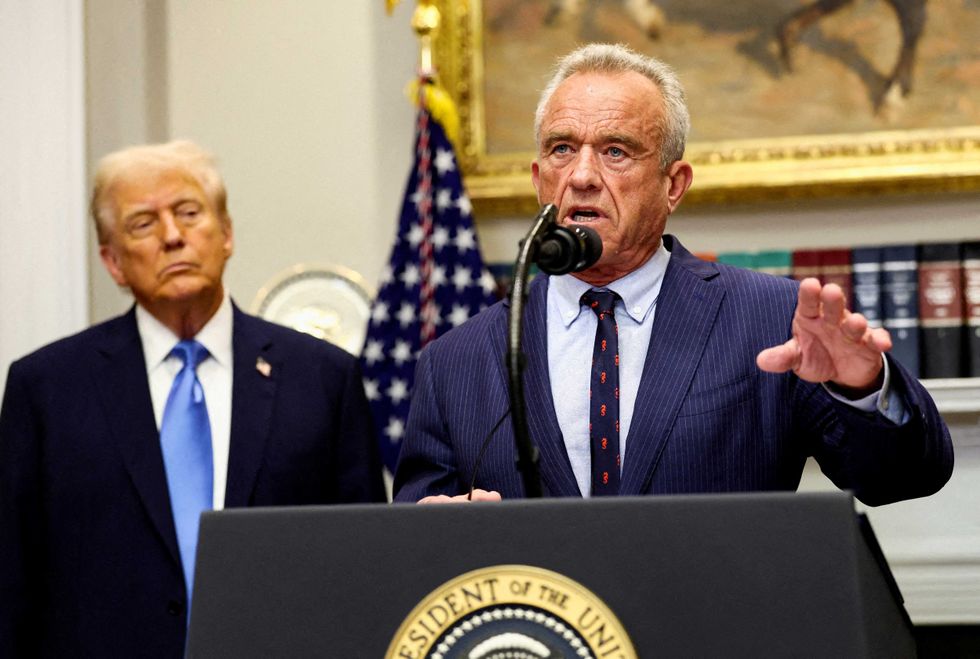
RFK Jr. reveals puzzling reason why he loves working for Trump

RFK Jr. reveals puzzling reason why he loves working for Trump

Health Secretary Robert F. Kennedy Jr. gave a puzzling answer to a softball question on Monday during a public event at The Heritage Foundation, according to a
Share
Rawstory2026/02/10 07:00
Lovable AI’s Astonishing Rise: Anton Osika Reveals Startup Secrets at Bitcoin World Disrupt 2025

Lovable AI’s Astonishing Rise: Anton Osika Reveals Startup Secrets at Bitcoin World Disrupt 2025

BitcoinWorld Lovable AI’s Astonishing Rise: Anton Osika Reveals Startup Secrets at Bitcoin World Disrupt 2025 Are you ready to witness a phenomenon? The world of technology is abuzz with the incredible rise of Lovable AI, a startup that’s not just breaking records but rewriting the rulebook for rapid growth. Imagine creating powerful apps and websites just by speaking to an AI – that’s the magic Lovable brings to the masses. This groundbreaking approach has propelled the company into the spotlight, making it one of the fastest-growing software firms in history. And now, the visionary behind this sensation, co-founder and CEO Anton Osika, is set to share his invaluable insights on the Disrupt Stage at the highly anticipated Bitcoin World Disrupt 2025. If you’re a founder, investor, or tech enthusiast eager to understand the future of innovation, this is an event you cannot afford to miss. Lovable AI’s Meteoric Ascent: Redefining Software Creation In an era where digital transformation is paramount, Lovable AI has emerged as a true game-changer. Its core premise is deceptively simple yet profoundly impactful: democratize software creation. By enabling anyone to build applications and websites through intuitive AI conversations, Lovable is empowering the vast majority of individuals who lack coding skills to transform their ideas into tangible digital products. This mission has resonated globally, leading to unprecedented momentum. The numbers speak for themselves: Achieved an astonishing $100 million Annual Recurring Revenue (ARR) in less than a year. Successfully raised a $200 million Series A funding round, valuing the company at $1.8 billion, led by industry giant Accel. Is currently fielding unsolicited investor offers, pushing its valuation towards an incredible $4 billion. As industry reports suggest, investors are unequivocally “loving Lovable,” and it’s clear why. This isn’t just about impressive financial metrics; it’s about a company that has tapped into a fundamental need, offering a solution that is both innovative and accessible. The rapid scaling of Lovable AI provides a compelling case study for any entrepreneur aiming for similar exponential growth. The Visionary Behind the Hype: Anton Osika’s Journey to Innovation Every groundbreaking company has a driving force, and for Lovable, that force is co-founder and CEO Anton Osika. His journey is as fascinating as his company’s success. A physicist by training, Osika previously contributed to the cutting-edge research at CERN, the European Organization for Nuclear Research. This deep technical background, combined with his entrepreneurial spirit, has been instrumental in Lovable’s rapid ascent. Before Lovable, he honed his skills as a co-founder of Depict.ai and a Founding Engineer at Sana. Based in Stockholm, Osika has masterfully steered Lovable from a nascent idea to a global phenomenon in record time. His leadership embodies a unique blend of profound technical understanding and a keen, consumer-first vision. At Bitcoin World Disrupt 2025, attendees will have the rare opportunity to hear directly from Osika about what it truly takes to build a brand that not only scales at an incredible pace in a fiercely competitive market but also adeptly manages the intense cultural conversations that inevitably accompany such swift and significant success. His insights will be crucial for anyone looking to understand the dynamics of high-growth tech leadership. Unpacking Consumer Tech Innovation at Bitcoin World Disrupt 2025 The 20th anniversary of Bitcoin World is set to be marked by a truly special event: Bitcoin World Disrupt 2025. From October 27–29, Moscone West in San Francisco will transform into the epicenter of innovation, gathering over 10,000 founders, investors, and tech leaders. It’s the ideal platform to explore the future of consumer tech innovation, and Anton Osika’s presence on the Disrupt Stage is a highlight. His session will delve into how Lovable is not just participating in but actively shaping the next wave of consumer-facing technologies. Why is this session particularly relevant for those interested in the future of consumer experiences? Osika’s discussion will go beyond the superficial, offering a deep dive into the strategies that have allowed Lovable to carve out a unique category in a market long thought to be saturated. Attendees will gain a front-row seat to understanding how to identify unmet consumer needs, leverage advanced AI to meet those needs, and build a product that captivates users globally. The event itself promises a rich tapestry of ideas and networking opportunities: For Founders: Sharpen your pitch and connect with potential investors. For Investors: Discover the next breakout startup poised for massive growth. For Innovators: Claim your spot at the forefront of technological advancements. The insights shared regarding consumer tech innovation at this event will be invaluable for anyone looking to navigate the complexities and capitalize on the opportunities within this dynamic sector. Mastering Startup Growth Strategies: A Blueprint for the Future Lovable’s journey isn’t just another startup success story; it’s a meticulously crafted blueprint for effective startup growth strategies in the modern era. Anton Osika’s experience offers a rare glimpse into the practicalities of scaling a business at breakneck speed while maintaining product integrity and managing external pressures. For entrepreneurs and aspiring tech leaders, his talk will serve as a masterclass in several critical areas: Strategy Focus Key Takeaways from Lovable’s Journey Rapid Scaling How to build infrastructure and teams that support exponential user and revenue growth without compromising quality. Product-Market Fit Identifying a significant, underserved market (the 99% who can’t code) and developing a truly innovative solution (AI-powered app creation). Investor Relations Balancing intense investor interest and pressure with a steadfast focus on product development and long-term vision. Category Creation Carving out an entirely new niche by democratizing complex technologies, rather than competing in existing crowded markets. Understanding these startup growth strategies is essential for anyone aiming to build a resilient and impactful consumer experience. Osika’s session will provide actionable insights into how to replicate elements of Lovable’s success, offering guidance on navigating challenges from product development to market penetration and investor management. Conclusion: Seize the Future of Tech The story of Lovable, under the astute leadership of Anton Osika, is a testament to the power of innovative ideas meeting flawless execution. Their remarkable journey from concept to a multi-billion-dollar valuation in record time is a compelling narrative for anyone interested in the future of technology. By democratizing software creation through Lovable AI, they are not just building a company; they are fostering a new generation of creators. His appearance at Bitcoin World Disrupt 2025 is an unmissable opportunity to gain direct insights from a leader who is truly shaping the landscape of consumer tech innovation. Don’t miss this chance to learn about cutting-edge startup growth strategies and secure your front-row seat to the future. Register now and save up to $668 before Regular Bird rates end on September 26. To learn more about the latest AI market trends, explore our article on key developments shaping AI features. This post Lovable AI’s Astonishing Rise: Anton Osika Reveals Startup Secrets at Bitcoin World Disrupt 2025 first appeared on BitcoinWorld.
Share
Coinstats2025/09/17 23:40