The post AI Transforms Emerging Markets Worldwide appeared on BitcoinEthereumNews.com. AI’s rapid development will change emerging markets. Mobile World Congress 2025 in Barcelona, Spain (Photo by Marc Asensio/NurPhoto via Getty Images) NurPhoto via Getty Images In 2025, artificial intelligence underwent a transformative shift from scientific advancement to practical economic force multiplier. As technological capabilities developed, AI use rose exponentially. Much of the discourse around the new technology focuses on the major players and their political struggles. China and the U.S. see AI in geopolitical terms, as a tool to transform their military capabilities and shape the international order. AI is also defining great power rivalries and is increasingly embedded in the national security policies of countries large and small around the world. Emerging markets are facing a major challenge in dealing with articifial intelligence. For energy-rich countries hoping to diversify, energy-hungry AI is a path to further growth and create value-added exports as well as increasing the efficiency of their money-making energy sectors. Countries struggling with the middle-income trap see AI as part of the solution for their development woes. Technologically advanced states with less competitive exports due to aging populations see AI as an efficiency booster that can help circumvent inflated wages and at least partially help compensate for declining populations. AI is also a technology that many developing states are embracing in the hope that it will allow them to leapfrog over their problems. We took a look at a few case studies that are struggling with the quick advancement of the AI era, to learn what the new tech is doing to developing countries with GDPs from $2,305 (Kenya) to $30,000 (Saudi Arabia). Brazil: Same Old Dreams of Autarky Latin America has begun to position itself within the AI landscape. The region’s largest economy, Brazil, with per capita GDP of $10,816 is developing a national AI strategy… The post AI Transforms Emerging Markets Worldwide appeared on BitcoinEthereumNews.com. AI’s rapid development will change emerging markets. Mobile World Congress 2025 in Barcelona, Spain (Photo by Marc Asensio/NurPhoto via Getty Images) NurPhoto via Getty Images In 2025, artificial intelligence underwent a transformative shift from scientific advancement to practical economic force multiplier. As technological capabilities developed, AI use rose exponentially. Much of the discourse around the new technology focuses on the major players and their political struggles. China and the U.S. see AI in geopolitical terms, as a tool to transform their military capabilities and shape the international order. AI is also defining great power rivalries and is increasingly embedded in the national security policies of countries large and small around the world. Emerging markets are facing a major challenge in dealing with articifial intelligence. For energy-rich countries hoping to diversify, energy-hungry AI is a path to further growth and create value-added exports as well as increasing the efficiency of their money-making energy sectors. Countries struggling with the middle-income trap see AI as part of the solution for their development woes. Technologically advanced states with less competitive exports due to aging populations see AI as an efficiency booster that can help circumvent inflated wages and at least partially help compensate for declining populations. AI is also a technology that many developing states are embracing in the hope that it will allow them to leapfrog over their problems. We took a look at a few case studies that are struggling with the quick advancement of the AI era, to learn what the new tech is doing to developing countries with GDPs from $2,305 (Kenya) to $30,000 (Saudi Arabia). Brazil: Same Old Dreams of Autarky Latin America has begun to position itself within the AI landscape. The region’s largest economy, Brazil, with per capita GDP of $10,816 is developing a national AI strategy…

AI Transforms Emerging Markets Worldwide

8 min read

AI’s rapid development will change emerging markets. Mobile World Congress 2025 in Barcelona, Spain (Photo by Marc Asensio/NurPhoto via Getty Images)

NurPhoto via Getty Images

In 2025, artificial intelligence underwent a transformative shift from scientific advancement to practical economic force multiplier. As technological capabilities developed, AI use rose exponentially. Much of the discourse around the new technology focuses on the major players and their political struggles. China and the U.S. see AI in geopolitical terms, as a tool to transform their military capabilities and shape the international order. AI is also defining great power rivalries and is increasingly embedded in the national security policies of countries large and small around the world. Emerging markets are facing a major challenge in dealing with articifial intelligence.

For energy-rich countries hoping to diversify, energy-hungry AI is a path to further growth and create value-added exports as well as increasing the efficiency of their money-making energy sectors. Countries struggling with the middle-income trap see AI as part of the solution for their development woes. Technologically advanced states with less competitive exports due to aging populations see AI as an efficiency booster that can help circumvent inflated wages and at least partially help compensate for declining populations. AI is also a technology that many developing states are embracing in the hope that it will allow them to leapfrog over their problems.

We took a look at a few case studies that are struggling with the quick advancement of the AI era, to learn what the new tech is doing to developing countries with GDPs from $2,305 (Kenya) to $30,000 (Saudi Arabia).

Brazil: Same Old Dreams of Autarky

Latin America has begun to position itself within the AI landscape. The region’s largest economy, Brazil, with per capita GDP of $10,816 is developing a national AI strategy that emphasizes inclusivity and sustainable development. Under President Luiz Inacio Lula da Silva (80), AI is being furthered to create new jobs and manage data. Under his government’s Brazilian Artificial Intelligence Plan, officially published this past summer, over $4 billion in investment is to be spread over the next four years. In a similar vein to Saudi Arabia (see below), Brazil is attempting to transition towards technological autonomy by promoting regional development and job creation in the sector. This may be a first step towards attracting cross-border investment, remaining cautious when collaborating with current AI leaders.

Highlighting technology transfer rather than dependency is a significant part of the plan, the idea being to decrease reliance on China and/or the U.S. and boost Brazil’s strength in the global AI landscape by promoting autonomy and participation from the Global South in the sector. As with prior attempts to develop autarkic economies, this plan is likely to fail. The country simply lacks the science and technology critical mass to pull it off on its own.

Kazakhstan: New AI Kid on the Block

Nur-Alem Sphere, site of Kazakhstan’s Artificial Intelligence Center in Astana

getty

A new player in the AI field is the Central Asian region, specifically Kazakhstan, with a GDP per capita of $14,770, surpassing both Russia and China. Unlike Saudi Arabia’s integration into the AI realm harnessing massive budgetary resources, Kazakhstan is using its position as a key part of the Middle Corridor between the East and the West to negotiate partnerships with major powers, including China and the U.S. Capitalizing on current tensions between Washington and its near-peer competitors Moscow and Beijing, Kazakhstan has made significant efforts to move beyond its traditional extractive industries. From President Kassym-Jomart Tokayev’s UNGA meetings with key American businesses to over $3 billion in investments from major tech companies such as NVIDIA and Oracle, Kazakhstan, boasting its indigenous fintech, is becoming a tech leader seeking to gain leverage in this new sector. More deals, amounting to $17 billion, were announced when Kazakhstan participated in the C5+1 summit in Washington, D.C., on November 6, where President Tokayev also proclaimed his country joining the Abraham Accords. The nation has a relatively highly trained workforce capitalizing on the Soviet-era advanced STEM education and the geographic advantage of serving as a convening point for technological collaboration among current industry leaders.

Kenya: The Great Leap Forward?

Often referred to as the “Silicon Savannah,” Nairobi has emerged as a growing tech ecosystem and AI hub in Africa. This year, Kenya, with a GDP per capita of only $2,305, published its own National AI Strategy, outlining policies and development for AI over the next five years. Both Microsoft and Huawei have invested in the region to expand cloud computing services and AI infrastructure. As reflected in these investments, both the U.S. and China are engaged in a digital race for Africa and are attempting to assert influence on the quickly developing continent. Africa, for now, is seeking technological leapfrogging and is still dependent on others’ tech advancements. These investments demonstrate the role of AI as a geopolitical tool in the global Sino-U.S. competition, as both Huawei and Microsoft’s investments target not only the development of AI models but also the construction of infrastructure such as data centers, the promotion of connectivity, and are dependent on government cooperation for implementation.

Saudi Arabia: Silicon, Not Sand for the New AI Kingdom

Dr. Lilac Al Safadi, speaking at the INSIDE THE AI REVOLUTION: RISK, REWARDS AND NEW WAYS OF WORKING talk at the Fortune Most Powerful Women International Summit Riyadh 2025. (Photo by Amal Alhasan/Getty Images for Fortune Media)

Getty Images for Fortune Media

Saudi Arabia’s integration of AI into its national agenda encapsulates the shift AI has imposed on the strategic developmental priorities of a number of upper middle- and high-income countries. As a major oil producing nation transitioning away from a purely hydrocarbon play, under Vision 2030, Saudi Arabia, with a GDP per capita of over $30,000, has highlighted the use of AI as a key component in building a diversified, higher-value economy, hoping to make digital technology a key vector of cooperation with the United States, as was highlighted in the recent visit by Crown Prince and Prime Minister Mohammad bin Salman’s to Washington, D.C.

Institutions such as the Saudi Data and AI Authority (SDAIA) have been established to plan and build data infrastructure and domestic research and development capabilities, in the future attracting potential global investors and partnerships. AI is not solely a means of technological advancement for the Kingdom, seeking to act as a hub for future data industries, but also a way to establish strategic autonomy through volatile Middle East/Gulf region.

Energy and Climate as Barriers to AI Development

AI’s rise does not come without obstacles, especially in the developing world. In emerging market nations such as Saudi Arabia and Kenya, limiting factors include talent gaps. Building talent pools and educating a 21st century AI workforce to leverage new knowledge technologies will take considerable time, require external actors from the private, multi-lateral, and state sectors, and may result in a temporary lag behind other nations that excel in AI talent development.

Environmental factors are also a key impediment, as AI infrastructure requires significant energy and water. The climate constraints of these countries may complicate sector growth or increase the costs of development. Especially troubling are water shortages in desert climates, including in Kazakhstan and Saudi Arabia. Energy scarcity for the air conditioning and water cooling needed for AI data centers, and the sheer amount of energy for data processing may not be currently found even in oil exporters such as Brazil, Kazakhstan, and Saudi Arabia. These countries may need nuclear reactors, natural gas power stations and massive renewables projects, including sun (KSA, Kenya, Kazakhstan) and wind (Kenya, Brazil), with concomitant industrial battery storage facilities to build out the sector.

The expansion of AI in 2025 has begun a reordering of global partnerships and economic dynamics, and may facilitate the rise of emerging market countries as middle powers. AI governance is on the radar of powers across the world, and is becoming a topic of importance in international bodies like the UN. “Technological leapfrogging” is being planned in less advanced nations to bypass the usual stages of development and accelerate their path to becoming AI-capable as the technology is integrated into an ever-growing list of industries and functions. As this year ends, AI has made it clear that it is more than just a technological fad and has the potential to significantly boost emerging markets’ development and change the global order in the coming years.

Source: https://www.forbes.com/sites/arielcohen/2025/11/30/2025-ai-transforms-emerging-markets-worldwide/

Market Opportunity
null Logo
null Price(null)
--
----
USD
null (null) Live Price Chart
Disclaimer: The articles reposted on this site are sourced from public platforms and are provided for informational purposes only. They do not necessarily reflect the views of MEXC. All rights remain with the original authors. If you believe any content infringes on third-party rights, please contact [email protected] for removal. MEXC makes no guarantees regarding the accuracy, completeness, or timeliness of the content and is not responsible for any actions taken based on the information provided. The content does not constitute financial, legal, or other professional advice, nor should it be considered a recommendation or endorsement by MEXC.

You May Also Like

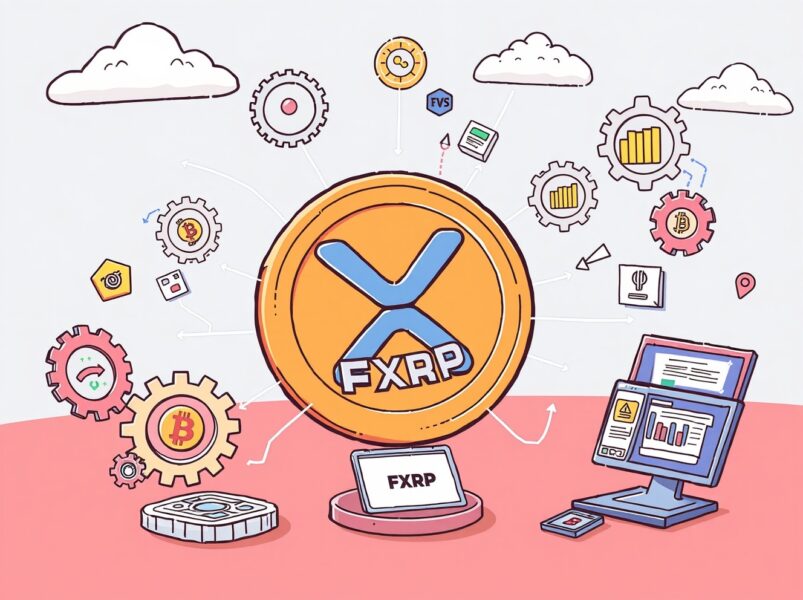
Unleash Potential: Flare Network’s FXRP Revolutionizes DeFi Access for XRP

Unleash Potential: Flare Network’s FXRP Revolutionizes DeFi Access for XRP

BitcoinWorld Unleash Potential: Flare Network’s FXRP Revolutionizes DeFi Access for XRP The world of decentralized finance (DeFi) is constantly evolving, and a major new development is set to excite XRP enthusiasts. Flare Network has just launched FXRP, an innovative solution designed to bring XRP directly into the heart of DeFi applications. This move opens up a wealth of new possibilities for XRP holders, allowing them to engage with lending, borrowing, and trading platforms like never before. It’s a significant step towards a more interconnected crypto ecosystem. What is FXRP and Why is it a Game-Changer for XRP? At its core, FXRP is an over-collateralized, wrapped version of XRP. Think of it as a digital twin of XRP, but one that lives on the Flare Network. This design is crucial because XRP itself doesn’t natively support smart contracts in the same way that Ethereum or other DeFi-centric blockchains do. Consequently, XRP has largely been excluded from the burgeoning DeFi sector. However, FXRP changes this narrative completely. By wrapping XRP, Flare Network creates a token that can interact with smart contracts on its own blockchain. This means XRP holders can now: Access a wider range of DeFi protocols. Participate in decentralized lending and borrowing. Engage in yield farming opportunities. Trade their XRP on decentralized exchanges. This initiative transforms XRP from a primarily transactional asset into a more versatile, programmable one within the DeFi landscape. How Can You Acquire and Utilize FXRP? Getting your hands on FXRP is straightforward, offering flexibility for users. You have two primary methods to acquire this wrapped token. First, users can mint FXRP directly on the Flare Network. This process typically involves locking up an equivalent amount of XRP as collateral, ensuring the wrapped token remains fully backed. Alternatively, if direct minting isn’t your preference, you can acquire FXRP on various decentralized exchanges (DEXs). Platforms like SparkDEX, BlazeSwap, and Enosys are among the initial venues where you can trade for FXRP. This accessibility makes it easy for existing DeFi users and new participants alike to join the Flare Network ecosystem and explore its offerings. The over-collateralization aspect adds an extra layer of security, providing confidence in the token’s backing. Expanding DeFi Horizons: The Broader Impact of FXRP The introduction of FXRP extends far beyond just enabling XRP holders to participate in DeFi. It has a much broader impact on the entire decentralized finance ecosystem. By integrating a widely adopted asset like XRP, Flare Network significantly boosts the total value locked (TVL) and liquidity available within DeFi. This influx of capital and users can lead to more robust and efficient markets. Moreover, FXRP positions Flare Network as a vital bridge between different blockchain ecosystems. It demonstrates how assets from one chain can gain new functionality and utility on another, fostering greater interoperability. This cross-chain capability is essential for the long-term growth and sustainability of decentralized finance, as it breaks down silos and encourages a more unified digital economy. The potential for future integrations with other tokens and protocols is immense, further solidifying Flare’s role. Navigating the Challenges and Future of FXRP While the launch of FXRP presents exciting opportunities, it’s also important to consider potential challenges. As with any new technology in the crypto space, security remains a paramount concern. The integrity of the wrapping mechanism and the underlying smart contracts must be rigorously maintained. Furthermore, user adoption and education will be key to the success of FXRP. New users need clear guidance on how to safely mint, acquire, and use the token in various DeFi applications. The competitive landscape also plays a role; other wrapped assets exist, and FXRP must demonstrate its unique value proposition. However, with its strong backing and the innovative approach of Flare Network, FXRP is well-positioned for growth. Its ability to unlock XRP’s potential for DeFi is a powerful differentiator, promising a vibrant future for both the token and the network. Actionable Insights: Getting Started with FXRP in DeFi If you’re an XRP holder looking to explore the new opportunities presented by FXRP, here are some actionable insights to help you get started: Do Your Research: Before engaging with any DeFi platform, thoroughly research its reputation, security audits, and user reviews. Understand how FXRP interacts with specific protocols. Understand the Risks: DeFi carries inherent risks, including smart contract vulnerabilities, impermanent loss, and market volatility. Familiarize yourself with these risks before committing funds. Start Small: Consider starting with a small amount of FXRP to familiarize yourself with the process of minting, acquiring, and using it in DeFi applications. Stay Informed: Follow official Flare Network channels and reputable crypto news sources to stay updated on new integrations, security announcements, and community developments related to FXRP. By taking these steps, you can confidently navigate the exciting new world that FXRP opens up for XRP within decentralized finance. In conclusion, the launch of FXRP by Flare Network is a monumental step forward for the XRP community and the broader DeFi ecosystem. It effectively bridges a gap, allowing one of the most widely held cryptocurrencies to participate actively in decentralized finance. This innovation not only expands the utility of XRP but also reinforces Flare Network’s commitment to building a more interconnected and functional blockchain world. As FXRP gains traction, we can expect to see a surge in innovative DeFi applications and a more vibrant, inclusive financial landscape for all. Frequently Asked Questions (FAQs) Q1: What exactly is FXRP? A1: FXRP is an over-collateralized, wrapped version of XRP, specifically designed to enable XRP holders to use their assets within decentralized finance (DeFi) applications on the Flare Network. Q2: How is FXRP different from standard XRP? A2: While FXRP is backed by XRP, its key difference is that it resides on the Flare Network and is compatible with smart contracts. This allows it to be used in DeFi protocols for lending, borrowing, and trading, which standard XRP cannot do natively. Q3: Where can I acquire FXRP? A3: You can acquire FXRP by minting it directly on the Flare Network by locking up XRP, or by purchasing it on decentralized exchanges such as SparkDEX, BlazeSwap, and Enosys. Q4: What are the main benefits of using FXRP in DeFi? A4: The primary benefits include gaining access to a wide array of DeFi services like lending, borrowing, and trading on DEXs, thereby increasing the utility and potential earning opportunities for XRP holders within the decentralized ecosystem. Q5: What is Flare Network’s role in the creation of FXRP? A5: Flare Network is the blockchain platform that hosts FXRP. It provides the smart contract functionality and infrastructure necessary to wrap XRP and enable its use in DeFi applications, acting as a bridge for XRP into the decentralized world. If you found this article insightful and believe in the potential of FXRP to revolutionize DeFi, please share it with your network! Help spread the word about how Flare Network is bridging the gap for XRP holders and expanding the possibilities within decentralized finance. Your support helps grow our community and keeps everyone informed about the latest crypto innovations. To learn more about the latest crypto market trends, explore our article on key developments shaping decentralized finance institutional adoption. This post Unleash Potential: Flare Network’s FXRP Revolutionizes DeFi Access for XRP first appeared on BitcoinWorld.
Share
Coinstats2025/09/24 22:45
Fed Lowers Rates By 25bps: How Bitcoin And Crypto Prices Responded And What’s Next

Fed Lowers Rates By 25bps: How Bitcoin And Crypto Prices Responded And What’s Next

The Federal Reserve (Fed) announced its first interest rate cut of the year, leading to an immediate reaction in the cryptocurrency market. Bitcoin (BTC) experienced a notable decline, dropping below the $115,000 threshold shortly after the announcement.  Expert Predicts Crypto Rally Fed Chair Jerome Powell addressed the current economic landscape, noting that while inflation has […]
Share
Bitcoinist2025/09/18 03:11
XRP Price Outlook As Peter Brandt Predicts BTC Price Might Crash to $42k

XRP Price Outlook As Peter Brandt Predicts BTC Price Might Crash to $42k

The post XRP Price Outlook As Peter Brandt Predicts BTC Price Might Crash to $42k appeared on BitcoinEthereumNews.com. XRP price led cryptocurrency losses on Friday
Share
BitcoinEthereumNews2026/02/06 19:06