The offshore gaming industry is experiencing a quiet realignment. For decades, operators seeking licenses have navigated a well-worn path: Curaçao for speed and affordability, Isle of Man for prestige and strictness, Anjouan for absolute rock-bottom entry costs. Yet each of these models carries friction. Curaçao’s reputation has eroded as major payment processors tightened vetting. Isle […] The post Bougainville’s New Offshore Gaming License Targets Fast, Low-Cost Market Entry appeared first on TechBullion.The offshore gaming industry is experiencing a quiet realignment. For decades, operators seeking licenses have navigated a well-worn path: Curaçao for speed and affordability, Isle of Man for prestige and strictness, Anjouan for absolute rock-bottom entry costs. Yet each of these models carries friction. Curaçao’s reputation has eroded as major payment processors tightened vetting. Isle […] The post Bougainville’s New Offshore Gaming License Targets Fast, Low-Cost Market Entry appeared first on TechBullion.

Bougainville’s New Offshore Gaming License Targets Fast, Low-Cost Market Entry

6 min read

The offshore gaming industry is experiencing a quiet realignment. For decades, operators seeking licenses have navigated a well-worn path: Curaçao for speed and affordability, Isle of Man for prestige and strictness, Anjouan for absolute rock-bottom entry costs. Yet each of these models carries friction. Curaçao’s reputation has eroded as major payment processors tightened vetting. Isle of Man remains expensive and slow. Anjouan has faced persistent criticism over enforcement and banking access. Into this shifting landscape steps Bougainville, with the launch of its Bougainville Offshore Gaming Authority (BOGA), offering what its architects describe as a “third way”: genuinely inexpensive and rapid licensing backed by visible, enforceable regulatory safeguards.

For gaming entrepreneurs, the appeal is straightforward. The path from idea to licensed operator has traditionally consumed six to eighteen months and hundreds of thousands of dollars. Capital expenditure on lawyers, consultants, and compliance infrastructure has often exceeded initial marketing budgets, creating a perverse incentive structure where only well-funded teams could afford to become “legal.” BOGA aims to invert that equation. By automating administrative processes, publishing standardized policy templates, and focusing human review on genuine risk assessment rather than documentation theater, the authority promises to compress timelines to eight to twelve weeks while holding headline license fees to a fraction of legacy offshore costs.

The regulatory framework that underpins BOGA is designed around operator categories rather than one-size-fits-all mandates. A non-custodial sportsbook, an affiliate network, a land-based casino platform, and a full-stack B2B supplier face different material risks and thus should face different supervisory requirements. Traditional offshore regulators often obscure this distinction, imposing identical technical specifications and capital thresholds across fundamentally different business models. BOGA’s approach is to publish clear license classes, each with proportionate fit-and-proper standards, minimum capital (where applicable), and ongoing reporting obligations. A bootstrapped sports betting startup does not carry the same systemic risk as a multi-brand casino operator accepting customer deposits; BOGA’s framework reflects that reality in its cost structure and compliance burden.

Speed is engineered, not promised. The authority has invested in digital infrastructure: online submission portals, machine-readable application checklists, and integration with third-party identity and document-verification services. Applicants who prepare thoroughly can submit complete dossiers digitally, triggering immediate acknowledgment and triage into the review queue. Investigators then focus on what actually matters: verification of beneficial ownership, assessment of the business plan and market fit, validation of technical infrastructure, and confirmation of AML/KYC controls. For well-organized teams, this translates into a first decision—approval or detailed feedback – within four to six weeks. For complex or higher-risk models, the timeline may stretch, but applicants receive transparent communication about what is being scrutinized and why.

Cost competitiveness is built into the fee model. Rather than opacity around “costs of processing,” BOGA publishes a transparent fee schedule: a fixed authorization fee (projected to be significantly lower than Curaçao or Isle of Man); an annual renewal; and minor levies for amendments or non-substantive filings. There are no hidden tiers, no mandatory local agents, no surprise deposits. For an entrepreneurial team, this clarity allows accurate cash-flow modeling and removes a major source of friction from the pre-licensing phase. Capital requirements are also calibrated to actual risk. A non-deposit-taking affiliate platform faces fundamentally different insolvency risk than a full-licensed casino operator; BOGA’s capital schedule reflects that distinction, allowing lean, low-leverage models to operate with proportionate safeguards rather than Tier-1 thresholds.

The regulatory substance behind the low cost is the critical differentiator. Payment processors and liquidity providers have become increasingly discriminating about jurisdiction choice. They no longer accept licensing as mere window-dressing; they now ask for evidence of real oversight. Does the regulator publish a public register? Are there documented fit-and-proper standards? Are there clear rules on player-fund segregation? Is there a formal complaints mechanism? BOGA’s framework addresses each of these questions directly. The authority publishes a comprehensive rulebook covering responsible gaming, AML/CFT, technical standards for RNG and RTP, and mandatory player protections (self-exclusion, deposit limits, reality-check notifications). Licensees are required to segregate player funds or maintain equivalent safeguards, submit to periodic audits, and operate a transparent ADR channel for player disputes. This is not light-touch regulation; it is proportionate regulation—serious safeguards for real risks, without bureaucratic overhead.

Responsible gaming sits at the center of BOGA’s mandate in a way that distinguishes it from pure-cost competitors. The authority requires all licensees to implement industry-standard RG features: age verification, self-exclusion interoperability at the jurisdiction level, deposit and loss limits, mandatory reality-check notifications, and easy access to problem-gambling resources. Rather than requiring each operator to build these tools from scratch, BOGA publishes reference implementations and partners with established RG testing labs to certify compliance. The result is that even small operators can deploy credible RG frameworks without absorbing massive development costs. This approach serves two constituencies: it genuinely reduces consumer harm, and it signals to banking and payment partners that BOGA-licensed operators are operating under modern standards.

The business model for operators is transparent. A gaming startup can now credibly plan to launch under BOGA, achieve regulatory approval, and move to revenue within three to four months while keeping licensing costs in the low six figures. That capital efficiency matters enormously for bootstrapped and angel-backed teams. The license is not just a checkbox; it is a legitimate credential that enables access to B2B suppliers, payment processors, and liquidity partners who have previously excluded operators from ultra-light jurisdictions. Over time, as BOGA publishes enforcement data and supervisory bulletins, the license will likely command increasing credibility with institutional partners.

For Bougainville itself, BOGA represents a strategic diversification play. Fishing, mining, and agriculture have long been the economic mainstays, but they are volatile and subject to external shocks. Gaming licensing revenue—from authorization fees, annual renewals, and associated corporate taxes—offers a more stable, scalable income stream that requires minimal capital investment and leverages Bougainville’s constitutional autonomy to regulate financial services. Early success with BOGA could pave the way for related initiatives: esports licensing, blockchain and tokenization services, and other high-margin digital businesses that are geographically footloose.

The risks are real but manageable. If BOGA becomes overwhelmed by applications, decision times could drift, eroding the core value proposition. If the authority fails to enforce rules consistently, the regime could slide into the “rubber stamp” category and lose payment-processor credibility. If a major BOGA-licensed operator fails or faces enforcement action in another jurisdiction, the brand could suffer collateral damage. Mitigation depends on disciplined execution: transparent service-level commitments, regular publication of enforcement metrics, and a willingness to sanction licensees visibly when rules are breached.

For operators weighing jurisdiction choice, the Bougainville proposition is compelling. Fast, affordable licensing combined with visible regulatory safeguards is precisely what many entrepreneurs have been waiting for. If BOGA delivers on its timelines and maintains its fee schedule while building a reputation for fair, consistent supervision, it could quickly become the default first license for serious gaming startups—a launchpad toward multi-jurisdiction coverage as brands mature and scaling demands additional regional approvals.
Comments
Market Opportunity
Matrix AI Network Logo
Matrix AI Network Price(MAN)
$0.00219
$0.00219$0.00219
-5.19%
USD
Matrix AI Network (MAN) Live Price Chart
Disclaimer: The articles reposted on this site are sourced from public platforms and are provided for informational purposes only. They do not necessarily reflect the views of MEXC. All rights remain with the original authors. If you believe any content infringes on third-party rights, please contact [email protected] for removal. MEXC makes no guarantees regarding the accuracy, completeness, or timeliness of the content and is not responsible for any actions taken based on the information provided. The content does not constitute financial, legal, or other professional advice, nor should it be considered a recommendation or endorsement by MEXC.

You May Also Like

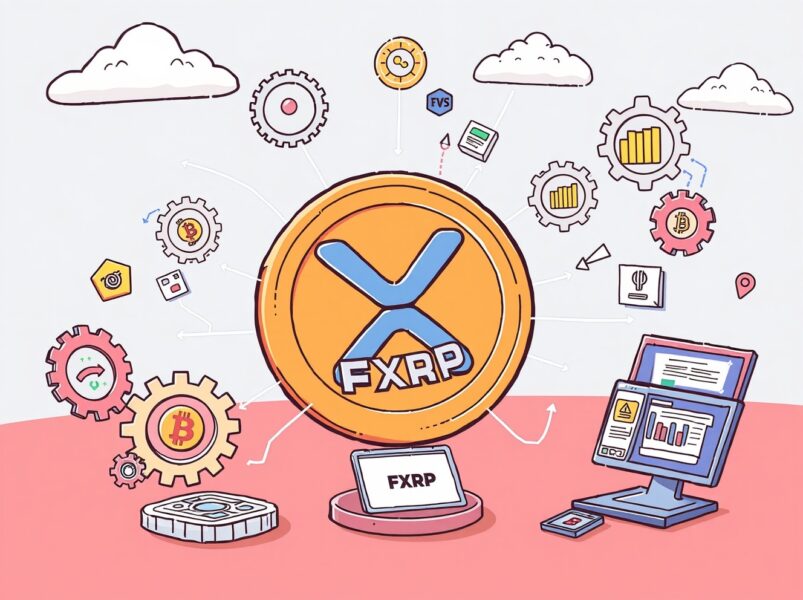
Unleash Potential: Flare Network’s FXRP Revolutionizes DeFi Access for XRP

Unleash Potential: Flare Network’s FXRP Revolutionizes DeFi Access for XRP

BitcoinWorld Unleash Potential: Flare Network’s FXRP Revolutionizes DeFi Access for XRP The world of decentralized finance (DeFi) is constantly evolving, and a major new development is set to excite XRP enthusiasts. Flare Network has just launched FXRP, an innovative solution designed to bring XRP directly into the heart of DeFi applications. This move opens up a wealth of new possibilities for XRP holders, allowing them to engage with lending, borrowing, and trading platforms like never before. It’s a significant step towards a more interconnected crypto ecosystem. What is FXRP and Why is it a Game-Changer for XRP? At its core, FXRP is an over-collateralized, wrapped version of XRP. Think of it as a digital twin of XRP, but one that lives on the Flare Network. This design is crucial because XRP itself doesn’t natively support smart contracts in the same way that Ethereum or other DeFi-centric blockchains do. Consequently, XRP has largely been excluded from the burgeoning DeFi sector. However, FXRP changes this narrative completely. By wrapping XRP, Flare Network creates a token that can interact with smart contracts on its own blockchain. This means XRP holders can now: Access a wider range of DeFi protocols. Participate in decentralized lending and borrowing. Engage in yield farming opportunities. Trade their XRP on decentralized exchanges. This initiative transforms XRP from a primarily transactional asset into a more versatile, programmable one within the DeFi landscape. How Can You Acquire and Utilize FXRP? Getting your hands on FXRP is straightforward, offering flexibility for users. You have two primary methods to acquire this wrapped token. First, users can mint FXRP directly on the Flare Network. This process typically involves locking up an equivalent amount of XRP as collateral, ensuring the wrapped token remains fully backed. Alternatively, if direct minting isn’t your preference, you can acquire FXRP on various decentralized exchanges (DEXs). Platforms like SparkDEX, BlazeSwap, and Enosys are among the initial venues where you can trade for FXRP. This accessibility makes it easy for existing DeFi users and new participants alike to join the Flare Network ecosystem and explore its offerings. The over-collateralization aspect adds an extra layer of security, providing confidence in the token’s backing. Expanding DeFi Horizons: The Broader Impact of FXRP The introduction of FXRP extends far beyond just enabling XRP holders to participate in DeFi. It has a much broader impact on the entire decentralized finance ecosystem. By integrating a widely adopted asset like XRP, Flare Network significantly boosts the total value locked (TVL) and liquidity available within DeFi. This influx of capital and users can lead to more robust and efficient markets. Moreover, FXRP positions Flare Network as a vital bridge between different blockchain ecosystems. It demonstrates how assets from one chain can gain new functionality and utility on another, fostering greater interoperability. This cross-chain capability is essential for the long-term growth and sustainability of decentralized finance, as it breaks down silos and encourages a more unified digital economy. The potential for future integrations with other tokens and protocols is immense, further solidifying Flare’s role. Navigating the Challenges and Future of FXRP While the launch of FXRP presents exciting opportunities, it’s also important to consider potential challenges. As with any new technology in the crypto space, security remains a paramount concern. The integrity of the wrapping mechanism and the underlying smart contracts must be rigorously maintained. Furthermore, user adoption and education will be key to the success of FXRP. New users need clear guidance on how to safely mint, acquire, and use the token in various DeFi applications. The competitive landscape also plays a role; other wrapped assets exist, and FXRP must demonstrate its unique value proposition. However, with its strong backing and the innovative approach of Flare Network, FXRP is well-positioned for growth. Its ability to unlock XRP’s potential for DeFi is a powerful differentiator, promising a vibrant future for both the token and the network. Actionable Insights: Getting Started with FXRP in DeFi If you’re an XRP holder looking to explore the new opportunities presented by FXRP, here are some actionable insights to help you get started: Do Your Research: Before engaging with any DeFi platform, thoroughly research its reputation, security audits, and user reviews. Understand how FXRP interacts with specific protocols. Understand the Risks: DeFi carries inherent risks, including smart contract vulnerabilities, impermanent loss, and market volatility. Familiarize yourself with these risks before committing funds. Start Small: Consider starting with a small amount of FXRP to familiarize yourself with the process of minting, acquiring, and using it in DeFi applications. Stay Informed: Follow official Flare Network channels and reputable crypto news sources to stay updated on new integrations, security announcements, and community developments related to FXRP. By taking these steps, you can confidently navigate the exciting new world that FXRP opens up for XRP within decentralized finance. In conclusion, the launch of FXRP by Flare Network is a monumental step forward for the XRP community and the broader DeFi ecosystem. It effectively bridges a gap, allowing one of the most widely held cryptocurrencies to participate actively in decentralized finance. This innovation not only expands the utility of XRP but also reinforces Flare Network’s commitment to building a more interconnected and functional blockchain world. As FXRP gains traction, we can expect to see a surge in innovative DeFi applications and a more vibrant, inclusive financial landscape for all. Frequently Asked Questions (FAQs) Q1: What exactly is FXRP? A1: FXRP is an over-collateralized, wrapped version of XRP, specifically designed to enable XRP holders to use their assets within decentralized finance (DeFi) applications on the Flare Network. Q2: How is FXRP different from standard XRP? A2: While FXRP is backed by XRP, its key difference is that it resides on the Flare Network and is compatible with smart contracts. This allows it to be used in DeFi protocols for lending, borrowing, and trading, which standard XRP cannot do natively. Q3: Where can I acquire FXRP? A3: You can acquire FXRP by minting it directly on the Flare Network by locking up XRP, or by purchasing it on decentralized exchanges such as SparkDEX, BlazeSwap, and Enosys. Q4: What are the main benefits of using FXRP in DeFi? A4: The primary benefits include gaining access to a wide array of DeFi services like lending, borrowing, and trading on DEXs, thereby increasing the utility and potential earning opportunities for XRP holders within the decentralized ecosystem. Q5: What is Flare Network’s role in the creation of FXRP? A5: Flare Network is the blockchain platform that hosts FXRP. It provides the smart contract functionality and infrastructure necessary to wrap XRP and enable its use in DeFi applications, acting as a bridge for XRP into the decentralized world. If you found this article insightful and believe in the potential of FXRP to revolutionize DeFi, please share it with your network! Help spread the word about how Flare Network is bridging the gap for XRP holders and expanding the possibilities within decentralized finance. Your support helps grow our community and keeps everyone informed about the latest crypto innovations. To learn more about the latest crypto market trends, explore our article on key developments shaping decentralized finance institutional adoption. This post Unleash Potential: Flare Network’s FXRP Revolutionizes DeFi Access for XRP first appeared on BitcoinWorld.
Share
Coinstats2025/09/24 22:45
Fed Lowers Rates By 25bps: How Bitcoin And Crypto Prices Responded And What’s Next

Fed Lowers Rates By 25bps: How Bitcoin And Crypto Prices Responded And What’s Next

The Federal Reserve (Fed) announced its first interest rate cut of the year, leading to an immediate reaction in the cryptocurrency market. Bitcoin (BTC) experienced a notable decline, dropping below the $115,000 threshold shortly after the announcement.  Expert Predicts Crypto Rally Fed Chair Jerome Powell addressed the current economic landscape, noting that while inflation has […]
Share
Bitcoinist2025/09/18 03:11
XRP Price Outlook As Peter Brandt Predicts BTC Price Might Crash to $42k

XRP Price Outlook As Peter Brandt Predicts BTC Price Might Crash to $42k

The post XRP Price Outlook As Peter Brandt Predicts BTC Price Might Crash to $42k appeared on BitcoinEthereumNews.com. XRP price led cryptocurrency losses on Friday
Share
BitcoinEthereumNews2026/02/06 19:06