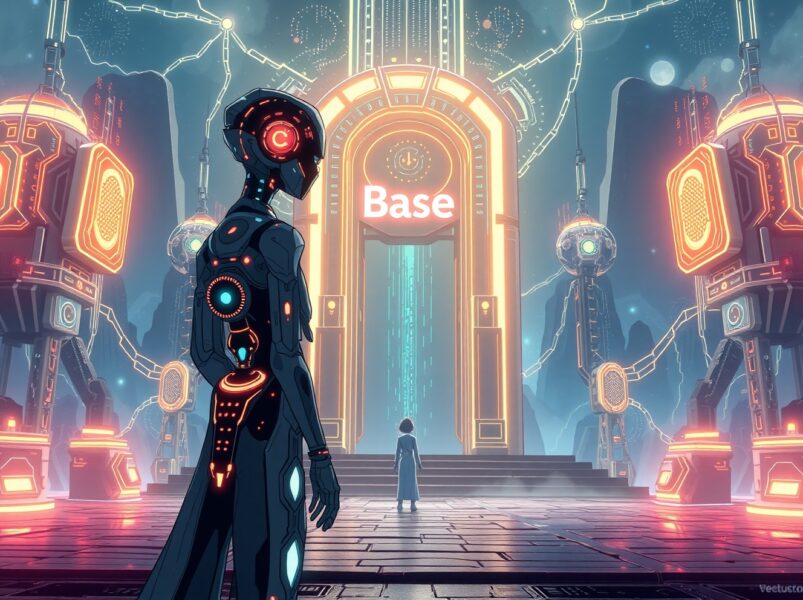
️Are we Ready for Star Wars?
Companies racing to launch data centers into orbit might spark a real-life Star Wars, an energy arms race playing out above Earth, and maybe a real Space War in the future to fight for dominance. Is space the answer for our energy-hungry AI future? Meanwhile, Google keeps shipping models at breakneck speed and now lets you build AI agents in minutes. Are they quietly becoming the AI winner? Let’s dive in and stay curious.
- Are we Ready for Star Wars?
- 🧰 AI Tools — AI Agents you can Vibe Code
- Google launches Workspace Studio for no-code AI agents
- 🛠️ AI Jobs Corner
- 📚 AI Learning Resource — AI Agent Building Courses.
Get 60% off for 1 year
📰 AI News and Trends
- Meta and other Silicon Valley tech giants were caught off guard by a new Chinese AI model from DeepSeek, which rivals their own advances and has sparked “panic” in the industry.
- Anthropic CEO Says Some Tech Firms Are Too Risky With AI Spending
- OpenAI to acquire Neptune, a company that builds monitoring and debugging tools for AI model training to compare thousands of runs and surface issues during training.
- Wikipedia seeks more AI licensing deals similar to Google’s tie-up to monetize content
Other Tech News
- Autolane is building air traffic control for AVs. It will start by coordinating pickup and drop-off points for companies that want to let robotaxis come onto their private property.
- UK passes law officially recognizing crypto as a third kind of asset
- Is brain rot real? Research on the long-term impacts of short-form video consumption is still lacking, but recent studies show concerning associations with cognition and mental health.
Google launches Workspace Studio for no-code AI agents
Google introduced Workspace Studio, a new way to build AI agents across Gmail, Docs, Drive, and Sheets, no coding required.
What it enables
- AI-created automations: Describe a task, and Gemini builds the workflow.
- Context-aware agents: Generate weekly updates, prioritize tasks, or triage emails using data from your documents and inbox.
- Integrations: Connect with Asana, Jira, Salesforce, Mailchimp, or internal tools via webhooks and Apps Script.
- Share + scale: Agents can be shared like Google Docs and customized across teams.
- Templates: Daily email summaries, auto-labeling, pre-meeting briefs, and more.
Rollout
- Rapid Release: Starts Dec 3, 2025
- Scheduled Release: Admin settings Dec 3; end-user access Jan 5, 2026
Bottom line: Workspace Studio makes automation accessible to everyone, turning Google Workspace into a powerful AI workflow engine.
Share
🛠️ AI Jobs Corner
Apply Today — Open Positions.
- Machine Learning Researchers (PhD)
- First-Line Supervisors of Productions and Operating Workers
- Computer and Information Systems Managers
- Database Administrators
- Apply Data Scientists
- Software Technical Writers
Are we Ready for Star Wars?
AI data centers already draw tens of gigawatts of power, global DC capacity is ~59 GW today, and AI demand is projected to grow power use by ~50% a year through 2030. Grids, water for cooling, and local opposition are becoming hard constraints.
Space flips the equation, allegedly:
- In orbit, a solar panel can harvest up to ~8× more energy than on Earth, with 24/7 sunlight and no clouds.
- You don’t need land, transmission lines, or water; you just need launch capacity and radiation-hardened hardware.
That’s the backdrop for Google’s Project Suncatcher, Musk’s comments about orbital AI, Altman’s Dyson-sphere musings, and now his exploration of a SpaceX-style launch company.
What’s happening
AI compute demand is exploding; a few companies are now pushing for data centers in orbit to take advantage of constant sunlight and avoid earth-based constraints (land, power, water, cooling).
Who’s doing it & how
- Google “Project Suncatcher”: building solar-powered satellites with TPUs and laser links; prototypes launching ~2027; goal: dense orbital TPU clusters.
- Starcloud / Crusoe Energy / NVIDIA: targeting a 5-GW orbital data center using H100 GPUs; claim 10–22× lower energy cost thanks to space solar + radiative cooling.
- SpaceX: Leveraging Starship for orbital data-center launches, the aim is high-volume satellite builds to support space-based compute infrastructure.
- Amazon Web Services / Blue Origin: Reportedly exploring orbital compute as a long-term hedge for energy and scale constraints.
Pros
- 24/7 sunlight leading to up to ~8× more generation vs Earth panels.
- No need for land, water, power grid, or cooling infrastructure.
- Lower long-term energy cost vs terrestrial DCs.
- Scalable infra — good for massive AI compute growth without local footprint or regulatory friction.
Cons
- This has a very high upfront cost and launch risk; hardware + launch of heavy satellite clusters is expensive.
- Latency and bandwidth limitations. Orbit adds delay; best suited for training/batch workloads, not latency-sensitive services.
- Reliability/maintenance challenges: radiation, thermal cycling, no physical access, risk of satellite failure or space debris.
- Geo-political and Security risk orbit becomes critical infrastructure and a potential target. Are we ready for Star Wars?
- Environmental and lifecycle footprint launches, satellite end-of-life, and emissions need careful handling to avoid just shifting the environmental burden.
Realistic Timeline
- 2025–2027: prototypes and small-scale launches may be launched by Google’s Suncatcher Starcloud/Crusoe.
- 2028–2032: initial MW–to–sub–GW–scale orbital compute becomes available, likely for specialized workloads.
- Early 2030s+: if economics and reliability work out, orbital compute could contribute meaningful additional capacity (but remain complementary to terrestrial data centers).
Orbital data centers are not a quick fix, but a long-term hedging strategy against rising power, land, and water constraints for AI infrastructure. They make sense as high-value, high-compute wings specialized for workloads, research, or large-scale training, but they’re unlikely to replace Earth-based data centers wholesale for general-purpose workloads.
Share
AI Learning Corner
AI Agent Building Courses.
- Agentic AI and AI Agents: A Primer for Leaders by Coursera Short (~5 hr) intro course explaining what “agentic AI” is, good for non-tech leads or early decision-makers to understand when and how to use agents.
- No‑Code AI and Machine Learning: Building Data Science Solutions by MIT Professional Education covers no-code and low-code AI workflows useful if you want to understand the landscape before diving into agent building.
- Free AI Agent Course for Beginners by NoCodeStartup — Practical guide targeting non-coders; shows how to build agents using free tools, handles basic workflows and integrations.
- AI Agents for Beginners by Microsoft GitHub repo — Step-by-step lessons on building agentic workflows, a good bridge between no-code tools and more technical implementations.
🧰 AI Tools of The Day
AI Agents you can build by Vibing
- Glean Agent Builder — Creates agents with plain-language descriptions or templates, then wire up workflows via a drag-and-drop interface. You can connect to data sources and third-party APIs without coding.
- MindStudio is A visual, no-code builder for AI agents; it ships with 100+ templates for common tasks (email triage, data processing, basic automation), integration via APIs or webhooks.
- Lindy.ai — Marketed as a no-code AI automation platform good for non-technical users. Let’s you build custom “agents” using pre-built workflow blocks and integrate with many SaaS tools.
- n8n — A workflow automation platform that recently added AI-agent support: you can build agents, add memory/context, hook them to APIs and data sources.
🛰️Are we Ready for Star Wars? was originally published in Coinmonks on Medium, where people are continuing the conversation by highlighting and responding to this story.
You May Also Like

Hauser’s Stark Warning Charts Reveal Persistent Economic Pressure

Fed Makes First Rate Cut of the Year, Lowers Rates by 25 Bps