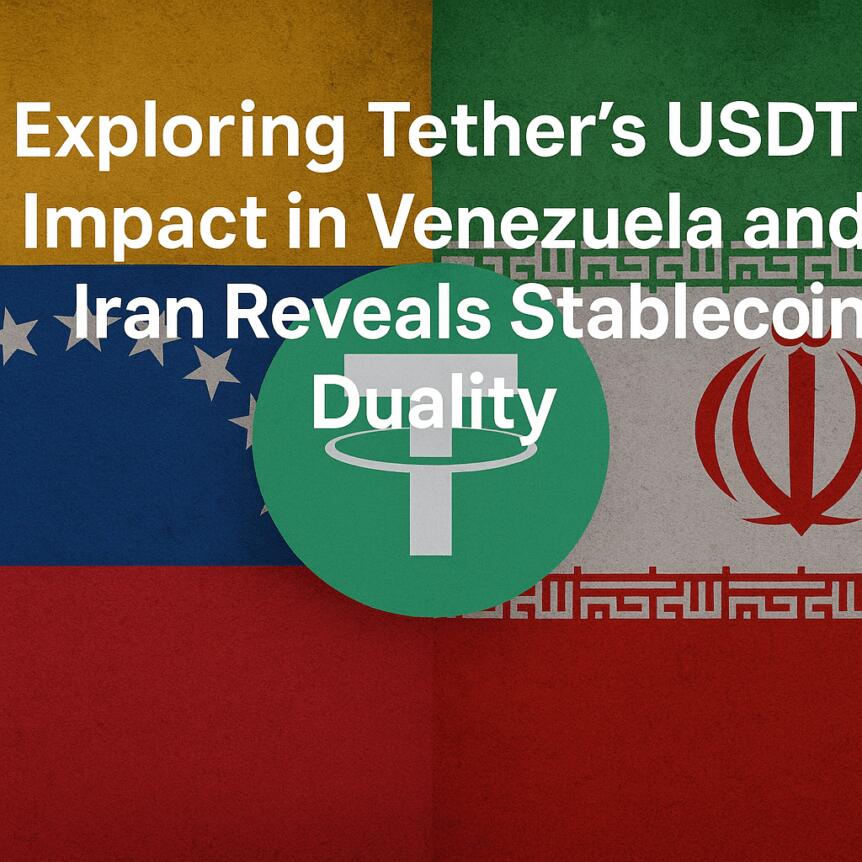
Exploring Tether’s USDT Impact in Venezuela and Iran Reveals Stablecoin Duality
Recent geopolitical and economic crises in Venezuela and Iran have reignited debate over the dual roles of stablecoins, especially those backed by the US dollar, such as Tether. While they serve as vital tools for citizens to hedge against inflation and economic instability, they also present challenges by enabling sanctions evasion for sanctioned entities.
Key Takeaways
- Iran faces widespread protests amid a collapsing rial and increased internet restrictions, leading citizens to increasingly rely on stablecoins like Tether.
- Iranian authorities have imposed caps on stablecoin holdings, yet illicit use persists, notably by the Islamic Revolutionary Guard Corps (IRGC), which reportedly moved over a billion dollars’ worth of stablecoins via front companies.
- Venezuelans have adopted USDT extensively, often using it for everyday transactions due to distrust in banks amidst hyperinflation and economic decline.
- Tether actively collaborates with U.S. authorities to blacklist wallets associated with sanction evasion, freezing billions of dollars’ worth of assets, but illicit flows continue.
Tickers mentioned: USDT
Sentiment: Neutral
Price impact: Neutral — regulatory efforts and illicit use efforts balance each other, resulting in no clear directional market movement.
Market context: The ongoing geopolitical tensions and sanctions regimes are pushing stablecoin adoption in sanctioned regions, influencing broader crypto market dynamics.
Iran’s Stablecoin Dilemma Amid Crisis
Over the past two weeks, Iran has experienced intensified protests triggered by economic hardship and the plummeting value of the Iranian rial against the US dollar. The government has responded with internet shutdowns to curb unrest, while citizens increasingly turn to cryptocurrencies and stablecoins as alternative currencies. Tron-based Tether has emerged as the most utilized asset in the country, enabling residents to hedge inflation and systemic risks.
Despite the growth in adoption, Iranian authorities have introduced regulations limiting stablecoin holdings and purchases to $10,000 annually per individual. However, illicit activities continue, particularly involving the IRGC, which, according to blockchain analytics firm TRM Labs, has moved over $1 billion in stablecoins through two UK-based front companies, Zedcex and Zedxion. These entities reportedly operate as a unified network used to bypass sanctions, moving funds across borders with the support of figures like Babak Zanjani, a known sanctions evader.
Venezuela’s Dependence on USDT
Similarly, Venezuela’s economic crisis has driven widespread adoption of USDT, with many citizens relying on stablecoins for daily transactions due to a distrust in the banking system amidst hyperinflation. Reportedly, Venezuela’s state oil company, Petroleos de Venezuela, now conducts around 80% of its oil transactions in Tether to avoid sanctions imposed in 2020. The use of stablecoins facilitates seamless international payments and offers an alternative to the challenging local financial infrastructure.
Regulatory and Enforcement Efforts
Tether has been working closely with U.S. authorities to combat misuse, blacklisting thousands of wallets involved in illicit activities. Between 2023 and late 2025, the company has reportedly frozen assets worth over $3.3 billion, including $1.75 billion on the Tron network. Recently, the firm added another $182 million to this figure, though it remains unconfirmed whether these actions directly relate to Iran or Venezuela.
This ongoing tension between regulatory efforts and illicit financial flows highlights the complex role stablecoins play in both providing financial stability and enabling sanctions evasion.
This article was originally published as Exploring Tether’s USDT Impact in Venezuela and Iran Reveals Stablecoin Duality on Crypto Breaking News – your trusted source for crypto news, Bitcoin news, and blockchain updates.
You May Also Like

Microsoft Corp. $MSFT blue box area offers a buying opportunity

TON Technical Analysis Feb 14