BitcoinWorld KOSDAQ 3000: South Korea’s Ambitious Plan to Revolutionize Startup Funding with Digital Assets SEOUL, South Korea – January 23, 2025 – In a bold moveBitcoinWorld KOSDAQ 3000: South Korea’s Ambitious Plan to Revolutionize Startup Funding with Digital Assets SEOUL, South Korea – January 23, 2025 – In a bold move

KOSDAQ 3000: South Korea’s Ambitious Plan to Revolutionize Startup Funding with Digital Assets

2026/01/23 08:10
6 min read
South Korea's plan to use digital assets to boost the KOSDAQ index to 3000 points for startup growth.

BitcoinWorld

KOSDAQ 3000: South Korea’s Ambitious Plan to Revolutionize Startup Funding with Digital Assets

SEOUL, South Korea – January 23, 2025 – In a bold move that could redefine the nation’s financial landscape, South Korea’s ruling Democratic Party has formally proposed leveraging digital assets to propel the KOSDAQ index to the landmark level of 3,000. This ambitious strategy, centered on security tokens and a sovereign stablecoin, aims to unlock unprecedented capital for the country’s innovative startups and small-to-medium enterprises (SMEs). Consequently, this initiative represents a significant policy pivot, merging cutting-edge financial technology with traditional market growth objectives to foster a more dynamic and accessible capital ecosystem.

KOSDAQ 3000: The Digital Asset Proposal

The Democratic Party’s KOSPI 5,000 Special Committee presented this groundbreaking proposal directly to President Lee Jae-myung during a pivotal luncheon at the Blue House. Lawmaker Min Byeong-deok, a key committee member, reportedly argued for allowing KOSDAQ-listed companies to utilize innovative financial instruments. Specifically, he highlighted security token offerings (STOs) and a potential won-denominated stablecoin. Min emphasized that the development of such a stablecoin should not be bank-centric, advocating for a more open and competitive framework. This approach seeks to directly address long-standing liquidity and funding challenges faced by high-growth potential companies on the junior exchange.

Understanding the KOSDAQ Market

The KOSDAQ market, often compared to the US NASDAQ, serves as South Korea’s primary exchange for venture companies, startups, and technology firms. Historically, it has been a barometer for the nation’s innovative capacity. However, analysts have frequently cited issues with volatility and investor access. The index has historically struggled to maintain consistent momentum above certain psychological thresholds. Therefore, the proposal to integrate digital assets is not merely about raising a number. It is fundamentally about structurally enhancing market depth, liquidity, and global competitiveness for Korea’s next-generation companies.

The Core Instruments: STOs and a Won Stablecoin

The committee’s plan hinges on two primary digital asset mechanisms. First, Security Token Offerings (STOs) would digitize traditional securities like stocks or bonds on a blockchain. This process promises greater efficiency, fractional ownership, and potentially global investor access. Second, a Won-Denominated Stablecoin would provide a digital representation of the Korean currency, designed for seamless settlement within these new digital asset ecosystems. Crucially, the proposal suggests moving development away from a purely bank-led model. This could encourage innovation from fintech firms and ensure the stablecoin serves the specific needs of the capital markets rather than just retail payments.

The potential impacts of these tools are multifaceted:

  • Enhanced Liquidity: Tokenization can fractionalize large investments, allowing smaller investors to participate in startup funding.
  • Reduced Costs: Blockchain-based settlement can streamline processes, lowering transaction and administrative fees.
  • 24/7 Markets: Digital asset trading could facilitate after-hours settlement, aligning with global crypto markets.
  • Global Capital Access: A compliant digital won could simplify cross-border investment into KOSDAQ assets.

Regulatory Context and Global Precedents

This proposal does not emerge in a vacuum. South Korea’s Financial Services Commission (FSC) has been progressively crafting a regulatory framework for digital assets, known as the Virtual Asset User Protection Act. Furthermore, global jurisdictions like the European Union with MiCA (Markets in Crypto-Assets) and specific US states have established pathways for regulated STOs. Japan, for instance, has seen pilot projects for digital securities. The Korean committee’s suggestion appears to align with this global trend while seeking a uniquely Korean application focused on domestic market development. Success would require careful calibration of investor protection rules with innovation incentives.

Potential Market Impact and Expert Perspectives

Financial analysts are cautiously evaluating the proposal’s potential ripple effects. A successful integration could significantly alter the funding lifecycle for Korean startups. Traditionally, these companies rely on venture capital and later-stage IPOs. STOs could provide a new, potentially more efficient middle ground for capital formation. Moreover, a vibrant digital securities market might attract a new class of younger, tech-savvy investors to the KOSDAQ. However, experts also warn of substantial challenges. These include ensuring robust cybersecurity, establishing clear legal ownership rights for tokenized assets, and preventing market manipulation in a novel trading environment. The stability and trustworthiness of any proposed won stablecoin would be paramount, requiring stringent reserve audits and operational transparency.

Comparison of Traditional IPO vs. Potential STO Pathway for KOSDAQ Firms

AspectTraditional IPOPotential STO Pathway
Primary AudienceInstitutional & large retail investorsGlobal, fractional investors (broader base)
Settlement TimeT+2 (or more) daysNear-instant (blockchain-based)
Cost StructureHigh (underwriting, legal fees)Potentially lower (automated compliance)
Trading HoursExchange hours onlyPotential for extended 24/7 trading
Regulatory FocusSecurities lawSecurities law + digital asset regulations

Conclusion: A Strategic Crossroads for Korean Finance

The proposal to drive the KOSDAQ to 3,000 using digital assets marks a strategic inflection point. It reflects a growing recognition that future economic competitiveness may depend on the fusion of traditional finance with blockchain innovation. While the path from proposal to policy and then to practice will be complex, the vision is clear: to create a more inclusive, efficient, and globally connected capital market for South Korea’s innovators. Ultimately, the success of this ambitious KOSDAQ 3000 plan will hinge on meticulous regulatory design, technological resilience, and the sustained confidence of both domestic and international investors. The world will be watching as South Korea potentially charts a new course for national stock exchanges in the digital age.

FAQs

Q1: What is the main goal of the Democratic Party’s proposal for KOSDAQ?
The primary goal is to revitalize the KOSDAQ market and help its index reach 3,000 points by enabling listed startups and SMEs to raise capital through new digital asset instruments like security tokens and a specialized won stablecoin.

Q2: What are Security Token Offerings (STOs) and how could they help KOSDAQ companies?
STOs are digital tokens issued on a blockchain that represent ownership in a real-world asset, like company equity. For KOSDAQ firms, they could offer a new, potentially faster, and more globally accessible way to raise funds compared to traditional methods, attracting a wider pool of investors.

Q3: Why does the proposal suggest keeping stablecoin development away from banks?
The suggestion aims to foster innovation and competition. By not centering development solely on banks, the government could encourage fintech companies to participate, potentially leading to a stablecoin better tailored for capital market efficiency and specific trading use cases rather than general retail banking.

Q4: Has South Korea regulated digital assets like STOs yet?
South Korea has passed the Virtual Asset User Protection Act, which provides a basic framework for user protection and market oversight. However, specific, detailed regulations for security tokens and stablecoins (like those proposed) are still under development by the Financial Services Commission (FSC).

Q5: What are the biggest challenges to implementing this KOSDAQ 3000 plan?
Key challenges include creating a watertight legal and regulatory framework that protects investors without stifling innovation, ensuring the technological security and stability of the blockchain infrastructure, and building sufficient market trust and liquidity for these new digital financial products.

This post KOSDAQ 3000: South Korea’s Ambitious Plan to Revolutionize Startup Funding with Digital Assets first appeared on BitcoinWorld.

Disclaimer: The articles reposted on this site are sourced from public platforms and are provided for informational purposes only. They do not necessarily reflect the views of MEXC. All rights remain with the original authors. If you believe any content infringes on third-party rights, please contact [email protected] for removal. MEXC makes no guarantees regarding the accuracy, completeness, or timeliness of the content and is not responsible for any actions taken based on the information provided. The content does not constitute financial, legal, or other professional advice, nor should it be considered a recommendation or endorsement by MEXC.

You May Also Like

HitPaw API is Integrated by Comfy for Professional Image and Video Enhancement to Global Creators

HitPaw API is Integrated by Comfy for Professional Image and Video Enhancement to Global Creators

SAN FRANCISCO, Feb. 7, 2026 /PRNewswire/ — HitPaw, a leader in AI-powered visual enhancement solutions, announced Comfy, a global content creation platform, is
Share
AI Journal2026/02/08 09:15
Journalist gives brutal review of Melania movie: 'Not a single person in the theater'
Journalist gives brutal review of Melania movie: 'Not a single person in the theater'

A Journalist gave a brutal review of the new Melania documentary, which has been criticized by those who say it won't make back the huge fees spent to make it,
Share
Rawstory2026/02/08 09:08
Jerome Powell’s Press Conference: Crucial Insights Unveiled for the Market’s Future

Jerome Powell’s Press Conference: Crucial Insights Unveiled for the Market’s Future

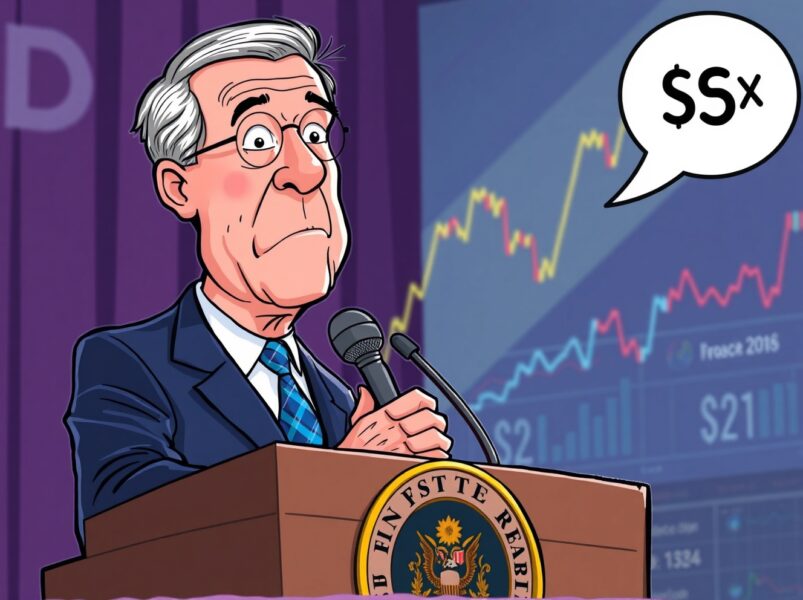
BitcoinWorld Jerome Powell’s Press Conference: Crucial Insights Unveiled for the Market’s Future The financial world, including the dynamic cryptocurrency market, often hangs on every word from the Federal Reserve. Recently, Jerome Powell’s press conference following the Federal Open Market Committee (FOMC) meeting concluded, leaving investors and analysts dissecting his remarks for clues about the future economic direction. This event is always a pivotal moment, shaping expectations for inflation, interest rates, and the overall stability of global markets. What Were the Key Takeaways from Jerome Powell’s Press Conference? During Jerome Powell’s press conference, the Fed Chair provided an update on the central bank’s monetary policy decisions and its economic outlook. His statements often reiterate the Fed’s dual mandate: achieving maximum employment and stable prices. This time was no different, with a strong emphasis on managing persistent inflation. Key points from the recent discussion included: Inflation Control: Powell emphasized the Fed’s unwavering commitment to bringing inflation back down to its 2% target. He reiterated that the fight against rising prices remains the top priority, even if it entails some economic slowdown. Interest Rate Policy: While the Fed’s stance on future interest rate adjustments was discussed, the path remains data-dependent. Powell indicated that decisions would continue to be made meeting-by-meeting, based on incoming economic data. Economic Projections: The updated Summary of Economic Projections (SEP) offered insights into the Fed’s forecasts for GDP growth, unemployment, and inflation. These projections help market participants gauge the central bank’s expectations for the economy’s trajectory. Quantitative Tightening (QT): The ongoing process of reducing the Fed’s balance sheet, known as quantitative tightening, was also a topic. This reduction in liquidity in the financial system has broad implications for asset prices. How Did Jerome Powell’s Remarks Impact Cryptocurrency Markets? The conclusion of Jerome Powell’s press conference often sends ripples through traditional financial markets, and cryptocurrencies are increasingly sensitive to these macroeconomic shifts. Digital assets, once thought to be uncorrelated, now frequently react to the Fed’s monetary policy signals. Higher interest rates, for instance, tend to make riskier assets like cryptocurrencies less attractive. This is because investors might prefer safer, interest-bearing investments. Consequently, we often see increased volatility in Bitcoin (BTC) and Ethereum (ETH) prices immediately following such announcements. The tightening of financial conditions, driven by the Fed, reduces overall liquidity in the system, which can put downward pressure on asset valuations across the board. However, some argue that this growing correlation signifies crypto’s increasing integration into the broader financial ecosystem. It suggests that institutional investors and mainstream finance are now paying closer attention to digital assets, treating them more like other risk-on investments. Navigating the Economic Landscape After Jerome Powell’s Press Conference For cryptocurrency investors, understanding the implications of Jerome Powell’s press conference is crucial for making informed decisions. The Fed’s policy trajectory directly influences the availability of capital and investor sentiment, which are key drivers for crypto valuations. Here are some actionable insights for navigating this environment: Stay Informed: Regularly monitor Fed announcements and economic data releases. Understanding the macroeconomic backdrop is as important as analyzing individual crypto projects. Assess Risk Tolerance: In periods of economic uncertainty and tighter monetary policy, a reassessment of personal risk tolerance is wise. Diversification within your crypto portfolio and across different asset classes can mitigate potential downsides. Focus on Fundamentals: While market sentiment can be swayed by macro news, projects with strong fundamentals, clear use cases, and robust development teams tend to perform better in the long run. Long-Term Perspective: Cryptocurrency markets are known for their volatility. Adopting a long-term investment horizon can help weather short-term fluctuations driven by macro events like Fed meetings. The challenges include potential continued volatility and reduced liquidity. However, opportunities may arise from market corrections, allowing strategic investors to accumulate assets at lower prices. In summary, Jerome Powell’s press conference provides essential guidance on the Fed’s economic strategy. Its conclusions have a profound impact on financial markets, including the dynamic world of cryptocurrencies. Staying informed, understanding the nuances of monetary policy, and maintaining a strategic investment approach are paramount for navigating the evolving economic landscape. The Fed’s actions underscore the interconnectedness of traditional finance and the burgeoning digital asset space. Frequently Asked Questions (FAQs) Q1: What is the Federal Open Market Committee (FOMC)? A1: The FOMC is the monetary policy-making body of the Federal Reserve System. It sets the federal funds rate target and directs open market operations, influencing the availability of money and credit in the U.S. economy. Q2: How do the Fed’s interest rate decisions typically affect cryptocurrency markets? A2: Generally, when the Fed raises interest rates, it makes borrowing more expensive and reduces liquidity in the financial system. This often leads investors to shy away from riskier assets like cryptocurrencies, potentially causing prices to decline. Conversely, lower rates can stimulate investment in riskier assets. Q3: What does “data-dependent” mean in the context of Fed policy? A3: “Data-dependent” means that the Federal Reserve’s future monetary policy decisions, such as interest rate adjustments, will primarily be based on the latest economic data. This includes inflation reports, employment figures, and GDP growth, rather than a predetermined schedule. Q4: Should I change my cryptocurrency investment strategy based on Jerome Powell’s press conference? A4: While it’s crucial to be aware of the macroeconomic environment shaped by Jerome Powell’s press conference, drastic changes to a well-researched investment strategy may not always be necessary. It’s recommended to review your portfolio, assess your risk tolerance, and consider if your strategy aligns with the current economic outlook, focusing on long-term fundamentals. If you found this analysis helpful, please consider sharing it with your network! Your insights and shares help us reach more readers interested in the intersection of traditional finance and the exciting world of cryptocurrencies. Spread the word! To learn more about the latest crypto market trends, explore our article on key developments shaping Bitcoin price action. This post Jerome Powell’s Press Conference: Crucial Insights Unveiled for the Market’s Future first appeared on BitcoinWorld.
Share
Coinstats2025/09/18 16:25