

World’s Second-Largest Wealth Manager UBS to Offer Crypto Investing to Wealth Clients
UBS Group AG, the world’s second-largest wealth manager with over $7 trillion in invested assets, is preparing to offer crypto investments to select wealthy clients, starting with Bitcoin and Ethereum.
According to a January 23 Bloomberg report, UBS is expected to begin offering crypto services in Switzerland, with potential expansion to the Asia-Pacific region and the U.S. The Swiss banking powerhouse is still selecting partners and hasn’t finalized plans.
The initiative reflects growing demand for digital assets among high-net-worth individuals and positions UBS alongside Wall Street competitors who have already entered the crypto wealth management space.
Wall Street’s Crypto Wealth Management Rush
UBS’s planned offering follows a wave of similar initiatives from major banking competitors throughout 2024 and 2025.
Last October, Morgan Stanley opened the door for all its wealth management clients to invest in crypto.
According to CNBC, the bank informed its financial advisers that starting October 15, crypto investments became available to all clients, regardless of risk profile or account type, including retirement accounts.
Previously, access to crypto funds at Morgan Stanley was limited to clients with aggressive risk tolerance and at least $1.5 million in investable assets who wanted exposure through taxable brokerage accounts.
The new policy removes those barriers, allowing any client to add crypto funds to their portfolio under adviser supervision.
Morgan Stanley is also preparing to bring cryptocurrency trading for E-Trade clients in the first half of 2026, a move that could unlock access to as much as $1.3 trillion in trading volume.
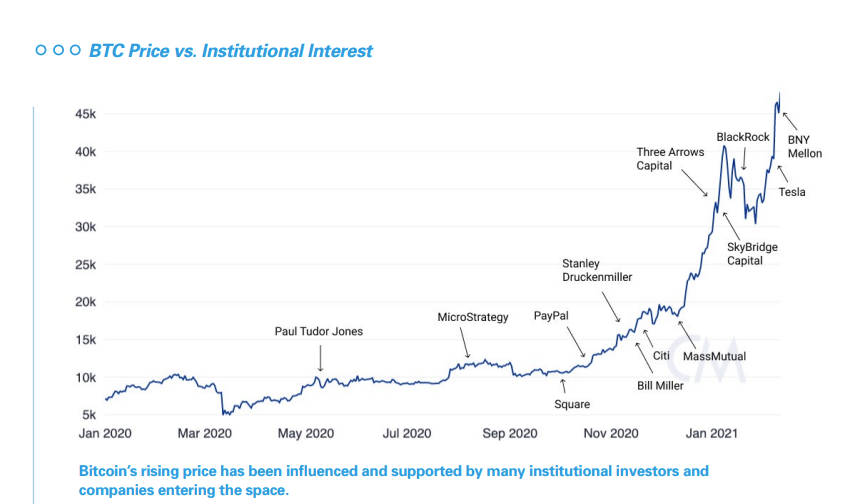 Source: KPMG
According to Bloomberg, the offering will begin with Bitcoin, Ether, and Solana, with plans to expand to broader services.
Morgan Stanley recently took another step into the U.S. crypto market after filing a Form S-1 registration statement with the Securities and Exchange Commission for a Morgan Stanley Ethereum Trust, adding to growing expectations that large Wall Street firms are positioning for broader spot crypto products beyond Bitcoin.
The Morgan Stanley Global Investment Committee (GIC) is now advising clients to allocate a small portfolio portion to cryptocurrency, recommending between 2% and 4% depending on risk appetite.
JPMorgan, BofA, Wells Fargo Join Crypto Push
Similarly, JPMorgan Chase & Co. allows select trading and wealth clients to use cryptocurrency exchange-traded funds (ETFs) as collateral for loans, according to Bloomberg, published on June 4.
The bank began with BlackRock’s iShares Bitcoin Trust (IBIT) and plans to expand access to other funds after rollout.
Traditional banking giants Bank of America and Wells Fargo are also offering eligible wealth management clients access to spot Bitcoin exchange-traded funds (ETFs).
The ETFs have been available to clients for several weeks, a source familiar with Bank of America’s plans told Reuters.
The move follows the Securities and Exchange Commission’s (SEC) approval of these investment vehicles in January 2024, marking a major milestone in cryptocurrency acceptance within traditional financial systems.
UBS already active in Hong Kong and Blockchain Integration
Currently, UBS Group AG and rivals such as HSBC Holdings Plc offer select clients in Hong Kong the ability to trade specific crypto-linked exchange-traded funds (ETFs).
Affluent clients have been granted access to the Samsung Bitcoin Futures Active, CSOP Bitcoin Futures, and CSOP Ether Futures ETFs since the initiative went live in 2023.
UBS is also taking a major step in integrating blockchain technology into traditional finance by experimenting with digital gold investments for retail investors.
Last February, UBS completed a proof-of-concept for its fractional gold investment product, UBS Key4 Gold, on the Ethereum layer-2 network ZKsync Validium.
In November 2024, the bank launched UBS Digital Cash, a private blockchain pilot for multi-currency cross-border payments.
UBS Tokenize, another initiative, enables on-chain issuance of tokenized financial products, including the first tokenized money market fund on Ethereum.
You May Also Like

Pi Network Tech Upgrade Unlocks Mainnet Migration for 2.5 Million Users and Introduces Palm Print Security

PayPal P2P, Google AI Payments, Miner Pivot — Crypto Biz

