Asia’s diverse markets offer ideal sandboxes to run pilots, scale what works, and connect lessons learned across borders.Asia’s diverse markets offer ideal sandboxes to run pilots, scale what works, and connect lessons learned across borders.

Building the backbone: Asia’s race to realize RWA markets | Opinion

6 min read

Disclosure: The views and opinions expressed here belong solely to the author and do not represent the views and opinions of crypto.news’ editorial.

The buzz around real-world asset tokenization is reaching fever pitch, with multi-trillion-dollar forecasts capturing headlines and investor imaginations. Yet while this narrative has raced ahead, the reality is more modest: the total RWA market stands at $23 billion even after a 260% surge in H1 2025, still a speck beside the world’s hundred-trillion-dollar asset base.

Summary
  • Asia holds massive potential for RWA tokenization, with trillions in private wealth and financing gaps, but progress has been slowed by fragmented regulation and cautious institutional capital.
  • Asia’s regulatory diversity is a strength, not a weakness — its patchwork of pilot programs and frameworks enables fast learning, cross-border experimentation, and adaptable models that can scale.
  • Collaborative infrastructure is the key to scale, with policymakers, TradFi institutions, and tech firms co-creating flexible systems and rules that support real-world tokenization use cases.
  • Instead of waiting for global standards, Asia can lead by scaling from within, proving that regional experimentation and collaboration can lay the foundation for broader, interoperable frameworks.

Crucially, the potential for RWA tokenization in Asia is enormous. With $11 trillion in private wealth and a $2.2 trillion corporate financing gap, the region offers a natural proving ground — mobilising idle capital, unlocking fresh collateral, and widening investor access to traditionally illiquid asset classes.

So, why isn’t it scaling as expected? Adoption continues to be curtailed by regulatory and infrastructure gaps that keep institutional money, which drives scale, cautious as they await tested models. However, instead of waiting for the perfect conditions, consider a different perspective: Asia’s patchwork progress makes it an exciting launchpad for scaling tokenized markets. Its diversity is a catalyst for building the foundational rails needed to turn tokenization’s promise into mainstream practice — without waiting for one universal framework to emerge.

Asia’s patchwork: a feature, not a bug

Asia’s regulatory landscape is often described as fragmented. But this complexity is fast becoming its greatest asset in the race to build viable RWA markets. Instead of imposing a single approach, the region’s diversity has created multiple parallel sandboxes to test and retrofit new models into their unique financial structures.

For example, Singapore and Hong Kong have emerged as regional frontrunners with frameworks that balance experimentation and consumer protection. Meanwhile, markets like Thailand and Japan are charting their own paths, from cautious pilots to detailed legal definitions for digital securities and custody.

Collectively, this medley of experimentation enables breakthroughs in one market to inform best practices in another — creating a dynamic network of knowledge sharing across borders. History shows that this regulatory cross-pollination works: Singapore’s REIT framework remains a benchmark for peers like Hong Kong, which has refined its own guidelines to stay competitive. Likewise, lessons from Asia’s tokenization pilots can help shape smarter rules regionally, ensuring that workable frameworks spread faster than if markets acted alone.

Collaboration is key for scale

Experimentation alone, however, won’t bring scale. Sustained institutional participation requires clarity, stability, and trusted market infrastructure — and no entity can deliver this in isolation. Across Asia, policymakers, banks, and technology providers are co-creating rules, sharing risk, and shaping common frameworks.

Singapore exemplifies this approach. Alongside global partnerships with standard-setting bodies like the International Swaps and Derivatives Association, the Monetary Authority of Singapore leads initiatives such as Global Layer One, which convenes diverse industry players to co-develop interoperable systems that can support cross-border tokenized transactions.

Such layered, cross-sector collaboration bridges the gap between emerging digital markets and traditional finance. Global associations bring TradFi credibility, regulators translate high-level principles into practical rules on the ground, and local industry groups stress-test infrastructure and build the technology rails that make this trust possible.

A well-defined but adaptable regulatory framework — informed by both global best practices and local realities — is essential to give institutions the confidence they need to commit real capital.

The myth of universal standards

Underlying the hesitation to scale RWAs is the belief that markets must wait for a universal standard — a seamless, borderless adoption route much like blockchain itself. But that’s an illusion.

Chasing a hypothetical one-size-fits-all model for tokenized assets is counterproductive to innovation. RWAs currently have no dedicated global regulatory framework, and treatment varies widely across jurisdictions depending on local context. In reality, fast-growing financial technologies need flexibility, not uniformity. Asian markets are responding by developing intermediate frameworks through their pilots and collaborations.

The Gulf Cooperation Council follows a similar patchwork approach, sparking a tokenization boom in sectors like base metals and aircraft leasing. Contrastingly, the EU’s Markets in Crypto-Assets Regulation represents a different model built on the EU’s long-standing goal of harmonization in financial markets (following precedents like MiFID II and PSD2) to offer legal clarity and legitimacy to the crypto industry.

Ultimately, while each region will take its own path, a set of shared principles will likely emerge to guide the evolution of interoperable frameworks worldwide.

It’s time to scale from within the patchwork

Above all, institutions need clear, credible spaces to experiment now. Asia’s diverse markets offer ideal sandboxes to run pilots, scale what works, and connect lessons learned across borders. If the goal is to unlock real capital and deliver tangible impact, there’s no time to waste.

Instead of waiting for one universal rulebook, each jurisdiction can advance at its own pace while contributing to a shared foundation of standards for RWA markets. With this mosaic taking shape amid growing cross-border discourse, Asia isn’t just keeping pace — it can set the benchmark, proving that collaboration across complexity is how the industry moves from pilot to mainstream.
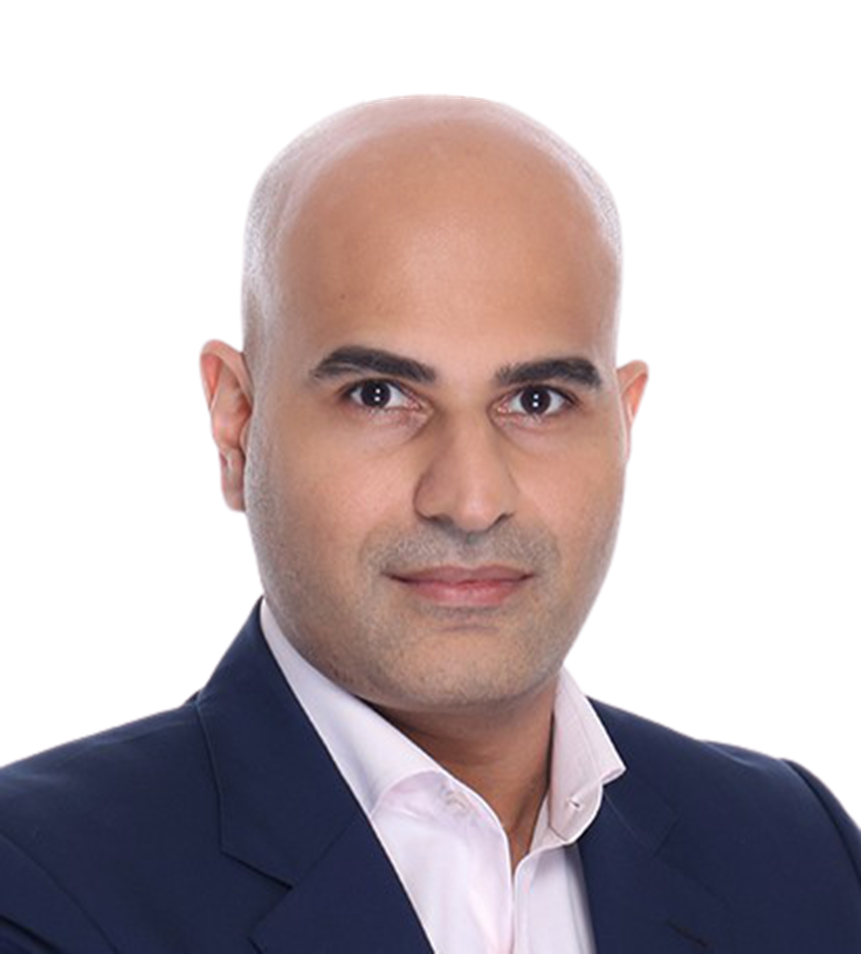
Rehan Ahmed
Rehan Ahmed

Rehan Ahmed is the CEO and founding team member at Marketnode, where he leads the team, focusing on product development and the digitalization of asset classes such as credit, funds, and structured products. Prior to Marketnode, Rehan was Head of Fixed Income Products and Digital Assets at SGX Group, where he oversaw the launch of a digital bond issuance platform that culminated in the Marketnode partnership as well as SGX Group’s institutional bond trading platform. He was one of the key SGX Group representatives on industry bodies such as ICMA, FIX Trading Community, and Singapore National Markets Practice Group (NMPG).

Market Opportunity
Allo Logo
Allo Price(RWA)
$0.002006
$0.002006$0.002006
-2.71%
USD
Allo (RWA) Live Price Chart
Disclaimer: The articles reposted on this site are sourced from public platforms and are provided for informational purposes only. They do not necessarily reflect the views of MEXC. All rights remain with the original authors. If you believe any content infringes on third-party rights, please contact [email protected] for removal. MEXC makes no guarantees regarding the accuracy, completeness, or timeliness of the content and is not responsible for any actions taken based on the information provided. The content does not constitute financial, legal, or other professional advice, nor should it be considered a recommendation or endorsement by MEXC.

You May Also Like

Top NYC Book Publishing Companies

Top NYC Book Publishing Companies

New York City has been the epicenter of American publishing for generations, but “NYC publishing” isn’t just one lane. Today’s landscape includes two very different
Share
Techbullion2026/02/06 14:02
Sensorion Announces its Participation in the Association for Research in Otolaryngology ARO 49th Annual Midwinter Meeting

Sensorion Announces its Participation in the Association for Research in Otolaryngology ARO 49th Annual Midwinter Meeting

MONTPELLIER, France–(BUSINESS WIRE)–Regulatory News: Sensorion (FR0012596468 – ALSEN) a pioneering clinical-stage biotechnology company which specializes in the
Share
AI Journal2026/02/06 14:45
AI Crypto Trading Secrets: What They Won’t Tell You About Profits and Pitfalls|9-Figure Media

AI Crypto Trading Secrets: What They Won’t Tell You About Profits and Pitfalls|9-Figure Media

AI crypto trading is everywhere, and every YouTube guru claims their bot mints money while they sleep. Sounds dreamy, right? However, most don’t discuss the full story, the wild profits possible, and the lurking pitfalls. As someone obsessed with the intersection of artificial intelligence and digital assets, let me pull back the curtain on the realities of algorithmic trading in the crypto jungle. Here’s what nobody tells you: 87% of retail traders using automated systems lose money within their first year. The marketing materials show cherry-picked results. The testimonials come from paid affiliates. But here’s the twist. The remaining 13% who succeed aren’t just lucky. They understand something the majority misses entirely. The Reality Behind the Hype The crypto world loves success stories. You’ve probably seen them. “I made $50,000 in three months using this bot.” What they don’t mention? The $200,000 they lost by testing seventeen other systems first. Real talk: most trading algorithms fail because they’re built for perfect market conditions. Crypto markets are anything but perfect. Think about it like this. Would you trust a Formula 1 car to handle rush hour traffic? That’s essentially what most people do with their trading bots. Why Smart Money Uses Crypto AI Tools Differently Professional traders approach crypto AI tools with surgical precision. They don’t expect miracles. They expect consistent, measured results. The difference lies in understanding what these tools actually do well: • Risk management automation • Pattern recognition at scale • Emotional bias elimination • 24/7 market monitoring • Portfolio rebalancing Notice what’s missing from that list? Get-rich-quick schemes. The smartest crypto AI tools focus on protecting capital first. Profits come second. This mindset separates winners from losers. Here’s something interesting. 9-figure media companies track these patterns religiously. They know which crypto AI tools produce sustainable results versus flashy short-term gains. Professional traders using crypto AI tools typically target 15–25% annual returns. Not 500% monthly moonshots. The Startup Connection Most People Ignore AI for startups isn’t just about building the next ChatGPT. Many successful companies use AI to optimize their crypto treasury management. Smart startups integrate crypto AI tools into their financial operations early. They automate routine decisions. They reduce human error. They scale their trading operations without hiring armies of analysts. But here’s where it gets interesting. The best AI for startup applications in crypto aren’t the obvious ones. Consider automated tax reporting. Or real-time compliance monitoring. Or treasury optimization across multiple blockchains. These unsexy applications generate more consistent profits than flashy trading algorithms. AI for startups in the crypto space succeeds when it solves boring problems efficiently. Not when it promises unrealistic returns. The most successful AI for startups implementations focus on operational efficiency. They reduce costs. They minimize risks. They free up human resources for strategic decisions. Learning from Top AI Start-Ups Top AI start-ups in the crypto space share common characteristics. They prioritize transparency over marketing hype. Look at successful top AI start-ups like Chainalysis or Elliptic. They don’t promise easy money. They provide essential infrastructure. The best top AI start-ups focus on solving real problems: • Market data analysis • Security monitoring • Regulatory compliance • Portfolio analytics • Risk assessment These top AI start-ups understand something crucial. Sustainable businesses solve actual problems. They don’t just ride hype cycles. 9-figure media outlets consistently highlight these fundamental companies. They ignore the noise. They focus on substance. Many top AI start-ups actually discourage retail trading. They know the odds. They’ve seen the casualties. Instead, successful top AI start-ups build tools for institutions. Banks. Hedge funds. Companies with proper risk management systems. The Hidden Costs Nobody Discusses Using crypto AI tools costs more than subscription fees. Much more. First, there’s the learning curve. Most people spend months figuring out proper settings. During this time, they’re paying tuition to the market. Second, there’s infrastructure. Reliable crypto AI tools require stable internet, backup systems, and proper security measures. Third, there’s opportunity cost. Time spent tweaking algorithms could be spent learning fundamental analysis. The real cost? Most people using crypto AI tools trade more frequently. Increased trading usually means increased losses. Think about 9-figure media companies again. They understand that technology amplifies existing skills. It doesn’t replace them. Smart Implementation Strategies Successful crypto AI tools users follow specific patterns: • Start with paper trading • Use position sizing rules • Set strict stop losses • Monitor performance weekly • Adjust strategies quarterly They treat crypto AI tools like any other business tool. With respect. With caution. With realistic expectations, startup applications work similarly. They augment human decision-making. They don’t replace it. The most successful AI for startups implementations in crypto involve human oversight at every level. Algorithms suggest. Humans decide. What Actually Works Here’s what separates successful crypto AI tools users from everyone else: They focus on consistency over home runs. They understand that small, regular gains compound better than occasional big wins followed by devastating losses. They apply AI principles to their approach for startups. They iterate quickly. They fail fast. They learn constantly. They study top AI start-ups for inspiration. But they don’t try to replicate their exact strategies. Most importantly, they never risk money they can’t afford to lose. The crypto market will humble anyone. AI doesn’t change this fundamental truth. Your success with crypto AI tools depends more on your discipline than the sophistication of your algorithms. Remember: the house always has an edge. Your job is to find where that edge doesn’t apply. That’s the secret they won’t tell you. AI Crypto Trading Secrets: What They Won’t Tell You About Profits and Pitfalls|9-Figure Media was originally published in Coinmonks on Medium, where people are continuing the conversation by highlighting and responding to this story
Share
Medium2025/09/18 23:20