The post US Dollar Index holds gains above 97.00 as traders eye FOMC Minutes appeared on BitcoinEthereumNews.com. The US Dollar Index (DXY), which measures the The post US Dollar Index holds gains above 97.00 as traders eye FOMC Minutes appeared on BitcoinEthereumNews.com. The US Dollar Index (DXY), which measures the

US Dollar Index holds gains above 97.00 as traders eye FOMC Minutes

The US Dollar Index (DXY), which measures the value of the US Dollar (USD) against six major currencies, remains stronger for the second consecutive day, trading around 97.20 during the European hours on Tuesday.

The Greenback steadies as traders adopt caution ahead of the looming Federal Open Market Committee (FOMC) Meeting Minutes due on Wednesday. Traders will shift their focus toward Q4 Gross Domestic Product Annualized and the core Personal Consumption Expenditures – Price Index data due on Friday for clearer signals on the policy outlook.

However, the Greenback may face challenges as softer January US Consumer Price Index (CPI) data reinforced expectations that the Federal Reserve (Fed) may begin cutting rates later this year. According to the CME Group’s FedWatch tool, markets now price in a 52.7% probability of a 25-basis-point rate reduction in June and 42.7% in July.

January’s US Nonfarm Payrolls recorded the largest increase in over a year, while the Unemployment Rate unexpectedly declined, pointing to a stabilizing labor market. However, sentiment remains guarded as the Fed’s preferred inflation gauge, the Personal Consumption Expenditures (PCE) Price Index, continues to hover closer to 3% than its 2% target, with disinflation progress uneven since mid-2025.

Chicago Fed President Austan Goolsbee said last week that the latest CPI report showed both positive signs and lingering concerns, particularly elevated services inflation. Goolsbee noted that robust January jobs data point to a stable labor market with only modest cooling, and added that interest rates still have scope to move lower.

US Dollar FAQs

The US Dollar (USD) is the official currency of the United States of America, and the ‘de facto’ currency of a significant number of other countries where it is found in circulation alongside local notes. It is the most heavily traded currency in the world, accounting for over 88% of all global foreign exchange turnover, or an average of $6.6 trillion in transactions per day, according to data from 2022.
Following the second world war, the USD took over from the British Pound as the world’s reserve currency. For most of its history, the US Dollar was backed by Gold, until the Bretton Woods Agreement in 1971 when the Gold Standard went away.

The most important single factor impacting on the value of the US Dollar is monetary policy, which is shaped by the Federal Reserve (Fed). The Fed has two mandates: to achieve price stability (control inflation) and foster full employment. Its primary tool to achieve these two goals is by adjusting interest rates.
When prices are rising too quickly and inflation is above the Fed’s 2% target, the Fed will raise rates, which helps the USD value. When inflation falls below 2% or the Unemployment Rate is too high, the Fed may lower interest rates, which weighs on the Greenback.

In extreme situations, the Federal Reserve can also print more Dollars and enact quantitative easing (QE). QE is the process by which the Fed substantially increases the flow of credit in a stuck financial system.
It is a non-standard policy measure used when credit has dried up because banks will not lend to each other (out of the fear of counterparty default). It is a last resort when simply lowering interest rates is unlikely to achieve the necessary result. It was the Fed’s weapon of choice to combat the credit crunch that occurred during the Great Financial Crisis in 2008. It involves the Fed printing more Dollars and using them to buy US government bonds predominantly from financial institutions. QE usually leads to a weaker US Dollar.

Quantitative tightening (QT) is the reverse process whereby the Federal Reserve stops buying bonds from financial institutions and does not reinvest the principal from the bonds it holds maturing in new purchases. It is usually positive for the US Dollar.

Source: https://www.fxstreet.com/news/us-dollar-index-holds-gains-above-9700-as-traders-eye-fomc-minutes-202602170834
Market Opportunity
Index Cooperative Logo
Index Cooperative Price(INDEX)
$0.3385
$0.3385$0.3385
+0.29%
USD
Index Cooperative (INDEX) Live Price Chart
Disclaimer: The articles reposted on this site are sourced from public platforms and are provided for informational purposes only. They do not necessarily reflect the views of MEXC. All rights remain with the original authors. If you believe any content infringes on third-party rights, please contact [email protected] for removal. MEXC makes no guarantees regarding the accuracy, completeness, or timeliness of the content and is not responsible for any actions taken based on the information provided. The content does not constitute financial, legal, or other professional advice, nor should it be considered a recommendation or endorsement by MEXC.

You May Also Like

Trump insiders privately mock 'far-fetched' plan to use luxury jet for deportations

Trump insiders privately mock 'far-fetched' plan to use luxury jet for deportations

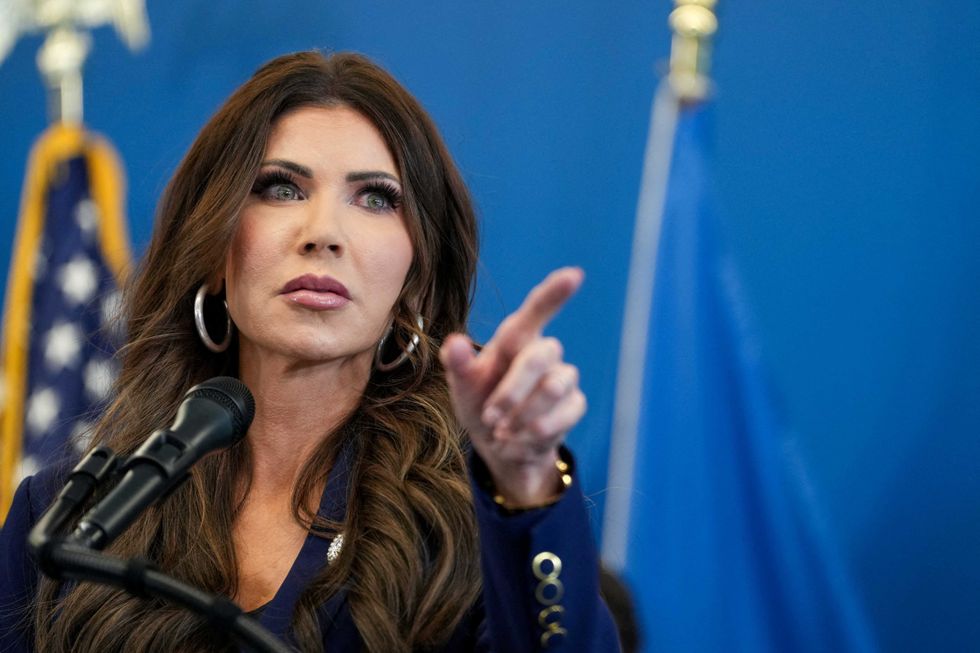
Scandal-plagued Homeland Security Secretary Kristi Noem is facing yet another accusation that taxpayer dollars are helping create a lavish lifestyle for her in
Share
Alternet2026/02/19 20:55
Fed Decides On Interest Rates Today—Here’s What To Watch For

Fed Decides On Interest Rates Today—Here’s What To Watch For

The post Fed Decides On Interest Rates Today—Here’s What To Watch For appeared on BitcoinEthereumNews.com. Topline The Federal Reserve on Wednesday will conclude a two-day policymaking meeting and release a decision on whether to lower interest rates—following months of pressure and criticism from President Donald Trump—and potentially signal whether additional cuts are on the way. President Donald Trump has urged the central bank to “CUT INTEREST RATES, NOW, AND BIGGER” than they might plan to. Getty Images Key Facts The central bank is poised to cut interest rates by at least a quarter-point, down from the 4.25% to 4.5% range where they have been held since December to between 4% and 4.25%, as Wall Street has placed 100% odds of a rate cut, according to CME’s FedWatch, with higher odds (94%) on a quarter-point cut than a half-point (6%) reduction. Fed governors Christopher Waller and Michelle Bowman, both Trump appointees, voted in July for a quarter-point reduction to rates, and they may dissent again in favor of a large cut alongside Stephen Miran, Trump’s Council of Economic Advisers’ chair, who was sworn in at the meeting’s start on Tuesday. It’s unclear whether other policymakers, including Kansas City Fed President Jeffrey Schmid and St. Louis Fed President Alberto Musalem, will favor larger cuts or opt for no reduction. Fed Chair Jerome Powell said in his Jackson Hole, Wyoming, address last month the central bank would likely consider a looser monetary policy, noting the “shifting balance of risks” on the U.S. economy “may warrant adjusting our policy stance.” David Mericle, an economist for Goldman Sachs, wrote in a note the “key question” for the Fed’s meeting is whether policymakers signal “this is likely the first in a series of consecutive cuts” as the central bank is anticipated to “acknowledge the softening in the labor market,” though they may not “nod to an October cut.” Mericle said he…
Share
BitcoinEthereumNews2025/09/18 00:23
Coinbase Slams ‘Patchwork’ State Crypto Laws, Calls for Federal Preemption

Coinbase Slams ‘Patchwork’ State Crypto Laws, Calls for Federal Preemption

The post Coinbase Slams ‘Patchwork’ State Crypto Laws, Calls for Federal Preemption appeared on BitcoinEthereumNews.com. In brief Coinbase has filed a letter with the DOJ urging federal preemption of state crypto laws, citing Oregon’s securities suit, New York’s ETH stance, and staking bans. Chief Legal Officer Paul Grewal called state actions “government run amok,” warning that patchwork enforcement “slows innovation and harms consumers.” A legal expert told Decrypt that states risk violating interstate commerce rules and due process, and DOJ support for preemption may mark a potential turning point. Coinbase has gone on the offensive against state regulators, petitioning the Department of Justice that a patchwork of lawsuits and licensing schemes is tearing America’s crypto market apart. “When Oregon can sue us for services that are legal under federal law, something’s broken,” Chief Legal Officer Paul Grewal tweeted on Tuesday. “This isn’t federalism—this is government run amok.” When Oregon can sue us for services that are legal under federal law, something’s broken. This isn’t federalism–this is government run amok. We just sent a letter to @TheJusticeDept urging federal action on crypto market structure to remedy this. 1/3 — paulgrewal.eth (@iampaulgrewal) September 16, 2025 Coinbase’s filing says that states are “expansively interpreting their securities laws in ways that undermine federal law” and violate the dormant Commerce Clause by projecting regulatory preferences beyond state borders. “The current patchwork of state laws isn’t just inefficient – it slows innovation and harms consumers” and demands “federal action on crypto market structure,” Grewal said.  States vs. Coinbase It pointed to Oregon’s securities lawsuit against the exchange, New York’s bid to classify Ethereum as a security, and cease-and-desist orders on staking as proof that rogue states are trying to resurrect the SEC’s discredited “regulation by enforcement” playbook. Oregon Attorney General Dan Rayfield sued Coinbase in April for promoting unregistered securities, and in July asked a federal judge to return the…
Share
BitcoinEthereumNews2025/09/18 11:52