BitcoinWorld AI-Generated Content: Will Smith’s Shocking Crowd Video Sparks Authenticity Debate In the rapidly evolving digital landscape, where blockchain aims for verifiable truth and NFTs promise unique digital ownership, the line between reality and fabrication is increasingly blurred. This challenge is starkly highlighted by recent events involving none other than Hollywood icon Will Smith, whose latest social media post has ignited a fiery debate about AI-generated content and the very nature of authenticity online. For those in the crypto and tech spheres, this incident offers a compelling look at the public’s immediate reaction to perceived digital manipulation, a crucial lesson for any project built on trust and transparency. Will Smith AI Video: A Digital Mirage or Reality? Will Smith recently shared a video from his European tour, showcasing vast crowds of adoring fans. His caption, "My favorite part of the tour is seeing you all up close," aimed to convey genuine connection. However, keen-eyed viewers quickly spotted disturbing inconsistencies: distorted faces, unnatural finger placements, and oddly augmented features. This immediate visual discord led to widespread accusations that the footage was created using AI, turning what was meant to be an uplifting post into a source of fresh cringe. The Will Smith AI video quickly became a prime example of how quickly public perception can shift when digital fakery is suspected. The visual anomalies included: Digitally-mangled faces in the crowd. Nonsensical finger placements on fans’ hands. Oddly augmented features across various clips. While some fans held up genuine signs expressing their love, including one claiming his music helped them survive cancer, the overall presentation raised significant red flags for a discerning online audience. The Generative AI Controversy: Why It Matters The initial assumption that the crowd footage was entirely AI-generated sent ripples through social media. For a public figure like Will Smith, still navigating reputational recovery post "the slap," such an accusation is particularly damaging. The idea that a celebrity might fabricate fan interactions, or even spin up stories of fans using his music to cope with cancer treatment, strikes a deeply inauthentic chord. This incident underscores a growing Generative AI controversy: the ethical dilemmas surrounding the creation of hyper-realistic but potentially misleading content. While the full extent of AI usage in Smith’s video remains debated, the immediate public reaction highlights a strong societal aversion to perceived digital deceit. The implications extend beyond celebrity PR: Erosion of Trust: When content creators use AI to enhance reality, it risks undermining audience trust. Misinformation Spread: The difficulty in discerning AI-generated content fuels a nightmare of misinformation online. Ethical Quandaries: Questions arise about the moral responsibility of creators to disclose AI usage. Unpacking the Truth: Is All AI-Generated Content Deceptive? As tech blogger Andy Baio pointed out, the situation is more nuanced. Smith’s team has previously posted genuine photos and videos from the tour featuring some of the same fans and signs. The contentious video appears to be a collage of real footage blended with AI-generated elements, likely using real crowd photos as source material. This hybrid approach makes it incredibly difficult to definitively label it as purely ‘fake’ or ‘real.’ Compounding the issue, YouTube’s recent testing of a feature to ‘unblur, denoise, and improve clarity’ on Shorts inadvertently made Smith’s video look even more synthetic on that platform, sparking further outrage before YouTube offered an opt-out. This incident serves as a stark reminder of the challenges in identifying and regulating AI-generated content, especially when it’s skillfully interwoven with authentic material. Consider the spectrum of digital manipulation: Tool/Technique Public Perception Impact on Authenticity Traditional Video Editing Generally accepted Minimal, if used for narrative flow Photoshop/Retouching Accepted with caveats (e.g., models) Moderate, if used to alter reality Autotune (Voice) Often criticized, but common High, if used to mask poor talent Generative AI (Fake Crowds) Highly resistant, seen as deceptive Extreme, seen as fabricating reality Social Media Authenticity: The Public’s Shifting Trust Regardless of the technical intricacies, the court of public opinion delivered a swift verdict: Will Smith posted a ‘fake’ video. Most social media users won’t delve into past posts to verify authenticity. What sticks is the perception of deception. This reaction reveals a critical shift in public tolerance. While tools like Photoshop and auto-tune have long been accepted, generative AI evokes a stronger resistance. Fans expect a certain level of truthfulness from artists; relying on AI to create fan interactions feels like a breach of trust. The incident highlights the fragile nature of social media authenticity, where a single misstep can erode years of built-up goodwill. The core issue isn’t just the use of AI, but the intent behind it. If the goal is to present fabricated interactions as real, it crosses a line. This is analogous to a pop star whose recordings are heavily auto-tuned but cannot perform live, or an advertisement for facial moisturizer that photoshops acne off a model’s face. In both cases, the audience feels duped. Rebuilding Celebrity Trust in the AI Era The Will Smith video saga is a cautionary tale for all public figures and content creators navigating the AI landscape. While the temptation to enhance content with generative AI is understandable for visual appeal, the risk to Celebrity trust is immense. When an artist breaks their audience’s trust – whether through heavily auto-tuned vocals that don’t match live performances or seemingly fabricated fan interactions – it’s incredibly difficult to win back. Transparency and clear disclosure regarding the use of AI in creative work will become paramount. As AI tools become more sophisticated, the onus will be on creators to maintain an honest relationship with their audience, ensuring that the ‘Fresh Prince’ of digital content remains genuinely fresh, not artificially enhanced. The Will Smith crowd video, whether fully AI-generated or a clever blend of real and synthetic, serves as a powerful case study in the evolving relationship between celebrities, technology, and their audience. It underscores the public’s growing skepticism towards AI-enhanced content and the critical importance of authenticity in the digital age. As generative AI becomes more pervasive, the challenge for creators will be to leverage its power without compromising the trust that forms the bedrock of their connection with fans. To learn more about the latest AI news, explore our article on key developments shaping AI features and institutional adoption. This post AI-Generated Content: Will Smith’s Shocking Crowd Video Sparks Authenticity Debate first appeared on BitcoinWorld and is written by Editorial TeamBitcoinWorld AI-Generated Content: Will Smith’s Shocking Crowd Video Sparks Authenticity Debate In the rapidly evolving digital landscape, where blockchain aims for verifiable truth and NFTs promise unique digital ownership, the line between reality and fabrication is increasingly blurred. This challenge is starkly highlighted by recent events involving none other than Hollywood icon Will Smith, whose latest social media post has ignited a fiery debate about AI-generated content and the very nature of authenticity online. For those in the crypto and tech spheres, this incident offers a compelling look at the public’s immediate reaction to perceived digital manipulation, a crucial lesson for any project built on trust and transparency. Will Smith AI Video: A Digital Mirage or Reality? Will Smith recently shared a video from his European tour, showcasing vast crowds of adoring fans. His caption, "My favorite part of the tour is seeing you all up close," aimed to convey genuine connection. However, keen-eyed viewers quickly spotted disturbing inconsistencies: distorted faces, unnatural finger placements, and oddly augmented features. This immediate visual discord led to widespread accusations that the footage was created using AI, turning what was meant to be an uplifting post into a source of fresh cringe. The Will Smith AI video quickly became a prime example of how quickly public perception can shift when digital fakery is suspected. The visual anomalies included: Digitally-mangled faces in the crowd. Nonsensical finger placements on fans’ hands. Oddly augmented features across various clips. While some fans held up genuine signs expressing their love, including one claiming his music helped them survive cancer, the overall presentation raised significant red flags for a discerning online audience. The Generative AI Controversy: Why It Matters The initial assumption that the crowd footage was entirely AI-generated sent ripples through social media. For a public figure like Will Smith, still navigating reputational recovery post "the slap," such an accusation is particularly damaging. The idea that a celebrity might fabricate fan interactions, or even spin up stories of fans using his music to cope with cancer treatment, strikes a deeply inauthentic chord. This incident underscores a growing Generative AI controversy: the ethical dilemmas surrounding the creation of hyper-realistic but potentially misleading content. While the full extent of AI usage in Smith’s video remains debated, the immediate public reaction highlights a strong societal aversion to perceived digital deceit. The implications extend beyond celebrity PR: Erosion of Trust: When content creators use AI to enhance reality, it risks undermining audience trust. Misinformation Spread: The difficulty in discerning AI-generated content fuels a nightmare of misinformation online. Ethical Quandaries: Questions arise about the moral responsibility of creators to disclose AI usage. Unpacking the Truth: Is All AI-Generated Content Deceptive? As tech blogger Andy Baio pointed out, the situation is more nuanced. Smith’s team has previously posted genuine photos and videos from the tour featuring some of the same fans and signs. The contentious video appears to be a collage of real footage blended with AI-generated elements, likely using real crowd photos as source material. This hybrid approach makes it incredibly difficult to definitively label it as purely ‘fake’ or ‘real.’ Compounding the issue, YouTube’s recent testing of a feature to ‘unblur, denoise, and improve clarity’ on Shorts inadvertently made Smith’s video look even more synthetic on that platform, sparking further outrage before YouTube offered an opt-out. This incident serves as a stark reminder of the challenges in identifying and regulating AI-generated content, especially when it’s skillfully interwoven with authentic material. Consider the spectrum of digital manipulation: Tool/Technique Public Perception Impact on Authenticity Traditional Video Editing Generally accepted Minimal, if used for narrative flow Photoshop/Retouching Accepted with caveats (e.g., models) Moderate, if used to alter reality Autotune (Voice) Often criticized, but common High, if used to mask poor talent Generative AI (Fake Crowds) Highly resistant, seen as deceptive Extreme, seen as fabricating reality Social Media Authenticity: The Public’s Shifting Trust Regardless of the technical intricacies, the court of public opinion delivered a swift verdict: Will Smith posted a ‘fake’ video. Most social media users won’t delve into past posts to verify authenticity. What sticks is the perception of deception. This reaction reveals a critical shift in public tolerance. While tools like Photoshop and auto-tune have long been accepted, generative AI evokes a stronger resistance. Fans expect a certain level of truthfulness from artists; relying on AI to create fan interactions feels like a breach of trust. The incident highlights the fragile nature of social media authenticity, where a single misstep can erode years of built-up goodwill. The core issue isn’t just the use of AI, but the intent behind it. If the goal is to present fabricated interactions as real, it crosses a line. This is analogous to a pop star whose recordings are heavily auto-tuned but cannot perform live, or an advertisement for facial moisturizer that photoshops acne off a model’s face. In both cases, the audience feels duped. Rebuilding Celebrity Trust in the AI Era The Will Smith video saga is a cautionary tale for all public figures and content creators navigating the AI landscape. While the temptation to enhance content with generative AI is understandable for visual appeal, the risk to Celebrity trust is immense. When an artist breaks their audience’s trust – whether through heavily auto-tuned vocals that don’t match live performances or seemingly fabricated fan interactions – it’s incredibly difficult to win back. Transparency and clear disclosure regarding the use of AI in creative work will become paramount. As AI tools become more sophisticated, the onus will be on creators to maintain an honest relationship with their audience, ensuring that the ‘Fresh Prince’ of digital content remains genuinely fresh, not artificially enhanced. The Will Smith crowd video, whether fully AI-generated or a clever blend of real and synthetic, serves as a powerful case study in the evolving relationship between celebrities, technology, and their audience. It underscores the public’s growing skepticism towards AI-enhanced content and the critical importance of authenticity in the digital age. As generative AI becomes more pervasive, the challenge for creators will be to leverage its power without compromising the trust that forms the bedrock of their connection with fans. To learn more about the latest AI news, explore our article on key developments shaping AI features and institutional adoption. This post AI-Generated Content: Will Smith’s Shocking Crowd Video Sparks Authenticity Debate first appeared on BitcoinWorld and is written by Editorial Team

AI-Generated Content: Will Smith’s Shocking Crowd Video Sparks Authenticity Debate

2025/08/29 04:25
6 min read

BitcoinWorld

AI-Generated Content: Will Smith’s Shocking Crowd Video Sparks Authenticity Debate

In the rapidly evolving digital landscape, where blockchain aims for verifiable truth and NFTs promise unique digital ownership, the line between reality and fabrication is increasingly blurred. This challenge is starkly highlighted by recent events involving none other than Hollywood icon Will Smith, whose latest social media post has ignited a fiery debate about AI-generated content and the very nature of authenticity online. For those in the crypto and tech spheres, this incident offers a compelling look at the public’s immediate reaction to perceived digital manipulation, a crucial lesson for any project built on trust and transparency.

Will Smith AI Video: A Digital Mirage or Reality?

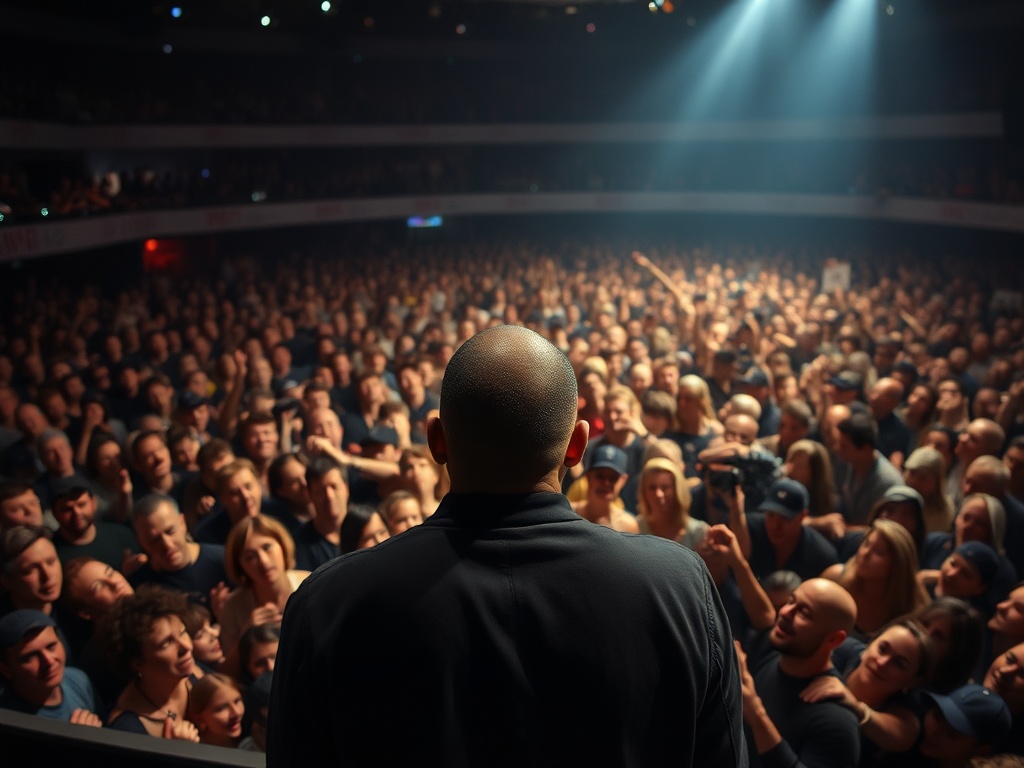
Will Smith recently shared a video from his European tour, showcasing vast crowds of adoring fans. His caption, "My favorite part of the tour is seeing you all up close," aimed to convey genuine connection. However, keen-eyed viewers quickly spotted disturbing inconsistencies: distorted faces, unnatural finger placements, and oddly augmented features. This immediate visual discord led to widespread accusations that the footage was created using AI, turning what was meant to be an uplifting post into a source of fresh cringe. The Will Smith AI video quickly became a prime example of how quickly public perception can shift when digital fakery is suspected.

The visual anomalies included:

  • Digitally-mangled faces in the crowd.
  • Nonsensical finger placements on fans’ hands.
  • Oddly augmented features across various clips.

While some fans held up genuine signs expressing their love, including one claiming his music helped them survive cancer, the overall presentation raised significant red flags for a discerning online audience.

The Generative AI Controversy: Why It Matters

The initial assumption that the crowd footage was entirely AI-generated sent ripples through social media. For a public figure like Will Smith, still navigating reputational recovery post "the slap," such an accusation is particularly damaging. The idea that a celebrity might fabricate fan interactions, or even spin up stories of fans using his music to cope with cancer treatment, strikes a deeply inauthentic chord. This incident underscores a growing Generative AI controversy: the ethical dilemmas surrounding the creation of hyper-realistic but potentially misleading content. While the full extent of AI usage in Smith’s video remains debated, the immediate public reaction highlights a strong societal aversion to perceived digital deceit.

The implications extend beyond celebrity PR:

  • Erosion of Trust: When content creators use AI to enhance reality, it risks undermining audience trust.
  • Misinformation Spread: The difficulty in discerning AI-generated content fuels a nightmare of misinformation online.
  • Ethical Quandaries: Questions arise about the moral responsibility of creators to disclose AI usage.

Unpacking the Truth: Is All AI-Generated Content Deceptive?

As tech blogger Andy Baio pointed out, the situation is more nuanced. Smith’s team has previously posted genuine photos and videos from the tour featuring some of the same fans and signs. The contentious video appears to be a collage of real footage blended with AI-generated elements, likely using real crowd photos as source material. This hybrid approach makes it incredibly difficult to definitively label it as purely ‘fake’ or ‘real.’ Compounding the issue, YouTube’s recent testing of a feature to ‘unblur, denoise, and improve clarity’ on Shorts inadvertently made Smith’s video look even more synthetic on that platform, sparking further outrage before YouTube offered an opt-out. This incident serves as a stark reminder of the challenges in identifying and regulating AI-generated content, especially when it’s skillfully interwoven with authentic material.

Consider the spectrum of digital manipulation:

Tool/TechniquePublic PerceptionImpact on Authenticity
Traditional Video EditingGenerally acceptedMinimal, if used for narrative flow
Photoshop/RetouchingAccepted with caveats (e.g., models)Moderate, if used to alter reality
Autotune (Voice)Often criticized, but commonHigh, if used to mask poor talent
Generative AI (Fake Crowds)Highly resistant, seen as deceptiveExtreme, seen as fabricating reality

Social Media Authenticity: The Public’s Shifting Trust

Regardless of the technical intricacies, the court of public opinion delivered a swift verdict: Will Smith posted a ‘fake’ video. Most social media users won’t delve into past posts to verify authenticity. What sticks is the perception of deception. This reaction reveals a critical shift in public tolerance. While tools like Photoshop and auto-tune have long been accepted, generative AI evokes a stronger resistance. Fans expect a certain level of truthfulness from artists; relying on AI to create fan interactions feels like a breach of trust. The incident highlights the fragile nature of social media authenticity, where a single misstep can erode years of built-up goodwill.

The core issue isn’t just the use of AI, but the intent behind it. If the goal is to present fabricated interactions as real, it crosses a line. This is analogous to a pop star whose recordings are heavily auto-tuned but cannot perform live, or an advertisement for facial moisturizer that photoshops acne off a model’s face. In both cases, the audience feels duped.

Rebuilding Celebrity Trust in the AI Era

The Will Smith video saga is a cautionary tale for all public figures and content creators navigating the AI landscape. While the temptation to enhance content with generative AI is understandable for visual appeal, the risk to Celebrity trust is immense. When an artist breaks their audience’s trust – whether through heavily auto-tuned vocals that don’t match live performances or seemingly fabricated fan interactions – it’s incredibly difficult to win back. Transparency and clear disclosure regarding the use of AI in creative work will become paramount. As AI tools become more sophisticated, the onus will be on creators to maintain an honest relationship with their audience, ensuring that the ‘Fresh Prince’ of digital content remains genuinely fresh, not artificially enhanced.

The Will Smith crowd video, whether fully AI-generated or a clever blend of real and synthetic, serves as a powerful case study in the evolving relationship between celebrities, technology, and their audience. It underscores the public’s growing skepticism towards AI-enhanced content and the critical importance of authenticity in the digital age. As generative AI becomes more pervasive, the challenge for creators will be to leverage its power without compromising the trust that forms the bedrock of their connection with fans.

To learn more about the latest AI news, explore our article on key developments shaping AI features and institutional adoption.

This post AI-Generated Content: Will Smith’s Shocking Crowd Video Sparks Authenticity Debate first appeared on BitcoinWorld and is written by Editorial Team

Market Opportunity
Gravity Logo
Gravity Price(G)
$0.003678
$0.003678$0.003678
-2.90%
USD
Gravity (G) Live Price Chart
Disclaimer: The articles reposted on this site are sourced from public platforms and are provided for informational purposes only. They do not necessarily reflect the views of MEXC. All rights remain with the original authors. If you believe any content infringes on third-party rights, please contact [email protected] for removal. MEXC makes no guarantees regarding the accuracy, completeness, or timeliness of the content and is not responsible for any actions taken based on the information provided. The content does not constitute financial, legal, or other professional advice, nor should it be considered a recommendation or endorsement by MEXC.

You May Also Like

IP Hits $11.75, HYPE Climbs to $55, BlockDAG Surpasses Both with $407M Presale Surge!

IP Hits $11.75, HYPE Climbs to $55, BlockDAG Surpasses Both with $407M Presale Surge!

The post IP Hits $11.75, HYPE Climbs to $55, BlockDAG Surpasses Both with $407M Presale Surge! appeared on BitcoinEthereumNews.com. Crypto News 17 September 2025 | 18:00 Discover why BlockDAG’s upcoming Awakening Testnet launch makes it the best crypto to buy today as Story (IP) price jumps to $11.75 and Hyperliquid hits new highs. Recent crypto market numbers show strength but also some limits. The Story (IP) price jump has been sharp, fueled by big buybacks and speculation, yet critics point out that revenue still lags far behind its valuation. The Hyperliquid (HYPE) price looks solid around the mid-$50s after a new all-time high, but questions remain about sustainability once the hype around USDH proposals cools down. So the obvious question is: why chase coins that are either stretched thin or at risk of retracing when you could back a network that’s already proving itself on the ground? That’s where BlockDAG comes in. While other chains are stuck dealing with validator congestion or outages, BlockDAG’s upcoming Awakening Testnet will be stress-testing its EVM-compatible smart chain with real miners before listing. For anyone looking for the best crypto coin to buy, the choice between waiting on fixes or joining live progress feels like an easy one. BlockDAG: Smart Chain Running Before Launch Ethereum continues to wrestle with gas congestion, and Solana is still known for network freezes, yet BlockDAG is already showing a different picture. Its upcoming Awakening Testnet, set to launch on September 25, isn’t just a demo; it’s a live rollout where the chain’s base protocols are being stress-tested with miners connected globally. EVM compatibility is active, account abstraction is built in, and tools like updated vesting contracts and Stratum integration are already functional. Instead of waiting for fixes like other networks, BlockDAG is proving its infrastructure in real time. What makes this even more important is that the technology is operational before the coin even hits exchanges. That…
Share
BitcoinEthereumNews2025/09/18 00:32
Ondo Finance launches USDY yieldcoin on Stellar network
Ondo Finance launches USDY yieldcoin on Stellar network

The post Ondo Finance launches USDY yieldcoin on Stellar network appeared on BitcoinEthereumNews.com. Key Takeaways Ondo Finance has launched its USDY yieldcoin on the Stellar blockchain network. USDY is Ondo’s flagship yieldcoin focused on real-world asset expansion. Ondo Finance launched its USDY yieldcoin on the Stellar blockchain network today. USDY is described as Ondo’s flagship yieldcoin and represents the company’s expansion of real-world assets onto the Stellar platform. The launch aims to provide yield access across global economies through Stellar’s international network infrastructure. The deployment connects traditional finance with blockchain-based solutions by bringing real-world asset exposure to Stellar’s ecosystem. Ondo Finance positions the move as part of efforts to broaden access to yield-generating opportunities worldwide. Source: https://cryptobriefing.com/ondo-finance-usdy-yieldcoin-stellar-launch/
Share
BitcoinEthereumNews2025/09/18 03:58
Rap Star Drake Uses Stake to Wager $1M in Bitcoin on Patriots Despite Super Bowl LX Odds

Rap Star Drake Uses Stake to Wager $1M in Bitcoin on Patriots Despite Super Bowl LX Odds

Drake has never been shy about betting big, but on the eve of Super Bowl LX, the global music star took it up another notch by placing a $1 million wager on the
Share
Coinstats2026/02/09 04:00