For some DeFi projects, when airdrop rewards dry up, it kickstarts a terminal liquidity decline from which they don’t recover.DeFi lending protocol Gearbox has defied that pattern.Last year, its total value locked fell 80% from its $410 million peak. Users caused the slump by abandoning Gearbox when opportunities to farm airdrops of restaking services like Renzo shrank. TVL is a metric that measures the amount of deposits to a DeFi protocol. Yet, Gearbox’s TVL has since bounced back to $340 million, DefiLlama data shows. The TVL includes funds borrowed on the protocol.“A significant aspect of Gearbox’s comeback strategy was integrating assets no one else can,” a Gearbox team member who goes by Mugglesect told DL News.For instance, Gearbox users can tap into illiquid assets available on protocols like Mellow Finance, a $430 million liquid restaking protocol. Mugglesect said Gearbox is betting that this growth is anchored in users actually leveraging the protocol rather than chasing the next speculative farming craze.Gearbox’s revival comes amid a resurgence in crypto’s lending sector that has pushed deposits to $130 billion, catapulting the sector to the summit of DeFi, even overtaking liquid staking, previously the biggest sector. Unique advantageGearbox is small compared to giants like Aave and Morpho, whose deposits are in the tens of billions of dollars. But it has a unique advantage: so-called credit accounts, Mugglesect said. These are smart contract wallets inside the Gearbox app that allow users to deploy leveraged capital across several DeFi markets for trading, staking, or providing liquidity.Users deposit approved collateral like Ether on Gearbox to open a credit account. Based on the account’s leverage limits, they can borrow multiples of their collateral to use as capital to stake on Lido to earn staking yield, provide liquidity on Curve to receive boosted rewards, or trade perpetual contracts.“You don’t just loop an asset, you borrow up to [40 times] your capital in a credit account and utilise it across DeFi, turning any integrated DeFi protocol leveraged,” Mugglesect said.“Credit accounts can also connect to assets that aren’t on [decentralised exchanges] or aren’t even tokenised, something traditional lending protocols can’t do.”Gearbox’s credit accounts offer composability, which means users can integrate across several DeFi markets via the platform. That’s not possible on other protocols, such as Aave, Morpho, or Compound. There, users must manually transfer borrowed funds to other DeFi apps if they want to farm or stake. Risk curatorsIn March, Gearbox launched a new lending market called Permissionless. It has been a major boon for the protocol, with credit accounts on Permissionless accounting for $250 million of Gearbox’s TVL.Permissionless features risk curators. These are DAO-approved managers who define the assets and DeFi strategies that can be used with a Gearbox credit account. They also set the allowable risk parameters, like leverage limits and liquidation thresholds, to keep credit accounts safe for users.Usually, the Gearbox DAO approves new assets that can be added to the protocol via a governance vote. “Permissionless enables risk curators to onboard new markets to Gearbox without the DAO intervention,” Mugglesect said.Under Permissionless, Gearbox has added five new blockchains and more than 25 markets to its lending stack while tripling the protocol’s market expansion, Mugglesect said.“The protocol is already on 27 [blockchains], the most of any lending protocol,” Mugglesect said. “We’ll be doubling down on more such integrations to create sticky growth.”Zero bad debtBut with crypto lending comes risks. As Gearbox swallows up more liquidity, the peril for lenders could increase.The team takes a proactive approach to unforeseen events by forking the networks eight times a day to test against black swan events, Mugglesect said.Gearbox has already proven its chops in navigating periods of market upheaval, Mugglesect said.Last year, ezETH, Renzo’s Ethereum liquid staking token, lost its peg to Ethereum due to confusion over the protocol’s airdrop. Users couldn’t redeem ezETH for Ethereum, and that caused a massive selloff on exchanges.The ezETH depeg caused $56 million worth of user positions to be liquidated, with $33 million of those losses happening on Gearbox due to the protocol’s popularity among restaking airdrop farmers. Yet Gearbox didn’t suffer any bad debt thanks to its design. That design separates lenders, risk curators, and active borrowers into different layers within the protocol. It even earned a profit from the ezETH depeg liquidation, whereas Morpho, the second-most affected protocol in the ezETH depeg incident, incurred about $34,000 in bad debt. The protocol boasts a bad-debt-free track record since its inception in 2021.Osato Avan-Nomayo is our Nigeria-based DeFi correspondent. He covers DeFi and tech. Got a tip? Please contact him at [email protected].For some DeFi projects, when airdrop rewards dry up, it kickstarts a terminal liquidity decline from which they don’t recover.DeFi lending protocol Gearbox has defied that pattern.Last year, its total value locked fell 80% from its $410 million peak. Users caused the slump by abandoning Gearbox when opportunities to farm airdrops of restaking services like Renzo shrank. TVL is a metric that measures the amount of deposits to a DeFi protocol. Yet, Gearbox’s TVL has since bounced back to $340 million, DefiLlama data shows. The TVL includes funds borrowed on the protocol.“A significant aspect of Gearbox’s comeback strategy was integrating assets no one else can,” a Gearbox team member who goes by Mugglesect told DL News.For instance, Gearbox users can tap into illiquid assets available on protocols like Mellow Finance, a $430 million liquid restaking protocol. Mugglesect said Gearbox is betting that this growth is anchored in users actually leveraging the protocol rather than chasing the next speculative farming craze.Gearbox’s revival comes amid a resurgence in crypto’s lending sector that has pushed deposits to $130 billion, catapulting the sector to the summit of DeFi, even overtaking liquid staking, previously the biggest sector. Unique advantageGearbox is small compared to giants like Aave and Morpho, whose deposits are in the tens of billions of dollars. But it has a unique advantage: so-called credit accounts, Mugglesect said. These are smart contract wallets inside the Gearbox app that allow users to deploy leveraged capital across several DeFi markets for trading, staking, or providing liquidity.Users deposit approved collateral like Ether on Gearbox to open a credit account. Based on the account’s leverage limits, they can borrow multiples of their collateral to use as capital to stake on Lido to earn staking yield, provide liquidity on Curve to receive boosted rewards, or trade perpetual contracts.“You don’t just loop an asset, you borrow up to [40 times] your capital in a credit account and utilise it across DeFi, turning any integrated DeFi protocol leveraged,” Mugglesect said.“Credit accounts can also connect to assets that aren’t on [decentralised exchanges] or aren’t even tokenised, something traditional lending protocols can’t do.”Gearbox’s credit accounts offer composability, which means users can integrate across several DeFi markets via the platform. That’s not possible on other protocols, such as Aave, Morpho, or Compound. There, users must manually transfer borrowed funds to other DeFi apps if they want to farm or stake. Risk curatorsIn March, Gearbox launched a new lending market called Permissionless. It has been a major boon for the protocol, with credit accounts on Permissionless accounting for $250 million of Gearbox’s TVL.Permissionless features risk curators. These are DAO-approved managers who define the assets and DeFi strategies that can be used with a Gearbox credit account. They also set the allowable risk parameters, like leverage limits and liquidation thresholds, to keep credit accounts safe for users.Usually, the Gearbox DAO approves new assets that can be added to the protocol via a governance vote. “Permissionless enables risk curators to onboard new markets to Gearbox without the DAO intervention,” Mugglesect said.Under Permissionless, Gearbox has added five new blockchains and more than 25 markets to its lending stack while tripling the protocol’s market expansion, Mugglesect said.“The protocol is already on 27 [blockchains], the most of any lending protocol,” Mugglesect said. “We’ll be doubling down on more such integrations to create sticky growth.”Zero bad debtBut with crypto lending comes risks. As Gearbox swallows up more liquidity, the peril for lenders could increase.The team takes a proactive approach to unforeseen events by forking the networks eight times a day to test against black swan events, Mugglesect said.Gearbox has already proven its chops in navigating periods of market upheaval, Mugglesect said.Last year, ezETH, Renzo’s Ethereum liquid staking token, lost its peg to Ethereum due to confusion over the protocol’s airdrop. Users couldn’t redeem ezETH for Ethereum, and that caused a massive selloff on exchanges.The ezETH depeg caused $56 million worth of user positions to be liquidated, with $33 million of those losses happening on Gearbox due to the protocol’s popularity among restaking airdrop farmers. Yet Gearbox didn’t suffer any bad debt thanks to its design. That design separates lenders, risk curators, and active borrowers into different layers within the protocol. It even earned a profit from the ezETH depeg liquidation, whereas Morpho, the second-most affected protocol in the ezETH depeg incident, incurred about $34,000 in bad debt. The protocol boasts a bad-debt-free track record since its inception in 2021.Osato Avan-Nomayo is our Nigeria-based DeFi correspondent. He covers DeFi and tech. Got a tip? Please contact him at [email protected].

Gearbox deposits recover from 80% crash as users pour $250m into new lending market

2025/09/10 22:27
4 min read

For some DeFi projects, when airdrop rewards dry up, it kickstarts a terminal liquidity decline from which they don’t recover.

DeFi lending protocol Gearbox has defied that pattern.

Last year, its total value locked fell 80% from its $410 million peak. Users caused the slump by abandoning Gearbox when opportunities to farm airdrops of restaking services like Renzo shrank. TVL is a metric that measures the amount of deposits to a DeFi protocol.

Yet, Gearbox’s TVL has since bounced back to $340 million, DefiLlama data shows. The TVL includes funds borrowed on the protocol.

“A significant aspect of Gearbox’s comeback strategy was integrating assets no one else can,” a Gearbox team member who goes by Mugglesect told DL News.

For instance, Gearbox users can tap into illiquid assets available on protocols like Mellow Finance, a $430 million liquid restaking protocol.

Mugglesect said Gearbox is betting that this growth is anchored in users actually leveraging the protocol rather than chasing the next speculative farming craze.

Gearbox’s revival comes amid a resurgence in crypto’s lending sector that has pushed deposits to $130 billion, catapulting the sector to the summit of DeFi, even overtaking liquid staking, previously the biggest sector.

Unique advantage

Gearbox is small compared to giants like Aave and Morpho, whose deposits are in the tens of billions of dollars.

But it has a unique advantage: so-called credit accounts, Mugglesect said. These are smart contract wallets inside the Gearbox app that allow users to deploy leveraged capital across several DeFi markets for trading, staking, or providing liquidity.

Users deposit approved collateral like Ether on Gearbox to open a credit account. Based on the account’s leverage limits, they can borrow multiples of their collateral to use as capital to stake on Lido to earn staking yield, provide liquidity on Curve to receive boosted rewards, or trade perpetual contracts.

“You don’t just loop an asset, you borrow up to [40 times] your capital in a credit account and utilise it across DeFi, turning any integrated DeFi protocol leveraged,” Mugglesect said.

“Credit accounts can also connect to assets that aren’t on [decentralised exchanges] or aren’t even tokenised, something traditional lending protocols can’t do.”

Gearbox’s credit accounts offer composability, which means users can integrate across several DeFi markets via the platform.

That’s not possible on other protocols, such as Aave, Morpho, or Compound. There, users must manually transfer borrowed funds to other DeFi apps if they want to farm or stake.

Risk curators

In March, Gearbox launched a new lending market called Permissionless. It has been a major boon for the protocol, with credit accounts on Permissionless accounting for $250 million of Gearbox’s TVL.

Permissionless features risk curators. These are DAO-approved managers who define the assets and DeFi strategies that can be used with a Gearbox credit account. They also set the allowable risk parameters, like leverage limits and liquidation thresholds, to keep credit accounts safe for users.

Usually, the Gearbox DAO approves new assets that can be added to the protocol via a governance vote.

“Permissionless enables risk curators to onboard new markets to Gearbox without the DAO intervention,” Mugglesect said.

Under Permissionless, Gearbox has added five new blockchains and more than 25 markets to its lending stack while tripling the protocol’s market expansion, Mugglesect said.

“The protocol is already on 27 [blockchains], the most of any lending protocol,” Mugglesect said. “We’ll be doubling down on more such integrations to create sticky growth.”

Zero bad debt

But with crypto lending comes risks. As Gearbox swallows up more liquidity, the peril for lenders could increase.

The team takes a proactive approach to unforeseen events by forking the networks eight times a day to test against black swan events, Mugglesect said.

Gearbox has already proven its chops in navigating periods of market upheaval, Mugglesect said.

Last year, ezETH, Renzo’s Ethereum liquid staking token, lost its peg to Ethereum due to confusion over the protocol’s airdrop. Users couldn’t redeem ezETH for Ethereum, and that caused a massive selloff on exchanges.

The ezETH depeg caused $56 million worth of user positions to be liquidated, with $33 million of those losses happening on Gearbox due to the protocol’s popularity among restaking airdrop farmers.

Yet Gearbox didn’t suffer any bad debt thanks to its design. That design separates lenders, risk curators, and active borrowers into different layers within the protocol.

It even earned a profit from the ezETH depeg liquidation, whereas Morpho, the second-most affected protocol in the ezETH depeg incident, incurred about $34,000 in bad debt.

The protocol boasts a bad-debt-free track record since its inception in 2021.

Osato Avan-Nomayo is our Nigeria-based DeFi correspondent. He covers DeFi and tech. Got a tip? Please contact him at [email protected].

Market Opportunity
Harvest Finance Logo
Harvest Finance Price(FARM)
$12.74
$12.74$12.74
+0.79%
USD
Harvest Finance (FARM) Live Price Chart
Disclaimer: The articles reposted on this site are sourced from public platforms and are provided for informational purposes only. They do not necessarily reflect the views of MEXC. All rights remain with the original authors. If you believe any content infringes on third-party rights, please contact [email protected] for removal. MEXC makes no guarantees regarding the accuracy, completeness, or timeliness of the content and is not responsible for any actions taken based on the information provided. The content does not constitute financial, legal, or other professional advice, nor should it be considered a recommendation or endorsement by MEXC.

You May Also Like

XRP Buyers Defend Most Major 200-Week Price Average: Can It Be Bottom of 2026?

XRP Buyers Defend Most Major 200-Week Price Average: Can It Be Bottom of 2026?

The post XRP Buyers Defend Most Major 200-Week Price Average: Can It Be Bottom of 2026? appeared on BitcoinEthereumNews.com. XRP has returned to its 200-week moving
Share
BitcoinEthereumNews2026/02/08 19:49
Expert Tags Ethereum’s ERC-8004 Mainnet Launch An “iPhone Moment”, Here’s What It Means
Expert Tags Ethereum’s ERC-8004 Mainnet Launch An “iPhone Moment”, Here’s What It Means

Market analyst says Ethereum is having an “iPhone moment” as it approaches the ERC-8004 mainnet launch.
Share
Coinstats2026/02/08 19:56
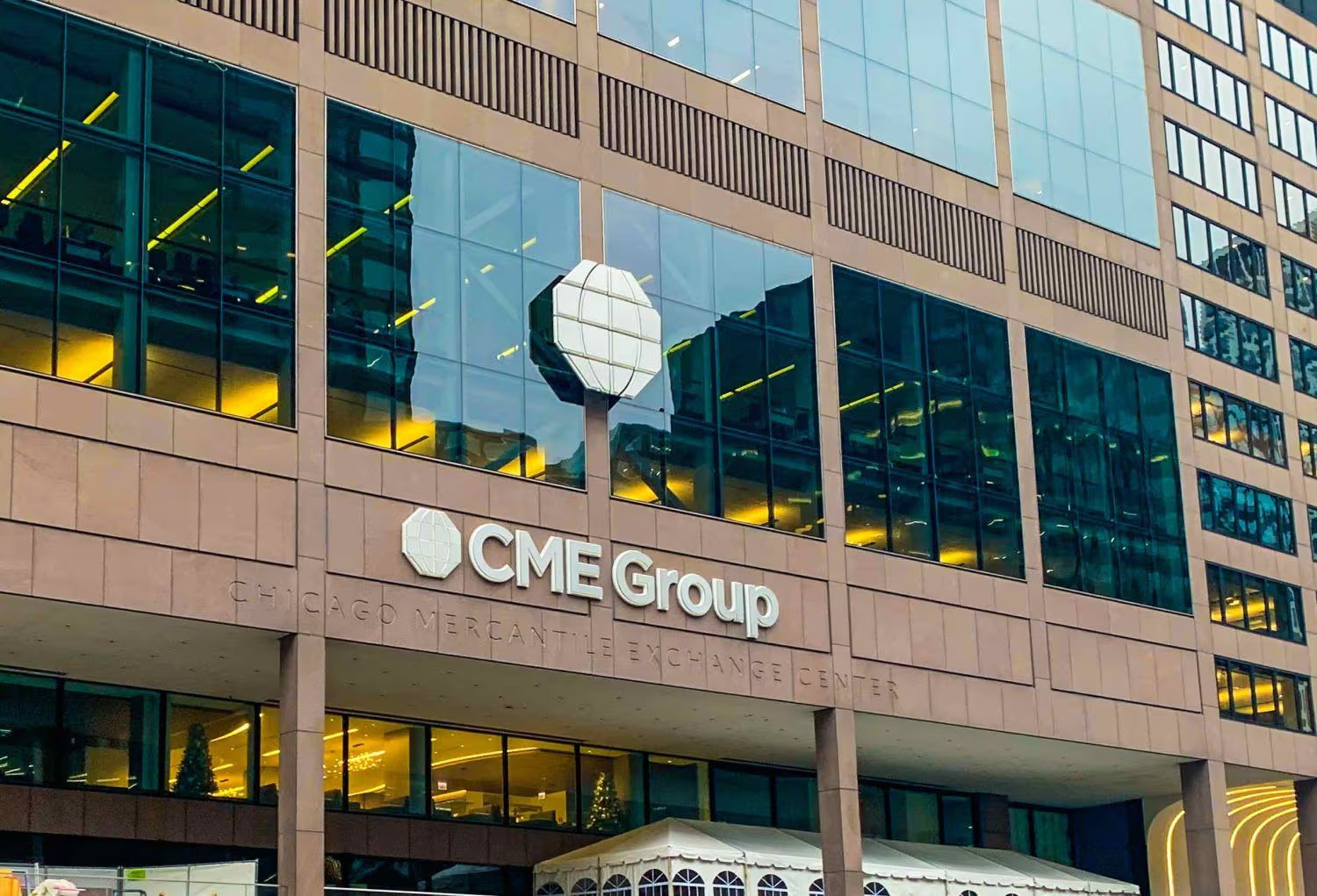
Breaking: CME Group Unveils Solana and XRP Options

Breaking: CME Group Unveils Solana and XRP Options

CME Group launches Solana and XRP options, expanding crypto offerings. SEC delays Solana and XRP ETF approvals, market awaits clarity. Strong institutional demand drives CME’s launch of crypto options contracts. In a bold move to broaden its cryptocurrency offerings, CME Group has officially launched options on Solana (SOL) and XRP futures. Available since October 13, 2025, these options will allow traders to hedge and manage exposure to two of the most widely traded digital assets in the market. The new contracts come in both full-size and micro-size formats, with expiration options available daily, monthly, and quarterly, providing flexibility for a diverse range of market participants. This expansion aligns with the rising demand for innovative products in the crypto space. Giovanni Vicioso, CME Group’s Global Head of Cryptocurrency Products, noted that the new options offer increased flexibility for traders, from institutions to active individual investors. The growing liquidity in Solana and XRP futures has made the introduction of these options a timely move to meet the needs of an expanding market. Also Read: Vitalik Buterin Reveals Ethereum’s Bold Plan to Stay Quantum-Secure and Simple! Rapid Growth in Solana and XRP Futures Trading CME Group’s decision to roll out options on Solana and XRP futures follows the substantial growth in these futures products. Since the launch of Solana futures in March 2025, more than 540,000 contracts, totaling $22.3 billion in notional value, have been traded. In August 2025, Solana futures set new records, with an average daily volume (ADV) of 9,000 contracts valued at $437.4 million. The average daily open interest (ADOI) hit 12,500 contracts, worth $895 million. Similarly, XRP futures, which launched in May 2025, have seen significant adoption, with over 370,000 contracts traded, totaling $16.2 billion. XRP futures also set records in August 2025, with an ADV of 6,600 contracts valued at $385 million and a record ADOI of 9,300 contracts, worth $942 million. Institutional Demand for Advanced Hedging Tools CME Group’s expansion into options is a direct response to growing institutional interest in sophisticated cryptocurrency products. Roman Makarov from Cumberland Options Trading at DRW highlighted the market demand for more varied crypto products, enabling more advanced risk management strategies. Joshua Lim from FalconX also noted that the new options products meet the increasing need for institutional hedging tools for assets like Solana and XRP, further cementing their role in the digital asset space. The launch of options on Solana and XRP futures marks another step toward the maturation of the cryptocurrency market, providing a broader range of tools for managing digital asset exposure. SEC’s Delay on Solana and XRP ETF Approvals While CME Group expands its offerings, the broader market is also watching the progress of Solana and XRP exchange-traded funds (ETFs). The U.S. Securities and Exchange Commission (SEC) has delayed its decisions on multiple crypto-related ETF filings, including those for Solana and XRP. Despite the delay, analysts anticipate approval may be on the horizon. This week, REX Shares and Osprey Funds are expected to launch an XRP ETF that will hold XRP directly and allocate at least 40% of its assets to other XRP-related ETFs. Despite the delays, some analysts believe that approval could come soon, fueling further interest in these assets. The delay by the SEC has left many crypto investors awaiting clarity, but approval of these ETFs could fuel further momentum in the Solana and XRP futures markets. Also Read: Tether CEO Breaks Silence on $117,000 Bitcoin Price – Market Reacts! The post Breaking: CME Group Unveils Solana and XRP Options appeared first on 36Crypto.
Share
Coinstats2025/09/18 02:35