There is a long-standing academic claim that humanity itself began in Africa. Golf, meanwhile, is said to have started in Scotland, when shepherds playfully struck stones with sticks. But could anyone doubt that across the African savannas, there were people long ago striking stones with branches for fun?Back to Africa Today, golf has become one of the most commercialized sports, strongly tied to business and elite society, particularly in the United States and other developed countries. Yet among the estimated 70 million golfers worldwide, only a fraction — less than 1 in 10,000 — ever earn significant income through prize money in tournaments. The rest are consumers of golf content or, in smaller numbers, lesson coaches who help others enter the sport. Even then, global economic stagnation — from the U.S. to Japan to Korea — means that only those immune to financial pressure can comfortably play. Expensive equipment, costly lessons, and high green fees are barriers preventing broader participation. A Sport Too Costly for the Next Generation A 2024 survey in Korea showed that golf ranked as the number one sport young people want to learn. Yet actual participation is shrinking. The reason: high entry barriers. Even after entering, most remain consumers, spending their time, money, and effort without any way to reclaim value.American students training with SMARTGOLF This problem is not confined to advanced economies. In developing nations, where resources are scarcer, the barriers are even higher. SMARTGOLF: Turning Players into Producers SMARTGOLF changes this structure. Golfers are no longer just consumers — they become producers. Every swing can now generate real rewards. This cannot be achieved with toy-like golf gadgets. True value and fair competition demand accuracy, fairness, and recognition of skill. SMARTGOLF delivers on this with technology validated by PGA professionals and trusted in U.S. school golf education. By combining precision, AI coaching, and real-world token rewards, SMARTGOLF connects skill with value. And this potential is not limited to developed markets. In fact, even in regions with less developed industrial foundations, such as Africa or South Asia, this potential can flourish even more. Global connectivity and education mean that talented, humble, and ambitious people in these regions can rise through new cultural and economic opportunities. Golf in Africa: A New Beginning Whether in a schoolyard, a backyard, or an open savanna, people are now swinging SMARTGOLF clubs, earning SGi tokens and learning through AI coaching.Student in an African school taking their first swings → The first swings at school already show remarkable adaptability. Even on their very first day with golf, they are swinging like this.On the African savanna, with elephants and giraffes nearby → Swings here mean both learning and earning, blending sport with new economic opportunity.Backyard practice on the second day → Smiles and progress show the joy of learning, with AI as a constant coach.Nigerian golfers with SmartGolf In these images and stories, we see health, joy, infinite possibility, and the future itself. A New Web3 Future This is what Web3 means at its core: a decentralized system where value creation is democratized, and global connection fuels a virtuous cycle. From Africa back to the world, SMARTGOLF and SGi are building a new ecosystem where every swing is both a lesson and a reward, and where the future of sports aligns with fairness, opportunity, and decentralization. The wise have already begun to embrace it. https://smartgolf.io https://t.me/SmartGolfSGi Back to Africa was originally published in Coinmonks on Medium, where people are continuing the conversation by highlighting and responding to this storyThere is a long-standing academic claim that humanity itself began in Africa. Golf, meanwhile, is said to have started in Scotland, when shepherds playfully struck stones with sticks. But could anyone doubt that across the African savannas, there were people long ago striking stones with branches for fun?Back to Africa Today, golf has become one of the most commercialized sports, strongly tied to business and elite society, particularly in the United States and other developed countries. Yet among the estimated 70 million golfers worldwide, only a fraction — less than 1 in 10,000 — ever earn significant income through prize money in tournaments. The rest are consumers of golf content or, in smaller numbers, lesson coaches who help others enter the sport. Even then, global economic stagnation — from the U.S. to Japan to Korea — means that only those immune to financial pressure can comfortably play. Expensive equipment, costly lessons, and high green fees are barriers preventing broader participation. A Sport Too Costly for the Next Generation A 2024 survey in Korea showed that golf ranked as the number one sport young people want to learn. Yet actual participation is shrinking. The reason: high entry barriers. Even after entering, most remain consumers, spending their time, money, and effort without any way to reclaim value.American students training with SMARTGOLF This problem is not confined to advanced economies. In developing nations, where resources are scarcer, the barriers are even higher. SMARTGOLF: Turning Players into Producers SMARTGOLF changes this structure. Golfers are no longer just consumers — they become producers. Every swing can now generate real rewards. This cannot be achieved with toy-like golf gadgets. True value and fair competition demand accuracy, fairness, and recognition of skill. SMARTGOLF delivers on this with technology validated by PGA professionals and trusted in U.S. school golf education. By combining precision, AI coaching, and real-world token rewards, SMARTGOLF connects skill with value. And this potential is not limited to developed markets. In fact, even in regions with less developed industrial foundations, such as Africa or South Asia, this potential can flourish even more. Global connectivity and education mean that talented, humble, and ambitious people in these regions can rise through new cultural and economic opportunities. Golf in Africa: A New Beginning Whether in a schoolyard, a backyard, or an open savanna, people are now swinging SMARTGOLF clubs, earning SGi tokens and learning through AI coaching.Student in an African school taking their first swings → The first swings at school already show remarkable adaptability. Even on their very first day with golf, they are swinging like this.On the African savanna, with elephants and giraffes nearby → Swings here mean both learning and earning, blending sport with new economic opportunity.Backyard practice on the second day → Smiles and progress show the joy of learning, with AI as a constant coach.Nigerian golfers with SmartGolf In these images and stories, we see health, joy, infinite possibility, and the future itself. A New Web3 Future This is what Web3 means at its core: a decentralized system where value creation is democratized, and global connection fuels a virtuous cycle. From Africa back to the world, SMARTGOLF and SGi are building a new ecosystem where every swing is both a lesson and a reward, and where the future of sports aligns with fairness, opportunity, and decentralization. The wise have already begun to embrace it. https://smartgolf.io https://t.me/SmartGolfSGi Back to Africa was originally published in Coinmonks on Medium, where people are continuing the conversation by highlighting and responding to this story

Back to Africa

2025/09/12 18:55
3 min read

There is a long-standing academic claim that humanity itself began in Africa.
Golf, meanwhile, is said to have started in Scotland, when shepherds playfully struck stones with sticks. But could anyone doubt that across the African savannas, there were people long ago striking stones with branches for fun?

Back to Africa

Today, golf has become one of the most commercialized sports, strongly tied to business and elite society, particularly in the United States and other developed countries. Yet among the estimated 70 million golfers worldwide, only a fraction — less than 1 in 10,000 — ever earn significant income through prize money in tournaments.

The rest are consumers of golf content or, in smaller numbers, lesson coaches who help others enter the sport. Even then, global economic stagnation — from the U.S. to Japan to Korea — means that only those immune to financial pressure can comfortably play. Expensive equipment, costly lessons, and high green fees are barriers preventing broader participation.

A Sport Too Costly for the Next Generation

A 2024 survey in Korea showed that golf ranked as the number one sport young people want to learn. Yet actual participation is shrinking. The reason: high entry barriers.
Even after entering, most remain consumers, spending their time, money, and effort without any way to reclaim value.

American students training with SMARTGOLF

This problem is not confined to advanced economies. In developing nations, where resources are scarcer, the barriers are even higher.

SMARTGOLF: Turning Players into Producers

SMARTGOLF changes this structure. Golfers are no longer just consumers — they become producers.
Every swing can now generate real rewards.

This cannot be achieved with toy-like golf gadgets. True value and fair competition demand accuracy, fairness, and recognition of skill. SMARTGOLF delivers on this with technology validated by PGA professionals and trusted in U.S. school golf education.

By combining precision, AI coaching, and real-world token rewards, SMARTGOLF connects skill with value. And this potential is not limited to developed markets. In fact, even in regions with less developed industrial foundations, such as Africa or South Asia, this potential can flourish even more.

Global connectivity and education mean that talented, humble, and ambitious people in these regions can rise through new cultural and economic opportunities.

Golf in Africa: A New Beginning

Whether in a schoolyard, a backyard, or an open savanna, people are now swinging SMARTGOLF clubs, earning SGi tokens and learning through AI coaching.

Student in an African school taking their first swings

→ The first swings at school already show remarkable adaptability. Even on their very first day with golf, they are swinging like this.

On the African savanna, with elephants and giraffes nearby

→ Swings here mean both learning and earning, blending sport with new economic opportunity.

Backyard practice on the second day

→ Smiles and progress show the joy of learning, with AI as a constant coach.

Nigerian golfers with SmartGolf

In these images and stories, we see health, joy, infinite possibility, and the future itself.

A New Web3 Future

This is what Web3 means at its core: a decentralized system where value creation is democratized, and global connection fuels a virtuous cycle.

From Africa back to the world, SMARTGOLF and SGi are building a new ecosystem where every swing is both a lesson and a reward, and where the future of sports aligns with fairness, opportunity, and decentralization.

The wise have already begun to embrace it.

https://smartgolf.io

https://t.me/SmartGolfSGi


Back to Africa was originally published in Coinmonks on Medium, where people are continuing the conversation by highlighting and responding to this story.

Disclaimer: The articles reposted on this site are sourced from public platforms and are provided for informational purposes only. They do not necessarily reflect the views of MEXC. All rights remain with the original authors. If you believe any content infringes on third-party rights, please contact [email protected] for removal. MEXC makes no guarantees regarding the accuracy, completeness, or timeliness of the content and is not responsible for any actions taken based on the information provided. The content does not constitute financial, legal, or other professional advice, nor should it be considered a recommendation or endorsement by MEXC.

You May Also Like

IP Hits $11.75, HYPE Climbs to $55, BlockDAG Surpasses Both with $407M Presale Surge!

IP Hits $11.75, HYPE Climbs to $55, BlockDAG Surpasses Both with $407M Presale Surge!

The post IP Hits $11.75, HYPE Climbs to $55, BlockDAG Surpasses Both with $407M Presale Surge! appeared on BitcoinEthereumNews.com. Crypto News 17 September 2025 | 18:00 Discover why BlockDAG’s upcoming Awakening Testnet launch makes it the best crypto to buy today as Story (IP) price jumps to $11.75 and Hyperliquid hits new highs. Recent crypto market numbers show strength but also some limits. The Story (IP) price jump has been sharp, fueled by big buybacks and speculation, yet critics point out that revenue still lags far behind its valuation. The Hyperliquid (HYPE) price looks solid around the mid-$50s after a new all-time high, but questions remain about sustainability once the hype around USDH proposals cools down. So the obvious question is: why chase coins that are either stretched thin or at risk of retracing when you could back a network that’s already proving itself on the ground? That’s where BlockDAG comes in. While other chains are stuck dealing with validator congestion or outages, BlockDAG’s upcoming Awakening Testnet will be stress-testing its EVM-compatible smart chain with real miners before listing. For anyone looking for the best crypto coin to buy, the choice between waiting on fixes or joining live progress feels like an easy one. BlockDAG: Smart Chain Running Before Launch Ethereum continues to wrestle with gas congestion, and Solana is still known for network freezes, yet BlockDAG is already showing a different picture. Its upcoming Awakening Testnet, set to launch on September 25, isn’t just a demo; it’s a live rollout where the chain’s base protocols are being stress-tested with miners connected globally. EVM compatibility is active, account abstraction is built in, and tools like updated vesting contracts and Stratum integration are already functional. Instead of waiting for fixes like other networks, BlockDAG is proving its infrastructure in real time. What makes this even more important is that the technology is operational before the coin even hits exchanges. That…
Share
BitcoinEthereumNews2025/09/18 00:32
Ondo Finance launches USDY yieldcoin on Stellar network
Ondo Finance launches USDY yieldcoin on Stellar network

The post Ondo Finance launches USDY yieldcoin on Stellar network appeared on BitcoinEthereumNews.com. Key Takeaways Ondo Finance has launched its USDY yieldcoin on the Stellar blockchain network. USDY is Ondo’s flagship yieldcoin focused on real-world asset expansion. Ondo Finance launched its USDY yieldcoin on the Stellar blockchain network today. USDY is described as Ondo’s flagship yieldcoin and represents the company’s expansion of real-world assets onto the Stellar platform. The launch aims to provide yield access across global economies through Stellar’s international network infrastructure. The deployment connects traditional finance with blockchain-based solutions by bringing real-world asset exposure to Stellar’s ecosystem. Ondo Finance positions the move as part of efforts to broaden access to yield-generating opportunities worldwide. Source: https://cryptobriefing.com/ondo-finance-usdy-yieldcoin-stellar-launch/
Share
BitcoinEthereumNews2025/09/18 03:58
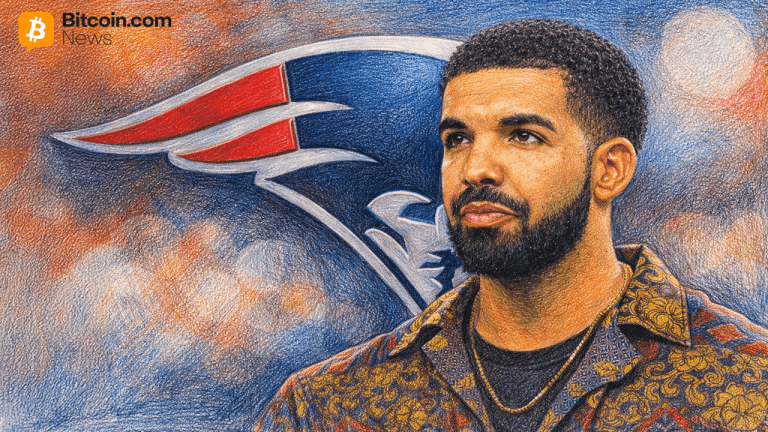
Rap Star Drake Uses Stake to Wager $1M in Bitcoin on Patriots Despite Super Bowl LX Odds

Rap Star Drake Uses Stake to Wager $1M in Bitcoin on Patriots Despite Super Bowl LX Odds

Drake has never been shy about betting big, but on the eve of Super Bowl LX, the global music star took it up another notch by placing a $1 million wager on the
Share
Coinstats2026/02/09 04:00