BitcoinWorld BTC Dominance Plunges: Is an Altcoin Season Imminent? The cryptocurrency world is buzzing with anticipation as a significant shift takes place. Bitcoin’s market share, widely known as BTC dominance, has recently dipped to 57.35%. This figure is notably close to its year-to-date low of 56.63% recorded on January 4, 2025. Such a substantial movement in BTC dominance often sparks excitement and speculation among investors, hinting at potential changes on the horizon for the broader digital asset market. What is BTC Dominance and Why Does it Matter? BTC dominance is a crucial metric that measures Bitcoin’s market capitalization against the total market capitalization of all cryptocurrencies. Think of it as Bitcoin’s share of the entire crypto pie. It provides a quick, yet powerful, snapshot of Bitcoin’s influence and relative strength within the vast crypto ecosystem at any given time. When BTC dominance is high, it typically signifies that Bitcoin is outperforming altcoins. This often happens during periods of market uncertainty, where investors might consolidate into Bitcoin, viewing it as a more established “safe haven” asset. Conversely, a declining BTC dominance suggests that altcoins are gaining significant traction. They might be outperforming Bitcoin and attracting a larger share of new capital inflows. This particular trend is often seen as a precursor to what the crypto community calls an “altcoin season.” Leading analytical firms, such as Matrixport, have consistently highlighted that a sustained decline in Bitcoin’s market share serves as a reliable indicator for the arrival of an altcoin season. This expert analysis is precisely why the current dip in BTC dominance is drawing so much attention and prompting strategic re-evaluations among traders and investors. Is This the Start of an Altcoin Season? Examining the Signals The recent movement in BTC dominance certainly raises this compelling question. An altcoin season is a highly anticipated period where a broad range of alternative cryptocurrencies experience substantial price increases, often outperforming Bitcoin significantly. It’s a time of exciting volatility and potential high returns for those positioned correctly. Historically, such seasons tend to unfold after Bitcoin has completed a strong bull run, reaching new all-time highs. Following this, investors often begin to rotate their profits into altcoins, seeking higher returns in assets with smaller market capitalizations and greater growth potential. The current 57.35% BTC dominance level suggests that this capital rotation might already be gaining momentum. Past Trends: Previous altcoin seasons have seen various sectors surge, including decentralized finance (DeFi) protocols, non-fungible tokens (NFTs), Layer-2 scaling solutions, and emerging blockchain ecosystems. These periods demonstrate the market’s appetite for innovation beyond Bitcoin. Investor Sentiment: A lower BTC dominance often correlates with an increased risk appetite among crypto investors. They become more willing to explore and invest in projects beyond the established market leader, driving demand for a wider array of digital assets. However, it is crucial to remember that cryptocurrency market dynamics are incredibly complex and fluid. While a falling BTC dominance is a strong signal, it does not guarantee an immediate or prolonged altcoin rally. Factors like global economic conditions, regulatory news, and technological advancements also play significant roles in shaping market trends. Navigating the Shifting Crypto Landscape: Actionable Insights For astute investors, understanding the implications of changing BTC dominance is absolutely key to making informed and potentially profitable decisions. So, how can you best prepare for a potential altcoin season and manage the associated risks? Diversify Wisely: Instead of focusing solely on Bitcoin, consider rebalancing your portfolio to include promising altcoins. Look for projects with strong fundamentals, innovative technologies, clear use cases, and active development teams. Thorough research into whitepapers, tokenomics, and community engagement is paramount. Monitor Market Signals: Keep a close eye on both macro and micro market indicators. This includes technical analysis for various altcoins, sentiment analysis, and tracking news related to specific sectors (e.g., AI coins, gaming tokens, privacy coins) that are gaining momentum as BTC dominance shifts. Practice Robust Risk Management: Altcoins, especially smaller-cap ones, can be highly volatile. Only invest capital you can comfortably afford to lose. Consider implementing strategies like dollar-cost averaging and setting realistic profit targets and stop-loss orders to protect your investments from sudden downturns. Stay Continuously Informed: The crypto space evolves rapidly. Follow reputable analysts, industry news sources, and thought leaders to stay updated on which sectors or specific altcoins are showing the most promise during periods of shifting BTC dominance. This period demands a strategic, disciplined, and well-researched approach, rather than impulsive, emotion-driven decisions. The Road Ahead for Bitcoin and Altcoins: A Dynamic Interplay While BTC dominance is currently dipping, it’s essential to reiterate that Bitcoin remains the undisputed pioneer and often the benchmark of the cryptocurrency market. Its long-term value proposition, robust network, and established role as a digital store of value are fundamental and unwavering. The current shift doesn’t diminish Bitcoin’s importance but rather highlights the evolving maturity and increasing breadth of the wider crypto market. The interaction between Bitcoin and altcoins is a continuous, dynamic dance. A period of lower BTC dominance allows for immense innovation and growth across the altcoin spectrum. This, in turn, contributes significantly to the overall health, diversity, and expansion of the entire digital asset space. As the market continues to mature and attract more institutional and retail interest, we can expect these cycles of shifting BTC dominance to become a regular and anticipated feature of the crypto landscape. Conclusion The recent dip in BTC dominance to 57.35% is a significant development, strongly hinting at the potential for an exhilarating altcoin season. While Bitcoin’s foundational role remains unchallenged, the growing strength and innovation within the altcoin market present exciting opportunities for informed investors. By staying continuously informed, diversifying strategically, and practicing robust risk management, you can effectively navigate these dynamic market shifts and potentially capitalize on the evolving crypto landscape. Frequently Asked Questions About BTC Dominance and Altcoin Season Q1: What does a decrease in BTC dominance signify for the average investor? A decrease in BTC dominance often signals that altcoins are gaining strength relative to Bitcoin. For investors, this could mean that capital is flowing from Bitcoin into various alternative cryptocurrencies, potentially leading to significant price appreciation for altcoins. It suggests a broadening of investment opportunities beyond Bitcoin. Q2: How long does an altcoin season typically last? The duration of an altcoin season can vary widely. Some can last for a few weeks or months, while others might extend for a longer period, depending on market sentiment, technological advancements, and overall economic conditions. There’s no fixed timeline, and cycles can be unpredictable. Q3: Are all altcoins guaranteed to perform well during an altcoin season? No, not all altcoins will perform equally well, and some may not experience significant gains at all. An altcoin season typically sees a broad rally, but individual project fundamentals, use cases, development activity, and community support play a crucial role in determining which altcoins thrive the most. Careful research is essential. Q4: What are the main risks associated with investing in altcoins during this period? While altcoins offer high potential returns, they also come with significant risks. These include higher volatility compared to Bitcoin, lower liquidity for smaller-cap altcoins, potential for scams or failed projects, and greater susceptibility to market manipulation. Robust risk management strategies are vital. Q5: Should I sell all my Bitcoin if BTC dominance is falling? Not necessarily. Bitcoin remains the largest and most established cryptocurrency, often serving as a foundational asset in a crypto portfolio. A declining BTC dominance indicates a shift in market dynamics, but it doesn’t diminish Bitcoin’s long-term value. Many investors choose to rebalance their portfolios to include more altcoins while retaining a core Bitcoin holding. Did you find this analysis on BTC dominance and the potential altcoin season insightful? Share this article with your friends, fellow investors, and on your social media channels to help them stay informed about the latest crypto market trends! To learn more about the latest crypto market trends, explore our article on key developments shaping Bitcoin price action. This post BTC Dominance Plunges: Is an Altcoin Season Imminent? first appeared on BitcoinWorld.BitcoinWorld BTC Dominance Plunges: Is an Altcoin Season Imminent? The cryptocurrency world is buzzing with anticipation as a significant shift takes place. Bitcoin’s market share, widely known as BTC dominance, has recently dipped to 57.35%. This figure is notably close to its year-to-date low of 56.63% recorded on January 4, 2025. Such a substantial movement in BTC dominance often sparks excitement and speculation among investors, hinting at potential changes on the horizon for the broader digital asset market. What is BTC Dominance and Why Does it Matter? BTC dominance is a crucial metric that measures Bitcoin’s market capitalization against the total market capitalization of all cryptocurrencies. Think of it as Bitcoin’s share of the entire crypto pie. It provides a quick, yet powerful, snapshot of Bitcoin’s influence and relative strength within the vast crypto ecosystem at any given time. When BTC dominance is high, it typically signifies that Bitcoin is outperforming altcoins. This often happens during periods of market uncertainty, where investors might consolidate into Bitcoin, viewing it as a more established “safe haven” asset. Conversely, a declining BTC dominance suggests that altcoins are gaining significant traction. They might be outperforming Bitcoin and attracting a larger share of new capital inflows. This particular trend is often seen as a precursor to what the crypto community calls an “altcoin season.” Leading analytical firms, such as Matrixport, have consistently highlighted that a sustained decline in Bitcoin’s market share serves as a reliable indicator for the arrival of an altcoin season. This expert analysis is precisely why the current dip in BTC dominance is drawing so much attention and prompting strategic re-evaluations among traders and investors. Is This the Start of an Altcoin Season? Examining the Signals The recent movement in BTC dominance certainly raises this compelling question. An altcoin season is a highly anticipated period where a broad range of alternative cryptocurrencies experience substantial price increases, often outperforming Bitcoin significantly. It’s a time of exciting volatility and potential high returns for those positioned correctly. Historically, such seasons tend to unfold after Bitcoin has completed a strong bull run, reaching new all-time highs. Following this, investors often begin to rotate their profits into altcoins, seeking higher returns in assets with smaller market capitalizations and greater growth potential. The current 57.35% BTC dominance level suggests that this capital rotation might already be gaining momentum. Past Trends: Previous altcoin seasons have seen various sectors surge, including decentralized finance (DeFi) protocols, non-fungible tokens (NFTs), Layer-2 scaling solutions, and emerging blockchain ecosystems. These periods demonstrate the market’s appetite for innovation beyond Bitcoin. Investor Sentiment: A lower BTC dominance often correlates with an increased risk appetite among crypto investors. They become more willing to explore and invest in projects beyond the established market leader, driving demand for a wider array of digital assets. However, it is crucial to remember that cryptocurrency market dynamics are incredibly complex and fluid. While a falling BTC dominance is a strong signal, it does not guarantee an immediate or prolonged altcoin rally. Factors like global economic conditions, regulatory news, and technological advancements also play significant roles in shaping market trends. Navigating the Shifting Crypto Landscape: Actionable Insights For astute investors, understanding the implications of changing BTC dominance is absolutely key to making informed and potentially profitable decisions. So, how can you best prepare for a potential altcoin season and manage the associated risks? Diversify Wisely: Instead of focusing solely on Bitcoin, consider rebalancing your portfolio to include promising altcoins. Look for projects with strong fundamentals, innovative technologies, clear use cases, and active development teams. Thorough research into whitepapers, tokenomics, and community engagement is paramount. Monitor Market Signals: Keep a close eye on both macro and micro market indicators. This includes technical analysis for various altcoins, sentiment analysis, and tracking news related to specific sectors (e.g., AI coins, gaming tokens, privacy coins) that are gaining momentum as BTC dominance shifts. Practice Robust Risk Management: Altcoins, especially smaller-cap ones, can be highly volatile. Only invest capital you can comfortably afford to lose. Consider implementing strategies like dollar-cost averaging and setting realistic profit targets and stop-loss orders to protect your investments from sudden downturns. Stay Continuously Informed: The crypto space evolves rapidly. Follow reputable analysts, industry news sources, and thought leaders to stay updated on which sectors or specific altcoins are showing the most promise during periods of shifting BTC dominance. This period demands a strategic, disciplined, and well-researched approach, rather than impulsive, emotion-driven decisions. The Road Ahead for Bitcoin and Altcoins: A Dynamic Interplay While BTC dominance is currently dipping, it’s essential to reiterate that Bitcoin remains the undisputed pioneer and often the benchmark of the cryptocurrency market. Its long-term value proposition, robust network, and established role as a digital store of value are fundamental and unwavering. The current shift doesn’t diminish Bitcoin’s importance but rather highlights the evolving maturity and increasing breadth of the wider crypto market. The interaction between Bitcoin and altcoins is a continuous, dynamic dance. A period of lower BTC dominance allows for immense innovation and growth across the altcoin spectrum. This, in turn, contributes significantly to the overall health, diversity, and expansion of the entire digital asset space. As the market continues to mature and attract more institutional and retail interest, we can expect these cycles of shifting BTC dominance to become a regular and anticipated feature of the crypto landscape. Conclusion The recent dip in BTC dominance to 57.35% is a significant development, strongly hinting at the potential for an exhilarating altcoin season. While Bitcoin’s foundational role remains unchallenged, the growing strength and innovation within the altcoin market present exciting opportunities for informed investors. By staying continuously informed, diversifying strategically, and practicing robust risk management, you can effectively navigate these dynamic market shifts and potentially capitalize on the evolving crypto landscape. Frequently Asked Questions About BTC Dominance and Altcoin Season Q1: What does a decrease in BTC dominance signify for the average investor? A decrease in BTC dominance often signals that altcoins are gaining strength relative to Bitcoin. For investors, this could mean that capital is flowing from Bitcoin into various alternative cryptocurrencies, potentially leading to significant price appreciation for altcoins. It suggests a broadening of investment opportunities beyond Bitcoin. Q2: How long does an altcoin season typically last? The duration of an altcoin season can vary widely. Some can last for a few weeks or months, while others might extend for a longer period, depending on market sentiment, technological advancements, and overall economic conditions. There’s no fixed timeline, and cycles can be unpredictable. Q3: Are all altcoins guaranteed to perform well during an altcoin season? No, not all altcoins will perform equally well, and some may not experience significant gains at all. An altcoin season typically sees a broad rally, but individual project fundamentals, use cases, development activity, and community support play a crucial role in determining which altcoins thrive the most. Careful research is essential. Q4: What are the main risks associated with investing in altcoins during this period? While altcoins offer high potential returns, they also come with significant risks. These include higher volatility compared to Bitcoin, lower liquidity for smaller-cap altcoins, potential for scams or failed projects, and greater susceptibility to market manipulation. Robust risk management strategies are vital. Q5: Should I sell all my Bitcoin if BTC dominance is falling? Not necessarily. Bitcoin remains the largest and most established cryptocurrency, often serving as a foundational asset in a crypto portfolio. A declining BTC dominance indicates a shift in market dynamics, but it doesn’t diminish Bitcoin’s long-term value. Many investors choose to rebalance their portfolios to include more altcoins while retaining a core Bitcoin holding. Did you find this analysis on BTC dominance and the potential altcoin season insightful? Share this article with your friends, fellow investors, and on your social media channels to help them stay informed about the latest crypto market trends! To learn more about the latest crypto market trends, explore our article on key developments shaping Bitcoin price action. This post BTC Dominance Plunges: Is an Altcoin Season Imminent? first appeared on BitcoinWorld.

BTC Dominance Plunges: Is an Altcoin Season Imminent?

2025/09/13 19:30
7 min read

BitcoinWorld

BTC Dominance Plunges: Is an Altcoin Season Imminent?

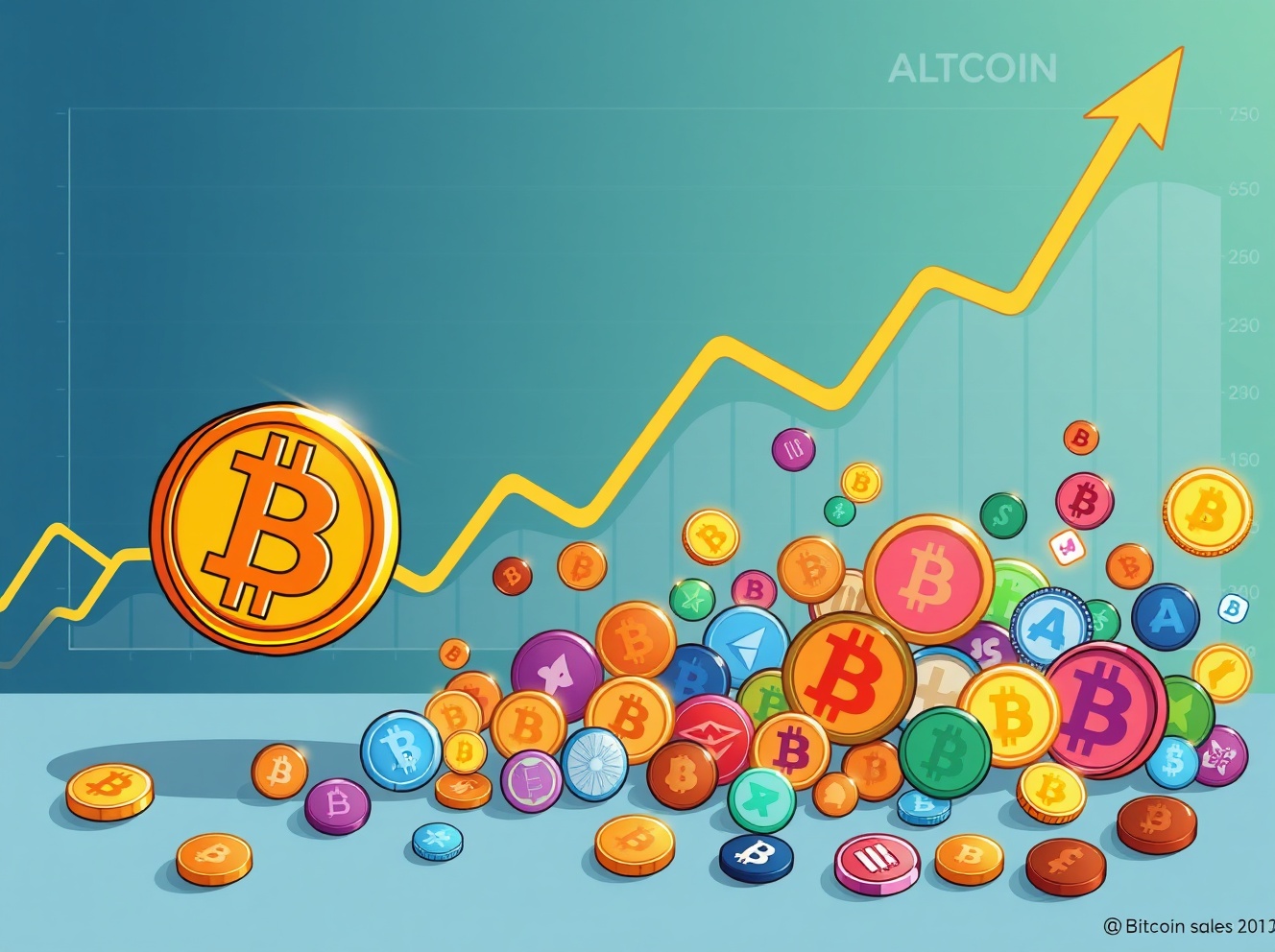
The cryptocurrency world is buzzing with anticipation as a significant shift takes place. Bitcoin’s market share, widely known as BTC dominance, has recently dipped to 57.35%. This figure is notably close to its year-to-date low of 56.63% recorded on January 4, 2025. Such a substantial movement in BTC dominance often sparks excitement and speculation among investors, hinting at potential changes on the horizon for the broader digital asset market.

What is BTC Dominance and Why Does it Matter?

BTC dominance is a crucial metric that measures Bitcoin’s market capitalization against the total market capitalization of all cryptocurrencies. Think of it as Bitcoin’s share of the entire crypto pie. It provides a quick, yet powerful, snapshot of Bitcoin’s influence and relative strength within the vast crypto ecosystem at any given time.

  • When BTC dominance is high, it typically signifies that Bitcoin is outperforming altcoins. This often happens during periods of market uncertainty, where investors might consolidate into Bitcoin, viewing it as a more established “safe haven” asset.
  • Conversely, a declining BTC dominance suggests that altcoins are gaining significant traction. They might be outperforming Bitcoin and attracting a larger share of new capital inflows. This particular trend is often seen as a precursor to what the crypto community calls an “altcoin season.”

Leading analytical firms, such as Matrixport, have consistently highlighted that a sustained decline in Bitcoin’s market share serves as a reliable indicator for the arrival of an altcoin season. This expert analysis is precisely why the current dip in BTC dominance is drawing so much attention and prompting strategic re-evaluations among traders and investors.

Is This the Start of an Altcoin Season? Examining the Signals

The recent movement in BTC dominance certainly raises this compelling question. An altcoin season is a highly anticipated period where a broad range of alternative cryptocurrencies experience substantial price increases, often outperforming Bitcoin significantly. It’s a time of exciting volatility and potential high returns for those positioned correctly.

Historically, such seasons tend to unfold after Bitcoin has completed a strong bull run, reaching new all-time highs. Following this, investors often begin to rotate their profits into altcoins, seeking higher returns in assets with smaller market capitalizations and greater growth potential. The current 57.35% BTC dominance level suggests that this capital rotation might already be gaining momentum.

  • Past Trends: Previous altcoin seasons have seen various sectors surge, including decentralized finance (DeFi) protocols, non-fungible tokens (NFTs), Layer-2 scaling solutions, and emerging blockchain ecosystems. These periods demonstrate the market’s appetite for innovation beyond Bitcoin.
  • Investor Sentiment: A lower BTC dominance often correlates with an increased risk appetite among crypto investors. They become more willing to explore and invest in projects beyond the established market leader, driving demand for a wider array of digital assets.

However, it is crucial to remember that cryptocurrency market dynamics are incredibly complex and fluid. While a falling BTC dominance is a strong signal, it does not guarantee an immediate or prolonged altcoin rally. Factors like global economic conditions, regulatory news, and technological advancements also play significant roles in shaping market trends.

For astute investors, understanding the implications of changing BTC dominance is absolutely key to making informed and potentially profitable decisions. So, how can you best prepare for a potential altcoin season and manage the associated risks?

  • Diversify Wisely: Instead of focusing solely on Bitcoin, consider rebalancing your portfolio to include promising altcoins. Look for projects with strong fundamentals, innovative technologies, clear use cases, and active development teams. Thorough research into whitepapers, tokenomics, and community engagement is paramount.
  • Monitor Market Signals: Keep a close eye on both macro and micro market indicators. This includes technical analysis for various altcoins, sentiment analysis, and tracking news related to specific sectors (e.g., AI coins, gaming tokens, privacy coins) that are gaining momentum as BTC dominance shifts.
  • Practice Robust Risk Management: Altcoins, especially smaller-cap ones, can be highly volatile. Only invest capital you can comfortably afford to lose. Consider implementing strategies like dollar-cost averaging and setting realistic profit targets and stop-loss orders to protect your investments from sudden downturns.
  • Stay Continuously Informed: The crypto space evolves rapidly. Follow reputable analysts, industry news sources, and thought leaders to stay updated on which sectors or specific altcoins are showing the most promise during periods of shifting BTC dominance.

This period demands a strategic, disciplined, and well-researched approach, rather than impulsive, emotion-driven decisions.

The Road Ahead for Bitcoin and Altcoins: A Dynamic Interplay

While BTC dominance is currently dipping, it’s essential to reiterate that Bitcoin remains the undisputed pioneer and often the benchmark of the cryptocurrency market. Its long-term value proposition, robust network, and established role as a digital store of value are fundamental and unwavering. The current shift doesn’t diminish Bitcoin’s importance but rather highlights the evolving maturity and increasing breadth of the wider crypto market.

The interaction between Bitcoin and altcoins is a continuous, dynamic dance. A period of lower BTC dominance allows for immense innovation and growth across the altcoin spectrum. This, in turn, contributes significantly to the overall health, diversity, and expansion of the entire digital asset space. As the market continues to mature and attract more institutional and retail interest, we can expect these cycles of shifting BTC dominance to become a regular and anticipated feature of the crypto landscape.

Conclusion

The recent dip in BTC dominance to 57.35% is a significant development, strongly hinting at the potential for an exhilarating altcoin season. While Bitcoin’s foundational role remains unchallenged, the growing strength and innovation within the altcoin market present exciting opportunities for informed investors. By staying continuously informed, diversifying strategically, and practicing robust risk management, you can effectively navigate these dynamic market shifts and potentially capitalize on the evolving crypto landscape.

Frequently Asked Questions About BTC Dominance and Altcoin Season

Q1: What does a decrease in BTC dominance signify for the average investor?
A decrease in BTC dominance often signals that altcoins are gaining strength relative to Bitcoin. For investors, this could mean that capital is flowing from Bitcoin into various alternative cryptocurrencies, potentially leading to significant price appreciation for altcoins. It suggests a broadening of investment opportunities beyond Bitcoin.

Q2: How long does an altcoin season typically last?
The duration of an altcoin season can vary widely. Some can last for a few weeks or months, while others might extend for a longer period, depending on market sentiment, technological advancements, and overall economic conditions. There’s no fixed timeline, and cycles can be unpredictable.

Q3: Are all altcoins guaranteed to perform well during an altcoin season?
No, not all altcoins will perform equally well, and some may not experience significant gains at all. An altcoin season typically sees a broad rally, but individual project fundamentals, use cases, development activity, and community support play a crucial role in determining which altcoins thrive the most. Careful research is essential.

Q4: What are the main risks associated with investing in altcoins during this period?
While altcoins offer high potential returns, they also come with significant risks. These include higher volatility compared to Bitcoin, lower liquidity for smaller-cap altcoins, potential for scams or failed projects, and greater susceptibility to market manipulation. Robust risk management strategies are vital.

Q5: Should I sell all my Bitcoin if BTC dominance is falling?
Not necessarily. Bitcoin remains the largest and most established cryptocurrency, often serving as a foundational asset in a crypto portfolio. A declining BTC dominance indicates a shift in market dynamics, but it doesn’t diminish Bitcoin’s long-term value. Many investors choose to rebalance their portfolios to include more altcoins while retaining a core Bitcoin holding.

Did you find this analysis on BTC dominance and the potential altcoin season insightful? Share this article with your friends, fellow investors, and on your social media channels to help them stay informed about the latest crypto market trends!

To learn more about the latest crypto market trends, explore our article on key developments shaping Bitcoin price action.

This post BTC Dominance Plunges: Is an Altcoin Season Imminent? first appeared on BitcoinWorld.

Market Opportunity
LETSTOP Logo
LETSTOP Price(STOP)
$0.01866
$0.01866$0.01866
+2.58%
USD
LETSTOP (STOP) Live Price Chart
Disclaimer: The articles reposted on this site are sourced from public platforms and are provided for informational purposes only. They do not necessarily reflect the views of MEXC. All rights remain with the original authors. If you believe any content infringes on third-party rights, please contact [email protected] for removal. MEXC makes no guarantees regarding the accuracy, completeness, or timeliness of the content and is not responsible for any actions taken based on the information provided. The content does not constitute financial, legal, or other professional advice, nor should it be considered a recommendation or endorsement by MEXC.

You May Also Like

Ethereum unveils roadmap focusing on scaling, interoperability, and security at Japan Dev Conference

Ethereum unveils roadmap focusing on scaling, interoperability, and security at Japan Dev Conference

The post Ethereum unveils roadmap focusing on scaling, interoperability, and security at Japan Dev Conference appeared on BitcoinEthereumNews.com. Key Takeaways Ethereum’s new roadmap was presented by Vitalik Buterin at the Japan Dev Conference. Short-term priorities include Layer 1 scaling and raising gas limits to enhance transaction throughput. Vitalik Buterin presented Ethereum’s development roadmap at the Japan Dev Conference today, outlining the blockchain platform’s priorities across multiple timeframes. The short-term goals focus on scaling solutions and increasing Layer 1 gas limits to improve transaction capacity. Mid-term objectives target enhanced cross-Layer 2 interoperability and faster network responsiveness to create a more seamless user experience across different scaling solutions. The long-term vision emphasizes building a secure, simple, quantum-resistant, and formally verified minimalist Ethereum network. This approach aims to future-proof the platform against emerging technological threats while maintaining its core functionality. The roadmap presentation comes as Ethereum continues to compete with other blockchain platforms for market share in the smart contract and decentralized application space. Source: https://cryptobriefing.com/ethereum-roadmap-scaling-interoperability-security-japan/
Share
BitcoinEthereumNews2025/09/18 00:25
ArtGis Finance Partners with MetaXR to Expand its DeFi Offerings in the Metaverse

ArtGis Finance Partners with MetaXR to Expand its DeFi Offerings in the Metaverse

By using this collaboration, ArtGis utilizes MetaXR’s infrastructure to widen access to its assets and enable its customers to interact with the metaverse.
Share
Blockchainreporter2025/09/18 00:07
BlackRock shifts $185B model portfolios deeper into US stocks and AI

BlackRock shifts $185B model portfolios deeper into US stocks and AI

BlackRock is steering $185 billion worth of model portfolios deeper into US stocks and artificial intelligence. The decision came this week as the asset manager adjusted its entire model suite, increasing its equity allocation and dumping exposure to international developed markets. The firm now sits 2% overweight on stocks, after money moved between several of […]
Share
Cryptopolitan2025/09/18 00:08