The total number of Bitcoin-related queries worldwide is close to 77 million per month, with direct searches for “Bitcoin” approaching 10 million.The total number of Bitcoin-related queries worldwide is close to 77 million per month, with direct searches for “Bitcoin” approaching 10 million.

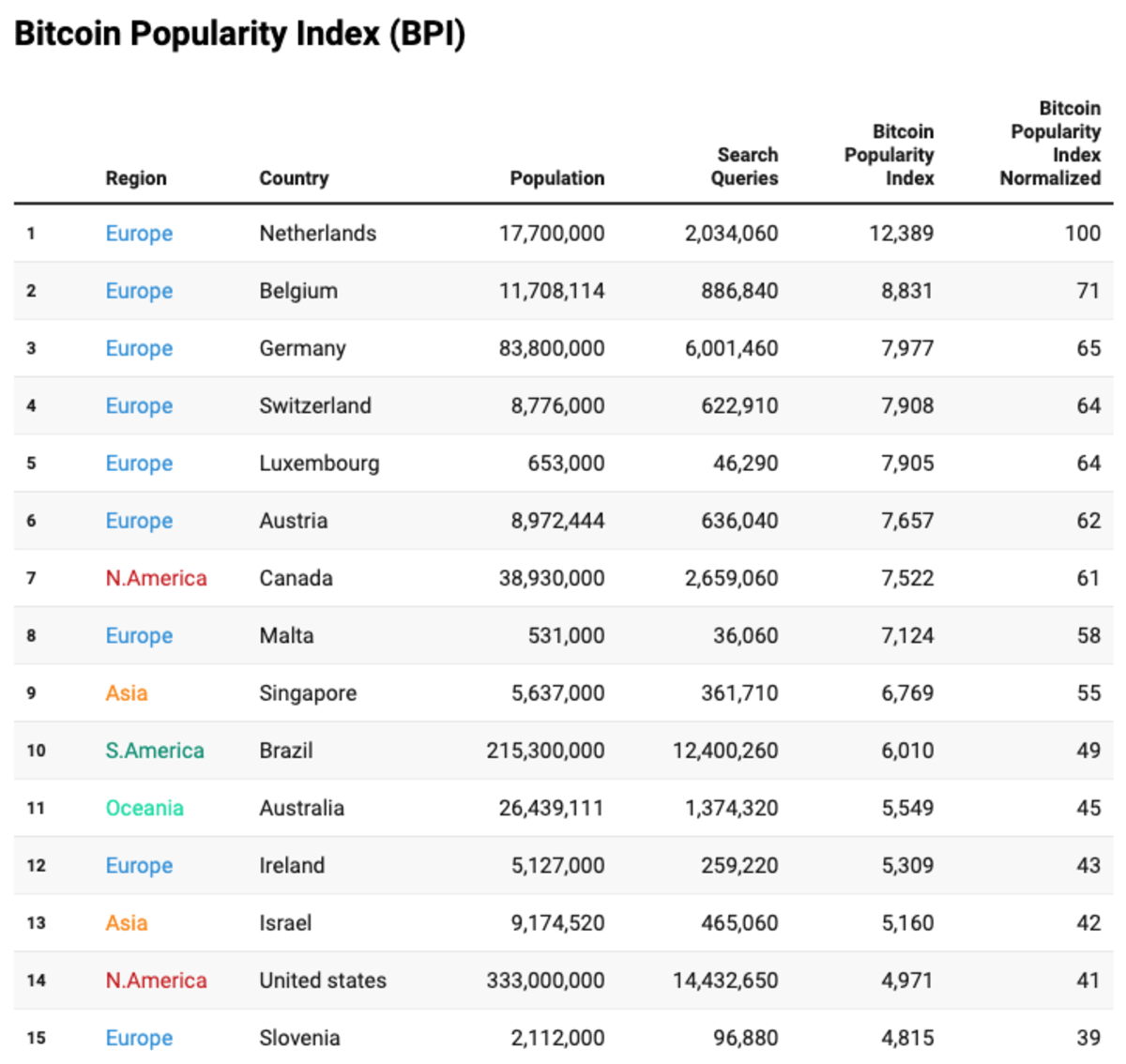
Bitcoin interest index rankings of countries around the world: 7 of the top 10 are European countries

2024/11/01 14:38
5 min read

By Bitcoin Magazine

Compiled by: Felix, PANews

The Bitcoin Popularity Index (BPI) is the first comprehensive search study of its kind. The index seeks to measure Bitcoin’s global influence through extensive analysis of Google search queries.

Unlike many studies that provide absolute data or individual dimensions for multiple coins, the BPI data provides specific insights into interest in Bitcoin by taking into account factors such as language diversity, Google Chrome dominance, and population size. This approach not only measures the raw interest in Bitcoin in different countries, but also measures the level of participation in Bitcoin in different countries.

While the BPI is not designed to give definitive answers, by integrating these different elements it provides a unique perspective that moves away from generic metrics to provide a richer, more contextual understanding of Bitcoin adoption around the world.
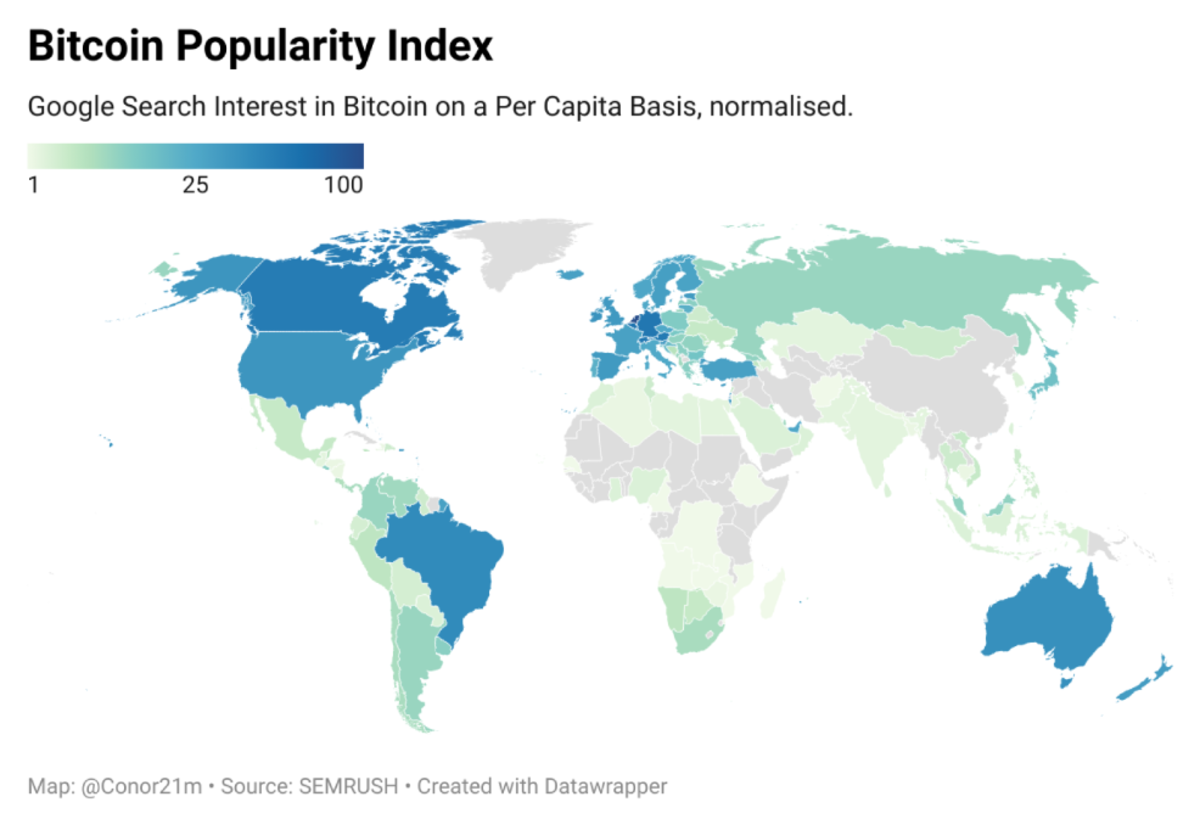
Bitcoin interest index rankings of countries around the world: 7 of the top 10 are European countries

 Bitcoin Popularity Index 2024

Key findings

  • The United States had the most monthly queries at 14,432,650, followed by Brazil at 12,400,260. Germany, India and Turkey rounded out the top five.
  • The top seven spots and eight of the top ten are occupied by Western European countries.
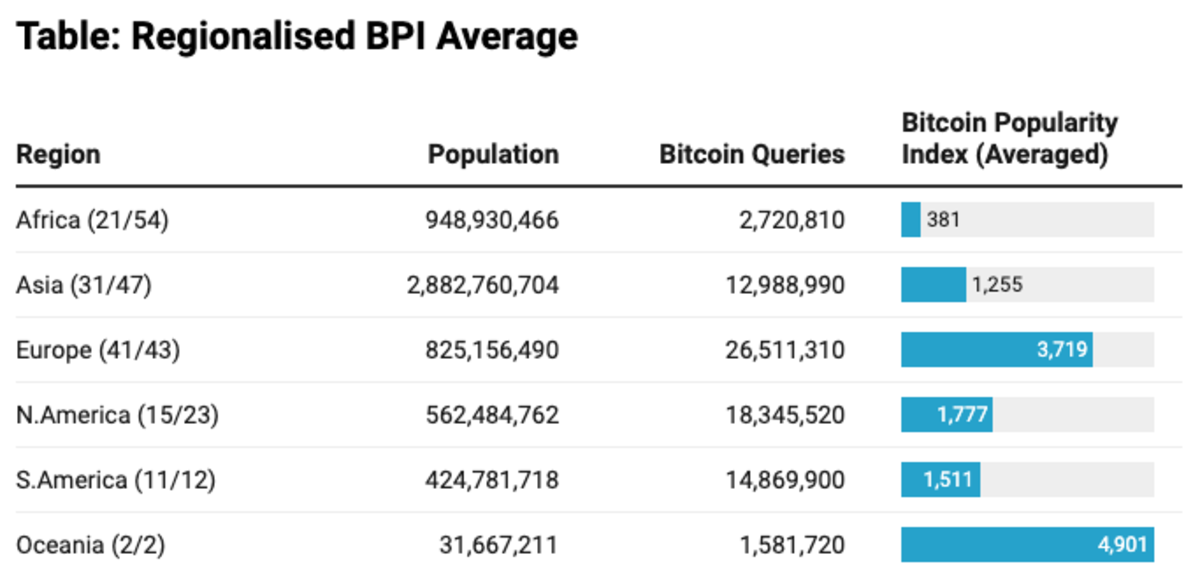
  • The average BPI for “Western” countries around the world is around 3,720 (1,250 for other regions), indicating that Bitcoin’s popularity is relatively high.
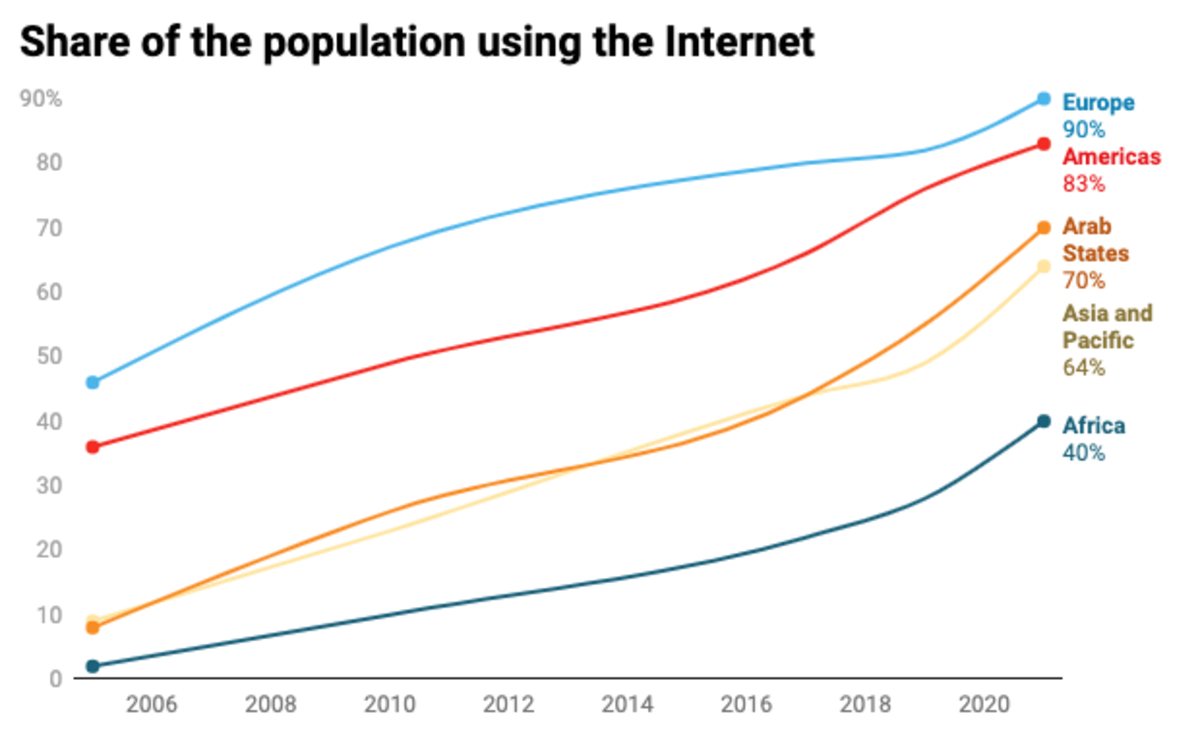
  • Africa has the lowest BPI score of all continents. This may be due to the fact that the Internet penetration rate in Africa is only 40%.
  • The most common query for Bitcoin is price, usually in terms of Bitcoin to USD. However, in Egypt, Bitcoin is more often priced in gold bars rather than USD or Egyptian pounds.
  • The total number of Bitcoin-related queries per month is close to 77 million, with direct searches for “Bitcoin” approaching 10 million.
  • The query ratio of Bitcoin to Ethereum is 9:1.

Comparison of continents

Oceania has the highest average BPI at around 4,901, indicating that Bitcoin is very popular in the region. This data comes from only two countries (New Zealand and Australia), both of which benefit from high levels of internet penetration.

Close behind is Europe, where the BPI averages 3,719 across 41 countries, with Bitcoin’s popularity across the continent far higher than in most other regions.
Bitcoin interest index rankings of countries around the world: 7 of the top 10 are European countries

Top 50 countries

Ranking 1-15

Bitcoin interest index rankings of countries around the world: 7 of the top 10 are European countries

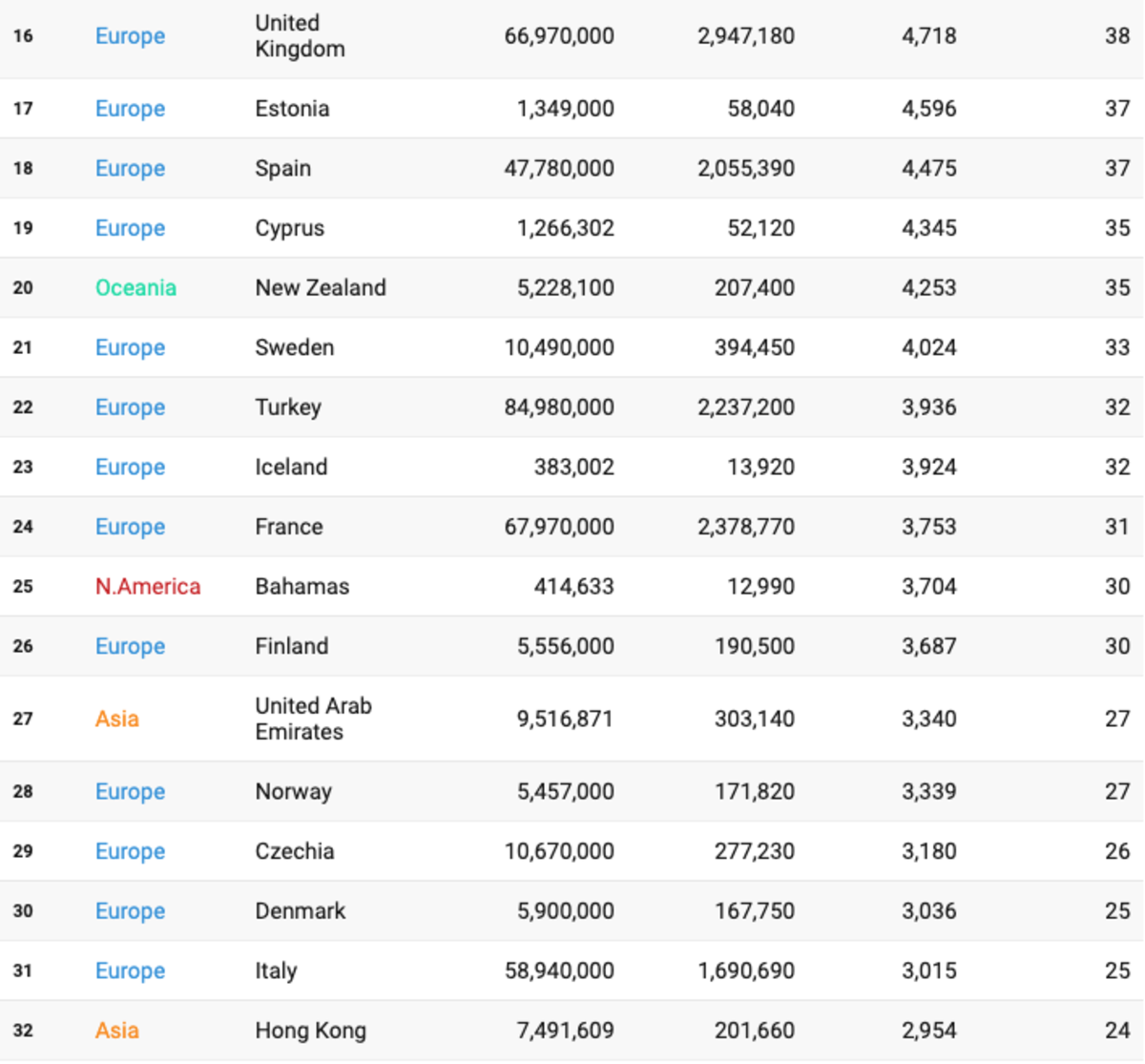
Ranking 16-32

Bitcoin interest index rankings of countries around the world: 7 of the top 10 are European countries

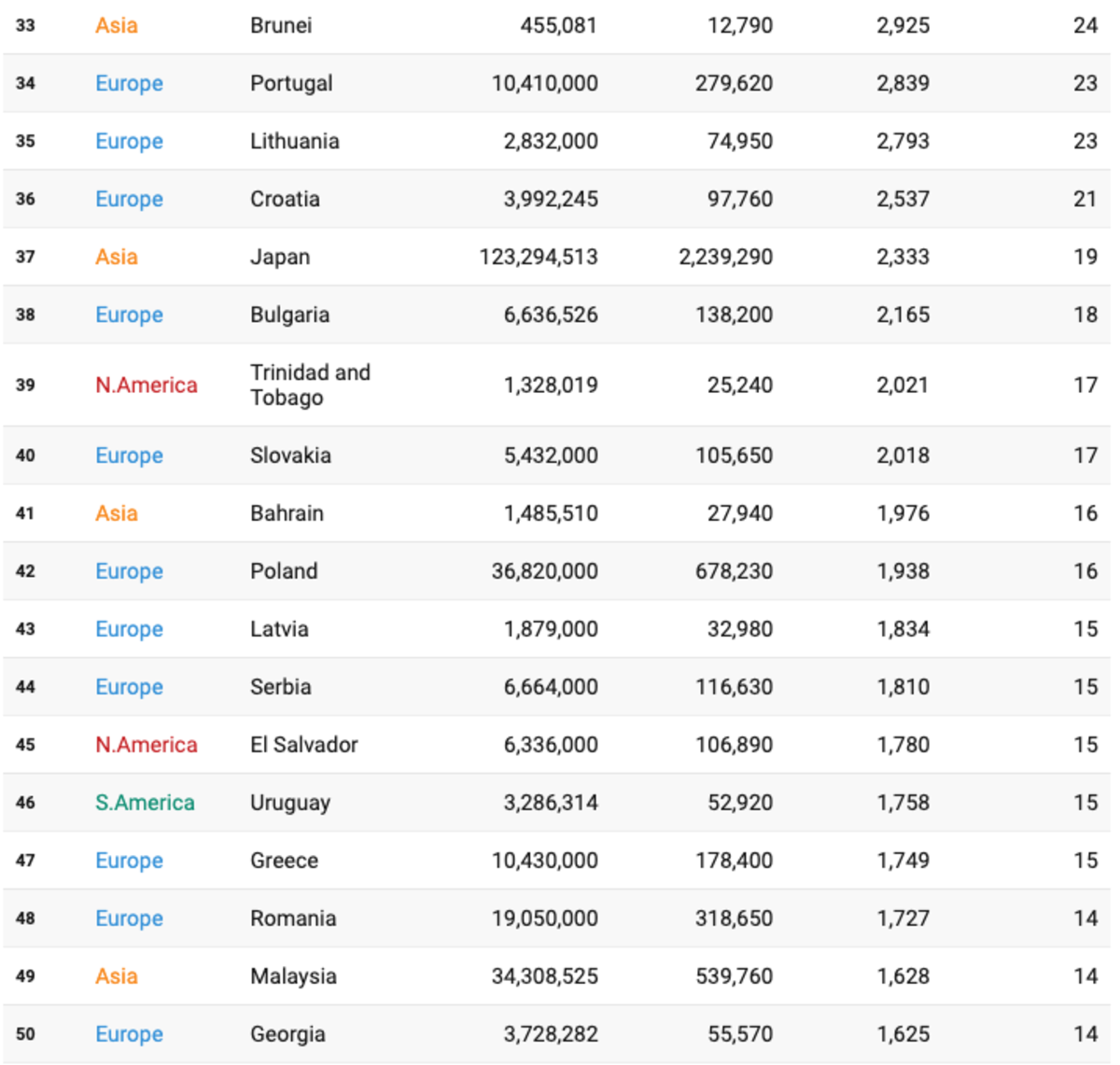
Ranking 33-50

Bitcoin interest index rankings of countries around the world: 7 of the top 10 are European countries

Data Collection Methods

  • Data Selection: Given that Google maintains data on all search queries related to cryptocurrency, it was important to identify the most reliable dataset. In order to be as comprehensive as possible, I downloaded and studied datasets from SEMRUSH, Ahrefs, DataOs, Moz, and Google Trends.
  • Data comparison and selection: Although the results from SEMRUSH and Ahrefs, the two largest available datasets, are largely similar, there are significant differences between the two in many terms. The data for some countries show differences of more than 80%. This variability makes it impractical to blend the data or fill in gaps for countries where SEMRUSH does not provide data, as the differences are too large to be reliably aggregated.
  • Query configuration: Broad match queries for "bitcoin" and "BTC" in Latin, Arabic, Hebrew, Cyrillic, Japanese, Hindi, Perso-Arabic, Cyrillic, Tamil, Sinhala, Chinese, and Thai.
  • Combination of demographic and search engine data: Population data comes from Worldometers and Google’s market share data comes from Statcounter. For this study, Google’s market share in all countries was recalculated to 100% to normalize the effect of search engine usage on the data.
  • Calculate searches per capita: Using the above data, calculate the number of search queries per capita for each country. This step is critical to normalizing the data across different populations and allowing for an apples-to-apples comparison of interest in Bitcoin regardless of country size.
  • Data Visualization: The final results were categorized and plotted on a Chloropleth map using the visualization tool Datawrapper.

The calculation does not take into account the percentage of a country’s population that uses the internet, as those without access to the internet are unlikely to be interested in Bitcoin. Africa’s most recently reported internet penetration rate was 40%, which is comparable to the penetration rates in Europe and the United States in 2005. While this rate is still low, it is rising, and so is Bitcoin’s popularity.
Bitcoin interest index rankings of countries around the world: 7 of the top 10 are European countries

Data Scope and Limitations

The BPI index is limited by a lack of data from 77 countries, including China, Iran, Cuba, and 33 African countries (particularly Tanzania, Kenya, and Sudan). The lack of data from key regions results in an incomplete global perspective on Bitcoin participation.

Additionally, the BPI index is based on third-party estimates, as Google does not share specific search query data for Bitcoin or other cryptocurrencies. VPNs also obfuscate the source of searches to some extent, but are not expected to have much impact on the results.

Data for a few countries is incorrect, as "BTC" is the name of a telephone company in the Bahamas, an internet provider in Botswana, and a shopping mall in Slovenia.

The BPI index provides a detailed look at global interest in Bitcoin through the lens of Google search queries. While this research uses the best available data, it is important to note that the BPI is not designed to definitively answer which country has the highest adoption of Bitcoin. Instead, the BPI is a measure of general interest and engagement in Bitcoin across different countries.

The data shows that Oceania has the highest BPI score, but Europe is the strongest, with 41 of 43 countries performing well. In addition, countries with higher internet penetration have stronger search data, so the data is biased towards these countries.

Related reading: Nasdaq and gold hit record highs, BTC is about to hit a new record, is a bull market coming?

Market Opportunity
Index Cooperative Logo
Index Cooperative Price(INDEX)
$0.3395
$0.3395$0.3395
+0.08%
USD
Index Cooperative (INDEX) Live Price Chart
Disclaimer: The articles reposted on this site are sourced from public platforms and are provided for informational purposes only. They do not necessarily reflect the views of MEXC. All rights remain with the original authors. If you believe any content infringes on third-party rights, please contact [email protected] for removal. MEXC makes no guarantees regarding the accuracy, completeness, or timeliness of the content and is not responsible for any actions taken based on the information provided. The content does not constitute financial, legal, or other professional advice, nor should it be considered a recommendation or endorsement by MEXC.

You May Also Like

Over 60% of crypto press releases linked to high-risk or scam projects: Report

Over 60% of crypto press releases linked to high-risk or scam projects: Report

A data analysis shows crypto press release wires are dominated by scam-linked projects, hype-driven content and low-impact announcements, raising concerns about
Share
Crypto.news2026/02/04 22:02
ArtGis Finance Partners with MetaXR to Expand its DeFi Offerings in the Metaverse

ArtGis Finance Partners with MetaXR to Expand its DeFi Offerings in the Metaverse

By using this collaboration, ArtGis utilizes MetaXR’s infrastructure to widen access to its assets and enable its customers to interact with the metaverse.
Share
Blockchainreporter2025/09/18 00:07
Crucial US Stock Market Update: What Wednesday’s Mixed Close Reveals

Crucial US Stock Market Update: What Wednesday’s Mixed Close Reveals

BitcoinWorld Crucial US Stock Market Update: What Wednesday’s Mixed Close Reveals The financial world often keeps us on our toes, and Wednesday was no exception. Investors watched closely as the US stock market concluded the day with a mixed performance across its major indexes. This snapshot offers a crucial glimpse into current investor sentiment and economic undercurrents, prompting many to ask: what exactly happened? Understanding the Latest US Stock Market Movements On Wednesday, the closing bell brought a varied picture for the US stock market. While some indexes celebrated gains, others registered slight declines, creating a truly mixed bag for investors. The Dow Jones Industrial Average showed resilience, climbing by a notable 0.57%. This positive movement suggests strength in some of the larger, more established companies. Conversely, the S&P 500, a broader benchmark often seen as a barometer for the overall market, experienced a modest dip of 0.1%. The technology-heavy Nasdaq Composite also saw a slight retreat, sliding by 0.33%. This particular index often reflects investor sentiment towards growth stocks and the tech sector. These divergent outcomes highlight the complex dynamics currently at play within the American economy. It’s not simply a matter of “up” or “down” for the entire US stock market; rather, it’s a nuanced landscape where different sectors and company types are responding to unique pressures and opportunities. Why Did the US Stock Market See Mixed Results? When the US stock market delivers a mixed performance, it often points to a tug-of-war between various economic factors. Several elements could have contributed to Wednesday’s varied closings. For instance, positive corporate earnings reports from certain industries might have bolstered the Dow. At the same time, concerns over inflation, interest rate policies by the Federal Reserve, or even global economic uncertainties could have pressured growth stocks, affecting the S&P 500 and Nasdaq. Key considerations often include: Economic Data: Recent reports on employment, manufacturing, or consumer spending can sway market sentiment. Corporate Announcements: Strong or weak earnings forecasts from influential companies can significantly impact their respective sectors. Interest Rate Expectations: The prospect of higher or lower interest rates directly influences borrowing costs for businesses and consumer spending, affecting future profitability. Geopolitical Events: Global tensions or trade policies can introduce uncertainty, causing investors to become more cautious. Understanding these underlying drivers is crucial for anyone trying to make sense of daily market fluctuations in the US stock market. Navigating Volatility in the US Stock Market A mixed close, while not a dramatic downturn, serves as a reminder that market volatility is a constant companion for investors. For those involved in the US stock market, particularly individuals managing their portfolios, these days underscore the importance of a well-thought-out strategy. It’s important not to react impulsively to daily movements. Instead, consider these actionable insights: Diversification: Spreading investments across different sectors and asset classes can help mitigate risk when one area underperforms. Long-Term Perspective: Focusing on long-term financial goals rather than short-term gains can help weather daily market swings. Stay Informed: Keeping abreast of economic news and company fundamentals provides context for market behavior. Consult Experts: Financial advisors can offer personalized guidance based on individual risk tolerance and objectives. Even small movements in major indexes can signal shifts that require attention, guiding future investment decisions within the dynamic US stock market. What’s Next for the US Stock Market? Looking ahead, investors will be keenly watching for further economic indicators and corporate announcements to gauge the direction of the US stock market. Upcoming inflation data, statements from the Federal Reserve, and quarterly earnings reports will likely provide more clarity. The interplay of these factors will continue to shape investor confidence and, consequently, the performance of the Dow, S&P 500, and Nasdaq. Remaining informed and adaptive will be key to understanding the market’s trajectory. Conclusion: Wednesday’s mixed close in the US stock market highlights the intricate balance of forces influencing financial markets. While the Dow showed strength, the S&P 500 and Nasdaq experienced slight declines, reflecting a nuanced economic landscape. This reminds us that understanding the ‘why’ behind these movements is as important as the movements themselves. As always, a thoughtful, informed approach remains the best strategy for navigating the complexities of the market. Frequently Asked Questions (FAQs) Q1: What does a “mixed close” mean for the US stock market? A1: A mixed close indicates that while some major stock indexes advanced, others declined. It suggests that different sectors or types of companies within the US stock market are experiencing varying influences, rather than a uniform market movement. Q2: Which major indexes were affected on Wednesday? A2: On Wednesday, the Dow Jones Industrial Average gained 0.57%, while the S&P 500 edged down 0.1%, and the Nasdaq Composite slid 0.33%, illustrating the mixed performance across the US stock market. Q3: What factors contribute to a mixed stock market performance? A3: Mixed performances in the US stock market can be influenced by various factors, including specific corporate earnings, economic data releases, shifts in interest rate expectations, and broader geopolitical events that affect different market segments uniquely. Q4: How should investors react to mixed market signals? A4: Investors are generally advised to maintain a long-term perspective, diversify their portfolios, stay informed about economic news, and avoid impulsive decisions. Consulting a financial advisor can also provide personalized guidance for navigating the US stock market. Q5: What indicators should investors watch for future US stock market trends? A5: Key indicators to watch include upcoming inflation reports, statements from the Federal Reserve regarding monetary policy, and quarterly corporate earnings reports. These will offer insights into the future direction of the US stock market. Did you find this analysis of the US stock market helpful? Share this article with your network on social media to help others understand the nuances of current financial trends! To learn more about the latest stock market trends, explore our article on key developments shaping the US stock market‘s future performance. This post Crucial US Stock Market Update: What Wednesday’s Mixed Close Reveals first appeared on BitcoinWorld.
Share
Coinstats2025/09/18 05:30