Banxico Holds Firm: Central Bank Maintains 7% Rate Amid Critical War-Driven Inflation Threats
BitcoinWorld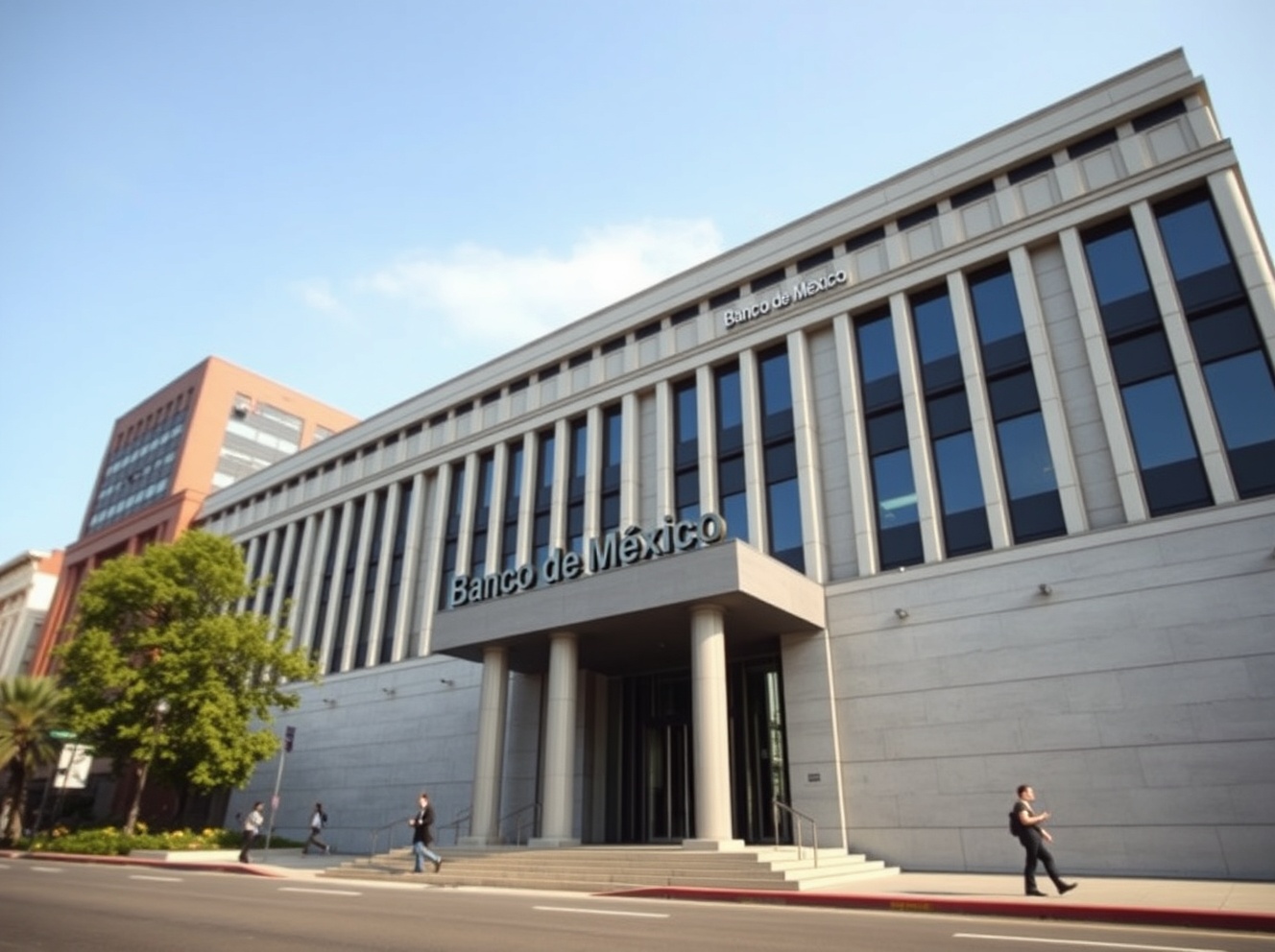
Banxico Holds Firm: Central Bank Maintains 7% Rate Amid Critical War-Driven Inflation Threats
MEXICO CITY, March 2025 – Banco de México, the nation’s central bank, has maintained its benchmark interest rate at 7.00% during its latest monetary policy meeting. This decision reflects the institution’s ongoing battle against persistent inflation pressures, which continue to challenge economic stability. The central bank’s governing council cited multiple global and domestic factors influencing their cautious approach to monetary policy.
Banxico’s Monetary Policy Decision Analysis
The Banco de México’s unanimous decision to maintain rates at 7.00% marks the fourth consecutive meeting without adjustment. This policy stance represents a careful balancing act between controlling inflation and supporting economic growth. The central bank’s governing council emphasized their commitment to price stability as their primary mandate. They referenced recent inflation data showing core inflation remaining above their 3% target range.
Market analysts had widely anticipated this outcome, with 95% of surveyed economists predicting no change. The Mexican peso showed minimal volatility following the announcement, indicating market consensus with the decision. However, forward guidance suggests potential rate adjustments later in 2025 if inflationary pressures persist. The central bank’s statement highlighted their data-dependent approach to future policy decisions.
Global Conflict and Inflationary Pressures
Persistent geopolitical tensions continue to exert upward pressure on global commodity prices. Energy markets remain particularly volatile, with Brent crude oil prices fluctuating between $85 and $95 per barrel throughout early 2025. Agricultural commodities have also experienced price increases due to disrupted supply chains. These global factors directly impact Mexico’s import costs and domestic price levels.
The ongoing conflict in Eastern Europe has created secondary effects across multiple sectors. Transportation costs have increased by approximately 15% year-over-year. Manufacturing inputs face continued scarcity and price volatility. Furthermore, global semiconductor shortages persist, affecting Mexico’s automotive and electronics industries. These supply-side pressures complicate the central bank’s inflation management efforts.
Expert Analysis on Monetary Policy Challenges
Dr. Elena Rodríguez, former Banxico deputy governor and current economics professor at ITAM, provides crucial context. “The central bank faces a complex policy environment,” she explains. “Domestic demand shows signs of recovery while external factors create imported inflation. Their current stance reflects prudent risk management.” Rodríguez emphasizes that premature rate cuts could undermine inflation expectations.
International Monetary Fund research supports this cautious approach. Their latest Western Hemisphere economic outlook highlights Mexico’s relative success in maintaining price stability compared to regional peers. However, the report notes that sustained high rates may eventually impact economic growth. The balance between these competing priorities remains delicate for policymakers.
Domestic Economic Indicators and Impacts
Recent economic data presents a mixed picture for Mexican policymakers. Consumer price inflation registered 4.2% year-over-year in February 2025, down from peak levels but still above target. Core inflation, excluding volatile food and energy prices, remains stubborn at 4.8%. The following table illustrates key economic indicators:
| Indicator | Current Value | Target/Previous |
|---|---|---|
| Headline Inflation | 4.2% | Target: 3% ±1% |
| Core Inflation | 4.8% | Previous: 5.1% |
| GDP Growth (Q4 2024) | 2.3% | Previous: 1.8% |
| Unemployment Rate | 3.1% | Previous: 3.3% |
Economic growth shows moderate improvement, with fourth quarter 2024 GDP expanding by 2.3% year-over-year. The labor market remains relatively strong, with unemployment at 3.1%. However, real wage growth continues to lag inflation, affecting household purchasing power. Manufacturing output has increased by 4.2% while services show more modest growth at 2.1%.
Comparative Central Bank Policies
Banxico’s policy trajectory diverges from major global central banks in several key aspects. The Federal Reserve has begun a gradual rate-cutting cycle, reducing their federal funds rate by 50 basis points since December 2024. The European Central Bank maintains a more hawkish stance similar to Mexico’s approach. Meanwhile, Brazil’s central bank has implemented more aggressive rate reductions despite similar inflation challenges.
This policy divergence creates complex dynamics for emerging markets. Capital flows respond to interest rate differentials, affecting currency stability. The Mexican peso has appreciated approximately 8% against the US dollar over the past six months. This appreciation helps contain imported inflation but potentially impacts export competitiveness. Banxico must consider these international monetary policy interactions.
Historical Context and Policy Evolution
Banxico’s current policy framework represents decades of institutional development. The central bank gained formal independence in 1993, establishing credibility in inflation targeting. Their current 3% inflation target with a ±1% tolerance band was established in 2001. This framework has generally succeeded in maintaining price stability through various economic cycles.
The COVID-19 pandemic prompted unprecedented policy responses, including rate cuts to historic lows. Subsequent global inflation surges necessitated rapid tightening, with Banxico raising rates by 725 basis points between 2021 and 2023. The current holding pattern reflects a maturation of this tightening cycle. Historical analysis suggests such plateau periods typically precede gradual normalization.
Future Outlook and Market Implications
Financial markets now focus on forward guidance and potential policy shifts. Banxico’s statement indicated continued data dependence, with particular attention to core inflation trends. Most analysts project rate reductions beginning in the third quarter of 2025, assuming inflationary pressures moderate. However, significant uncertainty surrounds this timeline given external volatility.
The central bank’s credibility remains a crucial asset in this environment. Inflation expectations, measured by various surveys, show gradual improvement but remain elevated. Maintaining policy consistency helps anchor these expectations. Market participants generally view Banxico’s communication as transparent and predictable, supporting financial stability.
Conclusion
Banxico’s decision to maintain interest rates at 7.00% reflects prudent monetary policy management amid complex global and domestic challenges. The central bank continues prioritizing inflation control while monitoring economic growth implications. External factors, particularly geopolitical tensions and commodity price volatility, significantly influence Mexico’s inflation trajectory. Future policy adjustments will depend on evolving data, with most analysts anticipating gradual normalization later in 2025. The institution’s credibility and consistent framework provide stability during this uncertain period.
FAQs
Q1: Why did Banxico decide to keep interest rates unchanged?
Banxico maintained rates at 7.00% due to persistent inflation above their target range, ongoing global commodity price pressures from geopolitical conflicts, and the need to anchor inflation expectations while supporting economic stability.
Q2: How does war-driven inflation affect Mexico’s economy?
Global conflicts increase energy and agricultural commodity prices, raise transportation costs, disrupt supply chains for manufacturing inputs, and create imported inflation that directly impacts consumer prices in Mexico through higher import costs.
Q3: What is the current inflation rate in Mexico?
As of February 2025, headline inflation stands at 4.2% year-over-year, while core inflation (excluding volatile food and energy prices) remains higher at 4.8%, both above Banxico’s 3% target with a ±1% tolerance band.
Q4: How does Banxico’s policy compare to other central banks?
Banxico maintains a more hawkish stance than the Federal Reserve, which has begun rate cuts, but aligns more closely with the European Central Bank’s cautious approach, while Brazil’s central bank has implemented more aggressive rate reductions.
Q5: When might Banxico consider lowering interest rates?
Most analysts project potential rate reductions beginning in the third quarter of 2025, contingent on sustained improvement in core inflation metrics and moderation of external price pressures from global conflicts and supply chain issues.
This post Banxico Holds Firm: Central Bank Maintains 7% Rate Amid Critical War-Driven Inflation Threats first appeared on BitcoinWorld.
You May Also Like

XRP price analysis: Can XRP break out as whales decline?

Fed rate decision September 2025