Brazil Postpones Crypto Tax Policy Until After Election
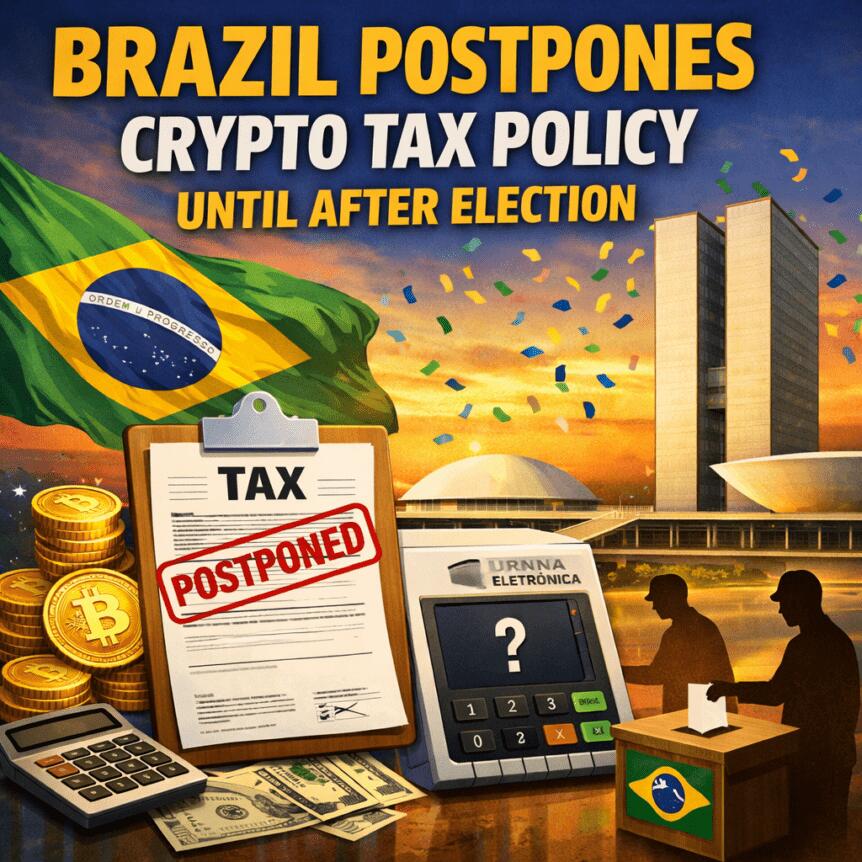
Brazil’s crypto tax policy is taking a back seat as the government focuses on an October 2026 presidential race, with officials delaying public consultation on crypto taxation until after the election cycle. Sources familiar with the matter told Reuters that regulators are hesitant to push divisive tax changes during an election year, though the topic remains on the radar for future consideration.
The policy environment in Brazil has already shifted markedly over the past year. In June 2025, Brazil ended its tax exemption for gains from smaller cryptocurrency sales or transfers, replacing it with a flat 17.5% capital gains tax that applies to profits from both onshore and offshore holdings, including self-custodied assets. The change marks a substantial tightening for retail investors who previously navigated a more lenient regime, and it set the stage for broader regulatory alignment of crypto activity with conventional tax rules.
In a separate development, Banco Central do Brasil unveiled rules in November 2025 that reframe stablecoin transfers as foreign currency exchanges, thereby bringing these transactions under the same tax framework as other FX movements. The government has also signaled potential proposals to tax cryptocurrencies used for international payments and is moving to align reporting obligations with the Crypto-Asset Reporting Framework (CARF), an international standard for monitoring crypto transactions.
Amid these regulatory shifts, Brazil’s crypto ecosystem has continued to expand. The country—home to more than 213 million people with a median age around 33.5 and a predominantly urban population—remains a leading crypto market in Latin America. Chainalysis data placed Brazil fifth globally in the 2025 Global Crypto Adoption Index, and first within Latin America, underscoring the country’s rapid embrace of digital assets among both retail and institutional players. In 2025, Latin America’s crypto adoption grew by about 63%, a reflection of broader regional momentum that Brazil has helped to drive.
Beyond tax and oversight, the Brazilian payments landscape has been evolving as well. The Pix instant payment system, already widely used domestically, has begun expanding its footprint beyond Brazil’s borders, signaling a growing ecosystem that could influence cross-border crypto activity and policy considerations in the region.
Key takeaways
- Brazil delays public consultation on crypto tax policy until after the 2026 presidential elections, with a potential slip into 2027, according to Reuters.
- As of June 2025, Brazil imposes a 17.5% flat tax on crypto capital gains, replacing the prior exemption for smaller sales and transfers.
- November 2025 rules from Banco Central treat stablecoin transfers as foreign currency exchanges, bringing them under existing tax laws.
- CARF alignment is on the radar, as Brazil seeks to harmonize crypto reporting with the Crypto-Asset Reporting Framework.
- Brazil remains a standout crypto market in Latin America, ranking fifth globally in Chainalysis’s 2025 index and first in the region, with Latin America’s adoption rising 63% in 2025.
Adoption, policy, and the road ahead
Brazil’s regulatory posture illustrates a broader tension visible across many jurisdictions: balancing a thriving crypto economy with the need for clear, stable tax and reporting rules. The decision to pause a public consultation on crypto taxation reflects a strategic calculus that policymakers often make in the heat of electoral campaigns. Yet the substance of policy—tighter tax treatment of gains, stricter treatment of cross-border transfers, and stronger alignment with international reporting standards—appears to be moving forward in the background.
For investors, traders, and builders, the shift to a 17.5% flat tax on capital gains marks a more predictable tax environment for many participants, particularly those who previously benefited from exemptions or progressive rates. However, the removal of exemptions also raises the bar for compliance and reporting, especially for individuals with offshore or self-custodial positions. The ongoing alignment with CARF suggests greater transparency and standardized reporting, which could facilitate cross-border activity while increasing the regulatory burden for some market participants.
Brazil’s position as a regional crypto hub matters beyond national borders. The country’s adoption momentum—reflected in Chainalysis’s ranking and the growth trajectory across Latin America—gives policymakers a clear signal about the potential economic benefits of a well-regulated crypto sector. It also raises questions about how Brazilian rules will interact with regional standards and bilateral fintech partnerships, particularly as cross-border payments and stablecoin use gain ground.
On the technology and payments front, the Pix system’s expansion into Argentina hints at a broader cross-national digital payments narrative that could influence both consumer behavior and the regulatory dialogue around crypto. If these cross-border payments channels become more integrated with crypto rails, Brazil’s regulatory stance—whether it tightens further or onboards more participants—will likely influence neighboring markets and the regional stance on digital asset taxation and reporting.
As politicians and regulators weigh the next steps, market watchers should track two key developments: the outcome of the 2026 election and the timing of any post-election crypto tax consultations. Clarity on the latter will be essential for market participants planning tax optimization, compliance workflows, and product launches within Brazil’s rapidly evolving crypto landscape.
This article was originally published as Brazil Postpones Crypto Tax Policy Until After Election on Crypto Breaking News – your trusted source for crypto news, Bitcoin news, and blockchain updates.
You May Also Like

UK Regulator Proposes New Crypto Rules to Protect Consumers

EUR/CHF slides as Euro struggles post-inflation data