In an interesting turn of events, Warner Bros. Discovery has asked its shareholders to turn down a takeover…In an interesting turn of events, Warner Bros. Discovery has asked its shareholders to turn down a takeover…

Warner Bros. rejects $108bn Paramount deal, prefers Netflix $82.7 billion offer

2025/12/17 22:22

In an interesting turn of events, Warner Bros. Discovery has asked its shareholders to turn down a takeover proposal from Paramount Skydance, making it clear that it prefers an earlier deal put forward by Netflix. The company stated that the Paramount Skydance bid poses a greater financial risk and does not offer better value than the current offer.

The rejection comes as interest in Warner Bros. Discovery, one of the world’s largest media companies, continues to grow. The company boasts a vast catalogue of film and television content that spans decades. Recently, two competing offers have surfaced, placing the company at the heart of a high-stakes bidding battle.
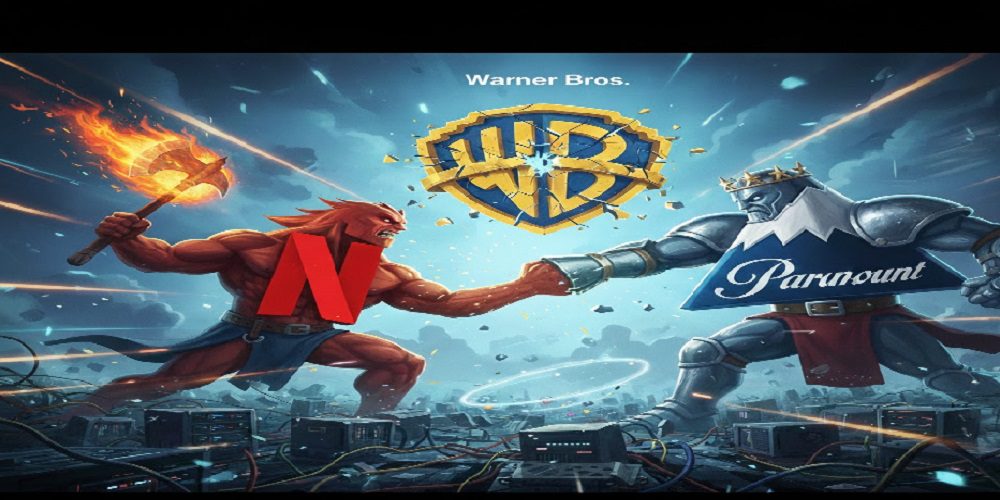
Paramount strikes back with $108bn bid for Warner Bros

A few weeks earlier, Netflix made a major move by agreeing to buy a stake in Warner Bros. Discovery, valued at $82.7 billion. Soon after, Paramount Skydance offered $30 per share in cash to buy the entire company, but Warner Bros. Discovery has publicly rejected this bid.

Warner Bros’ decision shaped by risk and control

Warner Bros. Discovery’s decision hinges on how the company assesses risk. After reviewing both proposals, the board stated that neither deal can avoid regulatory review. This goes against claims that the Paramount Skydance offer would face fewer approval challenges. Based on this evaluation, the company concluded that Netflix’s proposal made more sense.
paramount skydance

Netflix made an offer that includes both cash and Netflix shares. This allows Warner Bros. Discovery shareholders to benefit from Netflix’s future growth. The company believes this approach is more balanced, especially during a time when the media industry faces rising costs and changing viewer habits.

The company questioned how Paramount Skydance plans to finance its offer. They highlighted a $40.65 billion equity commitment linked to the deal, pointing out that there is no direct financial support from the Ellison family, even though the family is wealthy and influential in the technology sector.

Read also: Paramount strikes back with $108bn bid to challenge Netflix for Warner Bros

The standoff underscores the increasing competitiveness of the global media landscape. Major companies are competing to acquire premium content libraries as traditional television revenues decline and streaming platforms vie for subscribers. For Warner Bros. Discovery, the decision seems to focus on stability and long-term strategy rather than on eye-catching price tags.
Currently, Paramount Skydance has not released a public statement regarding the rejection. With shareholders closely monitoring the situation and regulators expected to examine any developments, the future ownership structure of Warner Bros. Discovery is still uncertain. However, the company has clearly expressed its preferences.

Sorumluluk Reddi: Bu sitede yeniden yayınlanan makaleler, halka açık platformlardan alınmıştır ve yalnızca bilgilendirme amaçlıdır. MEXC'nin görüşlerini yansıtmayabilir. Tüm hakları telif sahiplerine aittir. Herhangi bir içeriğin üçüncü taraf haklarını ihlal ettiğini düşünüyorsanız, kaldırılması için lütfen [email protected] ile iletişime geçin. MEXC, içeriğin doğruluğu, eksiksizliği veya güncelliği konusunda hiçbir garanti vermez ve sağlanan bilgilere dayalı olarak alınan herhangi bir eylemden sorumlu değildir. İçerik, finansal, yasal veya diğer profesyonel tavsiye niteliğinde değildir ve MEXC tarafından bir tavsiye veya onay olarak değerlendirilmemelidir.

Ayrıca Şunları da Beğenebilirsiniz

The Channel Factories We’ve Been Waiting For

The Channel Factories We’ve Been Waiting For

The post The Channel Factories We’ve Been Waiting For appeared on BitcoinEthereumNews.com. Visions of future technology are often prescient about the broad strokes while flubbing the details. The tablets in “2001: A Space Odyssey” do indeed look like iPads, but you never see the astronauts paying for subscriptions or wasting hours on Candy Crush.  Channel factories are one vision that arose early in the history of the Lightning Network to address some challenges that Lightning has faced from the beginning. Despite having grown to become Bitcoin’s most successful layer-2 scaling solution, with instant and low-fee payments, Lightning’s scale is limited by its reliance on payment channels. Although Lightning shifts most transactions off-chain, each payment channel still requires an on-chain transaction to open and (usually) another to close. As adoption grows, pressure on the blockchain grows with it. The need for a more scalable approach to managing channels is clear. Channel factories were supposed to meet this need, but where are they? In 2025, subnetworks are emerging that revive the impetus of channel factories with some new details that vastly increase their potential. They are natively interoperable with Lightning and achieve greater scale by allowing a group of participants to open a shared multisig UTXO and create multiple bilateral channels, which reduces the number of on-chain transactions and improves capital efficiency. Achieving greater scale by reducing complexity, Ark and Spark perform the same function as traditional channel factories with new designs and additional capabilities based on shared UTXOs.  Channel Factories 101 Channel factories have been around since the inception of Lightning. A factory is a multiparty contract where multiple users (not just two, as in a Dryja-Poon channel) cooperatively lock funds in a single multisig UTXO. They can open, close and update channels off-chain without updating the blockchain for each operation. Only when participants leave or the factory dissolves is an on-chain transaction…
Paylaş
BitcoinEthereumNews2025/09/18 00:09
BFX Presale Raises $7.5M as Solana Holds $243 and Avalanche Eyes $1B Treasury — Best Cryptos to Buy in 2025

BFX Presale Raises $7.5M as Solana Holds $243 and Avalanche Eyes $1B Treasury — Best Cryptos to Buy in 2025

BFX presale hits $7.5M with tokens at $0.024 and 30% bonus code BLOCK30, while Solana holds $243 and Avalanche builds a $1B treasury to attract institutions.
Paylaş
Blockchainreporter2025/09/18 01:07
Singapore Entrepreneur Loses Entire Crypto Portfolio After Downloading Fake Game

Singapore Entrepreneur Loses Entire Crypto Portfolio After Downloading Fake Game

The post Singapore Entrepreneur Loses Entire Crypto Portfolio After Downloading Fake Game appeared on BitcoinEthereumNews.com. In brief A Singapore-based man has
Paylaş
BitcoinEthereumNews2025/12/18 05:17