The post Korean lawmaker calls for institutionalization of stablecoins appeared on BitcoinEthereumNews.com. A South Korean lawmaker has urged the country to swiftlyThe post Korean lawmaker calls for institutionalization of stablecoins appeared on BitcoinEthereumNews.com. A South Korean lawmaker has urged the country to swiftly

Korean lawmaker calls for institutionalization of stablecoins

A South Korean lawmaker has urged the country to swiftly move forward with the institutionalization of stablecoins to protect its payment sovereignty. According to Rep. Min Byoung-dug of the Democratic Party of Korea, the move will also help the country stay competitive in a rapidly changing financial system.

The Korean lawmaker made this known while speaking at the final session of the eighth Global Business Forum, hosted by Herald Business in Seoul. He urged the Korean government to work with traditional financial institutions to accelerate efforts to legalize and expand the use of stablecoins in the country. The Korean lawmaker also warned that if the country delays, it could leave the vulnerable behind as global payment standards evolve.

Korean lawmaker urges government to institutionalize stablecoins

Min, a member of the National Assembly’s Political Affairs Committee and a key figure in Korea’s crypto policy debate, mentioned that stablecoins are now here to stay. “Stablecoins are no longer a question of whether we should do them or not,” he said. “The only question left is how fast and how well we do them.” Min described stablecoins as an inevitable tool for cross-border payments, trade settlement, and remittances.

The Korean lawmaker also highlighted that stablecoin tied to the value of the United States dollar have now become tools being used in global commerce. He warned that if the Korean government fails to approve the development of a stablecoin backed by the won in time, it could lead to the erosion of monetary sovereignty. Min noted that the dollar-pegged stablecoins have now become a new form of money that governments adopt.

The lawmaker highlighted the characteristics of these forms of money, noting that they are faster and cheaper when used to make cross-border transactions. Min also added that Korean companies may soon be faced with the dilemma of having to accept dollar-backed stablecoins during their trades overseas, irrespective of national policy preferences, noting that there are already signs that things are shifting in that regard domestically.

Businesses are now adopting dollar-pegged stablecoins

Small businesses in Korea are now paying foreign workers in dollar-based stablecoins at their request. Meanwhile, other firms are looking into using the stablecoins for international settlements. Min highlighted that these practices would soon become routine as foreign stablecoin risks become entrenched in everyday transactions before domestic rules are put in place to control their usage in specific aspects of the country.

“That’s when monetary sovereignty disappears,” Min warned, adding that payment standards, once widely adopted, are difficult to reverse. Despite the growing calls for regulation in that aspect of the market, the Korean government has yet to complete its regulatory framework for digital assets. So far, authorities have focused on consumer protection and putting several anti-money laundering guardrails in place in line with the Virtual Assets User Protection Act.

Policy discussions have now shifted towards more structural legislation. Regulators and lawmakers are now preparing a framework titled the Digital Asset Basic Act, which is presently in its second phase. This would formally recognize digital assets, define their legal status, and establish principles governing issuance and use beyond speculative trading. Min highlighted that in this case, a won-backed stablecoin will act as a defensive tool and a growth strategy.

Min also highlighted that instead of developing a won-backed stablecoin that would compete with dollar-backed stablecoin, the Korean government should look into developing a stablecoin with different use cases that can leverage the country’s strengths. “If we make a stablecoin that’s especially useful for cultural payments or for small businesses, and turn global users into repeat customers, Korea can secure a meaningful share of the market,” he said.

Also in attendance at the forum was Deputy Head of Mission Sarah McDowell of the New Zealand Embassy in Seoul. She highlighted the need to grow bilateral trade ties in her welcome address, noting that New Zealand is open and willing to do business. “Two-way trade has more than doubled since our free trade agreement entered into force ten years ago, and Korea is now New Zealand’s fifth-largest trading partner,” McDowell added.

Claim your free seat in an exclusive crypto trading community – limited to 1,000 members.

Source: https://www.cryptopolitan.com/korean-institutionalization-stablecoins/
Piyasa Fırsatı
Movement Logosu
Movement Fiyatı(MOVE)
$0,03435
$0,03435$0,03435
+3,68%
USD
Movement (MOVE) Canlı Fiyat Grafiği
Sorumluluk Reddi: Bu sitede yeniden yayınlanan makaleler, halka açık platformlardan alınmıştır ve yalnızca bilgilendirme amaçlıdır. MEXC'nin görüşlerini yansıtmayabilir. Tüm hakları telif sahiplerine aittir. Herhangi bir içeriğin üçüncü taraf haklarını ihlal ettiğini düşünüyorsanız, kaldırılması için lütfen [email protected] ile iletişime geçin. MEXC, içeriğin doğruluğu, eksiksizliği veya güncelliği konusunda hiçbir garanti vermez ve sağlanan bilgilere dayalı olarak alınan herhangi bir eylemden sorumlu değildir. İçerik, finansal, yasal veya diğer profesyonel tavsiye niteliğinde değildir ve MEXC tarafından bir tavsiye veya onay olarak değerlendirilmemelidir.

Ayrıca Şunları da Beğenebilirsiniz

China Launches Cross-Border QR Code Payment Trial

China Launches Cross-Border QR Code Payment Trial

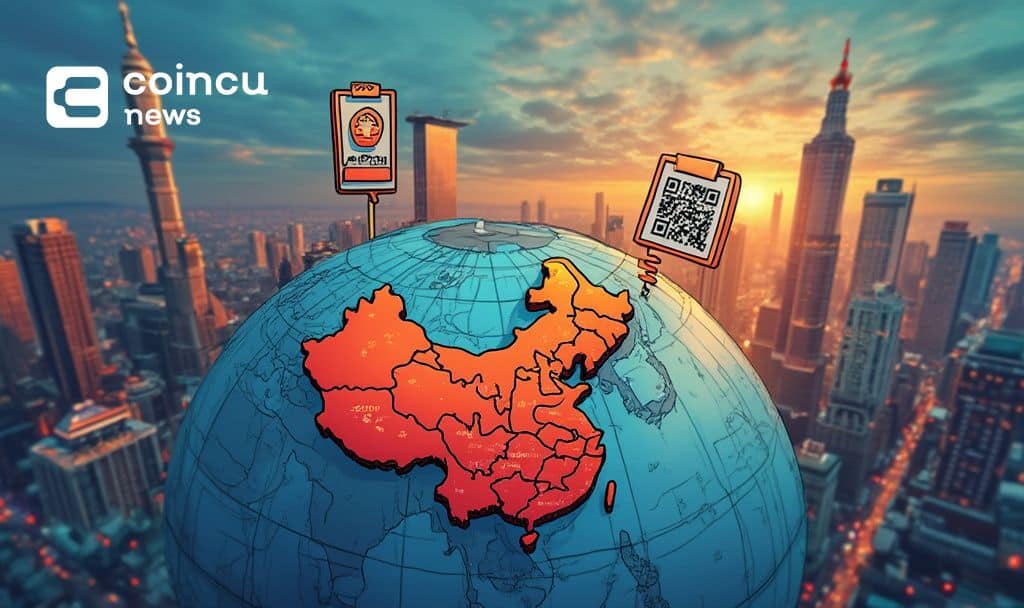
The post China Launches Cross-Border QR Code Payment Trial appeared on BitcoinEthereumNews.com. Key Points: Main event involves China initiating a cross-border QR code payment trial. Alipay and Ant International are key participants. Impact on financial security and regulatory focus on illicit finance. China’s central bank, led by Deputy Governor Lu Lei, initiated a trial of a unified cross-border QR code payment gateway with Alipay and Ant International as participants. This pilot addresses cross-border fund risks, aiming to enhance financial security amid rising money laundering through digital channels, despite muted crypto market reactions. China’s Cross-Border Payment Gateway Trial with Alipay The trial operation of a unified cross-border QR code payment gateway marks a milestone in China’s financial landscape. Prominent entities such as Alipay and Ant International are at the forefront, participating as the initial institutions in this venture. Lu Lei, Deputy Governor of the People’s Bank of China, highlighted the systemic risks posed by increased cross-border fund flows. Changes are expected in the dynamics of digital transactions, potentially enhancing transaction efficiency while tightening regulations around illicit finance. The initiative underscores China’s commitment to bolstering financial security amidst growing global fund movements. “The scale of cross-border fund flows is expanding, and the frequency is accelerating, providing opportunities for risks such as cross-border money laundering and terrorist financing. Some overseas illegal platforms transfer funds through channels such as virtual currencies and underground banks, creating a ‘resonance’ of risks at home and abroad, posing a challenge to China’s foreign exchange management and financial security.” — Lu Lei, Deputy Governor, People’s Bank of China Bitcoin and Impact of China’s Financial Initiatives Did you know? China’s latest initiative echoes the Payment Connect project of June 2025, furthering real-time cross-boundary remittances and expanding its influence on global financial systems. As of September 17, 2025, Bitcoin (BTC) stands at $115,748.72 with a market cap of $2.31 trillion, showing a 0.97%…
Paylaş
BitcoinEthereumNews2025/09/18 05:28
Ethereum Price Prediction: ETH Targets $10,000 In 2026 But Layer Brett Could Reach $1 From $0.0058

Ethereum Price Prediction: ETH Targets $10,000 In 2026 But Layer Brett Could Reach $1 From $0.0058

Ethereum price predictions are turning heads, with analysts suggesting ETH could climb to $10,000 by 2026 as institutional demand and network upgrades drive growth. While Ethereum remains a blue-chip asset, investors looking for sharper multiples are eyeing Layer Brett (LBRETT). Currently in presale at just $0.0058, the Ethereum Layer 2 meme coin is drawing huge [...] The post Ethereum Price Prediction: ETH Targets $10,000 In 2026 But Layer Brett Could Reach $1 From $0.0058 appeared first on Blockonomi.
Paylaş
Blockonomi2025/09/17 23:45
ZEC Jumps 10%, Is It The Best Crypto to Buy Now?

ZEC Jumps 10%, Is It The Best Crypto to Buy Now?

The post ZEC Jumps 10%, Is It The Best Crypto to Buy Now? appeared on BitcoinEthereumNews.com. While Bitcoin and many altcoins remain stuck around critical price
Paylaş
BitcoinEthereumNews2025/12/20 17:53