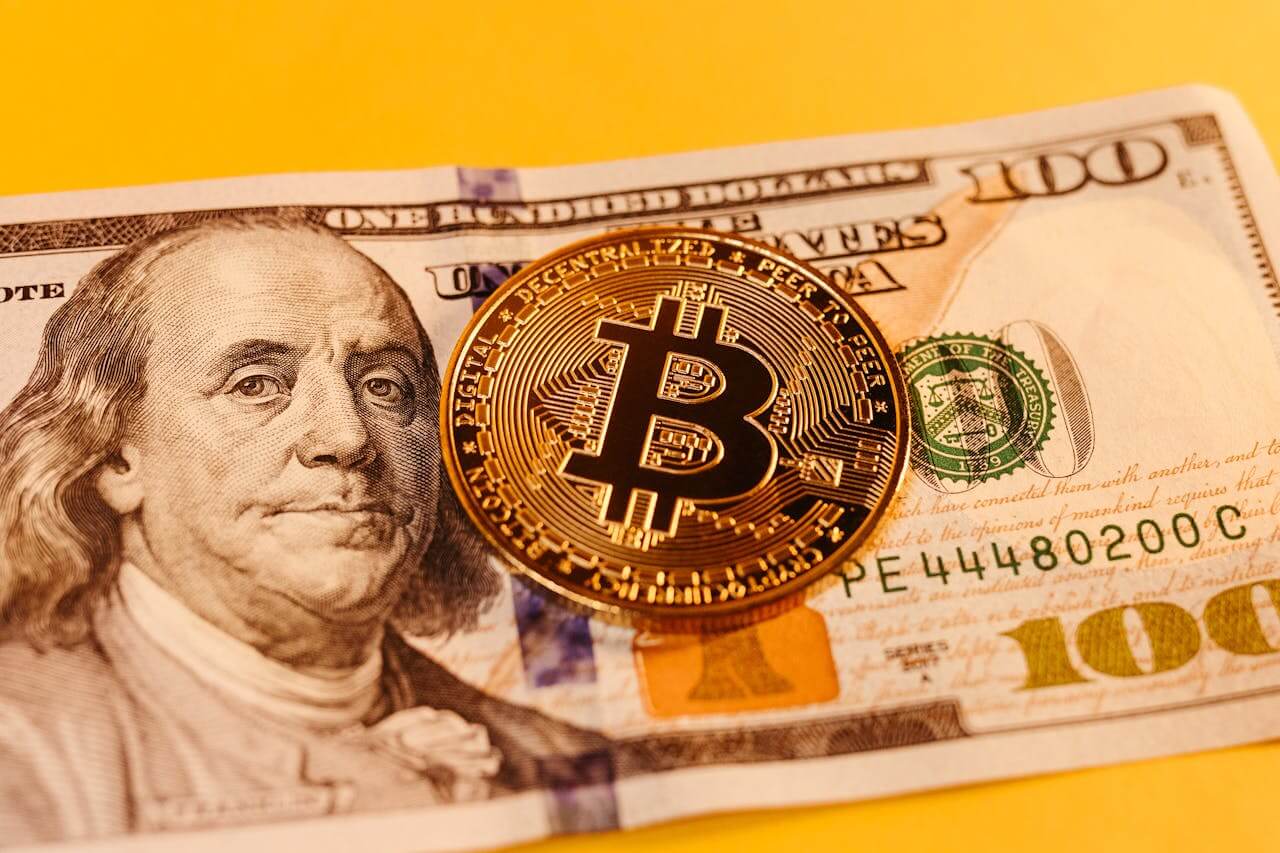
Bitcoin's reputation as "unhackable" digital money gets tested every time crypto theft hits the headlines. With over $2.2 billion stolen from crypto platforms in 2024 alone, many investors askBitcoin's reputation as "unhackable" digital money gets tested every time crypto theft hits the headlines. With over $2.2 billion stolen from crypto platforms in 2024 alone, many investors ask
Bitcoin's reputation as "unhackable" digital money gets tested every time crypto theft hits the headlines.
With over $2.2 billion stolen from crypto platforms in 2024 alone, many investors ask themselves the same pressing question: can Bitcoin actually be hacked?
This guide cuts through the confusion by explaining what's truly vulnerable and what remains secure.
You'll learn the critical difference between Bitcoin's blockchain network and the wallets or exchanges where your coins live, discover real-world hack examples from 2024, and get practical steps to protect your holdings today.
Key Takeaways
Bitcoin's blockchain network has never been successfully hacked since its launch in 2009.
Over $2.2 billion was stolen from cryptocurrency platforms in 2024, primarily through exchange breaches and wallet compromises.
Private key security failures accounted for nearly 44% of all stolen cryptocurrency in 2024.
North Korean hacking groups stole $1.34 billion across 47 incidents, representing 61% of total crypto theft.
Quantum computers pose only a theoretical threat 10-15 years away, not an immediate danger to Bitcoin.
Hardware wallets and avoiding address reuse provide the strongest protection against crypto theft.
The Bitcoin network itself has never been successfully hacked since its creation in 2009. The blockchain's security comes from its decentralized structure, where thousands of computers worldwide verify every transaction through a proof-of-work consensus mechanism.
Breaking Bitcoin's network would require controlling more than 51% of its total computing power, an attack that remains virtually impossible given the massive scale of Bitcoin's mining infrastructure. The economic cost and technical challenge make such an attack impractical even for well-funded adversaries.
However, this doesn't mean your Bitcoin holdings are automatically safe. The real vulnerabilities exist at the access points: cryptocurrency exchanges, hot wallets connected to the internet, and most critically, your private keys.
When you hear news about "Bitcoin being hacked," what actually got compromised was an exchange platform like DMM Bitcoin or WazirX, not the Bitcoin blockchain itself. Think of it this way: breaking into a bank vault doesn't mean the currency inside is flawed; it means the vault's security failed.
Your Bitcoin's safety depends on how and where you store it, not on any weakness in Bitcoin's fundamental technology.
This represented a 21% increase in stolen funds from 2023, though the pace of attacks notably slowed after July 2024. Private key compromises accounted for nearly 44% of all stolen crypto, making key management the single biggest security failure point.
Centralized exchanges became the primary targets during the second and third quarters of 2024, shifting away from the decentralized finance protocols that dominated headlines in previous years.
The attack exploited infrastructure vulnerabilities rather than blockchain weaknesses, leading DMM to shut down operations in December 2024. Indian exchange WazirX lost $234.9 million in July through similar private key compromise techniques.
These incidents highlight how centralized services managing large amounts of user funds become attractive targets regardless of Bitcoin's own security.
Hot wallets maintain constant internet connections for transaction convenience, but this connectivity creates attack surfaces that hackers actively exploit.
Malware targeting clipboard data can reroute transactions to attacker addresses without users noticing until funds disappear. Phishing campaigns trick users into entering private keys on fake websites that perfectly mimic legitimate platforms.
These attacks succeed not because Bitcoin can be hacked, but because users inadvertently expose their access credentials through infected devices or social engineering schemes.
These sophisticated groups employ advanced malware, social engineering, and even infiltrate crypto companies as remote IT workers to gain inside access. The stolen funds reportedly finance weapons programs, making cryptocurrency theft a national security concern beyond individual financial losses.
Their attack frequency increased dramatically, with major exploits occurring every few weeks rather than months as seen in previous years.
Quantum computing represents the most discussed future threat to Bitcoin's cryptographic security, though experts consistently place this risk 10-15 years away from practical reality.
Bitcoin relies on SHA-256 hashing and elliptic curve cryptography (ECDSA) to secure transactions and wallet addresses. Theoretical quantum computers running Shor's algorithm could eventually break these encryption methods, potentially deriving private keys from exposed public keys.
Bitcoin addresses that have never sent transactions keep their public keys hidden, providing protection even against future quantum threats. Only addresses with transaction history expose public keys, creating a vulnerability window.
The Bitcoin community has already begun researching post-quantum cryptographic algorithms that could be implemented through a network upgrade if quantum computers advance faster than expected. This adaptability built into Bitcoin's design means the network can transition to quantum-resistant security before the threat becomes practical.
For now, quantum computing remains a theoretical concern worth monitoring rather than an immediate danger requiring urgent action.
Hardware wallets provide the strongest protection by storing your private keys completely offline, away from internet-connected devices where malware and hackers operate.
These cold storage devices only connect briefly during transactions, minimizing your exposure window to potential attacks. Never keeping large Bitcoin amounts on exchange platforms eliminates the risk of losing funds during platform breaches like those that hit DMM Bitcoin and WazirX in 2024.
Two-factor authentication adds a critical security layer, requiring both your password and a time-sensitive code from your phone before anyone can access your account. Enable this feature on MEXC and any other platform where you hold cryptocurrency assets.
Address reuse creates unnecessary vulnerability by repeatedly exposing the same public key across multiple transactions. Bitcoin's design allows generating unlimited new addresses from a single wallet, so use fresh addresses for each incoming payment to maintain maximum security.
Phishing remains one of the most successful attack methods because it exploits human psychology rather than technical weaknesses. Always verify website URLs character-by-character before entering login credentials, and never click links in unexpected emails claiming to be from crypto services.
Regular software updates patch newly discovered security vulnerabilities in wallet applications and operating systems. Attackers constantly search for outdated software they can exploit, making updates a simple but essential defense.
Store recovery phrases on paper or metal backup devices rather than digital files that can be copied or stolen remotely. These physical backups should be kept in secure locations, ideally split between two separate places to protect against both theft and natural disasters.
Bitcoin's blockchain has never been successfully hacked, but your personal holdings remain only as secure as your storage practices make them.
The $2.2 billion stolen in 2024 came from exchange breaches and wallet compromises, not from breaking Bitcoin's fundamental technology. Quantum computing poses a theoretical future risk, though experts agree practical threats remain at least a decade away.
Taking control of your security today through hardware wallets, avoiding address reuse, and staying vigilant against phishing offers the best protection. Your Bitcoin's safety ultimately depends on your actions, not on any weakness in the network itself.
Market Opportunity
LightLink Price(LL)
$0.003407
$0.003407$0.003407
-4.67%
USD
LightLink (LL) Live Price Chart
This article is provided by MEXC for informational purposes only and does not constitute financial or investment advice. Cryptocurrency markets involve significant risk. Please conduct independent research or consult a qualified professional before making any investment decisions. The views expressed do not necessarily represent those of MEXC or its affiliates.