Options

Options are versatile derivative instruments that give traders the right, but not the obligation, to buy (Call) or sell (Put) a digital asset at a specific strike price.Unlike futures, options offer a flexible way to hedge against "black swan" events or speculate on implied volatility. The 2026 landscape features a surge in on-chain options vaults (DOVs) and structured products that simplify complex "Greeks" for retail users. Explore this tag for insights into premium pricing, expiration cycles, and advanced strategic hedging in the decentralized derivatives market.

21162 Articles
Created: 2026/02/02 18:52
Updated: 2026/02/02 18:52

Best NJ Poker Sites for 2025

Best NJ Poker Sites for 2025

The post Best NJ Poker Sites for 2025 appeared on BitcoinEthereumNews.com. New Jersey, commonly abbreviated as NJ, is one of the few states in the United States where online poker remains legal. In fact, as long as you are at least 21 years and live in NJ, you can play both casino games and online poker, both for fun and real money.  This friendly regulatory stance explains why the online poker market in the state has grown tremendously over the past few years, especially since it shares player pools with the likes of Michigan, Pennsylvania, and Nevada, which have also taken up the initiative to legalize gambling within their own borders. And in terms of the availability of poker sites in NJ, players have no shortage of options across both onshore or offshore platforms. But unfortunately, this may cause them to spend hours online trying to find the best NJ poker sites that cater to their gaming requirements.  In this article, we review the top option worth considering for both seasoned professionals and casual players, while also examining the current trajectory of the online poker market in the state. Online Poker NJ – Licensing & Regulation of Operators Online poker has been available in New Jersey since late 2013, when the state passed legislation to regulate internet gambling. As one of the first in the U.S. to do so, New Jersey created a regulatory framework that is now regarded as one of the most comprehensive in the country. Oversight is handled by the New Jersey Division of Gaming Enforcement (DGE), which is responsible for licensing, setting rules, and monitoring operations. To operate legally, every online poker platform must partner with a licensed Atlantic City casino. This requirement ensures that only authorized operators enter the market, while also protecting state tax revenues. The system allows regulators to monitor all games, confirm fairness,…

Author: BitcoinEthereumNews
Bitcoin averages 4.67/10 trust score across 25 countries in Cornell survey

Bitcoin averages 4.67/10 trust score across 25 countries in Cornell survey

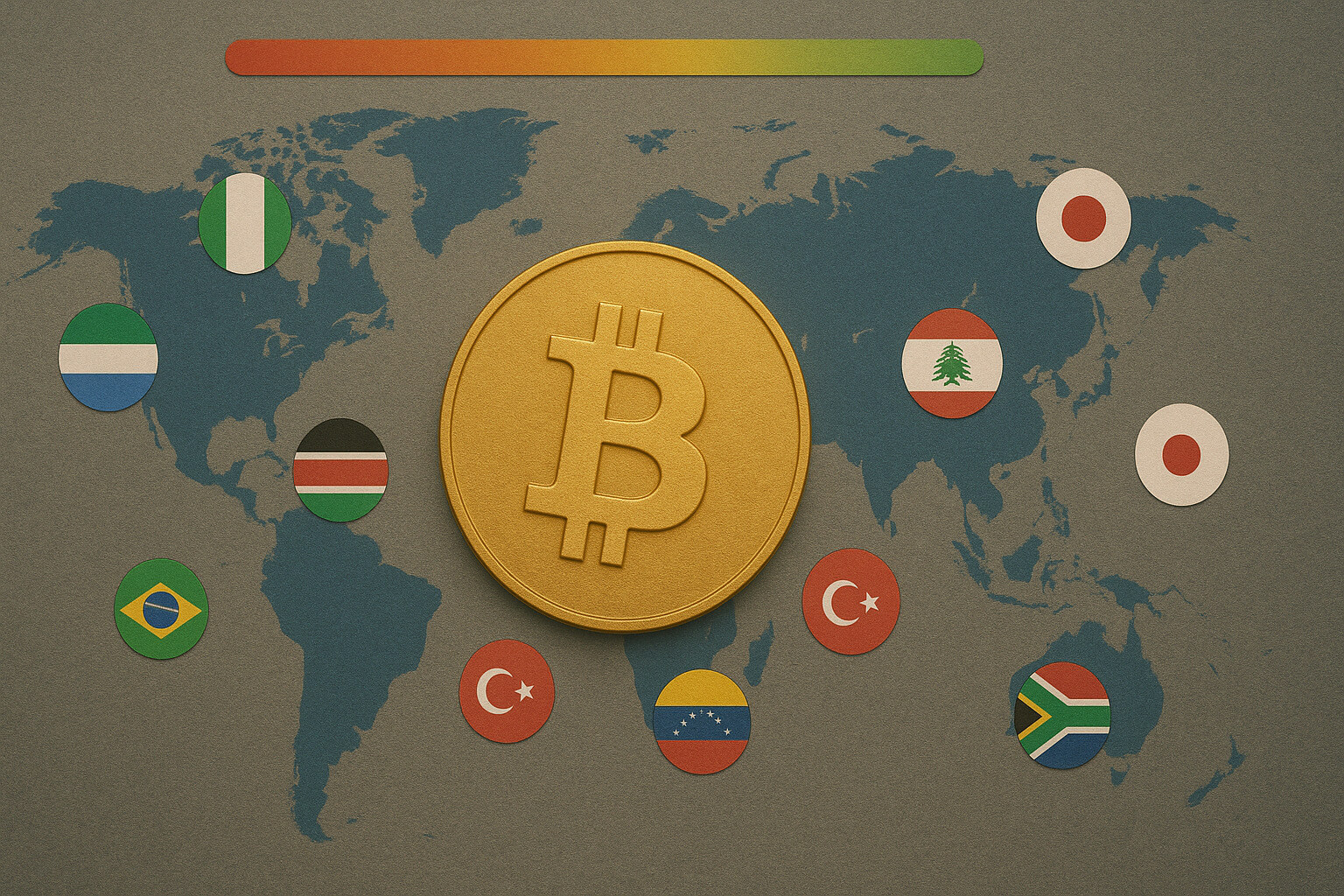
The post Bitcoin averages 4.67/10 trust score across 25 countries in Cornell survey appeared on BitcoinEthereumNews.com. Bitcoin (BTC) scored an average trust rating of 4.67 on a 10-point scale across 25 countries, according to a survey released by Cornell Bitcoin Club on Sept. 3. The survey reveals significant regional variations in perceptions of cryptocurrency. Nigeria led global Bitcoin trust levels, while Japan recorded the lowest scores among surveyed nations. BTC consistently ranked below traditional assets, including gold, real estate, and major fiat currencies in risk perception comparisons. Government trust patterns Ten countries reported higher trust in Bitcoin than their national governments: Brazil, Indonesia, Kenya, Lebanon, Nigeria, the Philippines, South Africa, Turkey, Ukraine, and Venezuela. These regions represent emerging markets or nations experiencing political instability. The UAE, China, and Saudi Arabia demonstrated high levels of government trust, which significantly exceeded Bitcoin confidence ratings. The pattern suggests Bitcoin attracts interest where institutional trust has eroded, positioning crypto as an alternative to centralized authority. Survey participants consistently rated Bitcoin as riskier than traditional investment options across all categories. However, 45% of respondents considered Bitcoin equally risky compared to stocks, while 43% viewed it as equivalent to corporate bonds, indicating some alignment with established volatile asset classes. Questions about Bitcoin’s fraud reduction capabilities, privacy protection, and service provider trustworthiness produced predominantly neutral responses rather than clear endorsement or rejection. The pattern suggests widespread uncertainty about Bitcoin’s practical benefits rather than informed skepticism. The Crypto Investor Blueprint: A 5-Day Course On Bagholding, Insider Front-Runs, and Missing Alpha Nice 😎 Your first lesson is on the way. Please add [email protected] to your email whitelist. Financial stress correlation Countries reporting higher financial stress levels, measured by responses to “my finances control my life,” generally showed increased Bitcoin ownership and trust. Turkey, India, Kenya, and South Africa recorded the highest financial stress indicators alongside elevated Bitcoin adoption rates. El Salvador, Switzerland, China, and Italy reported the…

Author: BitcoinEthereumNews
Best NJ Poker Sites for 2025 – What New & Experienced Players Should Know

Best NJ Poker Sites for 2025 – What New & Experienced Players Should Know

New Jersey, commonly abbreviated as NJ, is one of the few states in the United States where online poker remains legal. In fact, as long as you are at least 21 years and live in NJ, you can play both casino games and online poker, both for fun and real money.  This friendly regulatory stance […]

Author: The Cryptonomist
CFTC Clears Polymarket for U.S. Market Launch

CFTC Clears Polymarket for U.S. Market Launch

The post CFTC Clears Polymarket for U.S. Market Launch appeared on BitcoinEthereumNews.com. The Commodity Futures Trading Commission (CFTC) has cleared the path for Polymarket, a crypto-powered prediction platform, to operate legally in the United States. The approval came through a no-action letter issued by the regulator’s Division of Market Oversight and Division of Clearing and Risk. CFTC Letter and Polymarket Acquisition of QCX Enables Legal Path for U.S. Return The CFTC no-action letter means the regulator will not pursue enforcement against event contracts traded on QCX LLC, a designated contract market, and QC Clearing LLC, its affiliated clearinghouse. Also, the letter specifies that enforcement will not apply to failures in swap data reporting or recordkeeping for binary options and variable payout contracts cleared through QC Clearing. These exemptions mirror treatment given to other registered exchanges and clearinghouses. Both entities were acquired by Polymarket as part of its strategy to reenter the U.S. market after earlier regulatory setbacks. This move gives Polymarket a compliant structure to operate under CFTC oversight. By securing QCX and QC Clearing, Polymarket gained direct access to these allowances. It provided the platform with the legal framework needed to bring its platform back to American users. This aligns with a recent CFTC framework, which was aimed at providing clarity to bring back offshore crypto exchanges to the U.S. CFTC staff confirmed the exemptions followed a formal request by QCX and QC Clearing, now under Polymarket’s ownership. The deal effectively ties the platform’s future to the operational infrastructure of a registered exchange and clearinghouse. Regulatory Shift Opens Door for Polymarket’s Entry into U.S. Prediction Markets Before this approval, Polymarket had been fined by the CFTC in 2022 for selling unregistered event contracts to U.S. customers. Since then, it has been making efforts to re-build trust with regulators by following a compliant path. Another growing area in the crypto market is…

Author: BitcoinEthereumNews
Arbitrum kicks off $40M reward program to boost DeFi growth

Arbitrum kicks off $40M reward program to boost DeFi growth

The post Arbitrum kicks off $40M reward program to boost DeFi growth appeared on BitcoinEthereumNews.com. Arbitrum, the largest Ethereum layer-2 protocol, has launched a new initiative designed to channel liquidity into decentralized finance. The DeFi Renaissance Incentive Program (DRIP), announced on Sept. 3, will allocate up to $40 million in rewards to users performing targeted on-chain actions rather than simply generating attention. The program, structured by Entropy and powered by Merkl, will be managed by Entropy Advisors under the direction of ArbitrumDAO. According to the blockchain network, roughly 80 million ARB tokens have been earmarked for incentives across four distinct “seasons,” each focusing on a different corner of DeFi. The first season, which runs from Sept. 3, 2025, through Jan. 20, 2026, prioritizes looping leverage on lending markets. During this phase, users can earn up to 24 million ARB in rewards by borrowing against yield-bearing ETH and stablecoin assets on approved platforms. According to Arbitrum, the structure is performance-based and protocol-agnostic, meaning it will reward borrowing demand across multiple markets rather than concentrate liquidity in a single venue. Participating platforms include Aave, Morpho, Fluid, Euler, Dolomite, and Silo, with collateral options such as wstETH, eUSDC, and USDe. Ethereum L2 ecosystem The incentive scheme arrives at a time when competition among Ethereum scaling solutions is accelerating. The Crypto Investor Blueprint: A 5-Day Course On Bagholding, Insider Front-Runs, and Missing Alpha Nice 😎 Your first lesson is on the way. Please add [email protected] to your email whitelist. Data from analytics platform Growthepie shows that nearly 13% of Ethereum’s application revenue now originates on layer-2 networks. Ethereum Layer-2 Ecosystem (Source: GrowThePie) In this space, Arbitrum retains a commanding lead within the ecosystem. Data from L2beat places its total value secured at more than $19.1 billion, outpacing Coinbase’s Base at $14.7 billion and OP Mainnet at $3.6 billion. These numbers reflect how Ethereum’s broader layer-2 ecosystem is maturing quickly,…

Author: BitcoinEthereumNews
Gold is crushing the S&P 500 even as stocks post one of the strongest rallies in decades

Gold is crushing the S&P 500 even as stocks post one of the strongest rallies in decades

The post Gold is crushing the S&P 500 even as stocks post one of the strongest rallies in decades appeared on BitcoinEthereumNews.com. Gold is running laps around Wall Street’s finest. The S&P 500 has surged 1,650 points in under five months, one of the strongest runs in decades. But according to fresh numbers from Apollo, gold is up +37% year-to-date, nearly four times the return of the stock market. And this isn’t some weird outlier. Since the start of 2023, gold has climbed almost 100%, while the S&P 500 gained about 67% in the same window. That’s happening while the world screams about AI and calls it the biggest tech leap since the internet. But even that hype hasn’t lifted stocks beyond gold. The question isn’t why the metal’s up, it’s why everything else is still trailing it. Historically, gold only pops when things go south. It’s the panic button. When investors get scared, they leave stocks and grab gold, just like they used to do with bonds. But something broke that relationship. Gold moves with stocks as inflation and debt climb together Since 2020, the old patterns have flipped. Gold and the S&P 500 are now moving together. In 2024, the correlation between the two hit 0.91, an all-time high. That means both are climbing at the same time. Normally, that doesn’t happen. The change is tied to how markets are reading inflation and debt. Long-term inflation is being baked into asset prices, and the government’s spending binge is pumping the Treasury market full of new debt. As the U.S. deficit approaches $2 trillion, Washington is issuing more bonds to keep the lights on. That bond flood is dragging prices down. Bonds, once a trusted safe zone, are now shaky. So investors are ditching them and choosing gold instead. The demand has pushed central banks into overdrive. They now hold more gold than U.S. Treasuries for the first time since 1996.…

Author: BitcoinEthereumNews
Quid Miner 2.0 Green Cloud Mining Strengthens XRP’s Ecosystem and Investor Access

Quid Miner 2.0 Green Cloud Mining Strengthens XRP’s Ecosystem and Investor Access

The post Quid Miner 2.0 Green Cloud Mining Strengthens XRP’s Ecosystem and Investor Access appeared on BitcoinEthereumNews.com. The recent roller-coaster ride in the cryptocurrency market has once again exposed the gap between speculative hype and long-term financial strategy. Bitcoin soared to $124,000 in July, only to fall below $110,000 in August, while Ethereum’s scaling upgrade and the ongoing review of an XRP ETF have added new uncertainties. For many retail traders, this volatility is part of the thrill. But for institutional investors, it highlights a harsh reality: speculation alone cannot build a sustainable portfolio. They are shifting their focus from short-term bets to passive income models that can provide stable returns regardless of market fluctuations. The Rise of Passive Income in Crypto In traditional finance, dividends, bonds, and real estate can generate steady cash flows. In contrast, cryptocurrencies have long relied on price speculation, exposing investors to the risk of volatility. Now, a yield-focused model is changing that dynamic—transforming blockchain infrastructure into a source of everyday income. Quid Miner is at the forefront of this shift, offering institutional investors a reliable path to passive income. Quid Miner: Turning Hash Power into Daily Rewards One company leading this shift is Quid Miner. Founded in 2010 and headquartered in the UK, Quid Miner follows international regulatory standards and has built a global cloud mining platform that enables investors to convert computing power into predictable cash flow. Instead of purchasing cryptocurrency directly, users lease hash power from Quid Miner’s network of data centers across North America, the Middle East, and Central Asia. The output of this hash power—in the form of Bitcoin and other supported assets—is distributed directly to user wallets daily, operating similarly to a digital dividend. What makes Quid Miner different? 1. Daily Predictability—Investors receive stable returns, ensuring a clear path to returns even amidst market volatility. 2. Convenience—Mining requires no hardware, electricity costs, or technical expertise;. participation…

Author: BitcoinEthereumNews
Crypto.com towards IPO: revenues of $1.5 billion

Crypto.com towards IPO: revenues of $1.5 billion

The post Crypto.com towards IPO: revenues of $1.5 billion appeared on BitcoinEthereumNews.com. Crypto.com reignites the possibility of a listing: the group estimates revenues around $1.5 billion by 2025 (with an expected gross margin close to $1 billion, approximately 66% of revenues) and recently announced a strategic partnership with Trump Media for a new treasury structure dedicated to the Cronos token Crypto.com. The agreement, reported in international publications and dated August 26, 2025, has been described as a plan for significant allocations in CRO for treasury purposes Reuters. Meanwhile, markets are closely watching the possibility of a monetary policy easing by the Federal Reserve in the September 2025 meetings, an event that could influence liquidity and risk appetite Fed. It should be noted that the macro context remains central in determining risk appetite. According to the data collected from analytical desks and on-chain providers monitored by our team, the announcement has generated measurable movements in CRO flows on exchanges and in market-making activities, phenomena that historically can precede phases of volatility. Industry analysts also note that the combination of consolidated revenues and a high-profile partnership increases the likelihood that the group may consider a public offering window if market conditions remain favorable. Key Data (context and numbers) 2025 Revenue: approximately $1.5 billion; gross margin expected around $1 billion (equivalent to ~66% of revenue, according to company statements and market presentations). Operating profit indicated: approximately $300 million after reinvestments, preliminary indication provided by management in the communications. New Cronos Treasury with Trump Media: a fundraising exceeding $6.4 billion is speculated, as reported by Reuters on August 26, 2025. Fed Timing: the rate decision is expected at the meetings in September 2025, with scenarios anticipating increased liquidity in case of monetary easing. Why IPO rumors return on Crypto.com CEO Kris Marszalek emphasized that a more accommodative monetary policy environment could support a sector recovery in…

Author: BitcoinEthereumNews
Dogecoin (DOGE) Price Prediction Could Fall Below $0.10, Earn $8,000 Daily with ALL4 Mining Cloud Mining Contracts

Dogecoin (DOGE) Price Prediction Could Fall Below $0.10, Earn $8,000 Daily with ALL4 Mining Cloud Mining Contracts

In today’s volatile cryptocurrency market, achieving stable and substantial returns is crucial. While Dogecoin (DOGE) price predictions suggest it could fall below $0.10, this doesn’t mean investors lack other profitable opportunities. ALL4 Mining’s cloud mining contracts offer a way to earn a stable income in the cryptocurrency industry. Daily returns of up to $8,000 have [...] The post Dogecoin (DOGE) Price Prediction Could Fall Below $0.10, Earn $8,000 Daily with ALL4 Mining Cloud Mining Contracts appeared first on Blockonomi.

Author: Blockonomi
Gold has gained 37% year-to-date, nearly four times the S&P 500’s return despite a strong rally

Gold has gained 37% year-to-date, nearly four times the S&P 500’s return despite a strong rally

Gold is running laps around Wall Street’s finest. The S&P 500 has surged 1,650 points in under five months, one of the strongest runs in decades. But according to fresh numbers from Apollo, gold is up +37% year-to-date, nearly four times the return of the stock market. And this isn’t some weird outlier. Since the start of 2023, gold has climbed almost 100%, while the S&P 500 gained about 67% in the same window. That’s happening while the world screams about AI and calls it the biggest tech leap since the internet. But even that hype hasn’t lifted stocks beyond gold. The question isn’t why the metal’s up, it’s why everything else is still trailing it. Historically, gold only pops when things go south. It’s the panic button. When investors get scared, they leave stocks and grab gold, just like they used to do with bonds. But something broke that relationship. Gold moves with stocks as inflation and debt climb together Since 2020, the old patterns have flipped. Gold and the S&P 500 are now moving together. In 2024, the correlation between the two hit 0.91, an all-time high. That means both are climbing at the same time. Normally, that doesn’t happen. The change is tied to how markets are reading inflation and debt. Long-term inflation is being baked into asset prices, and the government’s spending binge is pumping the Treasury market full of new debt. As the U.S. deficit approaches $2 trillion, Washington is issuing more bonds to keep the lights on. That bond flood is dragging prices down. Bonds, once a trusted safe zone, are now shaky. So investors are ditching them and choosing gold instead. The demand has pushed central banks into overdrive. They now hold more gold than U.S. Treasuries for the first time since 1996. That shift isn’t random. It’s a signal that even the most conservative institutions are moving out of debt and into metals. That debt overhang also explains why term premiums are climbing. The term premium, the extra payment investors want for holding long-term debt, has jumped to 0.75%, the highest level since 2013. And as those risks climb, the demand for gold keeps growing. The metal saw a buying surge in late April and early May, right as the term premium began spiking. Central banks pile into gold as inflation breaks Fed targets Meanwhile, inflation expectations for the next 5 to 10 years are climbing. Markets no longer believe the Fed can deliver its 2% inflation target. That has turned gold from a hedge into a core position. And as interest rates get cut around the world to fight job losses and weak economies, inflation keeps rising. Central banks are trying to spend their way out of the hole. The result? More deficit, more bonds, and more demand for gold. On the tech front, equities did get a small lift. On Wednesday, the Nasdaq Composite rose 0.6% after a U.S. court handed Alphabet a mixed decision in its antitrust fight. Judge Amit Mehta ruled that while Google can keep running its Chrome browser, it must stop making exclusive search deals and has to open up access to its search data. That helped Alphabet dodge a full-blown crackdown. Shares of Google’s parent company jumped 8% after the ruling. The decision was seen as a win for the company, mostly because it avoided being forced to split up or shut down parts of its business. Mehta leaned on the argument that AI has created more options for users, making Google’s dominance less clear-cut. But even with that legal break, and even with AI headlines on full blast, stocks can’t keep up with gold. Want your project in front of crypto’s top minds? Feature it in our next industry report, where data meets impact.

Author: Coinstats