Stablecoins

Stablecoins are digital assets pegged to a stable reserve, such as the US Dollar or Gold, to minimize price volatility. Serving as the primary medium of exchange in Web3, tokens like USDT, USDC, and PYUSD facilitate global payments and DeFi liquidity. In 2026, the focus has shifted toward yield-bearing stablecoins and compliant stablecoin frameworks under global regulations like MiCA. This tag covers the intersection of traditional finance (TradFi) and crypto through stable on-chain liquidity solutions.

23952 Articles
Created: 2026/02/02 18:52
Updated: 2026/02/02 18:52
US Policy Group Says China Is Scared of USD Stablecoins

US Policy Group Says China Is Scared of USD Stablecoins

The post US Policy Group Says China Is Scared of USD Stablecoins appeared on BitcoinEthereumNews.com. The Council on Foreign Relations warns that USD stablecoins could reshape global finance and weaken Beijing’s control. China is preparing to counter with tightly monitored digital money designed to reinforce, not reduce, state authority. USD Stablecoins and US Policy The Council on Foreign Relations (CFR), a prominent US think tank on diplomacy and international politics, has raised alarms about stablecoin geopolitics. In a recent article, CFR scholar Zongyuan Zoe Liu argued that Washington’s new GENIUS Act transforms dollar-backed tokens into credible, regulated money. With banks guaranteeing one-to-one redemption, stablecoins could soon sit alongside deposits and commercial paper as cash equivalents. CFT notes that this credibility could drive explosive growth. Estimates suggest up to $1.75 trillion in stablecoins may circulate within three years. Meanwhile, the effects would reverberate far beyond crypto, strengthening the dollar’s global dominance. Beijing’s Growing Anxiety For Beijing, this shift is deeply unsettling. Stablecoins combine the liquidity of dollars with the portability of blockchain, bypassing conventional capital controls. Therefore, that undermines one of the Communist Party’s main economic and political power levers. Export-oriented firms might eagerly adopt stablecoins to cut transaction costs. Notably, dollar tokens could be used daily, edging out the renminbi in key markets. CFR calls this risk “existential” for Chinese monetary sovereignty. Chinese researchers echo the concern. Even state media have warned that dollar stablecoins could lock in US financial supremacy, undercutting years of Beijing’s effort to build renminbi-based alternatives. Controlled Experiments Ahead China’s record shows a preference for harnessing blockchain under tight state oversight. The central bank launched the e-CNY to preempt private tokens, but adoption has been sluggish. Alipay and WeChat Pay still dominate China’s digital payments. Hong Kong has become a laboratory. New rules permit licensed issuers to launch fiat-backed stablecoins, including offshore renminbi versions. Such tokens allow controlled experimentation without loosening…

Author: BitcoinEthereumNews
Unveiling The Crucial Shift To Bitcoin Season

Unveiling The Crucial Shift To Bitcoin Season

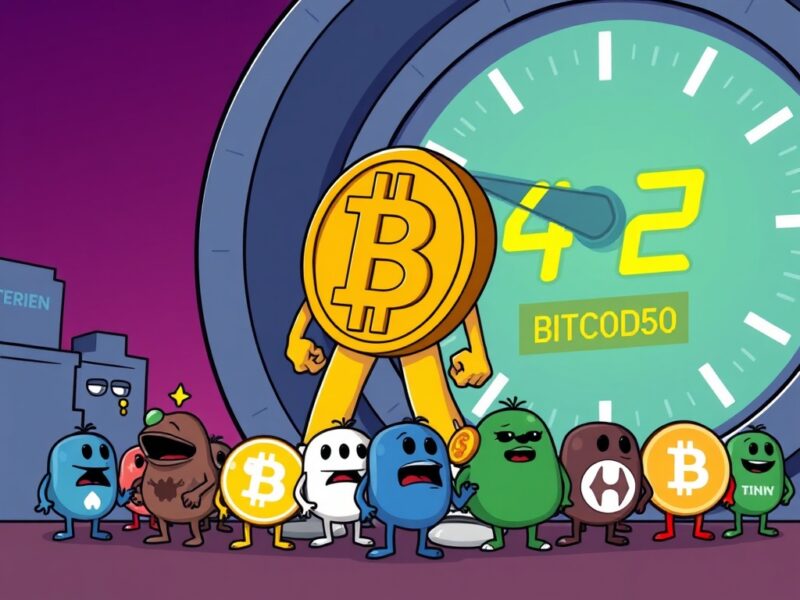
The post Unveiling The Crucial Shift To Bitcoin Season appeared on BitcoinEthereumNews.com. The cryptocurrency market is a dynamic landscape, constantly shifting between periods where Bitcoin leads the charge and times when altcoins shine. Understanding these cycles is crucial for any investor. Currently, the Altcoin Season Index, a key metric tracked by CoinMarketCap (CMC), indicates a clear shift, pointing towards what many call ‘Bitcoin Season’. What Does the Altcoin Season Index Tell Us? On August 22, at 00:30 UTC, the Altcoin Season Index registered a value of 42. This figure, reported by CoinMarketCap and previously noted by Bitcoin World, represents a slight dip from the previous day, signaling a strengthening Bitcoin dominance in the market. This index is a vital tool for understanding the broader market sentiment and asset performance. The Index’s Core Function: It assesses the performance of the top 100 cryptocurrencies on CoinMarketCap. Crucially, it excludes stablecoins and wrapped tokens to provide a clearer picture of market dynamics. Defining Seasons: The index determines whether the market is in ‘Altcoin Season’ or ‘Bitcoin Season’ by comparing how these top coins have performed relative to Bitcoin over the past 90 days. How is Bitcoin Season Determined by the Altcoin Season Index? The methodology behind the Altcoin Season Index is straightforward yet powerful. It sets clear thresholds to define the prevailing market condition: Altcoin Season: This period is declared when at least 75% of the top 100 altcoins (excluding stablecoins and wrapped tokens) have outperformed Bitcoin over the last 90 days. Think of it as a time when a wide array of alternative cryptocurrencies are seeing significant gains. Bitcoin Season: Conversely, we enter Bitcoin Season when 25% or fewer of these altcoins manage to outperform Bitcoin over the same 90-day period. The current index reading of 42 falls squarely into this category, confirming that Bitcoin is currently the dominant force. The index itself ranges…

Author: BitcoinEthereumNews
MetaMask Prepares Dollar-Pegged mUSD on Ethereum and Linea

MetaMask Prepares Dollar-Pegged mUSD on Ethereum and Linea

The post MetaMask Prepares Dollar-Pegged mUSD on Ethereum and Linea appeared on BitcoinEthereumNews.com. MetaMask partners with Stripe’s Bridge, M^0, and Blackstone to launch mUSD stablecoin. mUSD will integrate with MetaMask Card, enabling payments across Mastercard’s global network. Stablecoin market projected to grow from $280B to $750B by 2026 under new U.S. regulations. MetaMask, the world’s most widely used Ethereum wallet provider, is introducing its own stablecoin pegged 1:1 to the U.S. dollar. The token, named MetaMask USD (mUSD), is expected to go live by the end of August 2025, according to sources familiar with the matter. The stablecoin project involves a network of major partners across payments, issuance, and treasury management. Bridge, a stablecoin payments facilitator acquired by Stripe for $1.1 billion in 2024, has been assigned to provide payment processing technology. Built with Bridge (@stablecoin), a @stripe company, and @M0, a stablecoin platform, MetaMask USD will be a very important part of MetaMask. MetaMask USD will:🦊 support on-ramps, swaps, and bridging🦊 offer a dollar-denominated experience for holding, spending, and transacting… pic.twitter.com/w0Adtcmmxg — MetaMask.eth 🦊 (@MetaMask) August 21, 2025 MetaMask has also partnered with M^0, a stablecoin issuance protocol, to supply the technical infrastructure behind the token. M^0 specializes in decentralized stablecoin systems and will handle the issuance mechanics of mUSD. For custody and treasury operations, Blackstone has been brought on board, adding institutional oversight to the project’s reserves. Related: NEAR Snap Brings Non-EVM Features to MetaMask for the First Time The mUSD stablecoin will be backed 1:1 with dollar-equivalent assets. Transparency measures will allow real-time visibility into reserves, in line with current market expectations for stablecoin issuers. From Wallet to Checkout: The mUSD Use Case MetaMask has confirmed that mUSD will integrate directly into its wallet ecosystem, a move that follows its recent Expansion Beyond Ethereum With the Latest Tron Integration. The token’s primary use case is payments, with plans for it…

Author: BitcoinEthereumNews
DeFi Will Not Bite: US Fed Relieves Mainstream’s Fear

DeFi Will Not Bite: US Fed Relieves Mainstream’s Fear

The post DeFi Will Not Bite: US Fed Relieves Mainstream’s Fear appeared on BitcoinEthereumNews.com. Top Federal Reserve leaders are signaling a significant shift toward accepting blockchain technology and stablecoins within the financial mainstream.  The Fed officials delivered remarks at Wyoming’s 2025 Blockchain Symposium that support Trump’s pro-crypto policies and signal regulatory evolution. DeFi Is Simply a New Technology In a speech on Wednesday, Governor Christopher Waller described a technology-led revolution in the payments system and urged the financial industry not to fear change. “There is nothing scary about this just because it occurs in the decentralized finance or DeFi world—this is simply new technology to transfer objects and record transactions,” he said. “There is nothing to be afraid of when thinking about using smart contracts, tokenization, or distributed ledgers in everyday transactions.” He offered a particularly positive outlook on stablecoins, noting they can expand the US dollar’s international role. Waller highlighted how stablecoins give users in underbanked countries a new way to conduct real-time, dollar-based transactions. In a speech on Tuesday, Vice Chair Michelle Bowman called for an even more proactive shift in regulatory thinking. She declared that bank regulators have been overly cautious and conservative in the past and that it is time to embrace technological innovation actively. She identified that blockchain and asset tokenization could improve payment and title transfer efficiency dramatically. Citing the GENIUS Act, Bowman confirmed that federal banking supervisors have already started designing a clear regulatory framework for stablecoins. Markets Rally on Positive Outlook The unified message from two of the Fed’s most senior officials sends a clear signal: US regulators intend to integrate digital assets into the national financial framework. The shared goal of establishing clear rules for stablecoins and modernizing supervisory approaches immediately resonated with the market. Following Wednesday’s release of the remarks, investors rushed to buy leading DeFi protocols. AAVE, a major DeFi coin, rose 7.90%,…

Author: BitcoinEthereumNews
National Bitcoin Reserve Strategy: Can It Succeed in Asia?

National Bitcoin Reserve Strategy: Can It Succeed in Asia?

Bitcoin now sits at the center of Asia’s financial debate. Legislators and regulators—not retail traders—determine how it flows through markets. Their decisions affect liquidity, credibility, and whether Asia joins a global competition for national bitcoin holdings. Hong Kong now anchors digital assets in market infrastructure. ETFs provide compliant exposure, while the Stablecoins Bill created licensing for fiat-referenced issuers. Together, they transform crypto from speculative sidelines into financial plumbing. Hong Kong Writes the Rulebook Background Context – On April 30, 2024, HKEX listed Asia’s first spot bitcoin and ether ETFs, with in-kind creation reducing friction. The ASX followed on June 20, 2024. Korea’s Virtual Asset User Protection Act took effect on July 19, 2024, requiring 80% cold storage and insurance. In January 2025, Indonesia’s OJK assumed oversight, shifting supervision into financial regulation. Behind the Scenes – China has no unified rules for seized bitcoin. Local governments dispose of them inconsistently, prompting calls for central coordination, Reuters noted. In Hong Kong, banks and fintechs prepare applications under the new licensing regime. Japan’s Diet asked in December 2024 whether bitcoin could serve as reserves; the government dismissed the idea in its official record. In Taiwan, a legislator proposed allocating 0.1% of GDP to a national bitcoin reserve, according to CommonWealth Magazine. Wider Impact – Australia’s ETF enabled superannuation funds to allocate legally. Hong Kong’s listings drew custodians and auditors. Korea emphasizes protection, Hong Kong emphasizes access, and Indonesia strengthens supervision—divergent policies shape where capital flows. Latest Update – The US refrained from confiscating bitcoin as a strategic reserve, and plans to include crypto in 401(k)s could expose savers to political and market risks. China is reviewing yuan-backed stablecoins to boost renminbi use in global trade. Hong Kong passed its Stablecoins Bill in May and started licensing for fiat-referenced issuers under the Hong Kong Monetary Authority. Seizures Create Strategic Dilemmas Most state-controlled bitcoin comes from seizures, not reserves. China’s PlusToken case yielded about 195,000 BTC. The CPS announced record seizures in the U.K. in 2024. The U.S. chose retention, while Germany liquidated. Divergent policies inject volatility when states suddenly sell. Bitcoin Holdings of Countries & Governments | BiTBO According to CoinGecko, governments worldwide now hold about 463,741 BTC—2.3% of the supply. These caches reflect enforcement more than strategy. Whether they remain dormant, liquidated, or reclassified remains unsettled. Historical Perspective – Gold ETFs, two decades ago, unlocked institutional flows. Crypto ETFs follow that arc but face AML and custody hurdles. Bitcoin differs: its government balances come mainly from seizures. IMF frameworks exclude crypto from reserves, which is blocking official adoption for now. Possible Risks – Uncoordinated government sales could shake markets. Weak backing risks destabilizing stablecoins. Overregulation drives liquidity offshore. BeInCrypto reported that poorly designed U.S. retirement integration could amplify volatility. Declaring reserves without accounting legitimacy risks credibility loss. Politics Enter the Reserve Debate Legislatures increasingly test the reserve question. Taiwan’s proposal sparked debate. Japan’s Diet raised the issue, but the finance ministry dismissed it. According to the Brazilian Chamber record, Brazil’s Chamber of Deputies held a 2025 hearing on allocating up to 5% of reserves to Bitcoin. In the US, Texas codified a state-level bitcoin reserve. These moves show that politics, not just markets, drive the reserve conversation. Data Breakdown 2.3%: share of bitcoin controlled by governments 195,000: bitcoin seized in China’s PlusToken case 80%: cold-storage requirement in Korea April 30, 2024: Hong Kong ETF launch May 21, 2025: Hong Kong stablecoin law passed Expert Opinion “The introduction of Spot VA ETFs in Hong Kong is the latest exciting addition to HKEX’s diverse and vibrant ETP ecosystem, providing investors with access to a new asset class.” — HKEX “The Government welcomed the passage of the Stablecoins Bill… to establish a licensing regime for fiat-referenced stablecoins issuers in Hong Kong.” — HKMA “The Act… requires virtual asset service providers to safely manage and store their customers’ deposits and virtual assets.” — FSC Korea China’s decisions on seized bitcoin and yuan-backed stablecoins will set the tone. Hong Kong’s licensing regime could bring banks into the issuance process. U.S. reserves and retirement debates may pressure others to adjust. Asia must decide whether to prepare or remain cautious.

Author: Coinstats
JPMorgan Chase's Big Analysis: Four Factors That Make Ethereum Outperform Bitcoin

JPMorgan Chase's Big Analysis: Four Factors That Make Ethereum Outperform Bitcoin

By BitpushNews Over the past few weeks, a noteworthy trend has emerged in the crypto markets: Ethereum (ETH) has significantly outperformed Bitcoin (BTC). According to a recent JPMorgan research report, Wall Street analysts attribute this phenomenon to four key factors: optimized ETF structures, increased holdings by corporate finance departments, a softening of regulatory stances, and the potential liberalization of staking functionality. These factors not only explain Ethereum's recent strength but also suggest further potential for future growth. 1. Market Background: Dual Drive from Policies and Capital Flows In July, the US Congress passed the GENIUS Act, a stablecoin bill that brought unprecedented institutional benefits to the crypto market. Subsequently, Ethereum spot ETFs attracted a record $5.4 billion in inflows in July alone, almost matching the inflows of Bitcoin ETFs. However, in August, Bitcoin ETFs experienced a small outflow of funds, while Ethereum ETFs continued to see a net inflow of funds. This divergence in capital flows became the direct trigger for Ethereum to outperform Bitcoin. Meanwhile, the market awaits the upcoming September vote on the Crypto Market Structure Act. Investors widely anticipate this will mark another major turning point, similar to the stablecoin legislation. Driven by both policy and market expectations, Ethereum's position in the capital market is rapidly rising. 2. Analysis of four major factors: Why does Ethereum outperform Bitcoin? JPMorgan analyst Nikolaos Panigirtzoglou and his team clearly pointed out in the report that Ethereum's strength comes from the following four core driving factors: 1. Potential opening of staking functionality Currently, a major feature of the Ethereum ecosystem is its Proof-of-Stake (PoS) staking mechanism. Users need at least 32 ETH to run their own validator node, but this threshold is relatively high for most institutional and retail investors. If the U.S. Securities and Exchange Commission (SEC) ultimately approves staking for spot Ethereum ETFs, fund managers could generate additional returns for holders without requiring investors to run their own nodes. This would transform spot ETH ETFs into more than just price tracking tools, transforming them into passive investment products with income. This is fundamentally different from Bitcoin's spot ETF: Bitcoin itself does not have a native income mechanism, while Ethereum ETF may come with its own "interest" in the future, which obviously increases its market appeal. 2. Increased holdings and application by corporate finance departments JPMorgan Chase pointed out that currently about 10 listed companies have included Ethereum in their balance sheets, accounting for about 2.3% of the total circulation. What’s more noteworthy is that some companies are not just “buying and holding” but are further participating in the ecosystem: Run a verification node: directly obtain staking rewards. Adopt a liquidity staking or DeFi strategy: invest ETH in derivative protocols to earn additional returns. This means that Ethereum is gradually evolving from a "speculative asset" to a "sustainable asset allocation tool for enterprises." This trend is exactly what Bitcoin has not yet fully achieved. The involvement of corporate finance departments represents the entry of a more long-term and stable capital pool, and also enhances the market's valuation anchor for Ethereum. 3. Regulators soften their stance on liquidity staking tokens Previously, the SEC has always had disputes over the compliance of liquidity staking tokens (LSTs) such as Lido and Rocket Pool. The market is worried that these tokens will be identified as securities, thereby affecting the participation of large-scale institutions. However, the latest development is that the SEC staff has issued a clarifying opinion that "it may not be considered a security." Although formal legislation has not yet been enacted, this statement has greatly alleviated institutional concerns. In this context, institutional funds that were originally on the sidelines regarding compliance may enter the Ethereum staking and related derivatives markets faster and on a larger scale. 4. Optimization of ETF redemption mechanism: Approval of in-kind redemption The SEC recently approved a physical redemption mechanism for spot Bitcoin and Ethereum ETFs. This means that when institutional investors redeem ETF shares, they no longer have to go through the cumbersome process of first selling the ETF for cash. Instead, they can directly withdraw the equivalent amount of Bitcoin or Ethereum. This mechanism brings three major benefits: Improve efficiency: save time and costs. Enhanced liquidity: ETFs are directly linked to the spot market. Reduce selling pressure: Avoid triggering market sell-offs when large-scale redemptions occur. This system is also beneficial for Bitcoin and Ethereum, but because Ethereum accounts for a relatively low proportion of corporate and institutional holdings, it means there is greater room for future growth and the marginal effect is more significant. 3. Future Outlook: Has Ethereum’s potential surpassed Bitcoin? JPMorgan Chase pointed out in the report that although Bitcoin remains the leading "store of value" in the crypto market, Ethereum has greater room for growth: ETF adoption: The funding scale of ETH ETF is still lower than that of BTC, but as the staking function is liberalized, it is expected to attract more long-term funds. Corporate adoption: Bitcoin has long been held by a large number of companies and institutions, while Ethereum is still in its infancy and has huge room for future growth. DeFi and application ecology: Ethereum is not only a digital asset, but also carries applications such as decentralized finance (DeFi), NFT, stablecoins, AI+ on-chain computing, and thus has richer usage scenarios. In other words, Bitcoin is more like "digital gold", while Ethereum is evolving into "the infrastructure of the digital economy." IV. Conclusion JPMorgan's analysis reveals a key logic: Ethereum's strength is not driven by short-term speculation, but is based on the cumulative effect of four factors: favorable policies, structural optimization, institutional adoption and potential returns. With the further improvement of the ETF mechanism, the continued increase in holdings by corporate finance departments, and the possible future policy confirmation of the SEC, Ethereum is expected to gradually narrow or even surpass Bitcoin's advantages in the future market landscape. For investors, this trend is not only a signal of capital flow, but may also mean the turning point of the entire crypto market from "single value storage" to "multi-dimensional application ecology." In this new chapter in the history of cryptocurrencies, Bitcoin may still be “digital gold,” but Ethereum is rapidly growing into the “heart of the digital economy.”

Author: PANews
BlockDAG, Hedera, VeChain, & Tron

BlockDAG, Hedera, VeChain, & Tron

The post BlockDAG, Hedera, VeChain, & Tron appeared on BitcoinEthereumNews.com. Identifying the best long-term cryptos for 2025 is not just about focusing on the largest names, it is about recognizing projects that combine adoption, utility, and potential growth. While Bitcoin and Ethereum often dominate attention, many are now following other networks steadily building measurable value. These are the ecosystems where strong technology, partnerships, and active communities come together to form opportunities that could influence the next market cycle. BlockDAG is drawing the most attention with its record-setting presale and rapid early adoption before launch. Hedera is proving its value through enterprise partnerships, VeChain is solving real-world supply chain issues, and Tron has become a leader in stablecoin activity. Collectively, these projects highlight the diversity shaping the best long-term cryptos for 2025. 1. BlockDAG: Record Presale & Early Adoption BlockDAG has quickly become one of the most discussed projects. Its hybrid Directed Acyclic Graph (DAG) and Proof-of-Work (PoW) structure combines scalability with security, making it appealing to both developers and miners. With EVM compatibility, Ethereum-based apps can launch without friction, ensuring smart contracts and DeFi applications run smoothly from the beginning. Adoption has already started before the official launch, with the X1 mobile miner app surpassing 2.5 million users and more than 19,300 ASIC miners distributed. The presale results highlight the growing interest. BlockDAG has raised over $377 million so far, placing it among the biggest and fastest presales in recent years. Currently in Batch 29, BDAG is priced at $0.0276. Early buyers have seen returns of about 2,600% to 2,660% compared to the initial batches. Analysts expect the price could reach $1 after listing, which would translate into a 36x upside from its current level. Adding further momentum is BlockDAG’s 200 ETH competition, offering approximately $1 million in rewards to presale participants. The combination of its technology, adoption strength, and…

Author: BitcoinEthereumNews
MetaMask Confirms mUSD Launch, Backed by M0 and Stripe’s Bridge

MetaMask Confirms mUSD Launch, Backed by M0 and Stripe’s Bridge

The post MetaMask Confirms mUSD Launch, Backed by M0 and Stripe’s Bridge appeared on BitcoinEthereumNews.com. MetaMask, the popular crypto wallet developed by Consensys, confirmed on Thursday it will debut its proprietary U.S. dollar token (mUSD) later this year, joining the booming stablecoin market. “MetaMask USD is a critical step in bringing the world on-chain,” said Gal Eldar, product lead at MetaMask, in a blog post. Stablecoins, a type of cryptocurrencies pegged to external assets like the U.S. dollar, have grown into a $250 billion market, often touted as a faster, cheaper option for international payments. Interest in the sector has accelerated since U.S. President Donald Trump signed the GENIUS Act into law, setting new federal standards for stablecoin issuers. MetaMask’s stablecoin project was already known to be in the works due to a prematurely posted governance proposal earlier this month. In the official announcement, the firm said that the mUSD token will be launched first on Ethereum ETH$4,274.64 and Consensys-developed layer-2 network Linea, and closely integrated within the app and services. Users will be able to on-ramp fiat, swap between tokens, and move value across blockchains, with the stablecoin later becoming spendable through the MetaMask Card at Mastercard merchants worldwide. Further plans include extend utility across decentralized finance (DeFi) and payments. The token is issued by U.S.-licensed issuer Bridge, now part of payments giant Stripe, and underpinned by stablecoin platform M0’s blockchain infrastructure. “With MetaMask USD, users can bring their money onchain, put it to work, spend it almost anywhere, and use it like money should be used,” Eldar said. “It will allow us to cut through some of the most stubborn barriers in web3 and reduce both friction and costs for people onboarding directly into a self-custodial wallet.” Custom stablecoin issuance MetaMask’s stablecoin is the first example of the partnership between M0 and Bridge to help businesses roll out custom digital dollars. The two…

Author: BitcoinEthereumNews
Altcoin Season Index: Unveiling the Crucial Shift to Bitcoin Season

Altcoin Season Index: Unveiling the Crucial Shift to Bitcoin Season

BitcoinWorld Altcoin Season Index: Unveiling the Crucial Shift to Bitcoin Season The cryptocurrency market is a dynamic landscape, constantly shifting between periods where Bitcoin leads the charge and times when altcoins shine. Understanding these cycles is crucial for any investor. Currently, the Altcoin Season Index, a key metric tracked by CoinMarketCap (CMC), indicates a clear shift, pointing towards what many call ‘Bitcoin Season’. What Does the Altcoin Season Index Tell Us? On August 22, at 00:30 UTC, the Altcoin Season Index registered a value of 42. This figure, reported by CoinMarketCap and previously noted by Bitcoin World, represents a slight dip from the previous day, signaling a strengthening Bitcoin dominance in the market. This index is a vital tool for understanding the broader market sentiment and asset performance. The Index’s Core Function: It assesses the performance of the top 100 cryptocurrencies on CoinMarketCap. Crucially, it excludes stablecoins and wrapped tokens to provide a clearer picture of market dynamics. Defining Seasons: The index determines whether the market is in ‘Altcoin Season’ or ‘Bitcoin Season’ by comparing how these top coins have performed relative to Bitcoin over the past 90 days. How is Bitcoin Season Determined by the Altcoin Season Index? The methodology behind the Altcoin Season Index is straightforward yet powerful. It sets clear thresholds to define the prevailing market condition: Altcoin Season: This period is declared when at least 75% of the top 100 altcoins (excluding stablecoins and wrapped tokens) have outperformed Bitcoin over the last 90 days. Think of it as a time when a wide array of alternative cryptocurrencies are seeing significant gains. Bitcoin Season: Conversely, we enter Bitcoin Season when 25% or fewer of these altcoins manage to outperform Bitcoin over the same 90-day period. The current index reading of 42 falls squarely into this category, confirming that Bitcoin is currently the dominant force. The index itself ranges from 1 to 100. A lower number suggests stronger Bitcoin dominance, while a higher number indicates altcoin outperformance. The current 42 clearly points to Bitcoin leading the pack. Navigating the Current Bitcoin Season: What Does it Mean for Investors? Understanding the implications of the current Bitcoin Season, as indicated by the Altcoin Season Index, is essential for informed decision-making. When Bitcoin dominates, it often means: Capital Flow: Investors may be consolidating their capital into Bitcoin, viewing it as a safer or more stable asset during uncertain times, or anticipating a major Bitcoin price movement. Reduced Altcoin Volatility (Relative): While altcoins can still be volatile, their relative performance against Bitcoin tends to be weaker. They might not see the explosive growth characteristic of an Altcoin Season. Market Bellwether: Bitcoin’s price action often dictates the overall direction of the market. A strong Bitcoin run can sometimes precede a broader market recovery, eventually lifting altcoins. For those holding altcoins, this period might present challenges, as their portfolios may lag behind Bitcoin’s performance. However, it can also be an opportunity to reassess and strategize. Strategic Insights During Bitcoin Season When the Altcoin Season Index signals Bitcoin Season, investors can consider several approaches. This isn’t financial advice, but rather observations based on market trends: Focus on Bitcoin: Some investors may choose to increase their Bitcoin holdings, riding the wave of its dominance. Re-evaluate Altcoin Holdings: It might be a good time to review altcoin portfolios, perhaps divesting from weaker performers or projects with less fundamental strength. Research for Future Opportunities: Use this period to research promising altcoin projects that could thrive once the market sentiment shifts back towards altcoins. Strong fundamentals and innovative technology remain key. The market is cyclical, and understanding the signals from metrics like the Altcoin Season Index can provide a significant edge. While Bitcoin currently holds the reins, market conditions can change, and being prepared for future shifts is always wise. The Altcoin Season Index at 42 confirms that we are firmly in a Bitcoin Season. This means Bitcoin has been outperforming most of the top altcoins over the last 90 days. For crypto enthusiasts and investors, this metric offers a crucial snapshot of the market’s current state, guiding decisions and expectations. While the crypto landscape is ever-evolving, staying informed with reliable data from sources like CoinMarketCap allows participants to navigate these cycles with greater confidence and foresight. Frequently Asked Questions (FAQs) Q1: What is the Altcoin Season Index? The Altcoin Season Index is a metric from CoinMarketCap that tracks the performance of the top 100 cryptocurrencies (excluding stablecoins and wrapped tokens) against Bitcoin over the past 90 days to determine if the market is in ‘Altcoin Season’ or ‘Bitcoin Season’. Q2: How is Altcoin Season defined by the index? Altcoin Season occurs when at least 75% of the top 100 altcoins have outperformed Bitcoin over the last 90 days. Q3: What does an Altcoin Season Index of 42 signify? An index value of 42 indicates that 25% or fewer of the top 100 altcoins have outperformed Bitcoin over the past 90 days, meaning the market is currently in Bitcoin Season. Q4: What are the implications of a Bitcoin Season for altcoin holders? During Bitcoin Season, altcoins generally tend to underperform Bitcoin. This means altcoin portfolios might see less growth compared to Bitcoin, and capital may flow more towards Bitcoin as the dominant asset. Q5: How often does the Altcoin Season Index update? The Altcoin Season Index is updated regularly, providing a near real-time snapshot of market conditions, though the 90-day lookback period remains constant for its calculation. Did you find this article insightful? Share it with your friends and fellow crypto enthusiasts on social media to help them understand the current market dynamics! To learn more about the latest crypto market trends, explore our article on key developments shaping Bitcoin price action. This post Altcoin Season Index: Unveiling the Crucial Shift to Bitcoin Season first appeared on BitcoinWorld and is written by Editorial Team

Author: Coinstats
Crypto leaders urge UK to embrace stablecoins: ‘National strategy is needed’

Crypto leaders urge UK to embrace stablecoins: ‘National strategy is needed’

Is Britain about to fall behind the U.S. in the stablecoin race?

Author: Coinstats