Stablecoins

Stablecoins are digital assets pegged to a stable reserve, such as the US Dollar or Gold, to minimize price volatility. Serving as the primary medium of exchange in Web3, tokens like USDT, USDC, and PYUSD facilitate global payments and DeFi liquidity. In 2026, the focus has shifted toward yield-bearing stablecoins and compliant stablecoin frameworks under global regulations like MiCA. This tag covers the intersection of traditional finance (TradFi) and crypto through stable on-chain liquidity solutions.

23924 Articles
Created: 2026/02/02 18:52
Updated: 2026/02/02 18:52
XRP And ADA Holders Move To Remittix As Market Looks For The Next Big Breakout

XRP And ADA Holders Move To Remittix As Market Looks For The Next Big Breakout

The post XRP And ADA Holders Move To Remittix As Market Looks For The Next Big Breakout appeared on BitcoinEthereumNews.com. Crypto News XRP’s recent price decline suggests the hype might be ending, as it returns below $3. Similarly, the ADA coin is currently struggling below $1 in a price performance that suggests Cardano could be moving past a stage where hype could help it grow. However, Remittix is seeing an inflow that could trigger a major rally for 30x growth this year. Hence, while the ADA and XRP prices remain in a bear trap, Remittix could be leading a surge in the payment corner as it introduces the next-gen solution. Here is the analysis showing this current whale shift towards Remittix. What is Threatening XRP Price Dominance In 2025? The joint move by XRP and the SEC to end their appeal a few weeks ago did not bring the expected result, as the price remains muted. Analysts have long projected a surge that could follow the end of the XRP and SEC tussle, but the muted XRP price is raising questions. Some say this could be due to the rise in stablecoin interest in 2025, while others speculate that the expectation was already priced in. However, following the “priced in” analogy, analysis suggests the previous XRP price surge could be in anticipation of the end of the SEC case. As a result, the coin had nothing to react to after the case was eventually dropped. Meanwhile, another suggestion from the South Korean IM Securities suggests that rising stablecoins could be pushing XRP out. Cardano Rejects $1 Breakout With Bearish Cloud The volatility around the Cardano ADA coin has peaked lately, with the price testing and rejecting a position at $1. Although experts say the move might not be over yet, the current price action is showing a bearish reading. While concerns remain on ADA price rejecting the $1 level, the…

Author: BitcoinEthereumNews
Coinbase CEO Brian Armstrong Predicts Bitcoin Price Could Hit $1M by 2030

Coinbase CEO Brian Armstrong Predicts Bitcoin Price Could Hit $1M by 2030

The post Coinbase CEO Brian Armstrong Predicts Bitcoin Price Could Hit $1M by 2030 appeared first on Coinpedia Fintech News Coinbase CEO Brian Armstrong has made a bold prediction: Bitcoin could climb to $1 million per token by the end of this decade. The rare price target from Armstrong grabbed attention, especially as he usually avoids public forecasts. He shared the outlook on X while promoting his interview on the Cheeky Pint podcast. Bitcoin Price Prediction 2030 Armstrong isn’t alone in predicting Bitcoin’s explosive growth. Jack Dorsey, the former Twitter boss, has also projected the leading crypto hitting $1 million by 2030. ARK Invest’s Cathie Wood has gone even further with a $1.5 million bull case scenario, while MicroStrategy’s Michael Saylor believes that Wall Street allocating just 10% of reserves to Bitcoin could push it to that milestone. Author Robert Kiyosaki also argues that inflation and rising debt will only accelerate Bitcoin’s path toward seven figures. Regulation and Government Bitcoin Reserve Armstrong pointed to regulatory progress in the U.S. as a key driver for long-term growth. With new legislation on stablecoins and a market structure bill making its way through the Senate, he said a breakthrough could happen as early as this year. Another surprising factor, according to him, is that the U.S. government now holds a strategic Bitcoin reserve, something he once considered unthinkable. He added that the main risks threatening Bitcoin’s future are now fading. Fears of outright bans have receded, while the protocol itself has withstood over a decade of challenges. Even looming concerns like quantum computing, Armstrong said, are already being addressed by the developer community. Also Read :   Bitcoin Security Concerns Rise as Two Pools Dominate 51% of Network   , Institutional Inflows Still Growing Armstrong also stressed the role of institutional investors. Many funds currently allocate about 1% of their portfolios to Bitcoin, but with regulatory clarity, those allocations could multiply. ETFs have already sparked major adoption, funneling large sums of capital into the asset. Sovereign and institutional exposure, he argued, could drive the next leg of Bitcoin’s growth. For Armstrong and other Bitcoin believers, the limited supply, increasing institutional demand, and global economic uncertainty form the foundation of the $1M case. While the milestone still looks distant, the idea of Bitcoin becoming a digital reserve asset is no longer confined to speculation. Never Miss a Beat in the Crypto World! Stay ahead with breaking news, expert analysis, and real-time updates on the latest trends in Bitcoin, altcoins, DeFi, NFTs, and more. Subscribe to News FAQs What is Brian Armstrong’s Bitcoin price prediction? Armstrong predicts Bitcoin could reach $1 million by 2030, driven by regulatory progress, institutional adoption, and its limited supply. How are institutions affecting Bitcoin’s price? ETFs and funds increasing portfolio allocations are funneling massive capital into Bitcoin, accelerating its adoption and value. Is Bitcoin a good investment? Proponents believe it is, citing its fixed supply as a hedge against inflation and growing institutional adoption through new ETFs.

Author: Coinstats
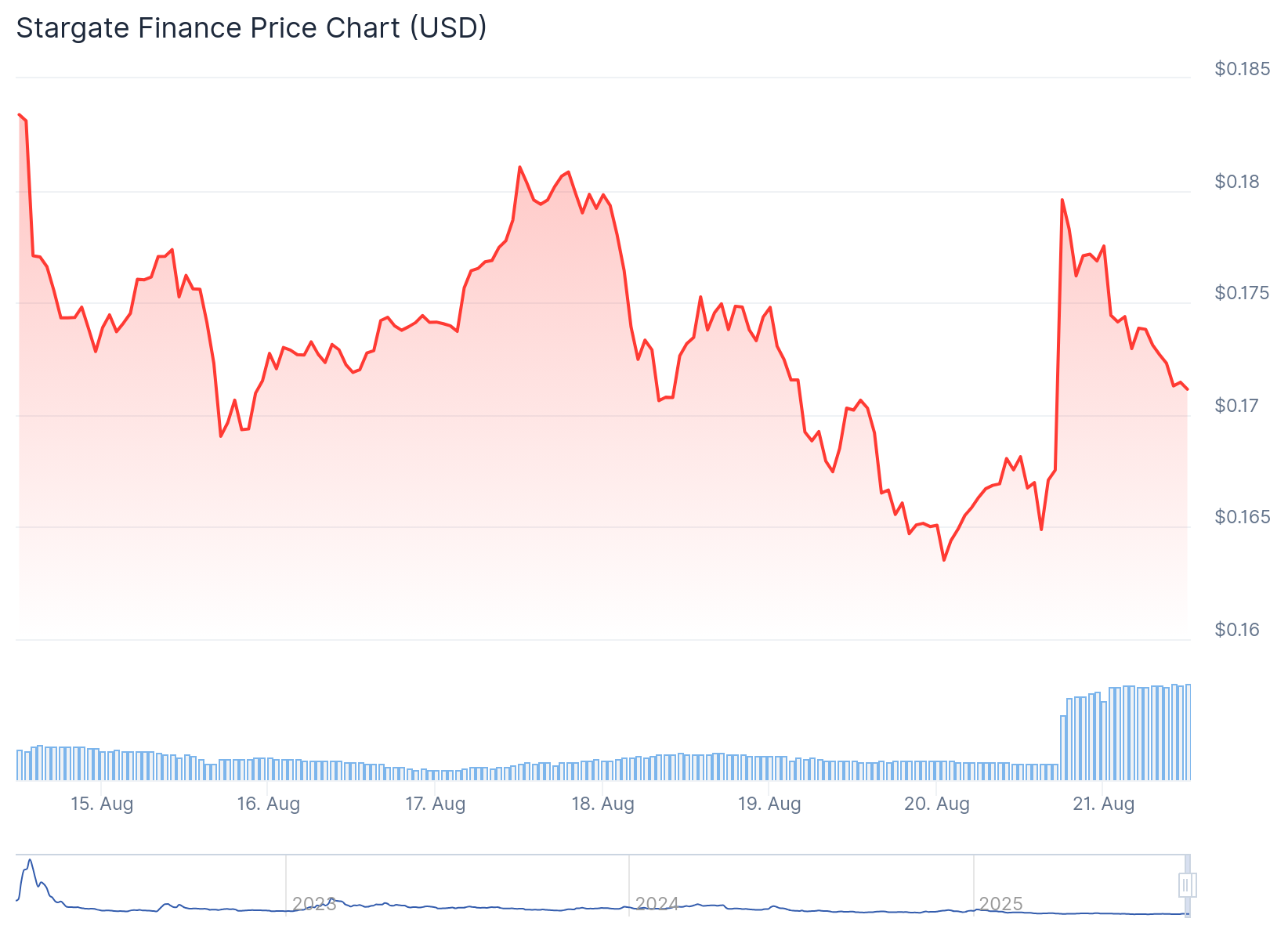
Crypto Bridge Wars: Wormhole vs LayerZero Battle for $110M Stargate Deal

Crypto Bridge Wars: Wormhole vs LayerZero Battle for $110M Stargate Deal

TLDR Wormhole is challenging LayerZero’s $110 million bid to acquire Stargate, arguing the offer undervalues the platform LayerZero updated its proposal on Sunday to include revenue-sharing for staked token holders, gaining 88.6% community support Wormhole has requested a five-day pause in voting to prepare a “meaningfully higher bid” for Stargate Stargate generated nearly $1 million [...] The post Crypto Bridge Wars: Wormhole vs LayerZero Battle for $110M Stargate Deal appeared first on CoinCentral.

Author: Coincentral
Fed, U.S. Banks, and China Turn Spotlight on Stablecoins

Fed, U.S. Banks, and China Turn Spotlight on Stablecoins

The post Fed, U.S. Banks, and China Turn Spotlight on Stablecoins appeared on BitcoinEthereumNews.com. Fintech Stablecoins are rapidly moving from niche crypto assets into the center of global financial debates. Recent discussions by the U.S. Federal Reserve, major American banks, and Chinese policymakers reveal how these digital tokens have become a strategic focus in reshaping payments, markets, and cross-border finance. The minutes of the Federal Open Market Committee’s (FOMC) latest meeting show that stablecoins are now part of the Federal Reserve’s official policy discourse. Officials examined both the opportunities and risks tied to payment-focused stablecoins, emphasizing their potential to improve efficiency in transactions while also introducing new dynamics in Treasury markets and bank regulation. According to the minutes, stablecoins could streamline payments, reduce friction in settlement systems, and modernize financial infrastructure. However, members also flagged risks tied to their reliance on U.S. Treasury securities and other assets that back their value, raising questions about systemic vulnerabilities. Concerns about maturity mismatches, rollover risks, and reserve management dominated much of the debate, signaling the Fed’s cautious but serious approach to stablecoin oversight. This marks one of the clearest acknowledgments yet from the U.S. central bank that blockchain-based digital dollars are becoming too significant to ignore. Balancing Benefits and Risks Market observers noted that the Fed’s comments illustrate the balancing act regulators face. On one hand, stablecoins could provide faster, cheaper, and more efficient payments for businesses and consumers. On the other, their rapid growth could disrupt Treasury markets and put pressure on banks if adoption accelerates unchecked. ETF Store president Nate Geraci highlighted the importance of the development, posting on X that the Fed’s recognition that “payment stablecoins could help improve the efficiency of the payment system” shows just how seriously policymakers are treating this emerging sector. U.S. Banks and China Move Toward Integration The private sector is already taking steps toward adoption. In the U.S.,…

Author: BitcoinEthereumNews
Crypto Market Structure Bill Will Be Law By 2026

Crypto Market Structure Bill Will Be Law By 2026

The post Crypto Market Structure Bill Will Be Law By 2026 appeared on BitcoinEthereumNews.com. Wyoming Senator Cynthia Lummis, one of the Republicans leading the charge in support of legislation for digital asset market structure, has said a bill will end up on US President Donald Trump’s desk “before the end of the year.” Speaking at the Wyoming Blockchain Symposium in Jackson Hole on Wednesday, Lummis said Republicans’ goals included having a market structure bill passed through the Senate Banking Committee by the end of September, followed by consideration in the Senate Agriculture Committee in October. Both committees will address how the US financial regulators, the Securities and Exchange Commission and Commodity Futures Trading Commission, handle digital assets. “We will have market structure to the president’s desk before the end of the year,” said Lummis. “I hope it’s before Thanksgiving.” Senator Cynthia Lummis speaking in Jackson Hole on Wednesday. Source: Wyoming Blockchain Symposium Republicans’ plans to pass market structure in the Senate followed the US House of Representatives approving the Digital Asset Market Clarity (CLARITY) Act in July, with 78 Democrats voting for the bill. Lummis and other Senate Republicans suggested their version of the legislation, tentatively titled the Responsible Financial Innovation Act, would “build on” the CLARITY Act.  “We […] want to honor as much of the House’s work as we can on CLARITY because they had a robust bipartisan vote,” said Lummis on Wednesday. “And we don’t want to disrupt that very much. So we’re going to use the CLARITY Act as the base bill […] CLARITY will probably end up being what passes, but CLARITY as tweaked by the Senate.” Related: White House crypto rules bring SEC-CFTC clarity for US crypto firms: Lawyer Lummis’ remarks echoed those of Senate Banking Committee Chair Tim Scott, who spoke at the Wyoming Blockchain Symposium on Tuesday. The South Carolina senator speculated that “between 12 and 18…

Author: BitcoinEthereumNews
High-Ranking Official Rumored to Be Next FED Chair Makes Statement on Cryptocurrencies

High-Ranking Official Rumored to Be Next FED Chair Makes Statement on Cryptocurrencies

The post High-Ranking Official Rumored to Be Next FED Chair Makes Statement on Cryptocurrencies appeared on BitcoinEthereumNews.com. Fed member Chris Waller said there is “nothing to fear” from cryptocurrency technologies. In his speech today in Jackson Hole, Waller referred to smart contracts, tokenization, and distributed ledger technologies, saying, “There's nothing to fear when thinking about these things. Using innovative technologies to build new payment services is nothing new.” Speaking at the SALT conference, Waller noted that some technologies have been unfairly demonized in recent years because of their association with digital assets. “They're just technologies, why are they so maligned? If they offer more useful and interesting avenues, we should look at them and embrace them,” he said. Related News: BREAKING: Chaos Ensues in Token Set to Be Completely Acquired by Another Altcoin – Now There’s a Higher Bidder Waller, who was appointed to the Fed by Donald Trump in 2020 and is seen as a strong candidate for the future Fed presidency, has long been known for his supportive stance towards stablecoins and the crypto industry. Stating that the FED is also exploring possible uses of tokenization, smart contracts, and distributed ledgers, Waller said, “As a central bank, we may never follow this path, but there is no reason why we shouldn't explore it to see what happens.” *This is not investment advice. Continue Reading: High-Ranking Official Rumored to Be Next FED Chair Makes Statement on Cryptocurrencies Source: https://en.bitcoinsistemi.com/high-ranking-official-rumored-to-be-next-fed-chair-makes-statement-on-cryptocurrencies/

Author: BitcoinEthereumNews
How the US Govt Uses Seized Crypto for Its Bitcoin Reserve

How the US Govt Uses Seized Crypto for Its Bitcoin Reserve

The post How the US Govt Uses Seized Crypto for Its Bitcoin Reserve appeared on BitcoinEthereumNews.com. The US government has seized another $300k in crypto from the Uranium Finance hacker. A process has been established for victims of the hack to file claims for a refund. Unclaimed seized funds are a primary “budget-neutral” source for the US strategic Bitcoin reserve. The United States government’s crypto wallet just received another $300,000 worth of assets seized from the Uranium Finance hacker. On-chain data from Thursday, August 21, shows the government withdrew 76.56 Ethereum (ETH) from a Coinbase wallet linked to the case. This latest transaction brings the total value of assets seized from the Uranium Finance hacker to $34.9 million. The majority of these funds are in Wrapped BNB (WBNB), valued at about $19.27 million, with an additional $15 million in ETH and other stablecoins.  How the U.S. Government Seized Funds From Uranium Finance Hacker The seizure is a prime example of how law enforcement actions have become a primary source for the government’s growing crypto treasury. In February 2025, the U.S. Attorney’s Office for the Southern District of New York (SDNY) and Homeland Security Investigations (HSI) in collaboration with TRM Labs seized $31 million stolen from Uranium Finance. The seizure of the Uranium Finance funds happened almost four years after the attackers drained $53.7 million from the protocol. TRM Labs worked closely with law enforcement to identify and trace the stolen funds, even after the attackers used crypto mixers like Tornado Cash and various decentralized exchanges. What Happens to the Recovered Funds Now? The U.S. government has now urged victims of the Uranium Finance hack to contact the SDNY’s official channels to begin the refund process. This provides a clear path for victims to reclaim their portion of the recovered money. SDNY and @HSISanDiego seize cryptocurrency worth approximately $31 million related to April 2021 hack of Uranium…

Author: BitcoinEthereumNews
UK Banks Tighten Grip on Crypto Payments as Investors Struggle to Fund Accounts

UK Banks Tighten Grip on Crypto Payments as Investors Struggle to Fund Accounts

The post UK Banks Tighten Grip on Crypto Payments as Investors Struggle to Fund Accounts appeared on BitcoinEthereumNews.com. A growing share of the United Kingdom’s cryptocurrency investors are struggling to fund their accounts, highlighting the regulatory and banking hurdles facing the digital asset sector. An IG Group survey of 500 UK crypto investors and a broader sample of 2,000 adults found that 40% of users said their bank had either blocked or delayed payments to a crypto provider. Among those affected, 29% lodged complaints with their banks, while 35% said they switched lenders in response. When the broader sample was asked about banks intervening in crypto transactions, 42% said they opposed such measures, while 33% expressed support. “We’re in a damaging position where millions of people are effectively being locked out of crypto just because of who they bank with,” said Michael Healy, IG’s UK managing director. “This kind of behavior is at best anti-consumer, at worst anti-competitive — and it’s not backed by the public.” While cryptocurrency trading is legal in the UK, funding accounts can be a major obstacle. Crypto companies must register with the Financial Conduct Authority (FCA) as virtual asset service providers to operate, and only FCA-authorized companies can provide fiat on- and off-ramps in British pounds. Some high-street banks, including Chase UK and NatWest, have gone further, restricting or blocking payments to crypto exchanges under the banner of fraud prevention. On top of these barriers, the FCA has prohibited retail customers from using borrowed money, including credit cards, to purchase digital assets — further narrowing the funding options available to everyday investors. Related: UK crypto hopes stall, but ‘encouraging signs’ are there UK falling behind in global crypto race Banking hurdles for UK crypto users come amid mounting criticism of the country’s broader approach to digital assets. Former Chancellor of the Exchequer and current Coinbase adviser George Osborne recently warned that the UK…

Author: BitcoinEthereumNews
Bitcoin Price Forecast: BTC steadies at $113,500 as traders await Powell’s Jackson Hole speech

Bitcoin Price Forecast: BTC steadies at $113,500 as traders await Powell’s Jackson Hole speech

Bitcoin (BTC) steadies around $113,500 at the time of writing on Thursday after falling 3% so far this week. On-chain data shows that weakening demand and profit-taking continue to weigh on BTC.

Author: Fxstreet
Swiss Franc: Navigating Global Headwinds – UBS Updates GBP/CHF Outlook

Swiss Franc: Navigating Global Headwinds – UBS Updates GBP/CHF Outlook

BitcoinWorld Swiss Franc: Navigating Global Headwinds – UBS Updates GBP/CHF Outlook In the dynamic and often unpredictable world of cryptocurrencies, where volatility is a constant companion, understanding the traditional financial safe havens can offer invaluable perspective. While digital assets often grab headlines with their parabolic gains and precipitous drops, the enduring Swiss franc resilience against global economic headwinds provides a fascinating case study in stability. This article delves into how the Swiss franc maintains its strength despite looming tariff threats, and what a major financial player like UBS is forecasting for the GBP/CHF currency pair, offering crucial insights for anyone interested in broader financial market trends. What Fuels the Swiss Franc’s Unyielding Resilience? The Swiss franc (CHF) has long been revered as a safe-haven currency, a preferred destination for capital during times of global uncertainty. Its consistent performance, even when faced with significant geopolitical and economic pressures, prompts the question: what exactly underpins this remarkable Swiss franc resilience? It’s not merely a reputation; it’s built on a foundation of robust economic fundamentals and strategic policy decisions. Key Pillars of CHF Strength: Political and Economic Stability: Switzerland boasts a long history of political neutrality and a stable, democratic government. This inherent stability reduces perceived risks for investors, making the CHF an attractive alternative when other nations face turmoil. Its robust legal framework and low corruption levels further enhance investor confidence. Strong Economic Fundamentals: Despite its small size, Switzerland has a highly developed, innovative, and diversified economy. It’s a global leader in sectors such as pharmaceuticals, precision manufacturing, finance, and luxury goods. The country consistently maintains a healthy trade surplus, low unemployment rates, and a strong fiscal position with low public debt. These economic strengths provide a solid backing for its currency. Prudent Monetary Policy by the SNB: The Swiss National Bank (SNB) is known for its independent and often unconventional monetary policy. While it has previously intervened to prevent excessive CHF appreciation (especially against the Euro), its primary mandate is price stability. The SNB’s credibility and willingness to act decisively, whether through interest rate adjustments or direct market interventions, reassure investors about the currency’s long-term value. Safe-Haven Demand: In times of global crises – be it trade wars, geopolitical conflicts, or financial market instability – investors flock to assets perceived as safe. The CHF, alongside gold and the Japanese Yen, is consistently among the top choices for this flight to safety. This intrinsic demand provides a constant floor for the currency, even when external pressures mount. High Savings Rate and Capital Inflows: Switzerland has a high domestic savings rate, contributing to capital accumulation. Furthermore, its status as a global financial hub attracts significant foreign capital inflows, both for investment and wealth management purposes, which naturally supports the demand for the franc. This combination of factors allows the Swiss franc to absorb shocks that would severely weaken other currencies. Its ability to act as a financial anchor in stormy seas is a testament to these foundational strengths, making it a critical currency to monitor in any comprehensive forex market analysis. How Do Tariff Threats Impact Global Currencies and the Forex Market Analysis? The specter of global tariff threats, often initiated by major economic powers, casts a long shadow over international trade and financial markets. These protectionist measures, designed to favor domestic industries, inevitably trigger retaliatory actions, leading to trade wars that disrupt supply chains, increase production costs, and dampen global economic growth. Understanding their ripple effects is crucial for any astute forex market analysis. The Cascade Effect of Tariffs on Currencies: Increased Volatility and Uncertainty: Tariffs introduce significant uncertainty into the global economic outlook. Businesses become hesitant to invest, and consumers may reduce spending. This uncertainty translates into increased volatility across all asset classes, including currencies, as investors adjust their risk exposure. Impact on Trade Balances: Tariffs aim to reduce imports and boost exports. However, in a retaliatory environment, they often lead to reduced overall trade volumes. Countries heavily reliant on exports, or those caught in the crossfire of trade disputes, may see their currencies weaken as their trade surpluses diminish or turn into deficits. Flight to Safety: As economic growth prospects dim and geopolitical tensions rise due to tariff disputes, there’s a noticeable ‘flight to safety.’ Capital flows out of riskier assets and emerging markets into perceived safe havens. This directly benefits currencies like the Swiss franc, Japanese Yen, and the US Dollar (in its capacity as the world’s reserve currency), leading to their appreciation. Central Bank Responses: Trade wars can compel central banks to adjust monetary policy. If tariffs lead to slower growth and lower inflation, central banks might consider interest rate cuts or quantitative easing to stimulate their economies. Such dovish shifts can weaken a currency, while hawkish stances (if inflation rises due to tariffs) could strengthen it. Commodity Price Fluctuations: Many currencies are heavily influenced by commodity prices (e.g., AUD, CAD, RUB). Tariff disputes can disrupt global demand for commodities, leading to price drops that in turn weaken commodity-linked currencies. Consider the potential impact of escalating tariff threats on various currency types: Currency Type Typical Response to Tariff Threats Example Currencies Safe Havens Appreciation (due to capital inflow) CHF, JPY, USD Export-Oriented (Caught in Crossfire) Depreciation (due to reduced trade) CNY, EUR, KRW Commodity-Linked Depreciation (due to falling demand/prices) AUD, CAD, NZD Emerging Markets Significant Depreciation (due to risk aversion) TRY, ZAR, MXN While the immediate impact of tariff threats can be negative for global growth, they paradoxically reinforce the appeal of currencies like the Swiss franc, highlighting its unique position in the global financial architecture. This dynamic makes the currency outlook for the CHF particularly interesting during periods of heightened trade tensions. Diving Deep into UBS’s GBP/CHF Forecast: What’s Changed? In the complex tapestry of the foreign exchange market, institutional forecasts from leading banks like UBS provide critical signposts for investors and traders. UBS, a global financial services giant headquartered in Switzerland, holds significant weight in its analysis, particularly concerning the UBS GBP CHF currency pair. Their recent adjustments to the GBP CHF forecast reflect a nuanced understanding of both British and Swiss economic trajectories, as well as broader global macro trends. UBS’s Rationale Behind the Updated Forecast: Traditionally, UBS has provided detailed analyses of major currency pairs, factoring in everything from interest rate differentials and economic growth projections to geopolitical risks and central bank policies. Their latest GBP CHF forecast indicates a revised outlook, moving away from previous expectations. This shift is typically driven by a confluence of factors: UK Economic Performance and Brexit Aftermath: The British economy continues to navigate the complexities of post-Brexit trade relationships and inflationary pressures. Persistent inflation, coupled with a tight labor market, has forced the Bank of England (BoE) to maintain a relatively hawkish stance. However, underlying growth concerns and the potential for a recession could temper the BoE’s aggressiveness. UBS likely assesses these factors, weighing the UK’s growth potential against its inflation battle. Swiss National Bank (SNB) Policy Nuances: The SNB’s monetary policy is a pivotal determinant for the CHF. While the SNB has been proactive in combating inflation, its actions are also influenced by the strength of the franc. If the franc becomes excessively strong, posing a threat to Swiss exports, the SNB might signal a more dovish stance. UBS’s analysis would consider the SNB’s reaction function and its comfort level with the current CHF valuation. Interest Rate Differentials: The gap between the BoE’s policy rate and the SNB’s policy rate significantly impacts carry trade strategies and capital flows. A widening positive differential in favor of the GBP would theoretically make the GBP more attractive. However, this must be balanced against perceived risks and the overall economic health of both nations. Global Risk Sentiment: As discussed, the Swiss franc benefits from global risk aversion. If UBS anticipates a continued period of global uncertainty (e.g., ongoing tariff threats, geopolitical tensions, or a slowdown in major economies), this would bolster their view on the CHF’s strength relative to the GBP, which is often more sensitive to global growth cycles. Technical Analysis and Market Positioning: Beyond fundamental factors, large institutions also consider technical indicators and market positioning. If the market is heavily skewed in one direction, a correction might be anticipated, influencing the short-to-medium term GBP CHF forecast. While specific target numbers are proprietary and subject to change, the general direction of UBS’s revised forecast often signals a shift in the perceived relative strength of the two economies or a change in the global risk landscape. For example, if UBS lowers its GBP CHF forecast, it implies an expectation of a stronger CHF relative to the GBP, or a weaker GBP relative to the CHF, suggesting that the headwinds for the British pound are stronger than previously anticipated, or the tailwinds for the Swiss franc are more robust. Beyond the Headlines: Broader Forex Market Implications and Currency Outlook The specific movements and forecasts for a single currency pair like UBS GBP CHF are never isolated events. They are intricate threads in the vast and interconnected tapestry of the global forex market analysis. Understanding the broader implications of such expert outlooks is crucial for forming a comprehensive currency outlook and making informed decisions across various financial assets, including cryptocurrencies, which are increasingly influenced by macro trends. What Does the GBP/CHF Outlook Tell Us About the Wider Market? Global Risk Barometer: The continued strength of the Swiss franc, as highlighted by its resilience and reinforced by forecasts like UBS’s, acts as a significant barometer of global risk sentiment. When investors are consistently seeking safety in CHF, it suggests underlying concerns about global economic stability, geopolitical tensions, or financial market fragility. This ‘flight to safety’ often correlates with weakness in riskier assets, including certain cryptocurrencies that are more sensitive to broader market sentiment. Divergence in Monetary Policy Expectations: The GBP/CHF forecast implicitly reflects the market’s and institutions’ expectations regarding the monetary policy paths of the Bank of England (BoE) and the Swiss National Bank (SNB). If the forecast implies a stronger CHF, it could suggest that the market anticipates the SNB will maintain a relatively tighter policy, or that the BoE might ease its stance sooner than expected, or that the economic outlook for the UK is deteriorating relative to Switzerland. This divergence in central bank policies is a key driver for many currency pairs. Impact on Other Safe Havens: The performance of the CHF often provides clues about other safe-haven assets. A strong CHF might coincide with strength in the Japanese Yen (JPY) and gold, as these assets share similar demand drivers during times of uncertainty. Monitoring these correlations can help investors diversify their safe-haven allocations. Reflecting UK Economic Challenges: A weakening GBP against the CHF, as potentially indicated by a revised UBS forecast, underscores the persistent challenges facing the UK economy. These include the long-term impacts of Brexit, persistent inflation, and the delicate balance the BoE must strike between controlling prices and supporting growth. This insight is valuable for investors with exposure to UK equities or bonds. Cross-Currency Implications: Changes in the GBP/CHF pair can have ripple effects on other crosses. For example, if the GBP is weakening against the CHF, it might also show weakness against the Euro (EUR) or the US Dollar (USD), depending on the relative strengths of those economies. This highlights the interconnectedness of the forex market. The currency outlook for the GBP/CHF pair, when viewed through the lens of a comprehensive forex market analysis, offers more than just a trading signal for that specific pair. It provides a window into the prevailing global economic narrative, central bank intentions, and investor risk appetite, insights that are increasingly relevant even for participants in the crypto space looking to understand macro drivers. Actionable Insights: Navigating the GBP/CHF Landscape and Beyond Understanding the dynamics of the UBS GBP CHF forecast and the broader forex market analysis is not just an academic exercise; it offers tangible, actionable insights for various market participants. Whether you are a seasoned forex trader, a long-term investor, or a business engaged in international trade, these trends can significantly impact your financial strategies. Staying informed about the currency outlook is paramount. Strategies for Different Market Participants: For Forex Traders: Identify Entry and Exit Points: If UBS’s forecast suggests a stronger CHF against GBP, traders might look for opportunities to go short on GBP/CHF. Conversely, if the forecast implies a weaker CHF, long positions could be considered. Always combine institutional forecasts with your own technical and fundamental analysis. Monitor Key Levels: Pay close attention to support and resistance levels for the GBP/CHF pair. These are often psychological barriers where buying or selling pressure might intensify. Risk Management: Given the volatility introduced by global events like tariff threats, implementing robust risk management strategies (e.g., stop-loss orders, appropriate position sizing) is crucial to protect capital. Correlations: Observe how GBP/CHF moves in relation to other major pairs (e.g., EUR/CHF, USD/CHF, EUR/GBP). Sometimes, a move in one pair can foreshadow or confirm a move in another. For Long-Term Investors: Portfolio Diversification: The Swiss franc’s safe-haven status makes it an excellent candidate for portfolio diversification, especially during periods of elevated global risk. Holding some CHF-denominated assets can act as a hedge against equity market downturns or geopolitical shocks. Inflation Hedging: While not a primary inflation hedge like gold, the CHF’s stability and the SNB’s commitment to price stability can offer a degree of protection against inflationary pressures compared to currencies from less stable economies. Interest Rate Outlook: Consider the long-term interest rate outlook for both the UK and Switzerland. A sustained positive interest rate differential in favor of one currency can make it more attractive for long-term holdings, though this must be weighed against exchange rate risk. For Businesses with International Exposure: Hedging Strategies: Businesses with revenues or costs denominated in GBP or CHF should consider currency hedging strategies. Forward contracts, options, or currency swaps can mitigate the risk of adverse currency movements, ensuring more predictable cash flows. Supply Chain Optimization: In an environment of tariff threats, businesses might need to re-evaluate their supply chains to reduce exposure to countries embroiled in trade disputes, potentially increasing reliance on stable economies like Switzerland. Pricing Adjustments: Fluctuations in exchange rates can impact the competitiveness of products and services. Businesses may need to adjust their pricing strategies to remain competitive in international markets. Challenges and Considerations: While the Swiss franc resilience is a defining characteristic, it’s not without its challenges. The SNB has historically intervened to curb excessive CHF appreciation, especially when it threatens the country’s export-oriented economy. Such interventions can introduce volatility. Furthermore, unforeseen geopolitical events or a significant shift in global economic paradigms could alter the currency outlook. It’s vital to remember that forecasts, even from reputable institutions like UBS, are based on current information and models, and actual market movements can diverge significantly. The Unseen Benefits of Monitoring Traditional Currency Dynamics: For those primarily focused on the crypto space, understanding these traditional currency dynamics offers profound benefits. It provides a macro lens through which to view global liquidity, capital flows, and investor sentiment. The ‘flight to safety’ observed in traditional markets often mirrors shifts in crypto investor behavior, where stablecoins or larger, more established cryptocurrencies might gain favor during periods of heightened risk aversion. This interconnectedness means that a robust forex market analysis can inform strategies even within the digital asset ecosystem. Conclusion: The Enduring Appeal of Swiss Franc Resilience The narrative of the Swiss franc standing firm amidst the tumultuous waves of global tariff threats and economic uncertainty is a powerful reminder of its unique position in the financial world. As institutions like UBS meticulously refine their GBP CHF forecast, they underscore the complex interplay of economic fundamentals, central bank policies, and geopolitical forces that shape the currency outlook. The franc’s enduring Swiss franc resilience makes it a cornerstone for stability in an otherwise volatile global financial landscape. For investors, traders, and businesses alike, a keen understanding of these dynamics, supported by thorough forex market analysis, is not merely advantageous but essential for navigating the challenges and seizing the opportunities that arise in an ever-evolving global economy. The insights from traditional markets continue to offer valuable lessons, even as the digital asset space matures. To learn more about the latest Forex market trends, explore our article on key developments shaping global liquidity and institutional adoption. This post Swiss Franc: Navigating Global Headwinds – UBS Updates GBP/CHF Outlook first appeared on BitcoinWorld and is written by Editorial Team

Author: Coinstats