Stablecoins

Stablecoins are digital assets pegged to a stable reserve, such as the US Dollar or Gold, to minimize price volatility. Serving as the primary medium of exchange in Web3, tokens like USDT, USDC, and PYUSD facilitate global payments and DeFi liquidity. In 2026, the focus has shifted toward yield-bearing stablecoins and compliant stablecoin frameworks under global regulations like MiCA. This tag covers the intersection of traditional finance (TradFi) and crypto through stable on-chain liquidity solutions.

23860 Articles
Created: 2026/02/02 18:52
Updated: 2026/02/02 18:52

Ex-White House director Bo Hines appointed as Tether strategic advisor

Ex-White House director Bo Hines appointed as Tether strategic advisor

The post Ex-White House director Bo Hines appointed as Tether strategic advisor appeared on BitcoinEthereumNews.com. Stablecoin giant Tether hired former White House Crypto Council Executive Director Bo Hines as its new strategic adviser for digital assets and US strategy, signaling a push to expand in the world’s biggest economy. Tether, the issuer of the USDt (USDT) stablecoin, appointed Hines to directly engage and coordinate the company’s US strategy and expansion as part of its core focus with immediate effect, according to a Tuesday announcement shared with Cointelegraph. Hines previously served in President Donald Trump’s administration, where he worked on initiatives to foster digital asset innovation, set guardrails for stablecoin issuers and develop collaboration between government and the blockchain industry. In his new role, Hines will collaborate with Tether’s leadership team to execute its US market entry and cultivate “constructive relationships” with policymakers and industry stakeholders. Hines’ “deep understanding of the legislative process, combined with his passion for practical blockchain adoption, makes him an invaluable asset as Tether enters the biggest market in the world,” said Paolo Ardoino, CEO of Tether, adding: “Bo’s appointment demonstrates our commitment to building a strong U.S.-based presence that spans across multiple sectors, starting with digital assets and expanding to new opportunities, including a deep focus on potential further investments in domestic infrastructure.” Tether Investments has already reinvested almost $5 billion in the US economy. Hines’ addition aims to “reinforce” this commitment and alignment to the US market, the announcement said. Bo Hines, pictured to the left of US President Donald Trump, who stands in the center, following the publication of the advisory group’s crypto report. Source: Bo Hines Tether is planning to enter the US with a new “domestic” dollar-backed stablecoin, which may launch in late 2025 or early 2026, depending on progress with US lawmakers. In December, Tether announced a $775 million strategic investment with video-sharing platform Rumble, two…

Author: BitcoinEthereumNews
Circle Acquires Malachite for Arc L1 Blockchain

Circle Acquires Malachite for Arc L1 Blockchain

The post Circle Acquires Malachite for Arc L1 Blockchain appeared on BitcoinEthereumNews.com. Quick Highlights Circle will use Malachite to build Arc L1, a blockchain for stablecoin finance. The open-source Malachite engine aims to boost security and performance. Several Informal Systems employees will join Circle’s blockchain team. Circle Acquires Malachite to Power Arc L1 Circle, the issuer of the USDC stablecoin, has announced the acquisition of the Malachite consensus engine from developer Informal Systems.The technology will be the base for the new Arc L1 blockchain which is focused on stablecoin-based financial infrastructure and high-performance digital payments. The press release indicates that the integration of Malachite will enhance the performance, reliability and security of stablecoin transactions while reinforcing Malachite’s mission to build trusted, accessible and decentralized financial systems. Arc L1 blockchain is also expected to support modular architecture and interoperable solutions for developers building Web3 payment applications. What is Arc Blockchain for Stablecoins. Image Source: c-sharpcorner The Malachite repository will stay open-source under the Apache 2.0 license to keep the industry able to access it and to encourage more innovation, the statement said. The codebase will receive ongoing support from developers and institutions which will drive the advancement of digital finance network standards. Strategic Shift & Talent Integration Informal Systems CEO Ethan Buchman said: “This acquisition is a strong validation of Malachite and of our incubation model,” said Ethan Buchman, CEO at Informal Systems. “Circle’s adoption of Malachite provides a high-impact use case, a robust financial foundation for future development, and ensures our technology contributes to meaningful, mission-aligned outcomes.” As part of the agreement, several Informal employees will move to Circle to help develop Arc L1.Informal will continue supporting Malachite in other areas and will collaborate with ecosystem partners on new blockchain-based infrastructure projects, including those in DeFi, custody, and interoperability. The Arc platform plans to start its testnet operations in 2025 while developing…

Author: BitcoinEthereumNews
Federal Reserve says US banks should serve crypto without fear of penalties

Federal Reserve says US banks should serve crypto without fear of penalties

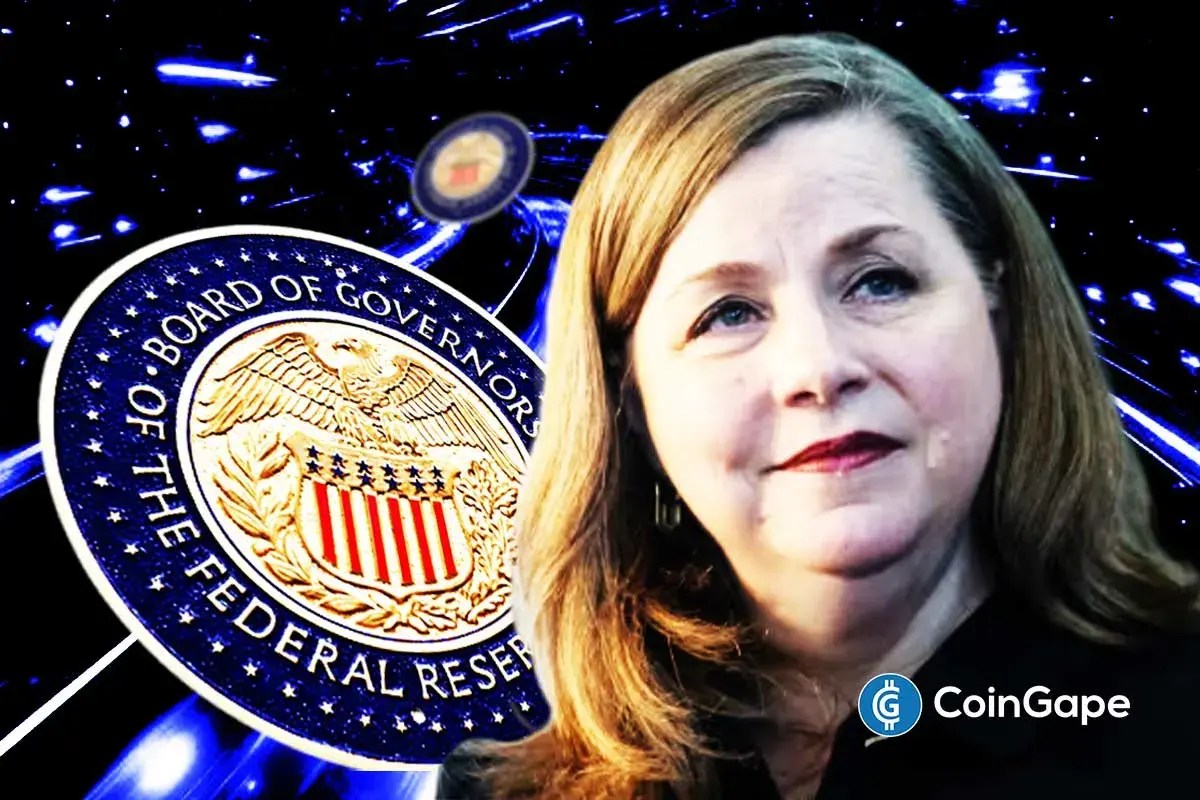
The post Federal Reserve says US banks should serve crypto without fear of penalties appeared on BitcoinEthereumNews.com. Federal Reserve Vice Chair for Supervision Michelle Bowman acknowledged that crypto firms experienced debanking due to regulatory uncertainty. During the Wyoming Blockchain Symposium on Aug. 19, Bowman also announced a fundamental shift in the Fed’s approach to blockchain innovation. She revealed the central bank eliminated reputational risk considerations from bank supervision in late June to address barriers preventing financial institutions from serving digital asset companies engaged in legal activities. The Fed official stated: “Your industry [crypto] has already experienced significant frictions with bank regulators applying unclear standards, conflicting guidance, and inconsistent regulatory interpretations.” Bowman emphasized that banks should not face penalties for serving customers conducting lawful business operations, stating that customer selection decisions “lie solely within the purview of bank management” rather than regulatory interference. Furthermore, she noted the Fed’s transition from an “overly cautious mindset” toward embracing blockchain technology within the traditional banking system. She warned that regulators must choose between shaping technological frameworks or allowing innovations to bypass banks entirely, potentially diminishing the banking sector’s economic relevance. The Fed is updating examination manuals and supervisory materials to ensure lasting implementation of the reputational risk removal policy. Four-principle regulatory framework The Fed Vice Chair established four core principles guiding the central bank’s new approach to digital asset regulation. Regulatory certainty tops the list, addressing industry concerns about investing in blockchain development without clear supervisory standards. Bowman questioned whether companies would partner with banks, knowing that regulatory scrutiny brings uncertainty, rather than pursuing alternatives outside the banking system. Tailored regulation forms the second principle, requiring supervisors to evaluate use cases based on specific circumstances rather than applying worst-case scenario expectations. The Fed must recognize unique features distinguishing digital assets from traditional financial instruments while avoiding one-size-fits-all approaches that fail to address actual risk profiles. Consumer protection represents the third principle,…

Author: BitcoinEthereumNews
Michelle Bowman Signals Fed’s Openness to Crypto

Michelle Bowman Signals Fed’s Openness to Crypto

The post Michelle Bowman Signals Fed’s Openness to Crypto appeared on BitcoinEthereumNews.com. Federal Reserve Governor Michelle Bowman warned that banks risk irrelevance if they resist blockchain, artificial intelligence, and crypto adoption. She said regulators are now building a digital asset framework to expand banking access and remove outdated supervisory barriers. Michelle Bowman Warns Against “Overly Cautious Approach” to Crypto Innovation In her official remarks at the Wyoming Blockchain Symposium, Michelle Bowman said regulators should allow innovation to flourish in ways that strengthen financial services. She stressed that bank regulators are already taking important steps to create a framework for digital assets and the adoption of blockchain within the banking system. She said these steps will expand access to banking services and remove supervisory obstacles that have hindered relationships between banks and innovators. Bowman added that she is encouraged by technology’s ability to solve problems and improve financial efficiency. Bowman warned that an overly cautious approach could leave banks sidelined as consumers and businesses adopt faster, cheaper, and more efficient alternatives. She said the Federal Reserve is committed to shifting its culture toward openness, emphasizing that outdated frameworks should not block new products and services. Another part of her message was on the growing importance of tokenization. Michelle Bowman said tokenized assets could transform ownership transfers, reduce costs, and increase access to capital markets. She added that the banks, even the community ones, would benefit from near real-time transactions achieved through tokenization. Bowman also pointed out the role of stablecoins after the GENIUS Act was passed. She indicated that stablecoins could help expand payment systems available to banks. According to Bowman, regulators must ensure that rules governing stablecoins are clear, fair, and tailored to actual risks. Bowman Calls for Balanced AI Oversight and Announces End to “Reputational Risk” Penalties Michelle Bowman also called for a balanced approach toward AI oversight. Artificial intelligence was…

Author: BitcoinEthereumNews
Ripple points the crypto industry to 4 arms for crypto custody

Ripple points the crypto industry to 4 arms for crypto custody

The post Ripple points the crypto industry to 4 arms for crypto custody appeared on BitcoinEthereumNews.com. Ripple and the Blockchain Association Singapore (BAS) co-hosted a workshop on crypto custody and stablecoins in Singapore.  Ripple’s team pointed out four core principles for custody providers, including compliance by design, tailored models, operational resilience, and governance. The compliance-by-design approach showed that regulators such as Singapore’s Monetary Authority (MAS) require strict asset segregation and recovery protocols. They also emphasized that institutions must choose custody models suited to their needs. This is whether or not it is third-party, hybrid, or self-custody. Next, the leaders talked about operational resilience. They said that workflows must handle interruptions, meet recovery standards set by laws like the EU’s Digital Operational Resilience Act, and have strong monitoring and response methods. Fourth, they pointed to governance, saying segregation of duties, independent oversight, and audit trails as essential to maintaining trust. According to Ripple execs, digital asset custody has become the foundation for institutional adoption of stablecoins, tokenized assets, and cross-border settlement. Rahul Advani, Ripple’s global co-head of policy, and Caren Tso, its Asia-Pacific policy manager, said custody is now a critical entry point for enterprises wanting to scale digital finance.  Institutional standards for stablecoin custody  The event also focused on institutional standards for stablecoin custody and culminated in releasing a best practices report by BAS subcommittees on stablecoins and cybersecurity. According to Ripple, the fifth theme of the class was the role of custody in making stablecoins useful in everyday situations like trade finance, cross-border payments, and managing cash flow.  They said enterprise-grade custodians can help with this change by providing API integration, anti-money laundering (AML) tools, and programmable features. According to them,  the change is also to safeguard tokenized documents related to global trade. To that end, according to Advani and Tso, digital finance, smart contracts, tokenized documents, and automated compliance will need to be more…

Author: BitcoinEthereumNews
MetaMask x TRON: A New Era for Web3 Access

MetaMask x TRON: A New Era for Web3 Access

The post MetaMask x TRON: A New Era for Web3 Access appeared on BitcoinEthereumNews.com. TRON DAO just made a big move. The community-led organization announced a partnership with MetaMask. The result? TRON will be natively integrated into the world’s most popular self-custodial wallet. This isn’t small. It changes how millions of MetaMask users connect with TRON’s ecosystem. And it fits perfectly with TRON’s mission to make blockchain simple, fast, and open to everyone. What it means for TRON and many more First, global access. TRON already dominates in Asia. It has strong presence in South America, Africa, and Europe. Now, MetaMask users everywhere can access TRON without needing a new wallet. One wallet. One interface. No walls left standing. Second, smooth experience. TRON’s blockchain is quick, over 2,000 transactions per second. Fees? Less than a cent. That means MetaMask users can now explore TRON’s major dApps like JustLend DAO and SunSwap without worrying about gas. Everything in one place. Third, stablecoin power. TRON is the biggest stablecoin network in the world. More than $82B worth of USDT circulates on TRON. That’s unmatched. With MetaMask in the mix, that stablecoin liquidity is now easier to reach than ever. 🚨Breaking TRON just linked up with MetaMask and it’s huge. Metamask will add support for the TRON network, opening Tron’s ecosystem dApps, TRC20 tokens like USDT, USDD to metamask’s 100M+ users. It’s safe to say Tron’s reach just got massive. What does this mean?– Global… pic.twitter.com/HD4VgGNWAd — Leila (@chimpnzee) August 19, 2025 How it’s done This isn’t a bridge. It isn’t a pegged TRX token. TRON’s team worked directly with MetaMask to build native integration. That means users will manage TRX, stake, and move assets right inside the MetaMask interface. It’s clean. It’s secure. It’s real Web3 infrastructure. Angel Gonzalez-Capizzi from MetaMask put it simply: “This connects ecosystems and opens doors.” Justin Sun, founder of TRON, was…

Author: BitcoinEthereumNews
Japan Approves Its First-Ever Yen-Pegged Stablecoin (JPYC)

Japan Approves Its First-Ever Yen-Pegged Stablecoin (JPYC)

The post Japan Approves Its First-Ever Yen-Pegged Stablecoin (JPYC) appeared on BitcoinEthereumNews.com. Japan’s top financial regulator has approved the country’s first-ever yen-pegged stablecoin. The new JPYC token will be fully backed by domestic deposits and Japanese Government Bonds. The move is a major step in Japan’s push to create a regulated digital finance sector. Japan has officially entered the stablecoin race after the country’s Financial Services Agency (FSA) granted regulatory approval to JPYC Inc., a Tokyo-based fintech startup, to issue Japan’s first yen-pegged stablecoin. The token, also branded as JPYC, is expected to debut in the autumn of 2025 and will maintain a one-to-one peg with the Japanese yen. In a statement, Chief Executive Noritaka Okabe confirmed the stablecoin will be fully backed by domestic deposits and Japanese Government Bonds (JGBs), ensuring compliance with the country’s updated Payment Services Act. By operating under a funds transfer service provider license, JPYC is transitioning from a prepaid token operator to a fully regulated issuer. Unique, Zero-Fee Business Model Unlike many global stablecoin issuers, JPYC will not charge transaction fees. Instead, its business model will rely entirely on the interest income generated by the JGB reserves backing the tokens. For every ¥1 trillion issued, the firm estimates it will generate gross annual revenue of approximately ¥5 billion from bond yields. The company expects its first users to be hedge funds, family offices, and institutional investors within Japan. Over time, JPYC aims to expand its adoption to international remittances and corporate settlements. How Japan’s Approach Differs from the US and China The launch comes as global regulation of stablecoins accelerates. In July, U.S. President Donald Trump signed federal legislation establishing rules for dollar-backed tokens. Related: U.S. Treasury Clarifies Position on Strategic Bitcoin Reserve Plans Meanwhile, major American financial institutions like Bank of America and Fiserv are preparing their own stablecoin products. By contrast, Chinese regulators recently…

Author: BitcoinEthereumNews
Senate Banking Chairman Tim Scott predicts up to 18 Democrats to break ranks on sweeping crypto law

Senate Banking Chairman Tim Scott predicts up to 18 Democrats to break ranks on sweeping crypto law

The post Senate Banking Chairman Tim Scott predicts up to 18 Democrats to break ranks on sweeping crypto law appeared on BitcoinEthereumNews.com. Senate Banking Committee Chairman Tim Scott reportedly predicts that 12 to 18 Democrats will support comprehensive crypto market structure legislation. According to Aug. 19 reports, Scott is conducting individual meetings with Democratic members, including those outside the Banking Committee, to build bipartisan backing for the anticipated September bill introduction. The South Carolina Republican’s outreach efforts follow the House passage of the Digital Asset Market Clarity Act on July 17, which received support from 78 Democrats in a 294-134 vote. The House legislation establishes jurisdictional boundaries between the Securities and Exchange Commission and the Commodity Futures Trading Commission while creating registration pathways for qualifying digital asset platforms. Scott released a discussion draft of the Responsible Financial Innovation Act of 2025 on July 22 alongside Senators Cynthia Lummis, Bill Hagerty, and Bernie Moreno. The Senate proposal builds upon the House CLARITY Act by introducing ancillary asset definitions, modernized disclosure requirements, and banking provisions that allow financial holding companies to offer digital asset services. Regulatory framework development The CLARITY Act directs SEC and CFTC coordination through joint registration processes for platforms listing tokens that meet functional decentralization tests and public float requirements. Qualifying networks fall outside the securities law scope once they achieve sufficient decentralization metrics. The legislation establishes token disclosure requirements scaling with market capitalization tiers while requiring issuers conducting US sales to submit initial information statements. Banking supervisors receive instruction to recognize qualified custodians managing both stablecoins and digital assets under unified segregation and audit standards. The framework creates coordinated custody requirements for platforms operating spot and derivatives trading under shared regulatory oversight between the two primary federal agencies. The Senate discussion draft expands these provisions through ancillary asset classifications covering digital tokens that avoid securities designation. Regulation DA would exempt certain ancillary asset sales from registration requirements for annual proceeds…

Author: BitcoinEthereumNews
Bo Hines will lead the USDT strategy

Bo Hines will lead the USDT strategy

The post Bo Hines will lead the USDT strategy appeared on BitcoinEthereumNews.com. Tether accelerates on regulated entry into the United States, enlisting Bo Hines as a strategic policy advisor. The choice targets the heart of the stablecoin market: USDT accounts for approximately 165 billion dollars in circulation and represents over 60% of the sector’s total capitalization (CoinMarketCap). With Hines, the issuer aims to structure the dialogue with Congress and regulators and align with the federal framework outlined by the GENIUS Act, signed by President Trump on July 18, 2025. In this context, the USA dossier becomes a priority. According to the data collected by CoinMarketCap on August 19, 2025, the market capitalization of USDT is confirmed to be around 165 billion dollars, with a market share of stablecoin exceeding 60%. Industry analysts observe that a structured compliance strategy and institutional dialogue can significantly reduce regulatory risk for issuers and partner institutions. From the briefings and industry sources we have engaged with, it is clear that the commitment to audits and disclosure will be closely monitored by regulators and the market. What changes in brief More incisive USA strategy: Tether activates a direct channel with Capitol Hill and with federal authorities. Compliance at the center: emphasis on reserves, audit, KYC/AML and more transparent governance. GENIUS Act as a framework: operational adjustment to federal requirements on reserves, supervision, and reporting. Who is Bo Hines and why it matters Former direttore esecutivo del White House Crypto Council in the previous administration, Bo Hines contributed to the definition of policy for valute digitali. At Tether, he will coordinate the policy outreach, setting posizionamento and priorità regolamentari for the American market. It should be noted that the mandate is explicit: translate regulatory requirements into internal processes and stable institutional relations (Tether press release). An interesting aspect is the bridge between technique and policy that Hines’ profile promises…

Author: BitcoinEthereumNews
SEC Chair Paul Atkins Says Most Crypto Tokens Are Not Securities

SEC Chair Paul Atkins Says Most Crypto Tokens Are Not Securities

TLDR SEC’s “Project Crypto” shifts focus: most tokens no longer deemed securities. Paul Atkins pivots SEC policy, easing rules for crypto offerings and ICOs. New SEC stance favors innovation, ending regulation-by-enforcement era. Congress advances CLARITY Act to align with SEC’s crypto-friendly shift Crypto firms cheer SEC’s pivot as U.S. bids to regain blockchain leadership. A [...] The post SEC Chair Paul Atkins Says Most Crypto Tokens Are Not Securities appeared first on CoinCentral.

Author: Coincentral