Stablecoins

Stablecoins are digital assets pegged to a stable reserve, such as the US Dollar or Gold, to minimize price volatility. Serving as the primary medium of exchange in Web3, tokens like USDT, USDC, and PYUSD facilitate global payments and DeFi liquidity. In 2026, the focus has shifted toward yield-bearing stablecoins and compliant stablecoin frameworks under global regulations like MiCA. This tag covers the intersection of traditional finance (TradFi) and crypto through stable on-chain liquidity solutions.

23854 Articles
Created: 2026/02/02 18:52
Updated: 2026/02/02 18:52
Treasury to Drain $500B From Markets With TGA Refill, Crypto Faces Tight Liquidity Test

Treasury to Drain $500B From Markets With TGA Refill, Crypto Faces Tight Liquidity Test

TLDR: Treasury will pull $500-600B from markets in its TGA refill, directly tightening crypto market liquidity. In 2023, $550B was absorbed easily, but today buffers like RRP and bank reserves are gone. Stablecoin supply may contract during the refill, creating stress for crypto assets such as ETH and BTC. Tether and Circle now hold $120B [...] The post Treasury to Drain $500B From Markets With TGA Refill, Crypto Faces Tight Liquidity Test appeared first on Blockonomi.

Author: Blockonomi
Stablecoin Market Cap Crosses $288 Billion Mark – Tether Dominance Continues with 60% Share

Stablecoin Market Cap Crosses $288 Billion Mark – Tether Dominance Continues with 60% Share

USDT continues its dominance as the Stablecoin market cap crosses $288.78 billion mark. Are there any other stablecoins catching up to the competition?

Author: Blockchainreporter
U.S. Treasury Seeks Comments on GENIUS Act Implementation for Stablecoins

U.S. Treasury Seeks Comments on GENIUS Act Implementation for Stablecoins

Detail: https://coincu.com/news/treasury-genius-act-stablecoin-comments/

Author: Coinstats
Circle launches Gateway for USDC transfers across seven blockchains

Circle launches Gateway for USDC transfers across seven blockchains

Circle is launching Gateway, unifying USDC balances across seven major blockchains.

Author: Crypto.news
Wyoming’s ‘Frontier’ Stablecoin Debuts on Ethereum, Solana and Avalanche

Wyoming’s ‘Frontier’ Stablecoin Debuts on Ethereum, Solana and Avalanche

The post Wyoming’s ‘Frontier’ Stablecoin Debuts on Ethereum, Solana and Avalanche appeared on BitcoinEthereumNews.com. In brief Wyoming’s Frontier Stable Token debuted on seven networks, including Ethereum, Solana, and Avalanche. The token could offer a yield in the future, while funding local education. It could theoretically be issued on more than 110 networks through LayerZero. Wyoming’s stablecoin debuted across seven blockchains on Tuesday, a new milestone for the Cowboy State as it officially enters the $285 billion sector. Issued in partnership with LayerZero, the Frontier Stable Token (FRNT) will operate across Ethereum, Solana, and Avalanche, along with four Ethereum scaling networks—Polygon, Arbitrum, Optimism, and Base—the blockchain infrastructure provider and Wyoming Stable Token Commission said in a joint statement. Although the stablecoin sector has been dominated for years by crypto-native firms like Tether and Circle, FRNT, previously known as the Wyoming Stable Token (WYST), represents the first state-backed token issued in the U.S. Wall Street firms, meanwhile are mulling their own offerings.  The Commission and LayerZero described FRNT as a “constitutionally-protected public asset” that’s not subject to “arbitrary usage restrictions,” unlike many alternatives.  Like most stablecoins, FRNT will be backed by cash and U.S. Treasuries—but instead of benefiting a business, interest generated by FRNT’s reserves will be diverted to Wyoming’s School Foundation Fund on a quarterly basis, serving its citizens as a public good. Individuals tied to FRNT’s introduction told Decrypt last month that the token will be unique because it’s not regulated under the GENIUS Act. The framework for stablecoins that passed last month does not apply to FRNT because Wyoming is a sovereignty—not a business—they said. That means FRNT could eventually share a portion of the revenue its reserves generate with holders. That feature won’t be enabled on Tuesday, as it’s still being ironed out, Wyoming Democratic State Senator Chris Rothfuss told Decrypt in July. The initiative has caught flack from some U.S.…

Author: BitcoinEthereumNews
Tether Taps Former White House Crypto Director Bo Hines as U.S. Strategy Adviser

Tether Taps Former White House Crypto Director Bo Hines as U.S. Strategy Adviser

Tether is beefing up its U.S. game plan — and it just hired someone who knows the D.C. playbook inside out. The stablecoin powerhouse announced that former White House Crypto Council Executive Director Bo Hines will join as a strategic adviser for digital assets and U.S. strategy, a move that signals Tether’s intent to plant firmer roots in the world’s biggest, most hostile-yet-coveted crypto market.

Author: Brave Newcoin
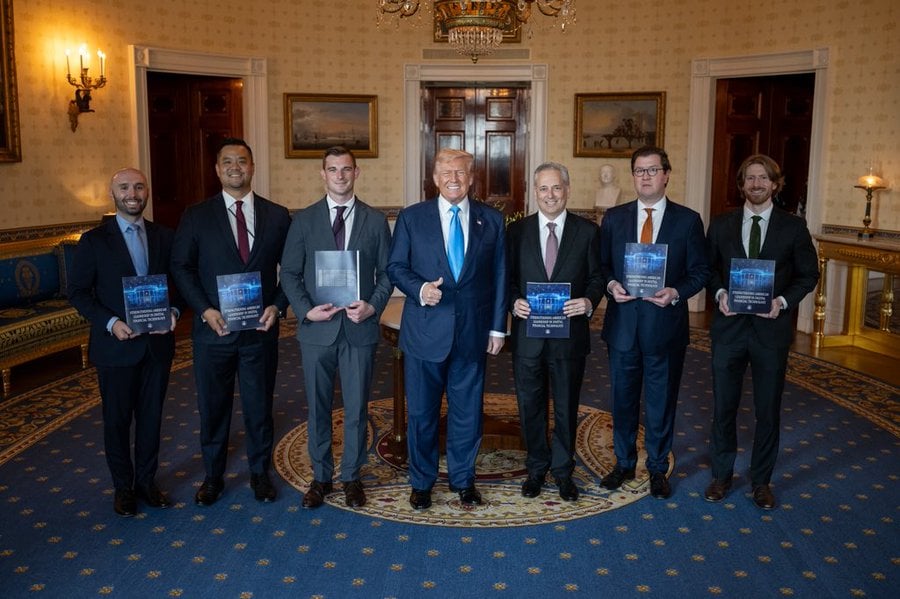
Tether Appoints Trump Administration Vet Bo Hines as Strategic Advisor

Tether Appoints Trump Administration Vet Bo Hines as Strategic Advisor

The post Tether Appoints Trump Administration Vet Bo Hines as Strategic Advisor appeared on BitcoinEthereumNews.com. In brief Stablecoin issuer Tether has appointed Bo Hines, former crypto advisor to the Trump administration, as a strategy advisor. Hines left his role as President Trump’s crypto advisor last week, after helping shape the landmark GENIUS Act. In his new position, Hines will help Tether “shape and execute the company’s U.S. market entry.” Stablecoin issuer Tether has appointed Bo Hines, who recently left his post as President Trump’s crypto adviser, as its strategic advisor for digital assets and U.S. strategy on Tuesday. According to a press release issued by Tether, Hines will collaborate with the firm’s leadership team to “shape and execute the company’s U.S. market entry.” This will include “cultivating constructive relationships” with policymakers and industry stakeholders. Thrilled to join @Tether_to! Huge thanks to @paoloardoino & the team for the warm welcome. Excited to help build an ecosystem of digital asset products that set the standard for compliance & innovation—empowering U.S. consumers and reshaping our financial system. The best is yet… https://t.co/DloARijWkh — Bo Hines (@BoHines) August 19, 2025 “Bo’s appointment demonstrates our commitment to building a strong U.S.-based presence that spans across multiple sectors,” Tether CEO Paolo Ardoino said in a statement accompanying the news. “His deep understanding of the legislative process, combined with his passion for practical blockchain adoption, makes him an invaluable asset as Tether enters the biggest market in the world.” Hines served as the Executive Director of the President’s Council of Advisers on Digital Assets, only leaving the post last week. During his tenure, the 29-year-old helped shape the Trump administration’s stablecoin and digital asset polices, including plans to build a Bitcoin reserve. “During my time in public service, I witnessed firsthand the transformative potential of stablecoins to modernize payments and increase financial inclusion,” Hines said in a statement. “I’m thrilled to join…

Author: BitcoinEthereumNews
1 on Ethereum, Avalanche, and Polygon

1 on Ethereum, Avalanche, and Polygon

The post 1 on Ethereum, Avalanche, and Polygon appeared on BitcoinEthereumNews.com. The Stablecoin yen giapponese debuts in a regulated form: JPYC has obtained the license of funds transfer service provider from the Japanese regulator Financial Services Agency (FSA), a key requirement for the issuance of a token with peg 1:1 to the yen on Ethereum, Avalanche, and Polygon. In this context, scenarios open up for digital payments, remittances, and Web3 integrations aligned with Japanese anti-money laundering regulations. According to the data collected by our research team (monitoring updated to August 2025), JPYC has completed the regulatory procedures required by the FSA and has declared a policy of monthly attestations for reserves. Industry analysts note that the explicit requirement for segregation of reserves and periodic reporting should increase transparency compared to unregulated models. What changes: regulated model and FSA supervision JPYC now operates as a fund transfer service provider (Kawase) under the revised Payment Services Act as of June 2023, which outlined a specific framework for Electronic Payment Instruments (stablecoin) FSA. It should be noted that the new status entails requirements on minimum capital, KYC/AML procedures, reserve segregation, and periodic reporting under FSA supervision. For an overview of AML/CFT compliance best practices for digital assets, refer also to the international guidelines FATF. Reserves and guarantees: yen in the bank and JGB with 1:1 coverage The peg is supported by bank deposits in JPY and by Japanese Government Bonds (JGB) with short maturity, held to cover 100% of the tokens in circulation. For information on the liquidity and market characteristics of short-term JGB, see the official website of the Japanese central bank. Coverage: 1 JPYC = 1 yen, supported by immediately available liquidity (deposits) and liquid government securities. Transparency: independent attestations on reserves on a monthly basis, as indicated in the issuer’s preliminary white paper JPYC. Redemption: conversion to JPY in the account…

Author: BitcoinEthereumNews
Stablecoin Zuid-Korea: banken bereiden lancering voor

Stablecoin Zuid-Korea: banken bereiden lancering voor

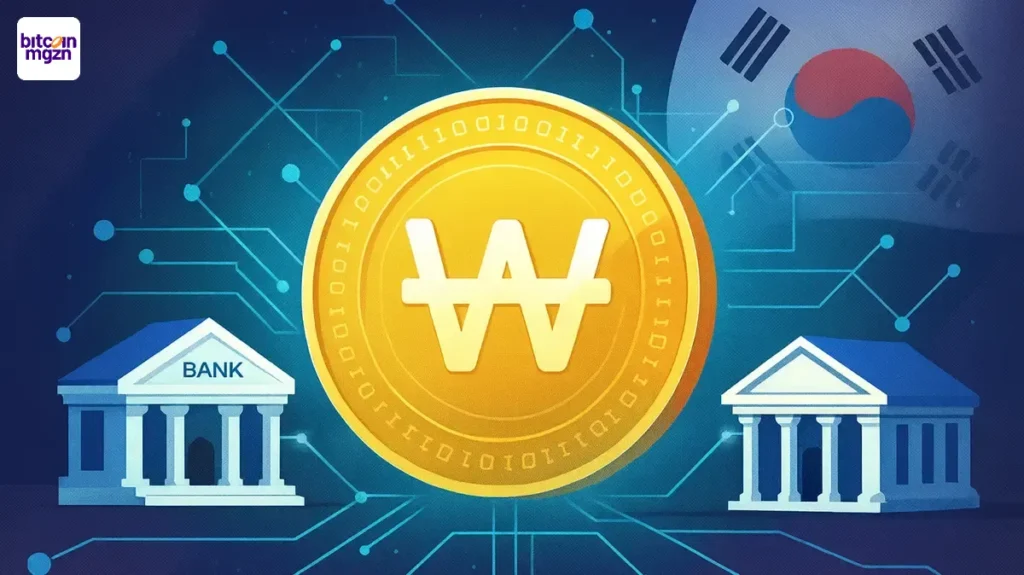
Snelle crypto updates? Connect op Instagram! Check onze Instagram   De Zuid-Koreaanse overheid werkt aan duidelijke regels voor stablecoins. Grote banken en internationale partijen zoals Circle bereiden zich voor op de lancering van een eigen won-stablecoin. Een nieuwe wetgeving moet duidelijkheid scheppen en innovatie stimuleren binnen het gereguleerde digitale financiële landschap. Wetgeving stablecoin Zuid-Korea in voorbereiding De Zuid-Koreaanse Financial Services Commission (FSC) is bezig met een wetsvoorstel dat de uitgifte van stablecoins moet reguleren. Deze wet vormt onderdeel van de tweede fase van de Virtual Asset User Protection Act en wordt in oktober 2025 aan het parlement voorgelegd. De regelgeving moet onder meer richtlijnen bieden voor collateralbeheer, interne controlemechanismen en risicobeheersing. De focus ligt op won-gedekte stablecoins, waarmee Zuid-Korea zijn afhankelijkheid van buitenlandse stablecoins zoals USDT en USDC wil verkleinen. De FSC wil met deze wet zorgen voor duidelijkheid en stabiliteit op de markt. Er worden strikte voorwaarden gesteld aan uitgiftepraktijken, waaronder transparantie in reserves en naleving van compliance-eisen. Deze stap plaatst Zuid-Korea in de voorhoede van landen die stablecoins binnen het reguliere financiële systeem proberen te integreren zonder de risico’s van ongecontroleerde adoptie. South Korea to Roll Out Won-Based Stablecoin Law This Octoberhttps://t.co/hjR2IjwUOZ — John Morgan (@johnmorganFL) August 19, 2025 Grote banken staan klaar voor stablecoin uitgifte Institutionele interesse en strategische positionering Vier van de grootste banken van Zuid-Korea: KB Kookmin, Shinhan, Hana en Woori hebben hun interesse kenbaar gemaakt in het uitgeven van eigen won-stablecoins. Ze hopen met hun gevestigde naam het vertrouwen van het publiek in digitale valuta te versterken. Ze willen zo hun rol in het digitale betalingsverkeer versterken. Met innovatieve producten spelen ze in op de groeiende vraag naar snelle, grensoverschrijdende betalingen. Daarbij hopen ze marktaandeel te behouden in een financiële sector die snel digitaliseert. In voorbereiding op de uitgifte van stablecoins zijn deze banken al gestart met het opzetten van testomgevingen, het ontwikkelen van blockchaingebaseerde betalingsoplossingen en het trainen van interne compliance-teams. Ze nemen hiermee een proactieve rol aan binnen het kader dat de FSC zal opstellen, en bereiden zich voor op integratie van traditionele en digitale financiën onder toezicht van de FSC waarin traditionele en digitale financiën samenkomen onder toezicht van één regelgevend regime. Hybride modellen en concurrentiepositie ten opzichte van DeFi Naast technologische ontwikkeling spelen ook strategische overwegingen mee. De betrokken banken willen voorkomen dat decentrale stablecoins, zoals DAI of algoritmische tokens, terrein winnen in de Koreaanse markt. Door vroeg in te stappen met gereguleerde alternatieven kunnen zij voldoen aan de toenemende vraag naar digitale activa en tegelijk hun concurrentiepositie als gecentraliseerde instellingen behouden. Dit heeft geleid tot discussies over hybride modellen, waarbij traditionele banken digitale stablecoins uitgeven die opereren op publieke blockchainnetwerken, maar onder centrale controle blijven. Volgens analisten kan deze aanpak Zuid-Korea positioneren als pionier in een gematigd gereguleerd stablecoin-ecosysteem. Het combineert de technologische voordelen van blockchain met de betrouwbaarheid van gevestigde financiële instellingen. Volgens analisten kan dit niet alleen de binnenlandse markt stabiliseren, maar ook buitenlandse investeerders aanspreken die op zoek zijn naar compliant toegang tot Aziatische cryptomarkten. Chinese tech giants pushing the country’s central bank for currency backed stable, South Korea payment firm planning to launch a korean pegged stable coin. Bhutan and Kazakhstan working on their BTC reserve. I wonder will India ever embrace crypto? — sandeeponchain (@sandeeppaths) July 28, 2025 Samenwerkingen met Circle en fintechs in opkomst Om de stap naar stablecoins mogelijk te maken, zoeken de banken actief samenwerking met buitenlandse partijen zoals Circle, de uitgever van USDC. Deze partnerschappen kunnen technologische kennis en operationele schaalbaarheid bieden. Circle werkt al internationaal samen en weet hoe je een compliant stablecoin-infrastructuur opzet die past binnen lokale regels. Voor banken biedt dit de mogelijkheid om snel betrouwbare systemen op te zetten, terwijl fintechs via deze brug toegang krijgen tot gereguleerde financiële netwerken. Vooral voor kleinere fintechs betekent dit een kans om mee te bouwen aan innovatie binnen een gecontroleerd kader, zonder direct zelf de volle verantwoordelijkheid voor regelgeving te dragen. Zuid-Koreaanse banken werken samen met Circle om internationale standaarden en betere aansluiting op wereldwijde netwerken te realiseren. Tegelijkertijd stellen ze duidelijke grenzen. Buitenlandse stablecoins mogen alleen functioneren in overeenstemming met de nieuwe wetgeving. Hierdoor ontstaat een gecontroleerde integratie van globale technologie met lokaal toezicht. Voor fintechs biedt dit kansen, maar ook uitdagingen. De nieuwe regelgeving vereist uitgebreide compliance, wat voor kleinere partijen lastig kan zijn. Samenwerking met gevestigde banken kan hier uitkomst bieden. Zo ontstaat een speelveld waarin banken richting geven en startups de ruimte krijgen om vernieuwend te werken. Op termijn kan dit model dienen als voorbeeld voor andere landen. Kansen en risico’s voor kleine spelers in de markt Hoewel de ontwikkelingen rond stablecoin Zuid-Korea positieve vooruitzichten bieden voor efficiënt betalingsverkeer en financiële inclusie, waarschuwen experts voor mogelijke uitsluiting van kleinere spelers. Voor zelfstandige fintechs zonder bankpartner kan de regelgeving een flinke hobbel zijn. Toch betekent dit niet dat innovatie stil hoeft te staan. Door strategische partnerschappen en gezamenlijke innovatielabs kunnen startups profiteren van de ervaring en infrastructuur van banken. Bovendien houdt de FSC toezicht op markttoegang en concurrentie, om te voorkomen dat enkel grote instellingen profiteren van de nieuwe wetgeving. Zuid-Korea zet koers naar gereguleerde stablecoin-markt Met de introductie van een won-gedekte stablecoin en duidelijke wetgeving, positioneert Zuid-Korea zich als koploper in de wereldwijde stablecoin-ontwikkeling. De samenwerking tussen banken, toezichthouders en internationale partijen zoals Circle zorgt voor betrouwbare randvoorwaarden voor het gebruik van stablecoins op grote schaal. Voor kleinere spelers blijven er hobbels, maar het model kan leiden tot een stabielere en inclusieve digitale betaalinfrastructuur. Koop je crypto via Best Wallet Best wallet is een topklasse crypto wallet waarmee je anoniem crypto kan kopen. Met meer dan 60 chains gesupport kan je al je main crypto coins aanschaffen via Best Wallet. Best wallet - betrouwbare en anonieme wallet Best wallet - betrouwbare en anonieme wallet Meer dan 60 chains beschikbaar voor alle crypto Vroege toegang tot nieuwe projecten Hoge staking belongingen Lage transactiekosten Best wallet review Koop nu via Best Wallet Let op: cryptocurrency is een zeer volatiele en ongereguleerde investering. Doe je eigen onderzoek. Het bericht Stablecoin Zuid-Korea: banken bereiden lancering voor is geschreven door Sebastiaan Krijnen en verscheen als eerst op Bitcoinmagazine.nl.

Author: Coinstats
Cold Wallet Leads With $6.2M Presale While ChainLink and Ethereum Strengthen Long-Term Outlook

Cold Wallet Leads With $6.2M Presale While ChainLink and Ethereum Strengthen Long-Term Outlook

Success in digital assets often comes down to timing. Projects that move early can set standards before larger players catch up. ChainLink’s latest breakout points to renewed strength in its long-term chart, while Ethereum’s updated forecasts highlight confidence in its future role. Cold Wallet’s presale, however, is carving out its own path by merging privacy-first […]

Author: Tronweekly